
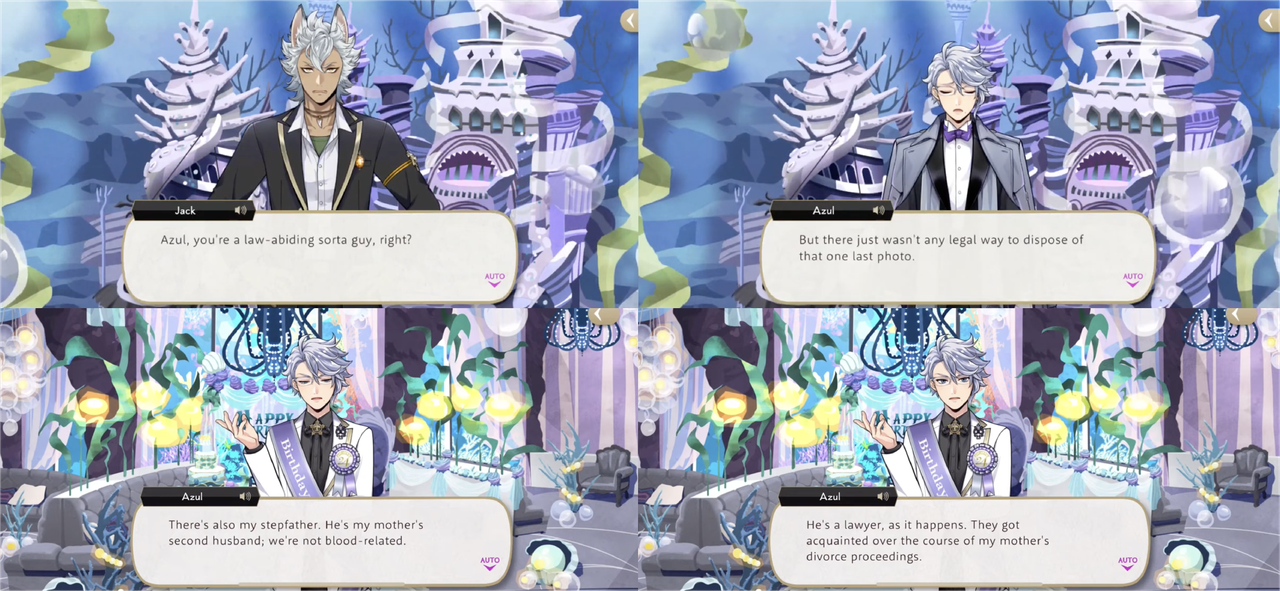
Jack makes the connection that Azul is “a law-abiding sorta guy” (the drama of Book 3 centers on a lack of “any legal way” for Azul to dispose of a photo of himself), which might be is connection to his lawyer stepfather: Azul explains, “He often shares his insights about contracts and the law with me.”
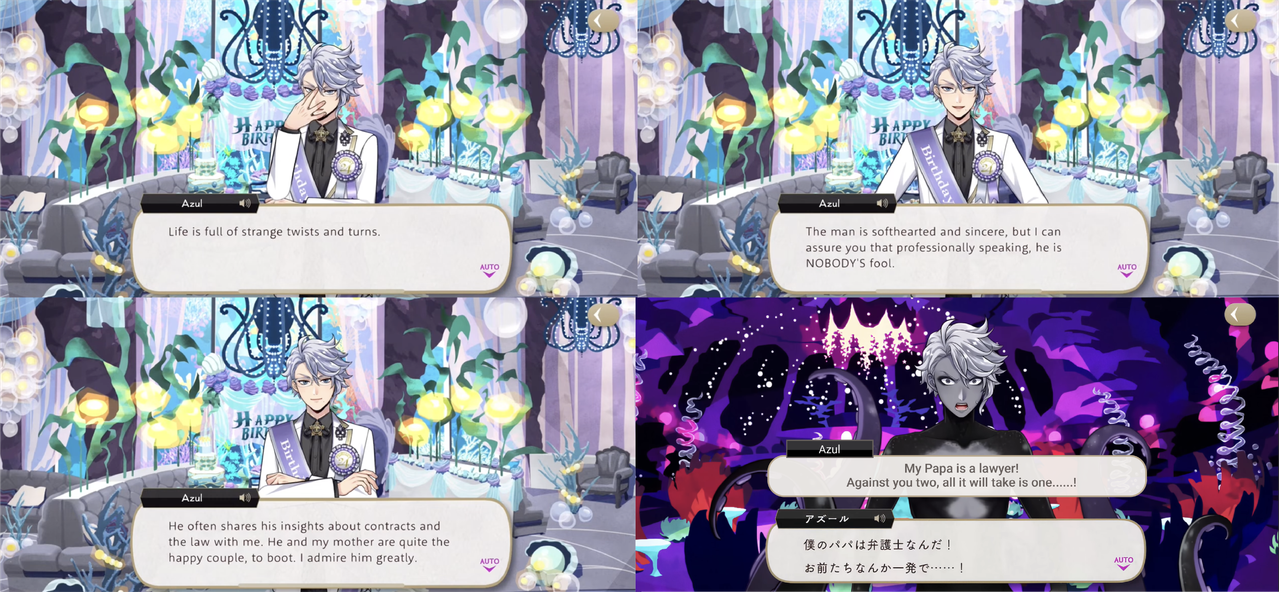
Azul says, “I admire him greatly,” and in Book 7 we discover that Azul refers to his stepfather as “papa,” so it is possible that they are close.
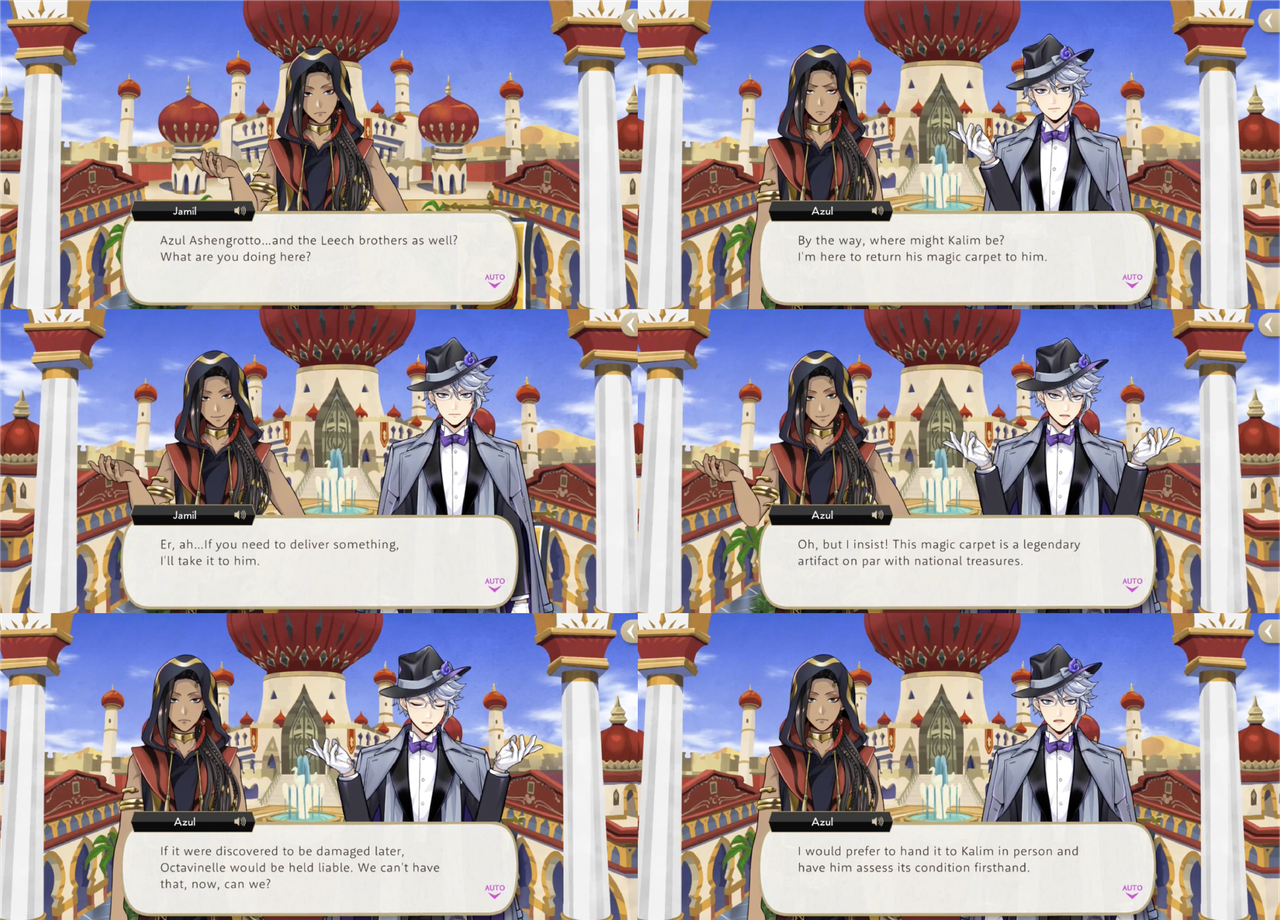
There are many examples of Azul using phrasing that seems to insinuate an unusual familiarity with the law, possibly displaying his stepfathers influence. In Book 4, he infiltrates Scarabia despite Jamil’s protests under the guise of wanted to return Kalim’s magic carpet in person, saying, “If it were discovered to be damaged later, Octavinelle would be held liable.”
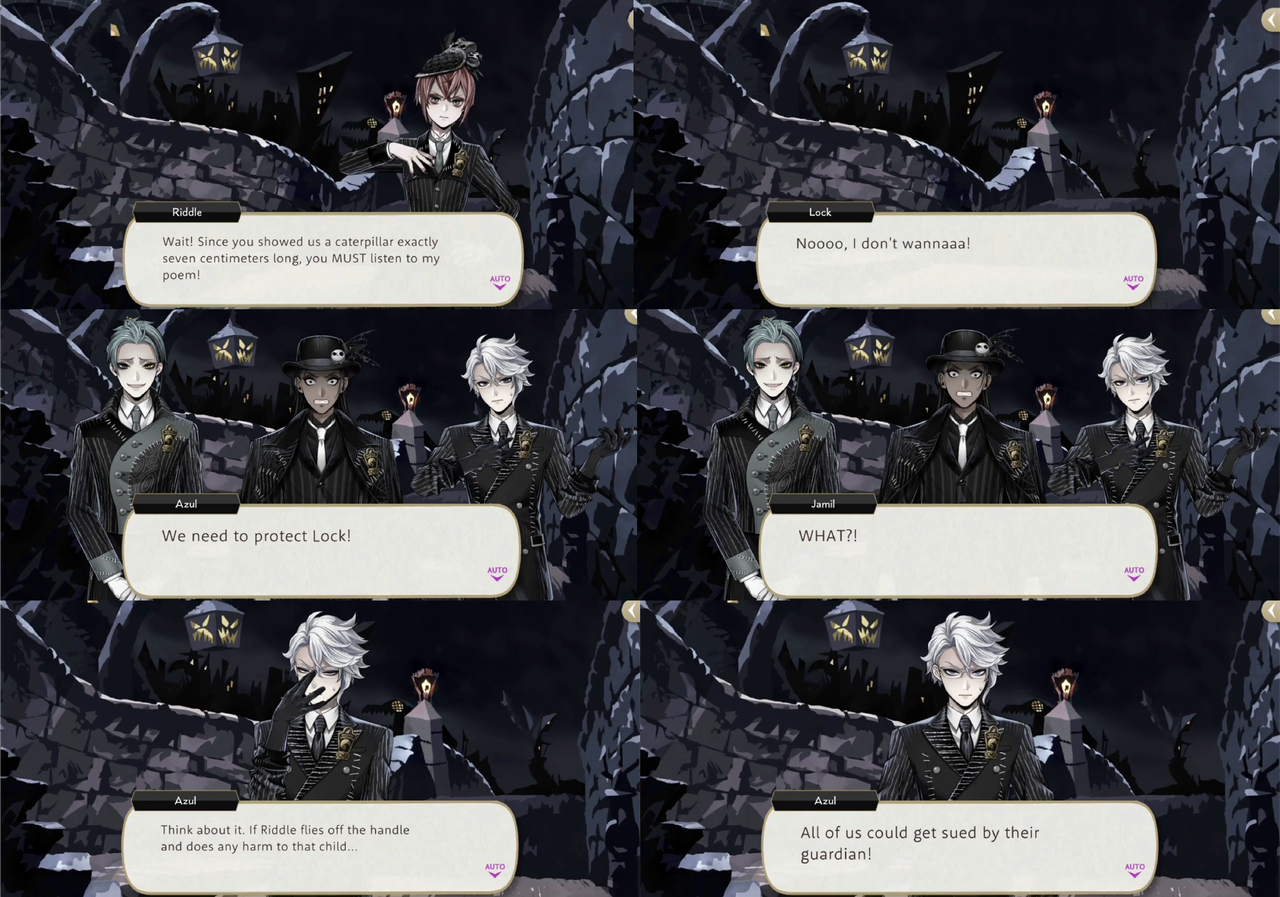
During the NBC event Azul insists on chasing after Riddle, who is chasing after Lock, insisting that he listen to a poem in accordance with the Queen of Hearts’ laws. Azul explains, “If Riddle flies off the handle and does any harm to that child, all of us could get sued by their guardian!”
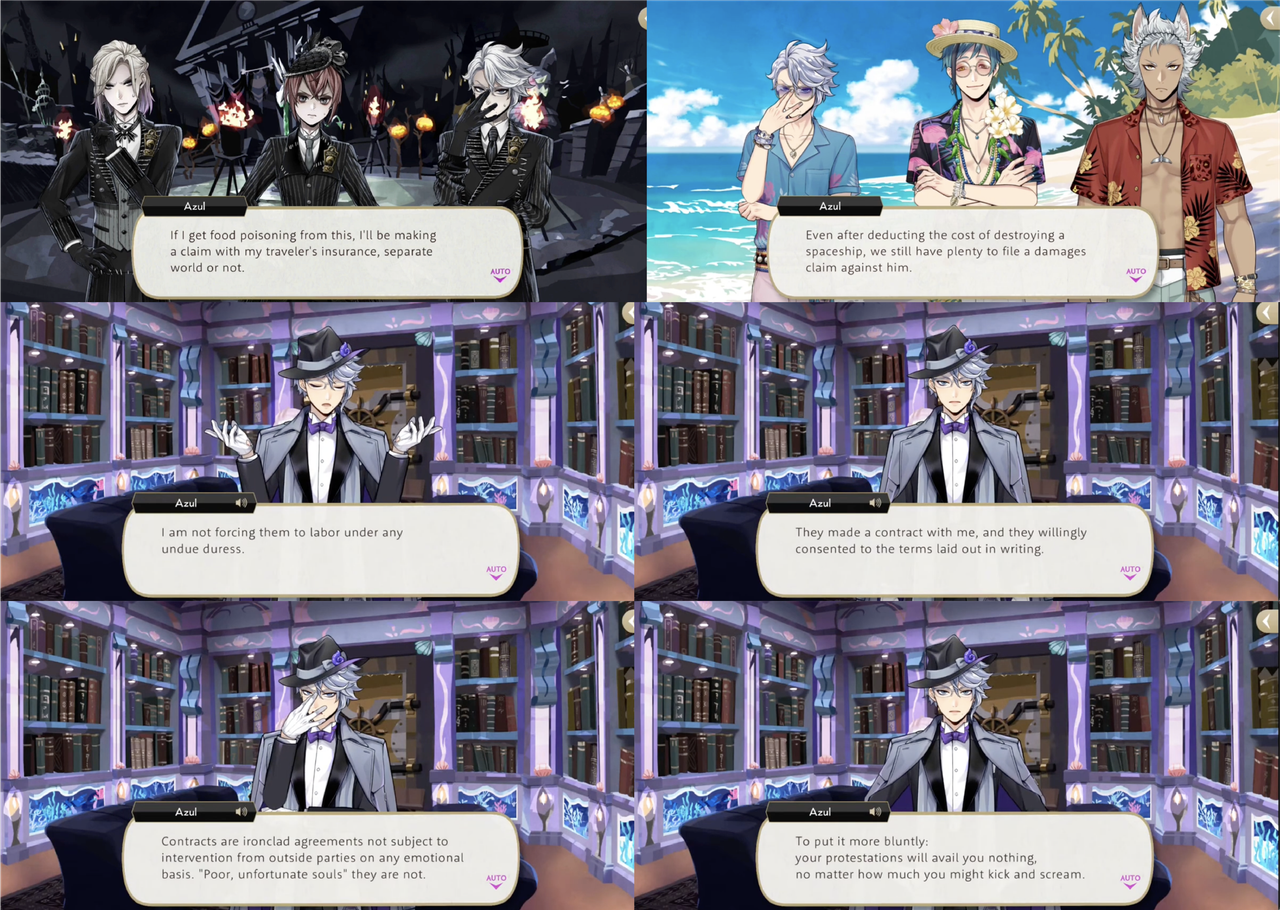
Later on Azul reluctantly eats soup provided by Sally with the comment, “If I get food poisoning from this, I’ll be making a claim with my traveler’s insurance, separate world or not,” and during the Stitch even Azul says, “Even after deducting the cost of destroying a spaceship, we still have plenty to file a damages claim against him.”
When confronted during Book 3, Azul argues that his 225 anemone’d servants are not being forced to labor under any undue duress: “They made a contract with me, and they willingly consented to the terms laid out in writing. Contracts are ironclad agreements not subject to intervention from outside parties on any emotional basis.”
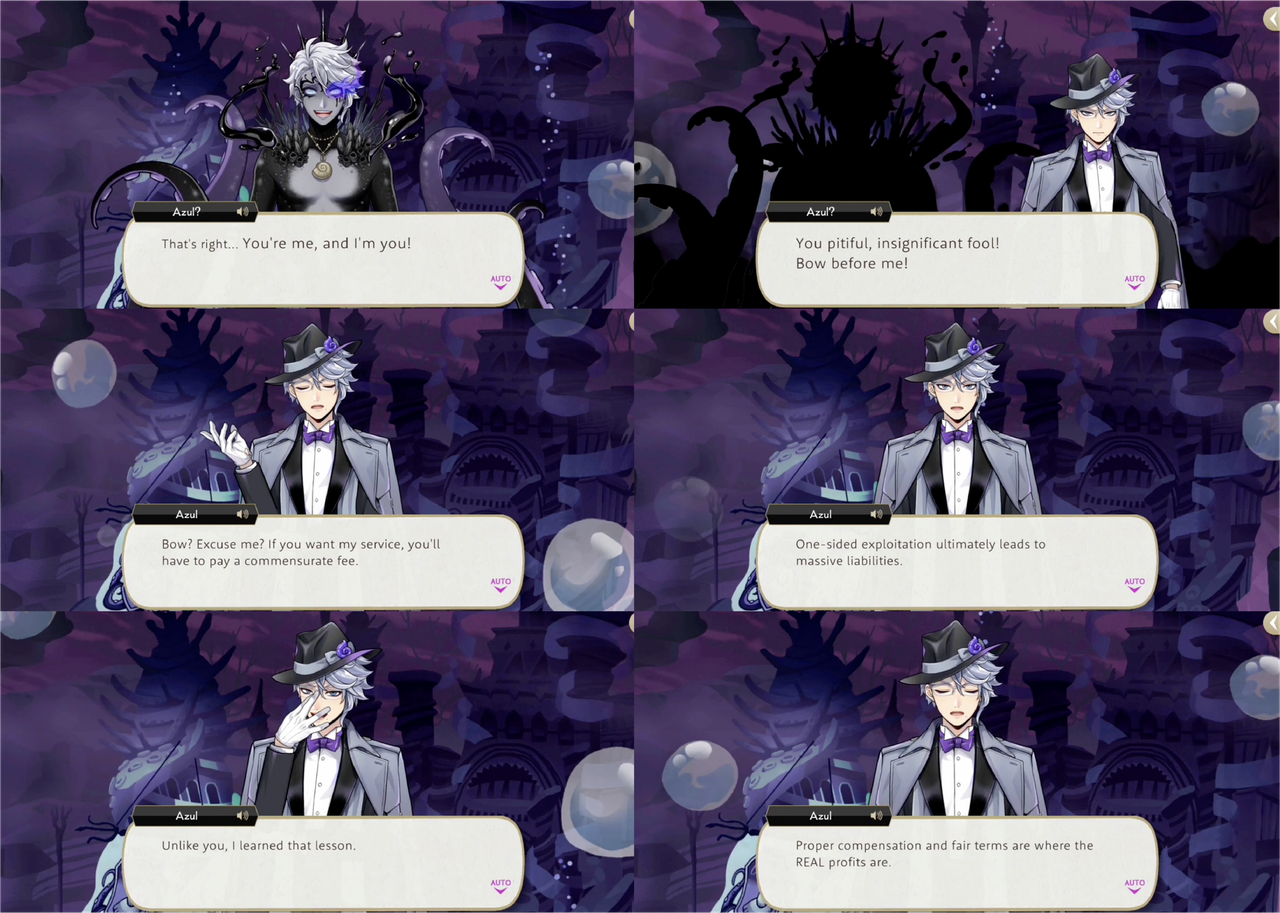
In the abyss of Book 7, however, when his oveblotted doppelgänger demands that he bow before it, Azul responds, “If you want my service, you’ll have to pay a commensurate fee. One-sided exploitation ultimately leads to massive liabilities. Unlike you, I learned that lesson,” possibly in reference to Book 3.
 Twisted Wonderland Reference Note