
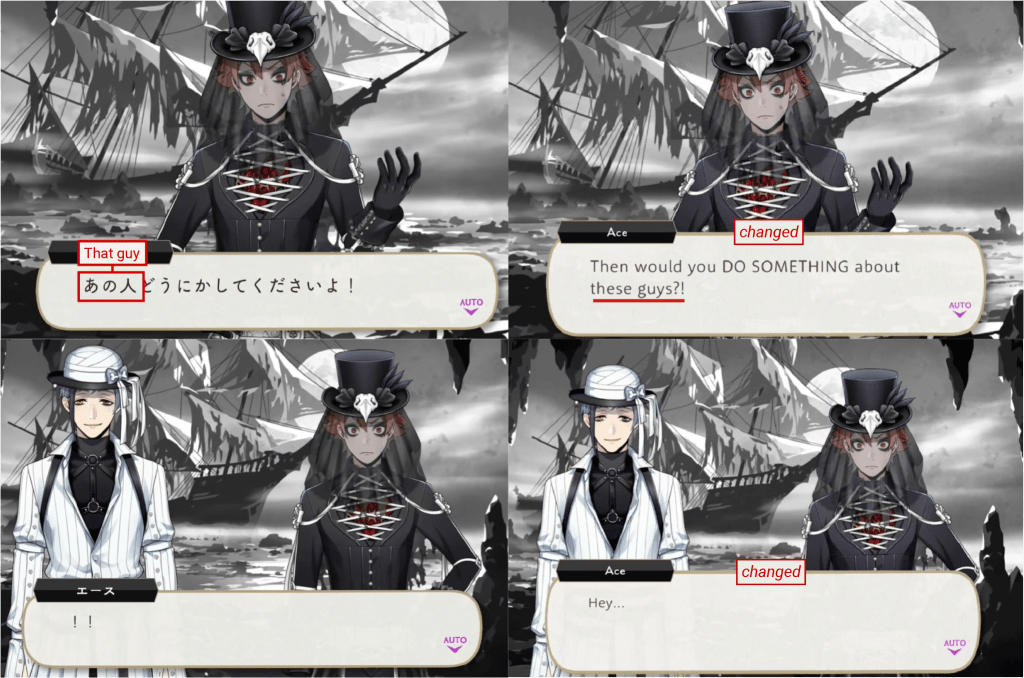
Original Ace: Please do something about that guy!
EN Ace: Then would you DO SOMETHING about these guys?!
In the English-language adaptation it has been made to seem like Ace is asking for Leona’s help with the ghosts, but in his original line he wasn’t referring to the ghosts at all. He was asking for Leona to do something about just one person: Floyd.
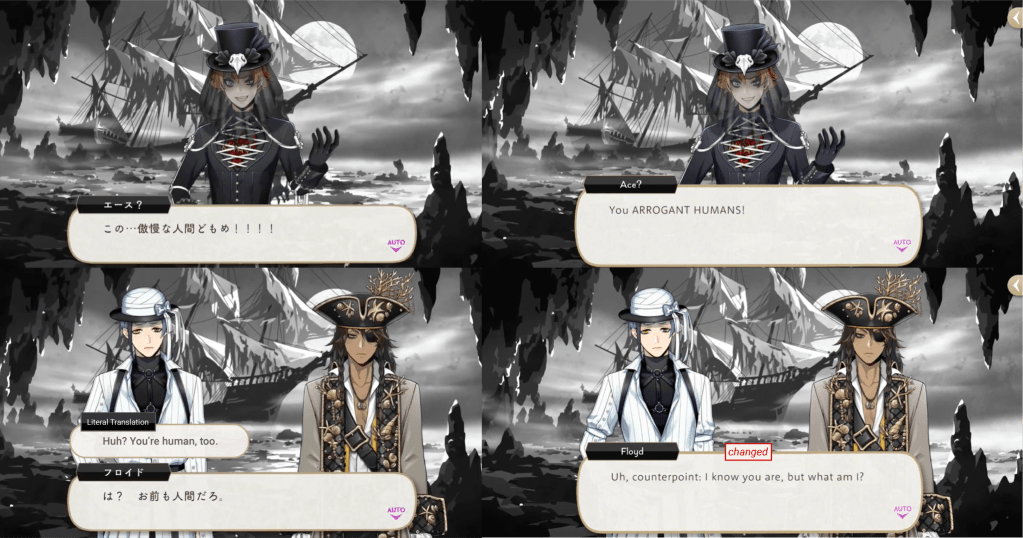
Original Floyd: Huh? You’re a human, too.
EN Floyd: Uh, counterpoint: I know you are, but what am !?
While the English-language adaptation of Floyd differentiates between mermaids and humans for the sake of a (cute!) joke, in the original game Floyd says, “you’re a human, too,” as though he considers himself no less human than Ace.

And this point is explicitly emphasized in the novel, where we learn that mermaids and beastpeople are all called “human” in Twisted Wonderland.
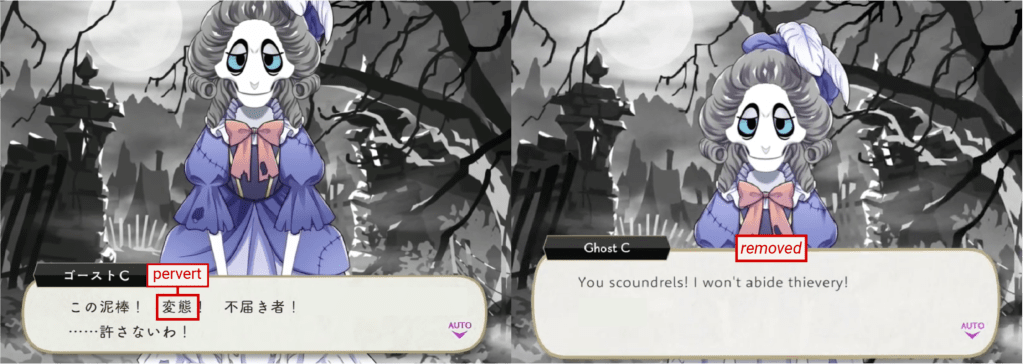
Original Ghost C: Thieves! Perverts! Scoundrels! …I won’t abide by this!
EN Ghost C: You scoundrels! I won’t abide thievery!

Original Trein: Of course, they are eggs of adept magic users. I do not lack faith in their abilities.
EN Trein: Yes, they’re exceptional fledgling mages. I do not lack faith in their abilities.
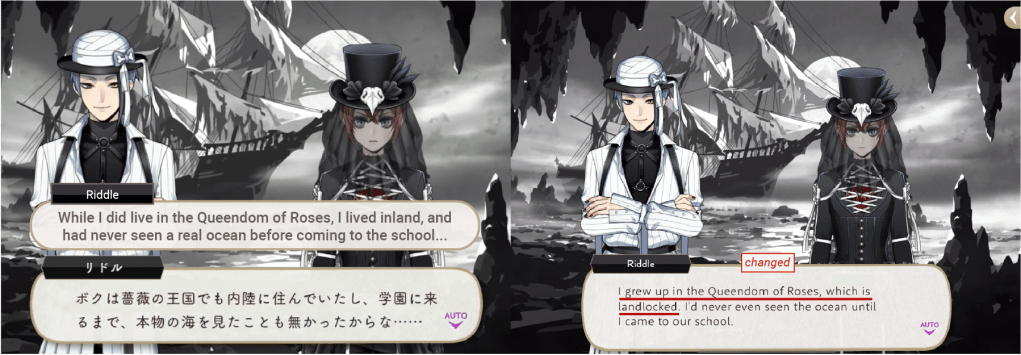
Original Riddle: While I did live in the Queendom of Roses, I lived inland, and had never seen a real ocean before coming to the school…
EN Riddle: I grew up in the Queendom of Roses, which is landlocked. I’d never even seen the ocean until I came to our school.
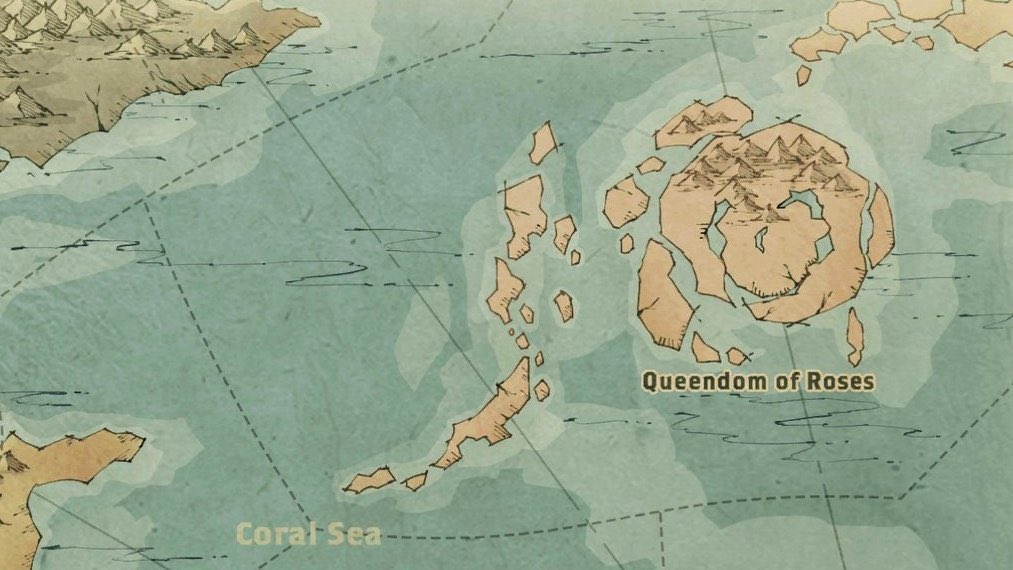
The Queendom of Roses is not landlocked. It is an island.
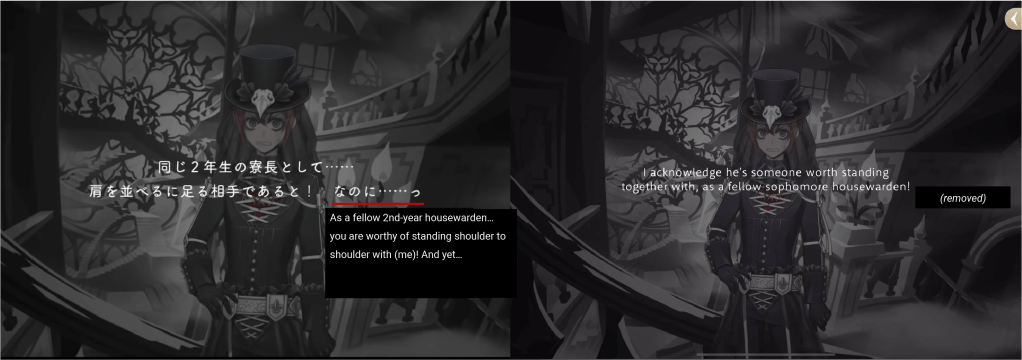
Original Riddle: As a fellow 2nd-year housewarden…you are worthy of standing shoulder to shoulder with (me)! And yet…
EN Riddle: I acknowledge he’s someone worth standing together, as a fellow sophomore housewarden!
Difficult to express in English, Riddle’s original line is more emotional than the translated version, which is why his reaction was so dramatic when he realized he had been recorded.
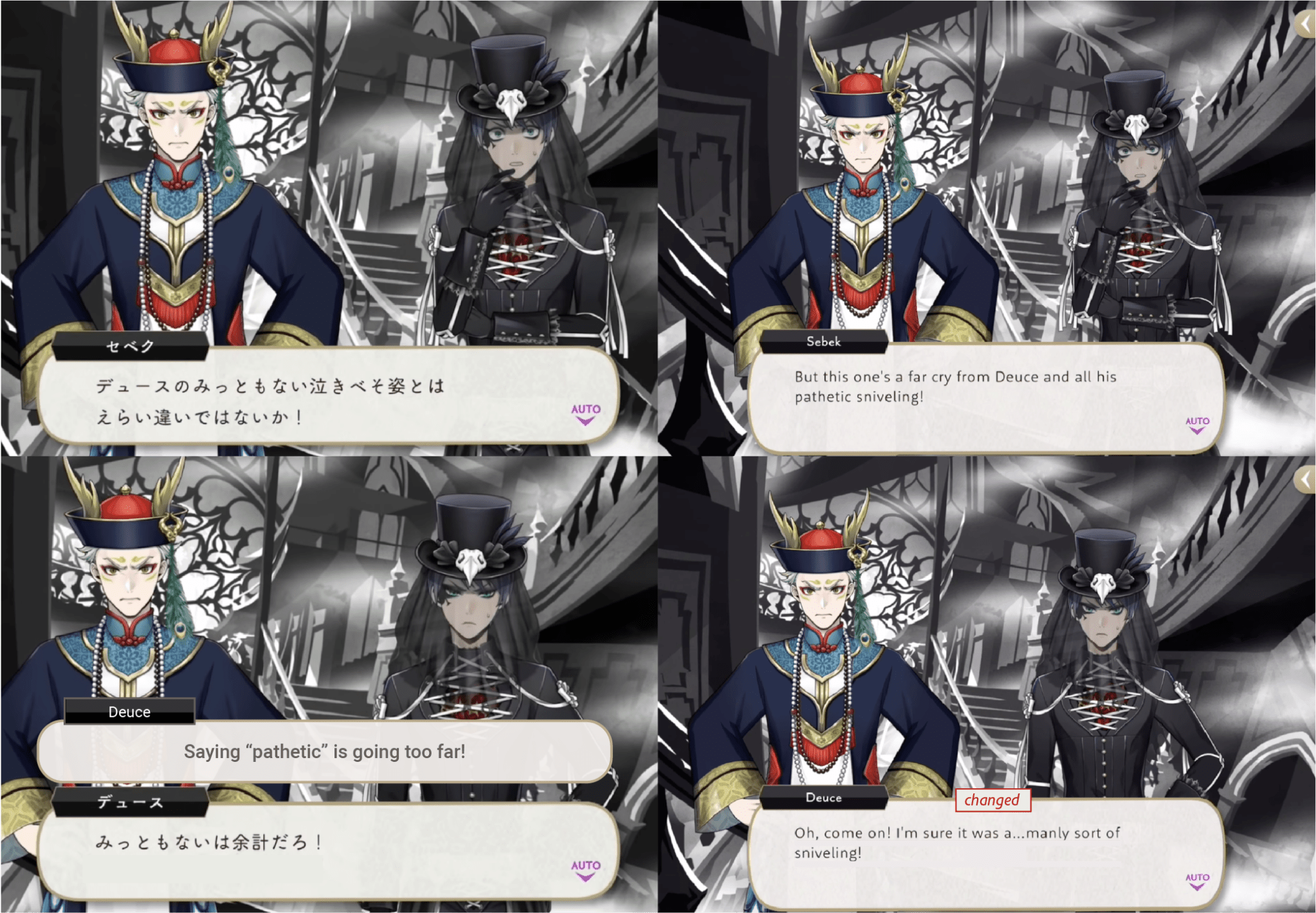
Original Deuce: Saying “pathetic” is going too far!
EN Deuce: Oh, come on! I’m sure it was a…manly sort of sniveling!
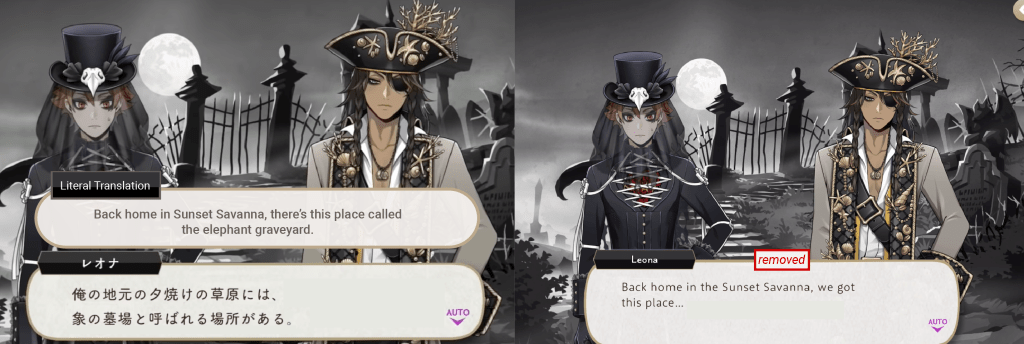
Original Leona: Back home in Sunset Savanna, there’s this place called the elephant graveyard.
EN Leona: Back home in the Sunset Savanna, we got this place…
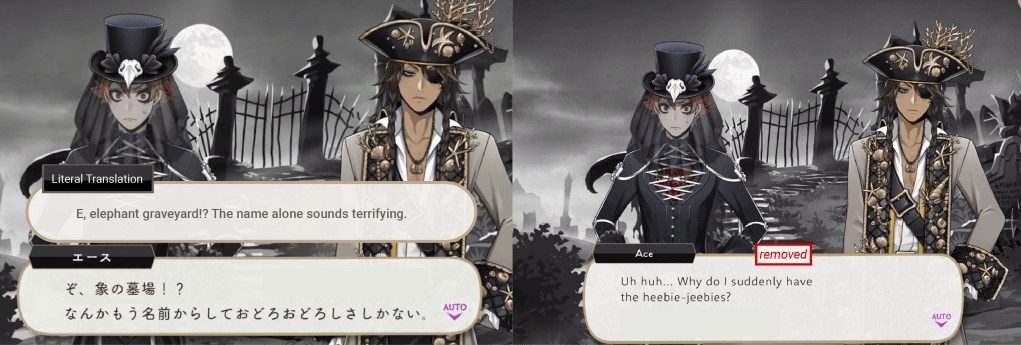
Original Ace: E, elephant graveyard!? The name alone sounds terrifying.
EN Ace: Uh huh…Why do I suddenly have the heebie-jeebies?
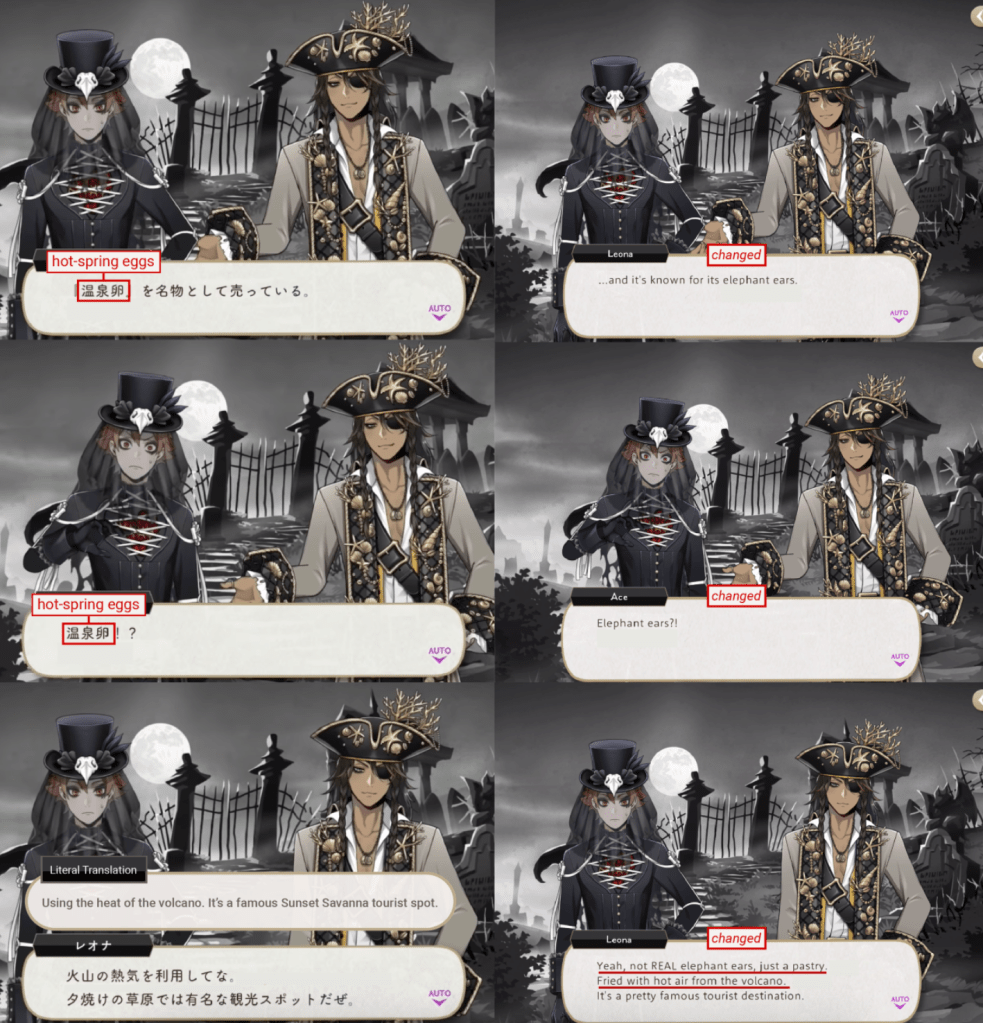
Leona’s explanation of hot spring eggs was changed to “elephant ear” pastries for the English-language adaptation, referenced again in the Cloudcalling event. More here ->
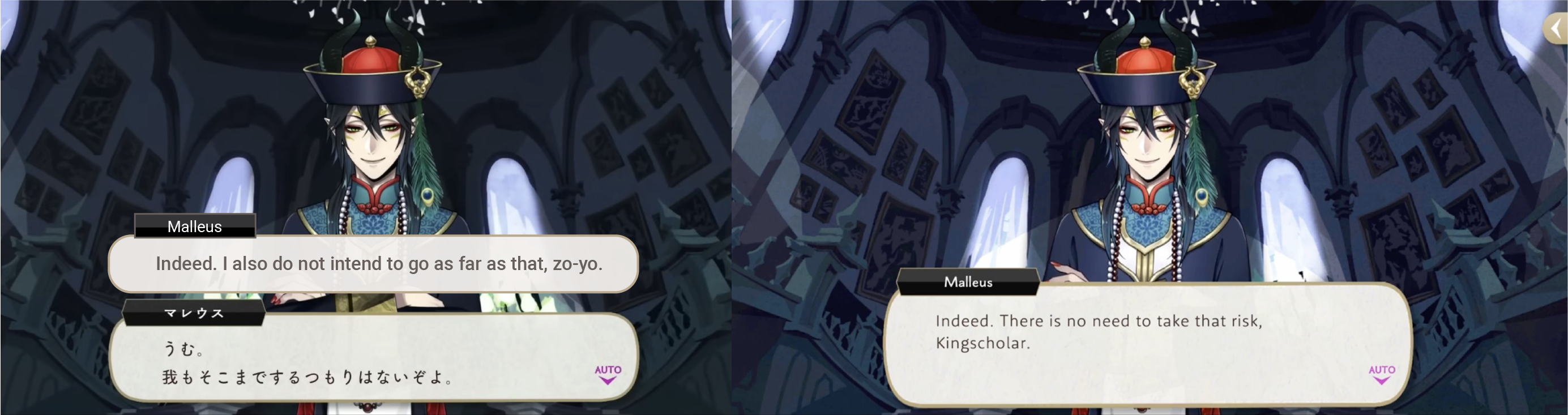
The ghosts that we have met thus far have all had old-fashioned verbal tics (that the EN version does its best to recreate for an English-speaking audience), and in his attempts to convince people that he is possessed by one of the ghosts in question, Malleus gets his verbal tics confused:
Malleus ends his sentence with “zo yo”, an outdated verbal tic that doesn’t really have a meaning in and of itself, like how all of Grim’s lines end with “zo”. The important part is that he is pretending to be possessed by a ghost with speech patterns of its own, who has thus far never used “zo yo”.

Leona discovers the ruse by noticing this mix up, since Malleus wouldn’t have such a problem if he were truly being possessed by a ghost with that specific speech pattern.
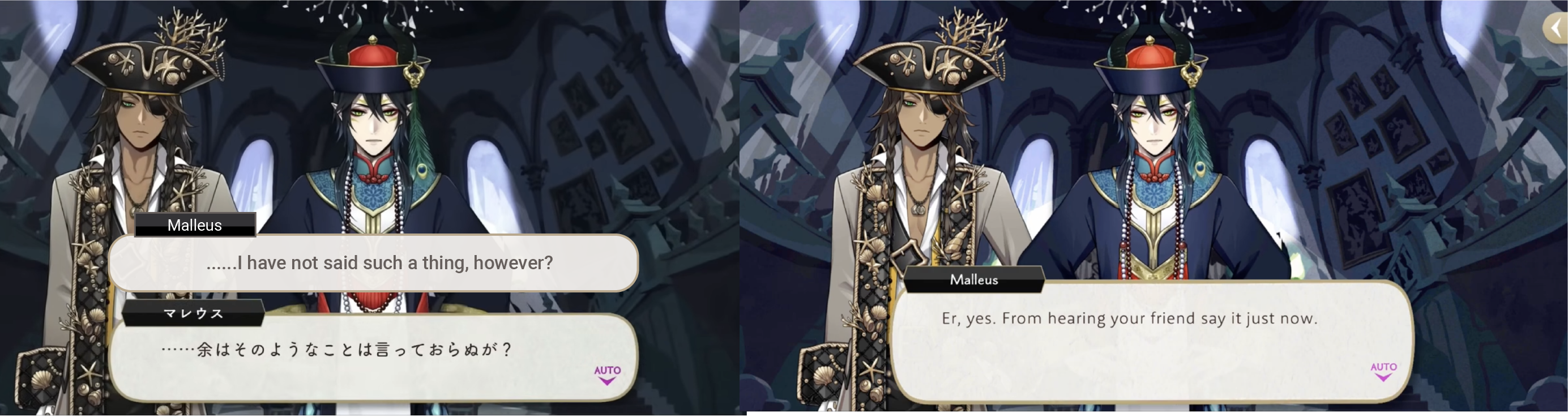
When Malleus tries to deny that he said anything of the sort, he uses a different pronoun than he was before, suddenly switching to “yo” (Malleus’ usual pronoun is “boku”) as he confuses the details of the character hes trying to portray.

When called out on his slip Malleus accidentally uses a different pronoun than he had been at first, which Rook points out.
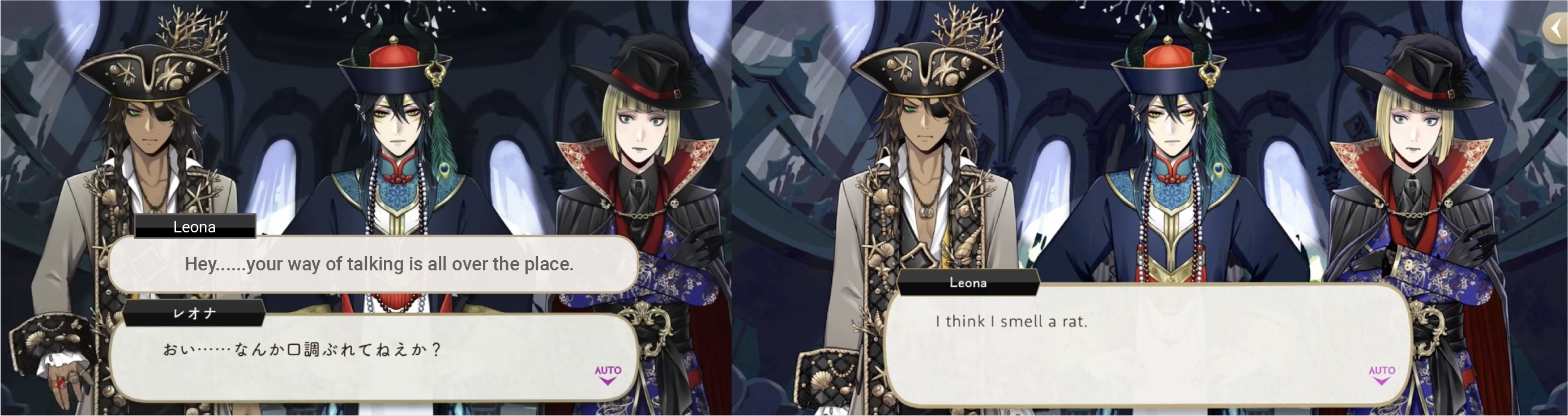
Leona points out Malleus’ speech patterns are inconsistent, compromising Malleus’ act.
Pronoun swapping isn’t really something that can be portrayed in English, so the entire exchange was rewritten for EN. An attempt was made by translators to uphold the old-fashioned speech patterns of the ghosts that we met throughout the game, but it maybe might have been confusing to try to convince EN players that Leona caught on to inconsistencies in Malleus’ efforts to speak like a ghost.
On the subject of pronouns: they are often dropped entirely from natural conversation when you speak in Japanese, because context and verb form conjugation make them redundant.
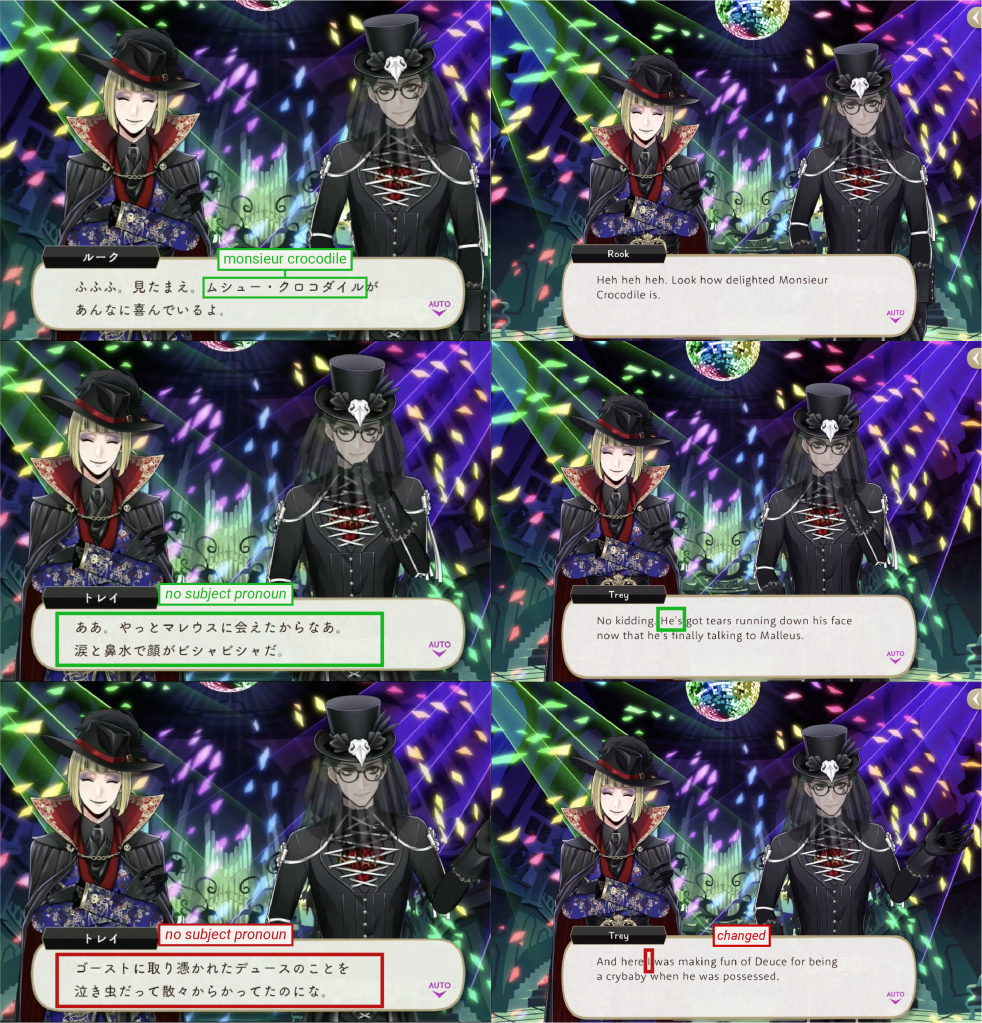
In Trey’s lines above there are no subject pronouns at all, and the verb forms in this case would be the same whether he is discussing himself or Sebek. The only way we can figure out who he is talking about is context.
But Rook set the subject as “Monsieur Crocodile” at the start. In a natural conversation this removes the need to constantly repeat “he”, which is why they don’t. If Trey wanted to specify that it was Trey himself who was teasing Deuce somewhere off screen, he would need to specify that he was changing the subject of the conversation by saying “I”.
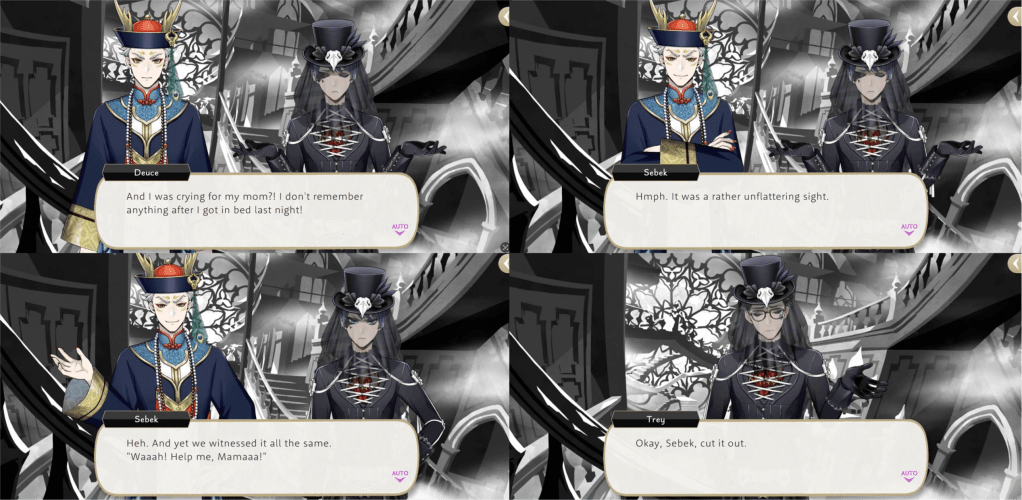
But we also have the scene above where Sebek mocks Deuce for crying and Sebek reprimands him. While it’s not technically impossible that Trey is saying he has been making fun of Deuce somewhere separately that we did not see, it would be grammatically off as Sebek was set as the subject at the beginning of the conversation, making the EN translation a slip of subject pronouns.
Q: Wait, does this mean that Trey’s first line could technically mean “He’s got tears running down his face” OR “I’ve got tears running down my face”?
A: Yes. But the translators were able to tell from the context that Trey is obviously not describing himself, he is describing Sebek, and they correctly introduced the subject “he” into the English-language translation. For some reason this didn’t make it to Trey’s follow-up line.
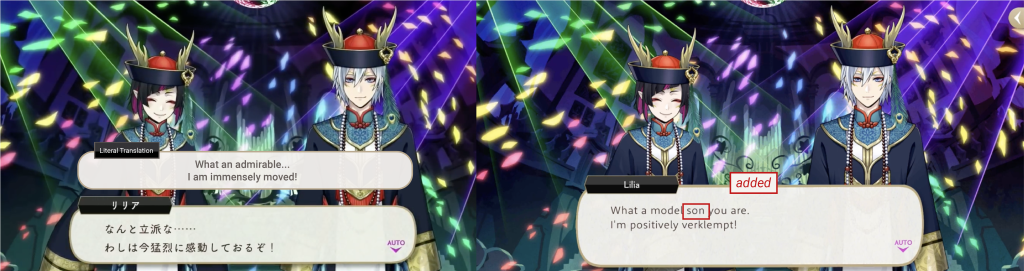
Original Lilia: What an admirable…I am immensely moved!
EN Llia: What a model son you are. I’m positively verklempt!
As of Book 7, Chapter 100, Lilia has canonically never referred to Silver as his son in the game.
 Twisted Wonderland Reference Note