
The dreamworlds of Book 7 are possibly teaching the dreamers how it feels to be Malleus:
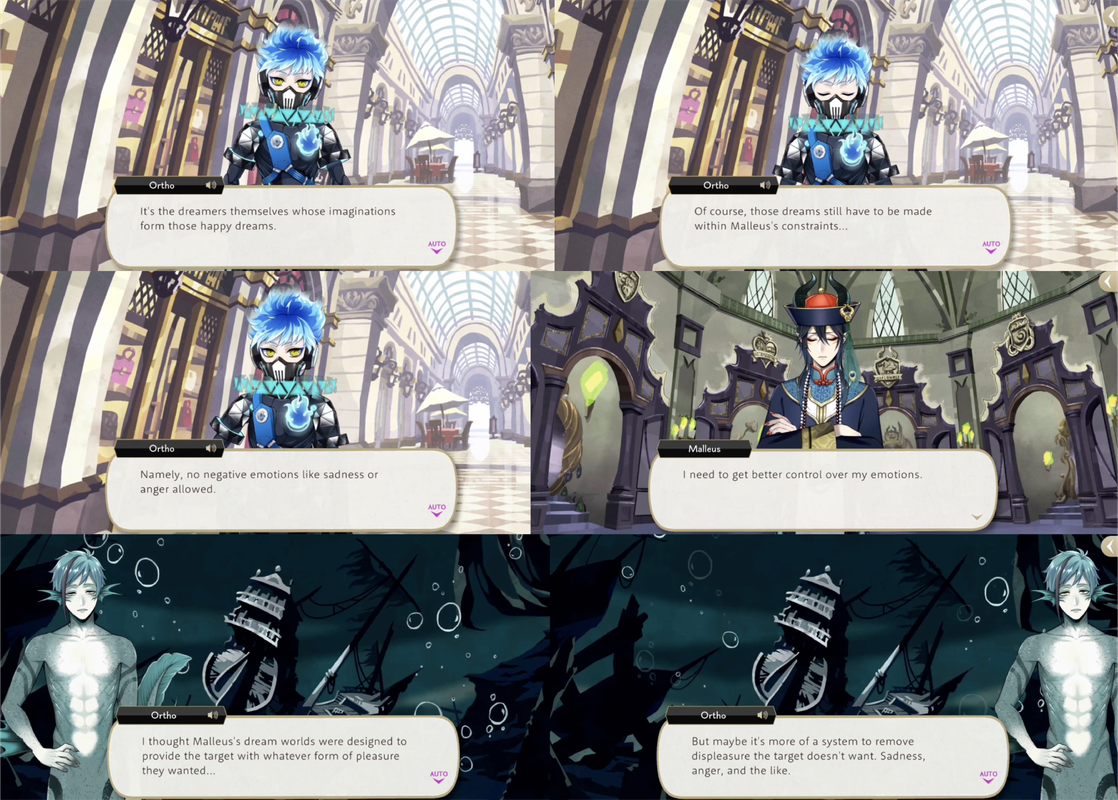
Ortho: “It’s the dreamers themselves whose imaginations form those happy dreams. Of course, those dreams still have to be made within Malleus’s constraints…namely, no negative emotions like sadness or anger allowed.”
And there is someone else who is not allowed to feel any emotions like sadness or anger, lest something terrible happen.
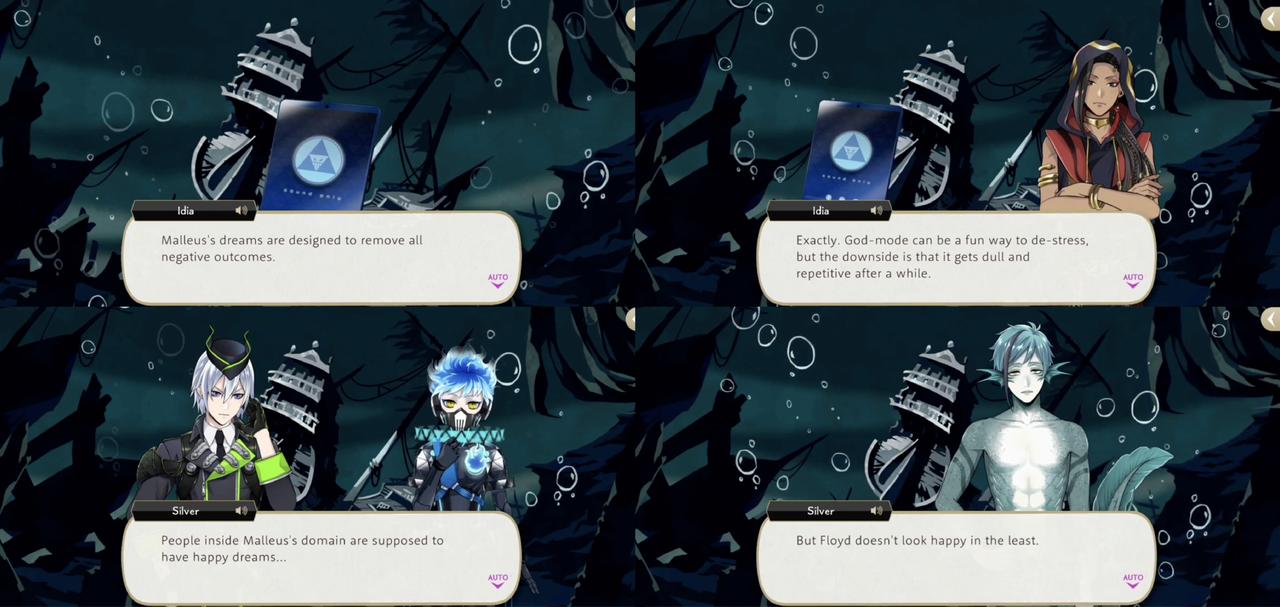
Ortho: “I thought Malleus’s dream worlds were designed to provide the target with whatever form of pleasure they wanted…But maybe it’s more of a system to remove displeasure the target doesn’t want. Sadness, anger, and the like.”
And this is not just speculation, with Sebek and Silver coming to the same conclusion:
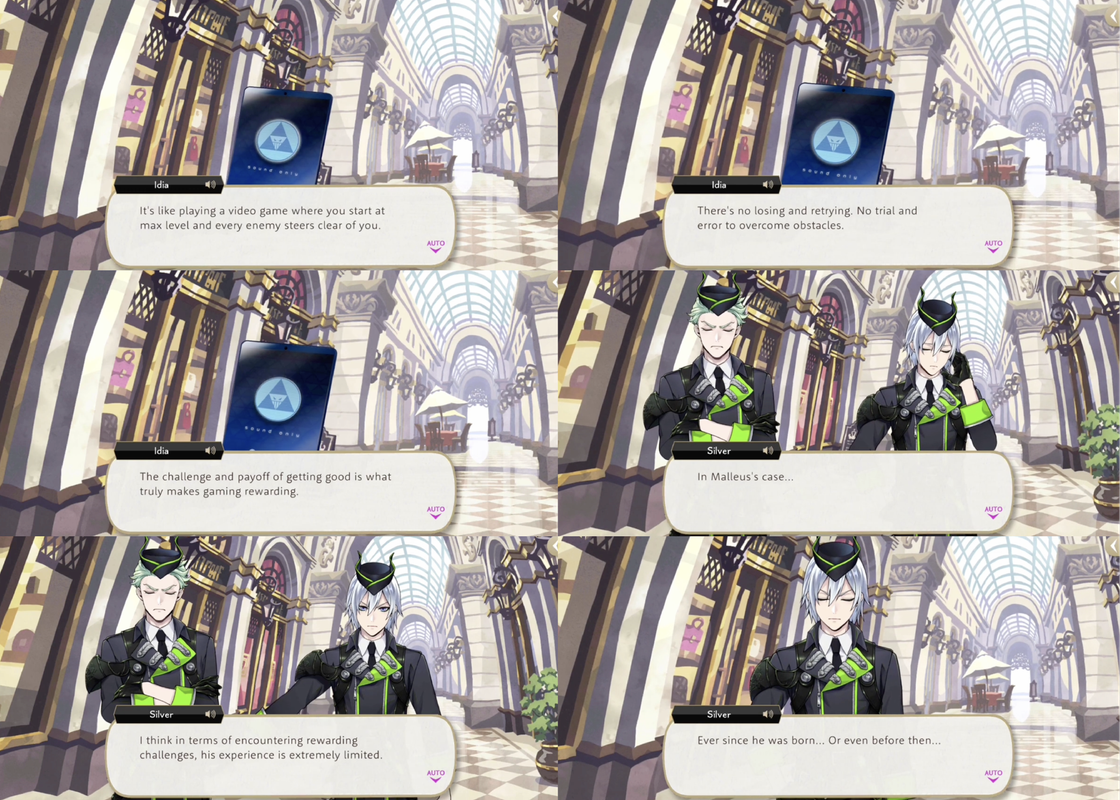
Idia: “It’s like playing a video game where you start at max level and every enemy steers clear of you.There’s no losing and retrying. No trial and error to overcome obstacles. The challenge and payoff of getting good is what truly makes gaming rewarding.”
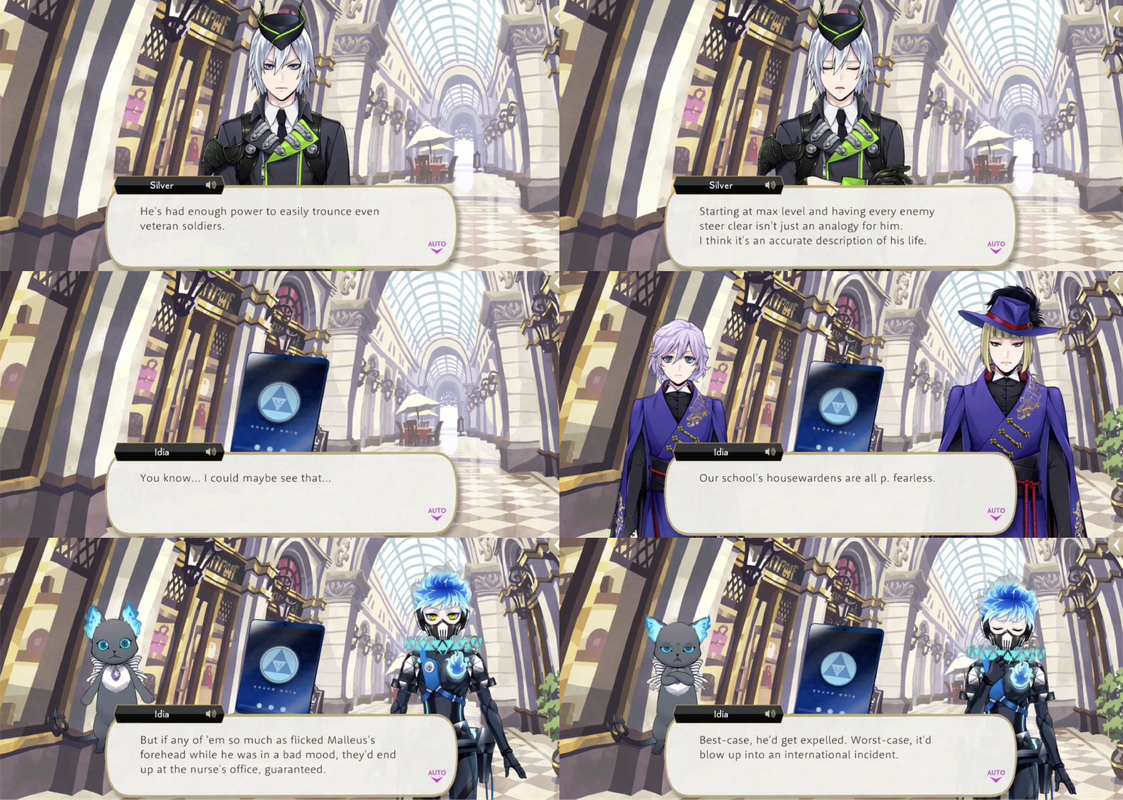
Silver: “In Malleus’s case…I think in terms of encountering rewarding challenges, his experience is extremely limited. Ever since he was born…or even before then..he’s had enough power to easily trounce even veteran soldiers. Starting at max level and having every enemy steer clear isn’t just an analogy for him. I think it’s an accurate description of his life.”
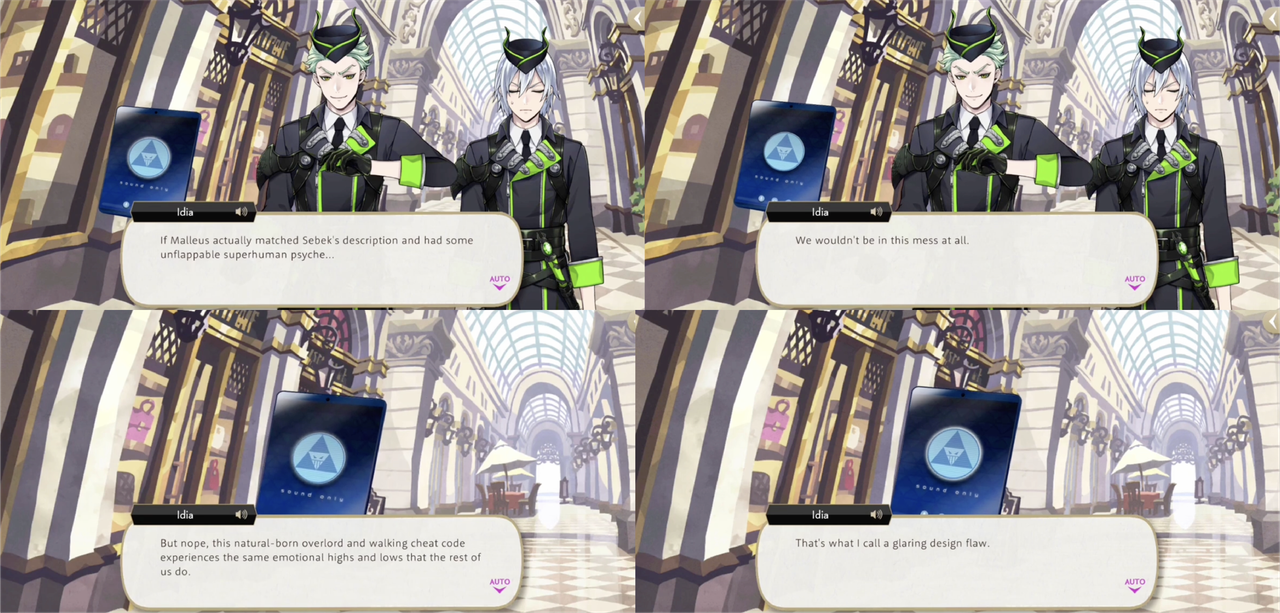
Idia: “If Malleus actually matched Sebek’s description and had some unflappable superhuman psyche…we wouldn’t be in this mess at all. But nope, this natural-born overlord and walking cheat code experiences the same emotional highs and lows that the rest of us do. That’s what I call a glaring design flaw.”
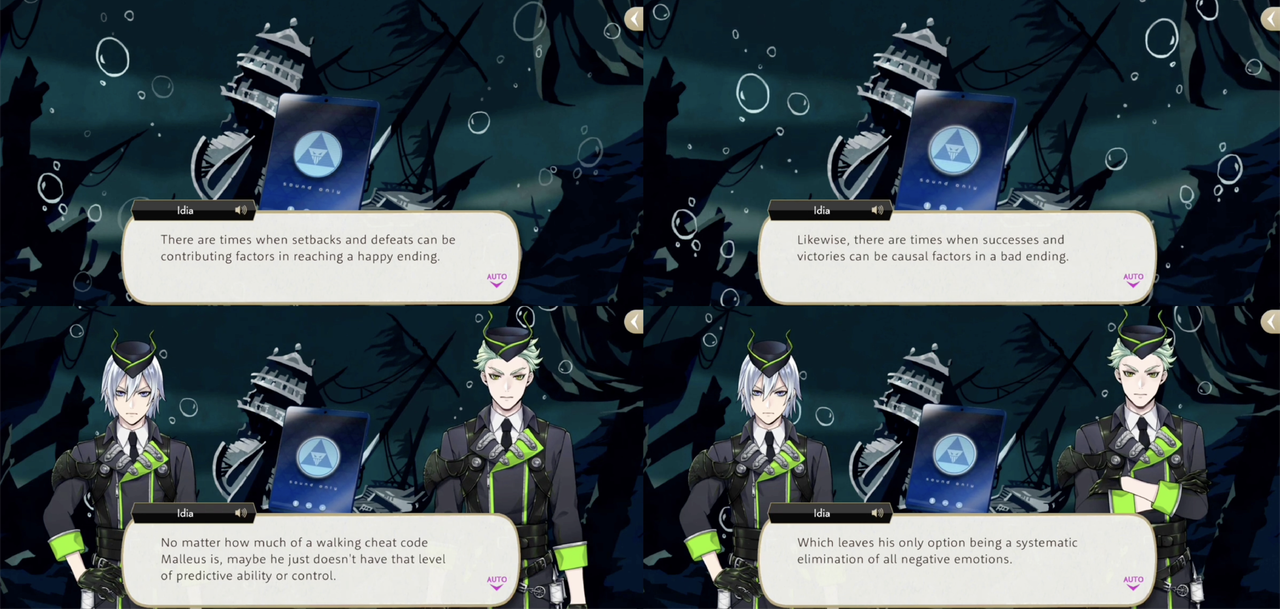
Idia: “There are times when setbacks and defeats can be contributing factors in reaching a happy ending. Likewise, there are times when successes and victories can be causal factors in a bad ending. No matter how much of a walking cheat code Malleus is, maybe he just doesn’t have that level of predictive ability or control. Which leaves his only option being a systematic elimination of all negative emotions.”
Malleus has never experienced setbacks or defeats, so he has no frame of reference for happiness that is derived from them. It is beyond Malleus’ ability to imagine, and we have seen the dreams limited by Malleus’ imagination before: Lilia’s, where Malleus was unable to interfere in a timeline before his own birth.
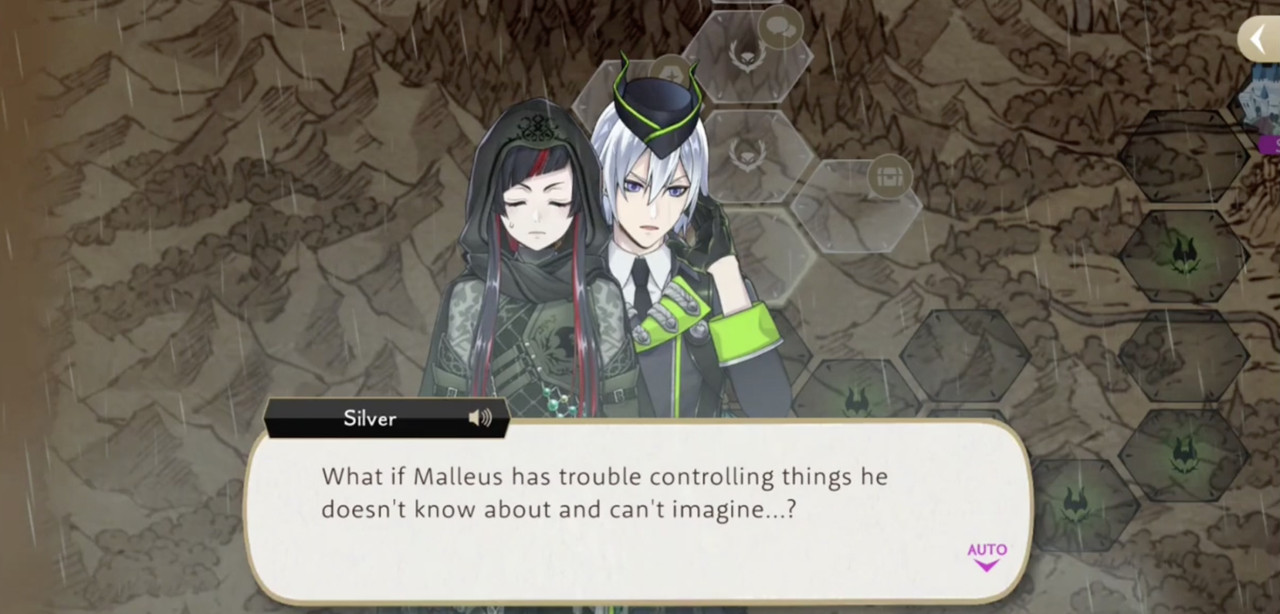
Silver: “What if Malleus has trouble controlling things he doesn’t know about and can’t imagine…?”
We are still learning the rules of the dreams as the characters themselves do not understand what is happening and are providing us with information through trial and error, and there is still more information to come on EN.
But here are some of the rules thus far:
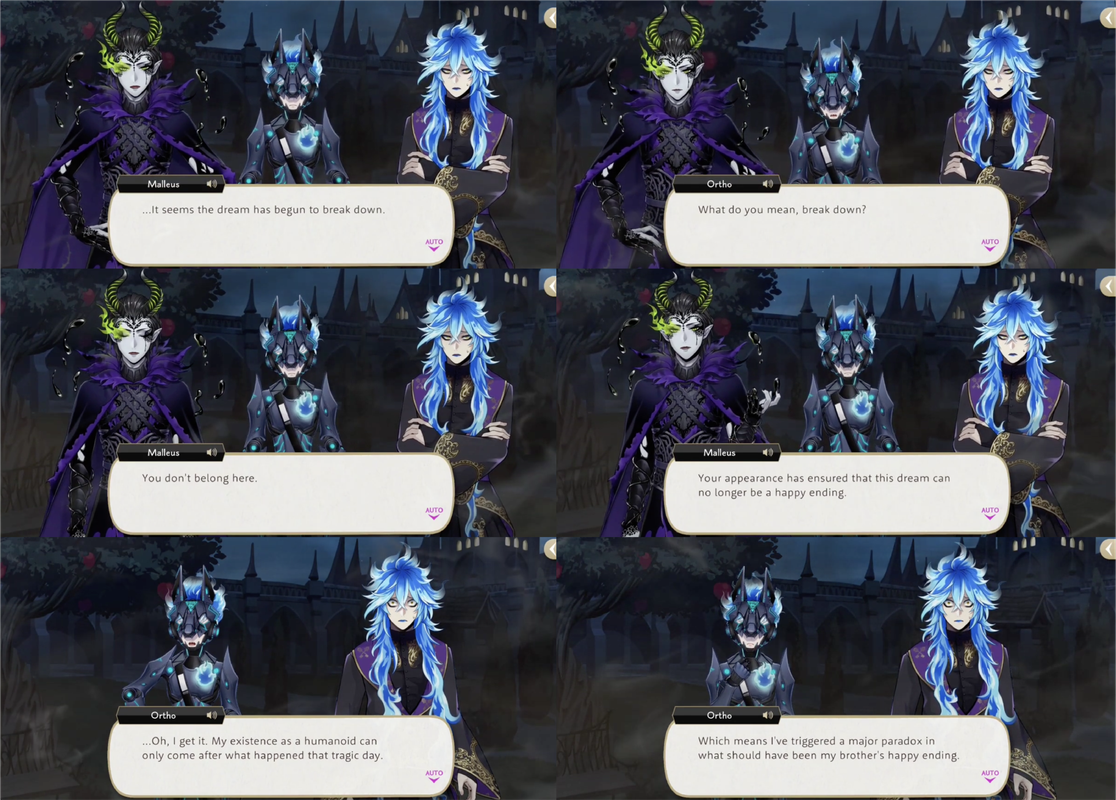
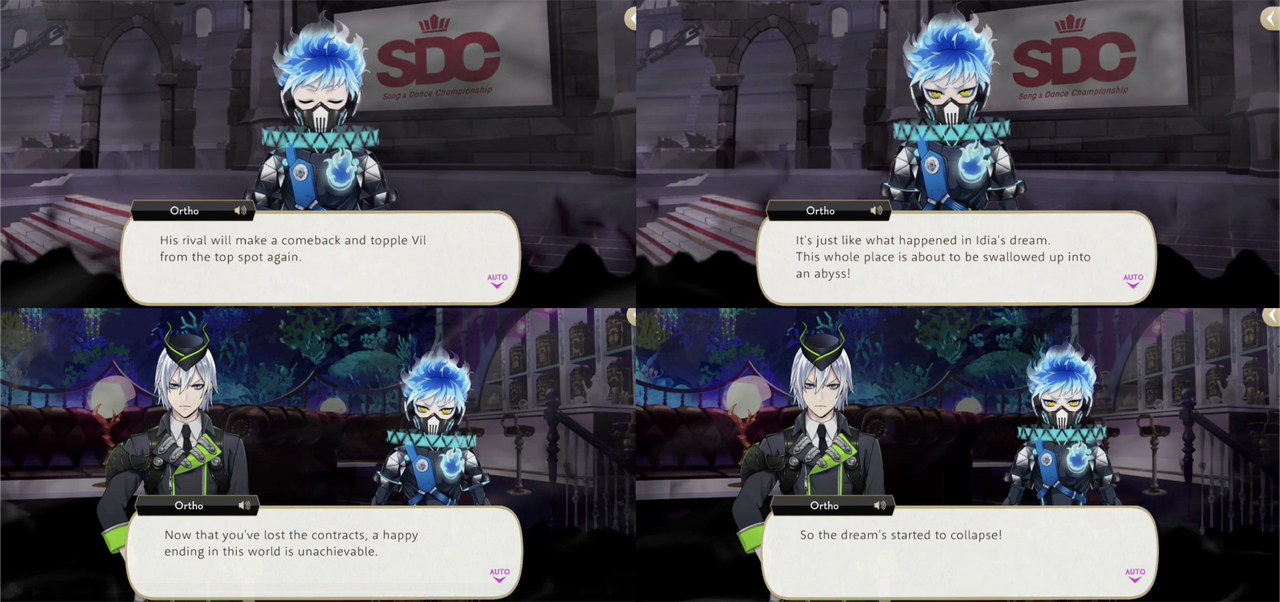
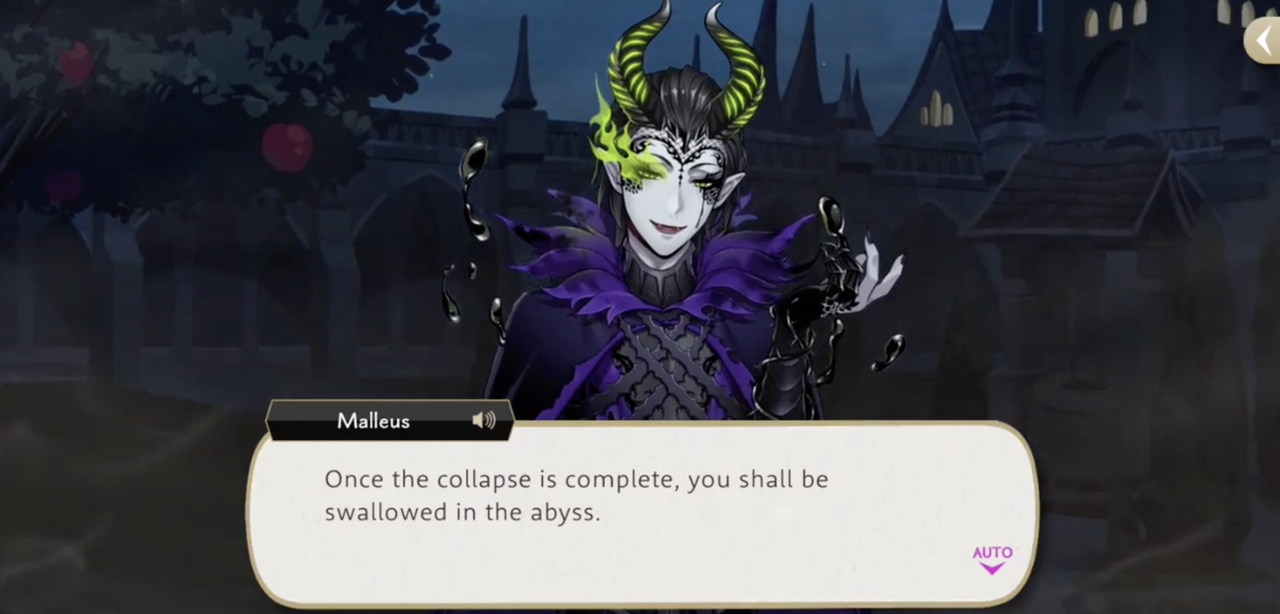
1. Dreams break down when a happy ending becomes impossible, at which point everything is swallowed into an abyss (hence the name of Book 7 in the original game, “Lord of the Abyss,” and Malleus’ canonical incantation, “I, the king of the abyss,” changed on EN to “Lord of Malevolence”).

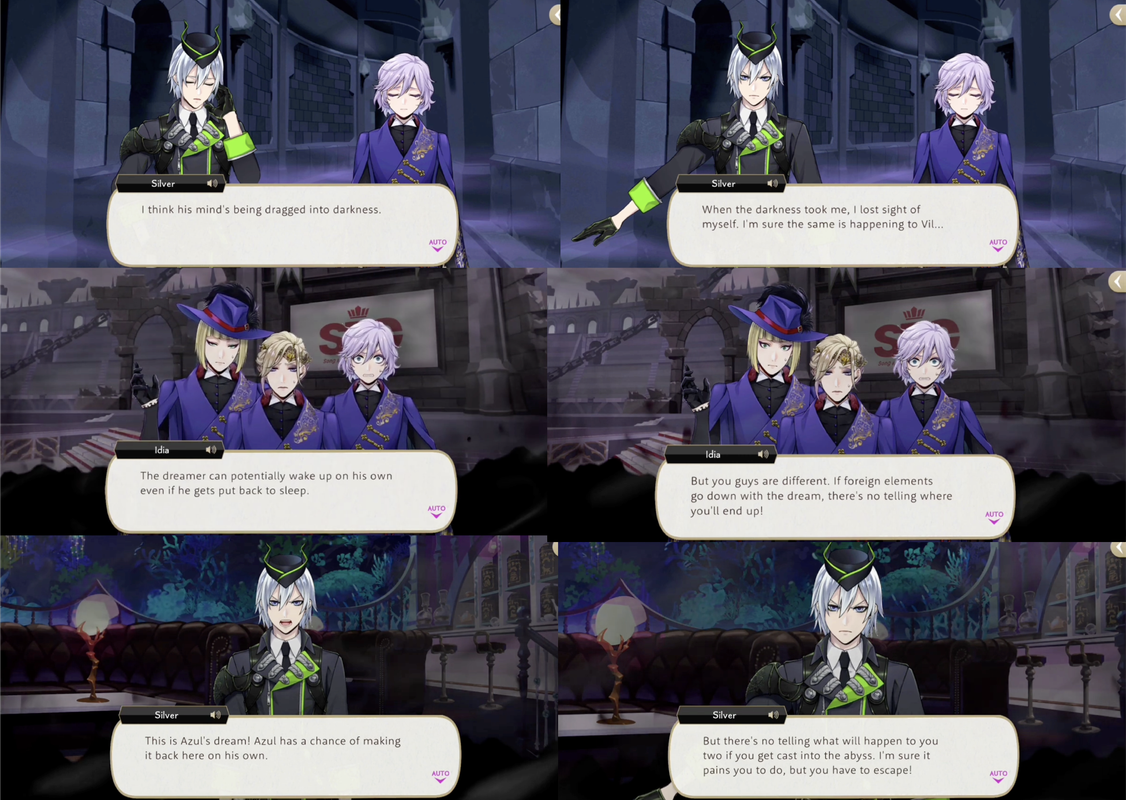
2. Idia says that once swallowed by the abyss the dreamer can potentially wake up on their own but there is no telling what may happen to foreign elements
(We have possibly seen successful examples of “foreign elements” being swallowed into the abyss and surviving, with both Silver and Lilia having their abysses invaded by others, but Idia has not.)
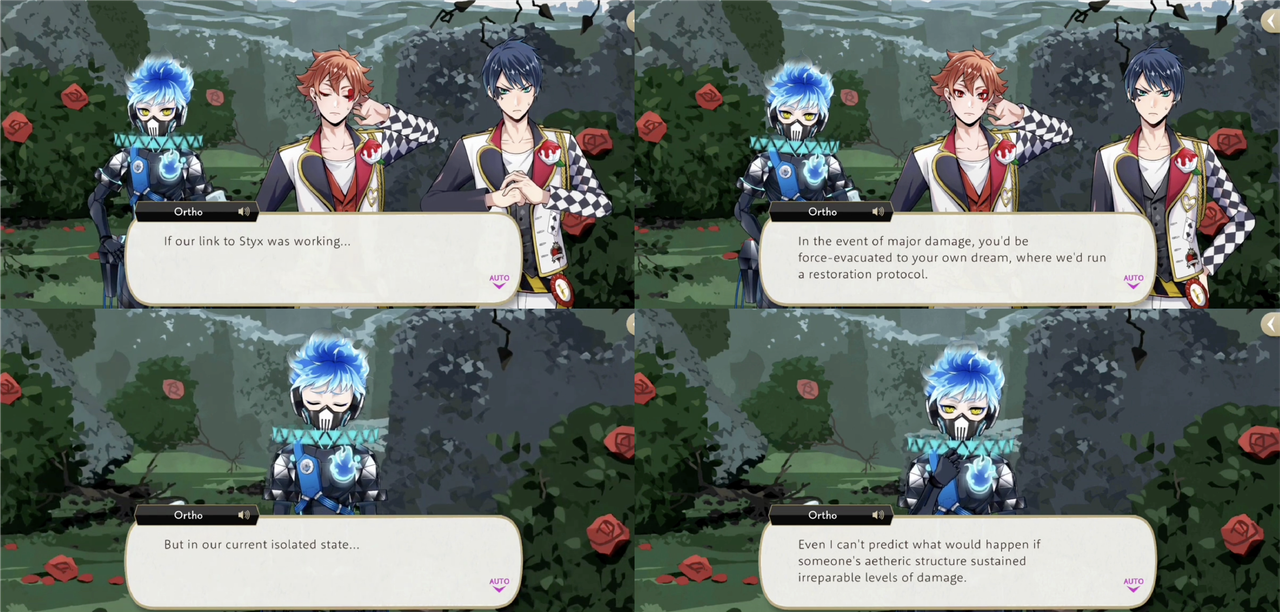
Ortho says that, in the event of the dream-jumpers taking on major damage, they would normally be force-evacuated to their own dreams. Later he says that he cannot predict what would happen if someone’s aetheric structure sustained irreparable levels of damage inside of another person’s dream world without the ability to contact STYX.
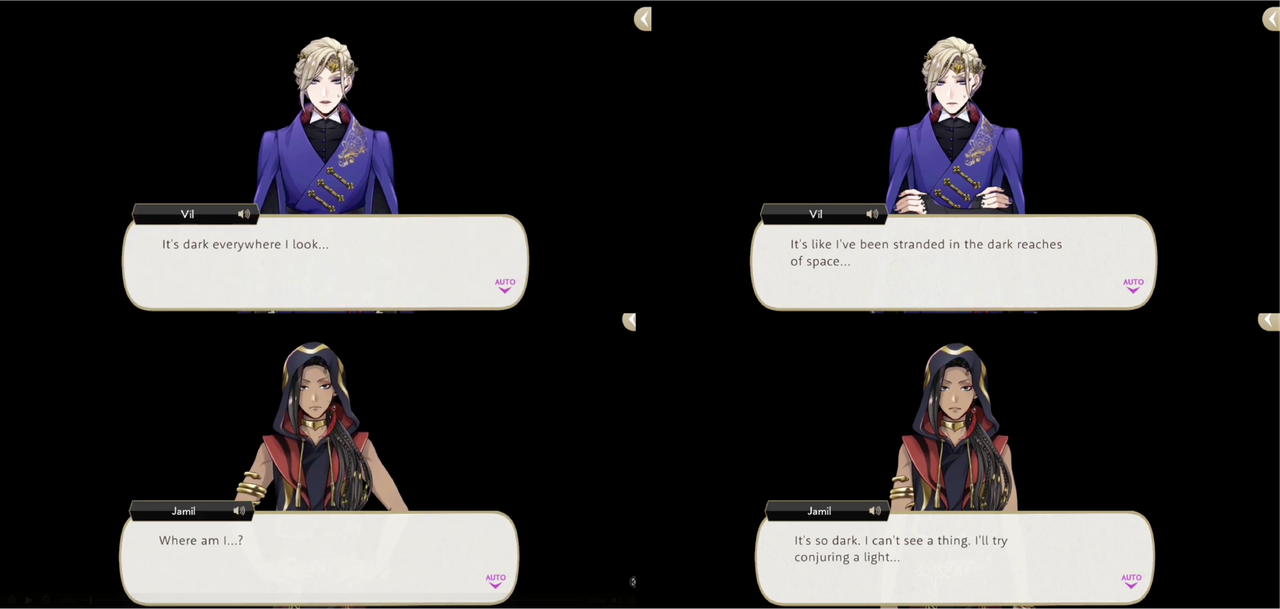
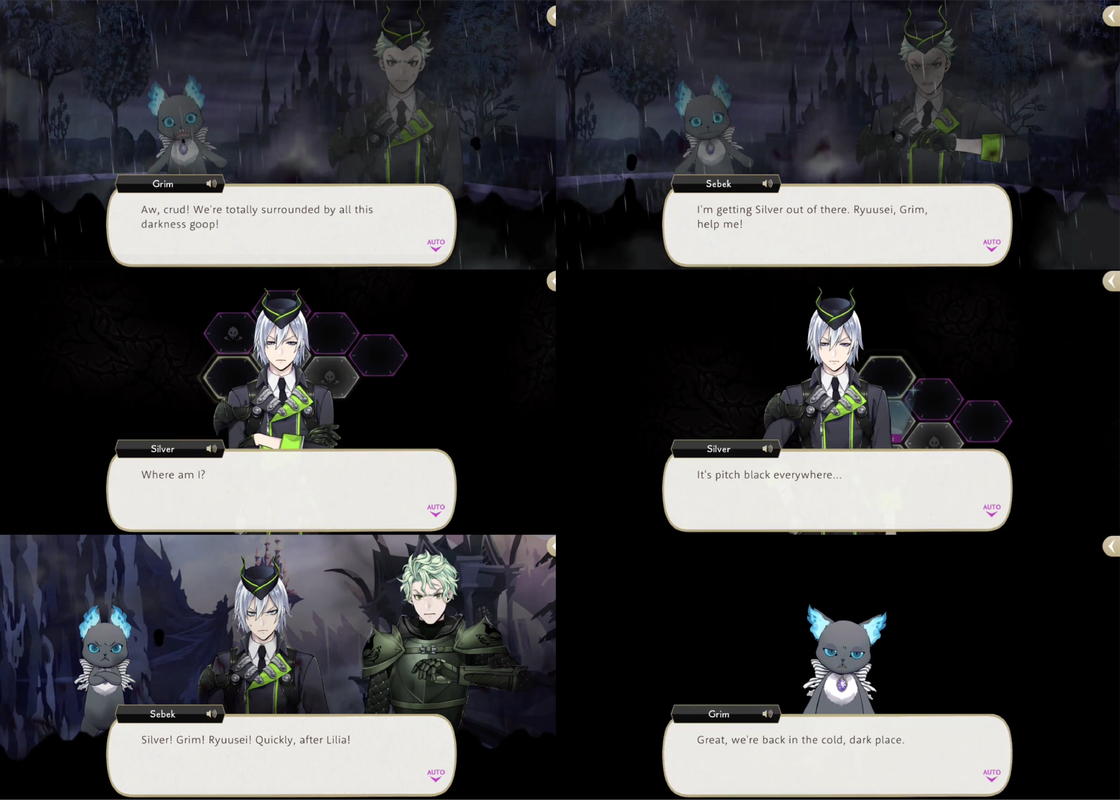
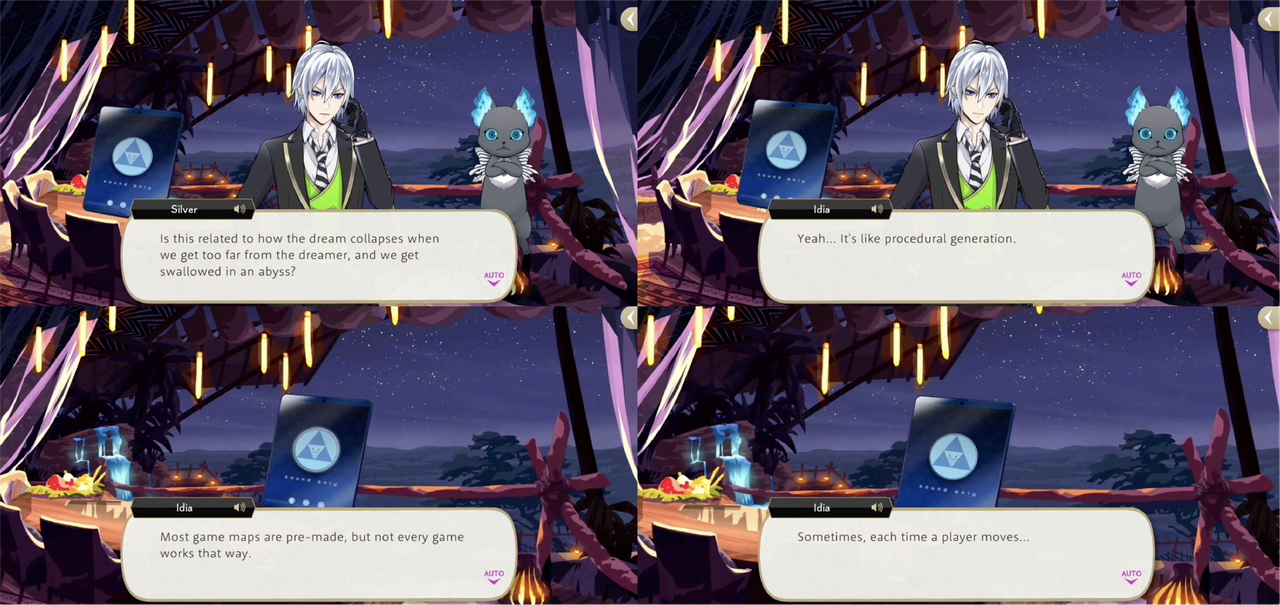
3. The expansiveness of a dream world is dictated by the imagination of the dreamer, not by Malleus, and outsiders like Silver can get swallowed by an abyss if they get too far away from the dreamer when in the world.
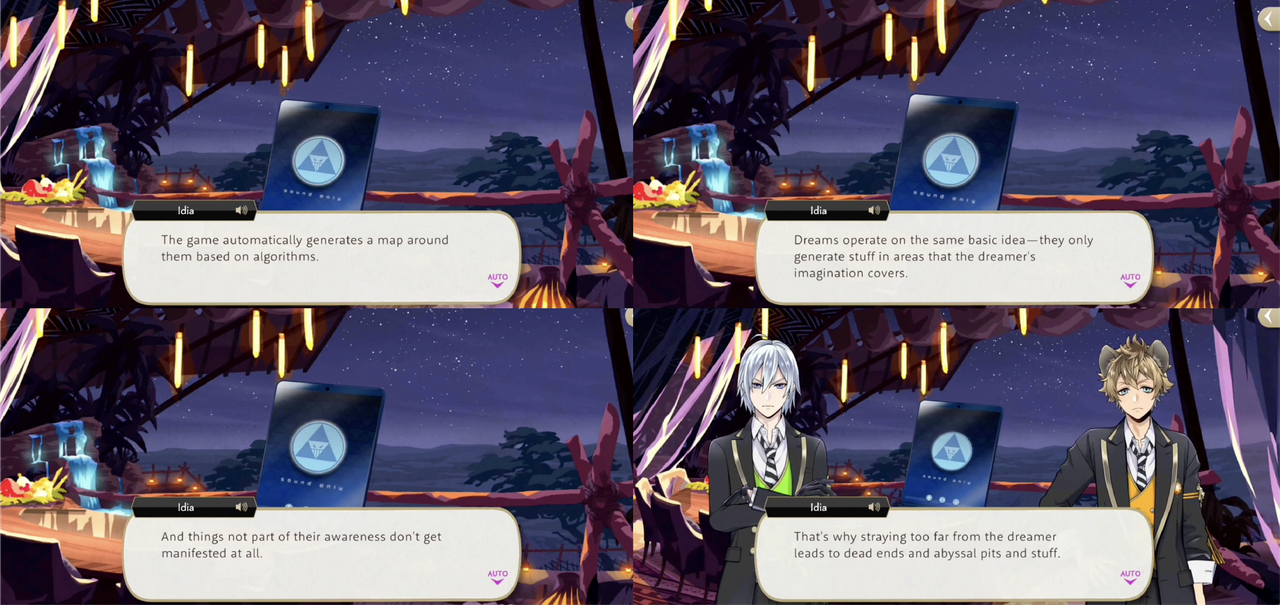
Idia explains that the dreamworlds operate on a system similar to procedural generation: “They only generate stuff in areas that the dreamer’s imagination covers. And things not part of their awareness don’t get manifested at all.”
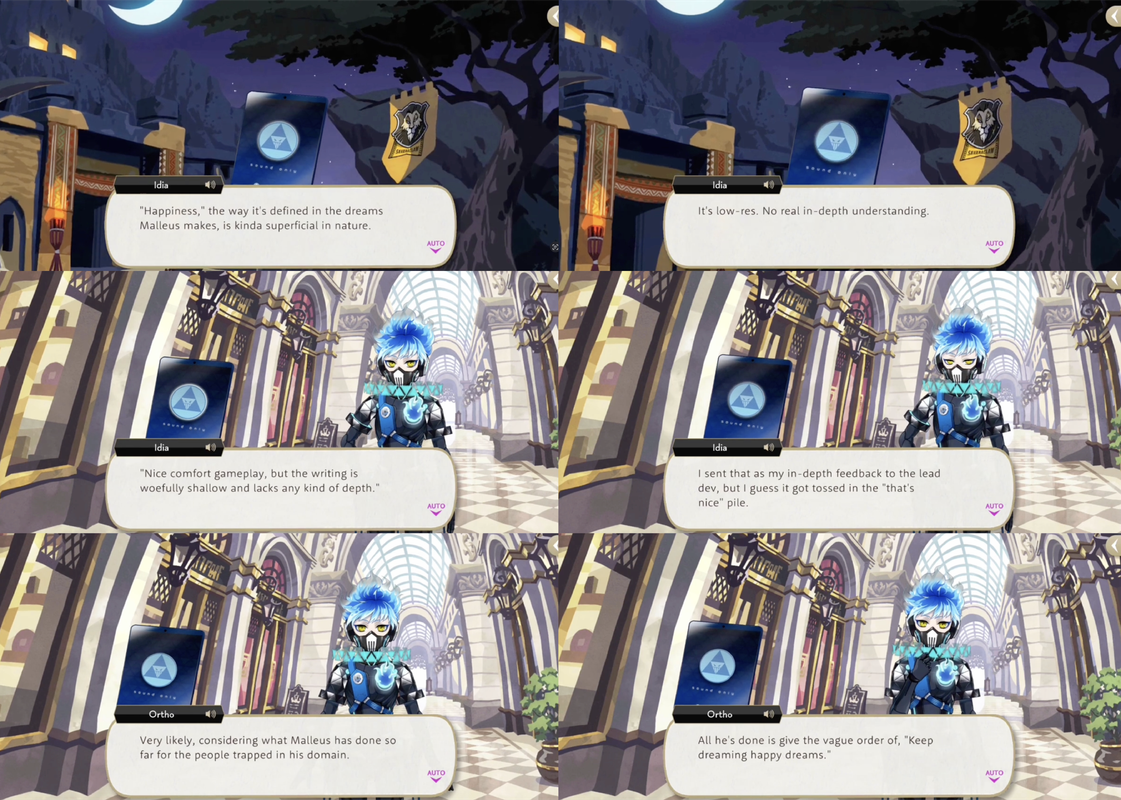
4. The “happiness” in the dreams is superficial, as though following the vague order of “keep dreaming happy dreams,” possibly due to Malleus’ limited understanding of the concept of happiness.
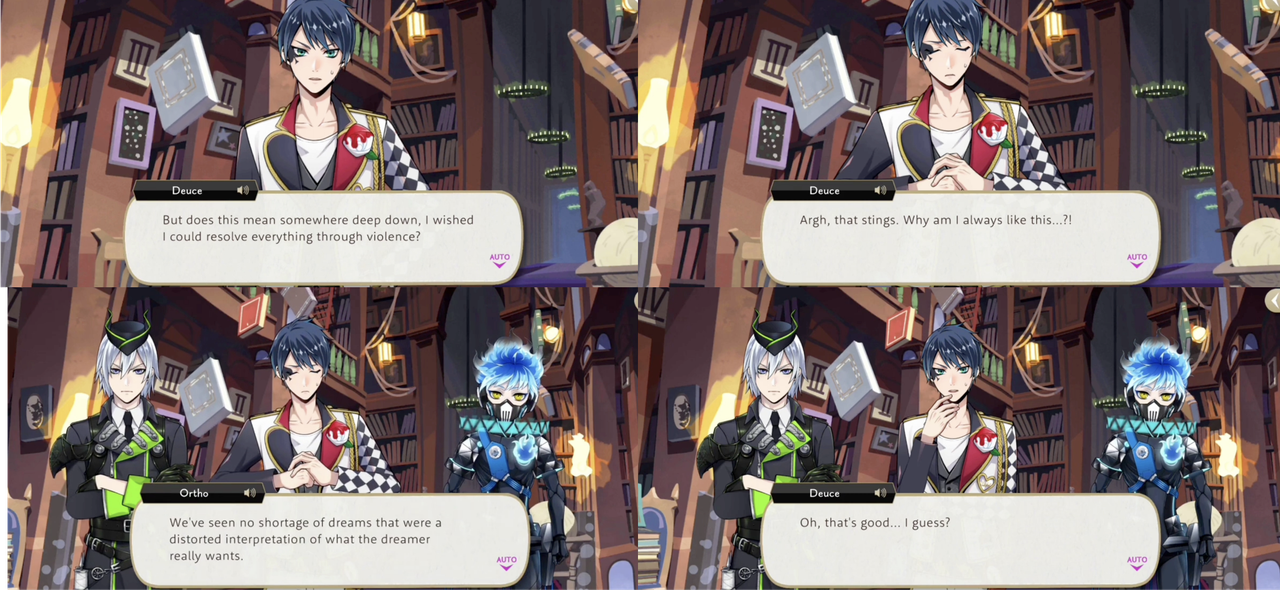
It is also inaccurate: when Deuce worries that his dream must mean that he secretly wishes he could resolve all his problems through violence Ortho assures him, “We’ve seen no shortage of dreams that were a distorted interpretation of what the dreamer really wants.”
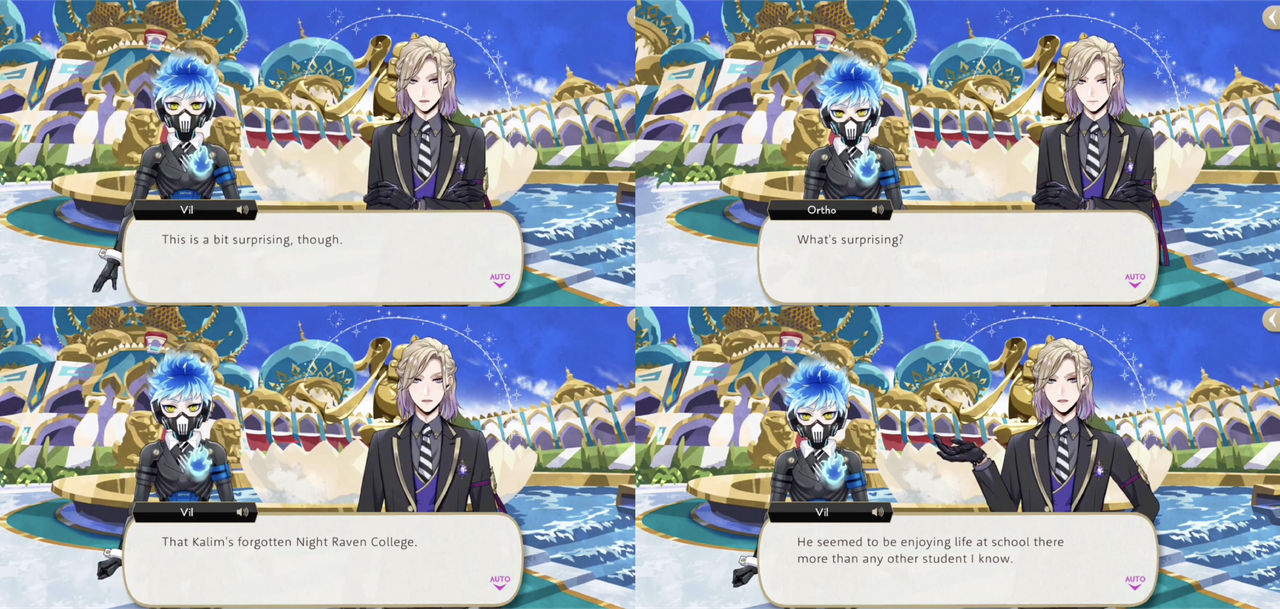
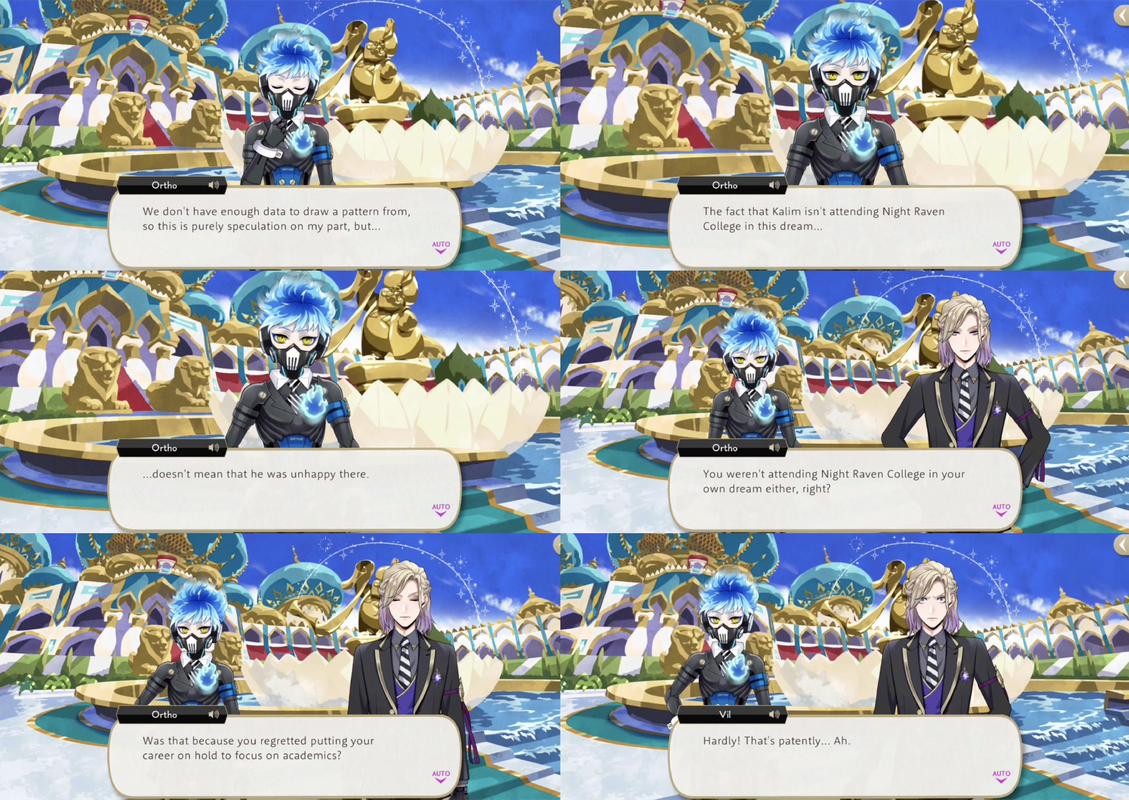
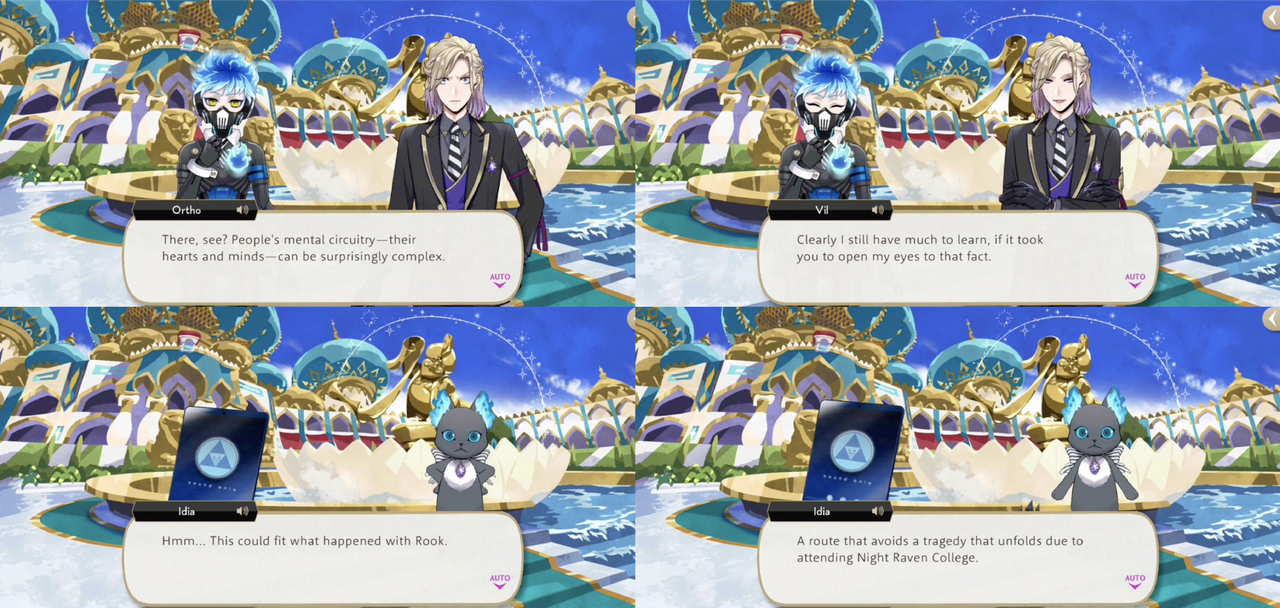
5. Despite the “superficial” nature of the dreams, Ortho explains that “people’s mental circuity—their hearts and minds—can be surprisingly complex,” resulting in the dreams coming up with creative ways to please the dreamers
(Example: Kalim attending a school that isn’t NRC not because he is unhappy at NRC and Rook dreaming of NRC without Vil not because he wants Vil out of NRC, but because they were both avoiding tragedies that happened there.)
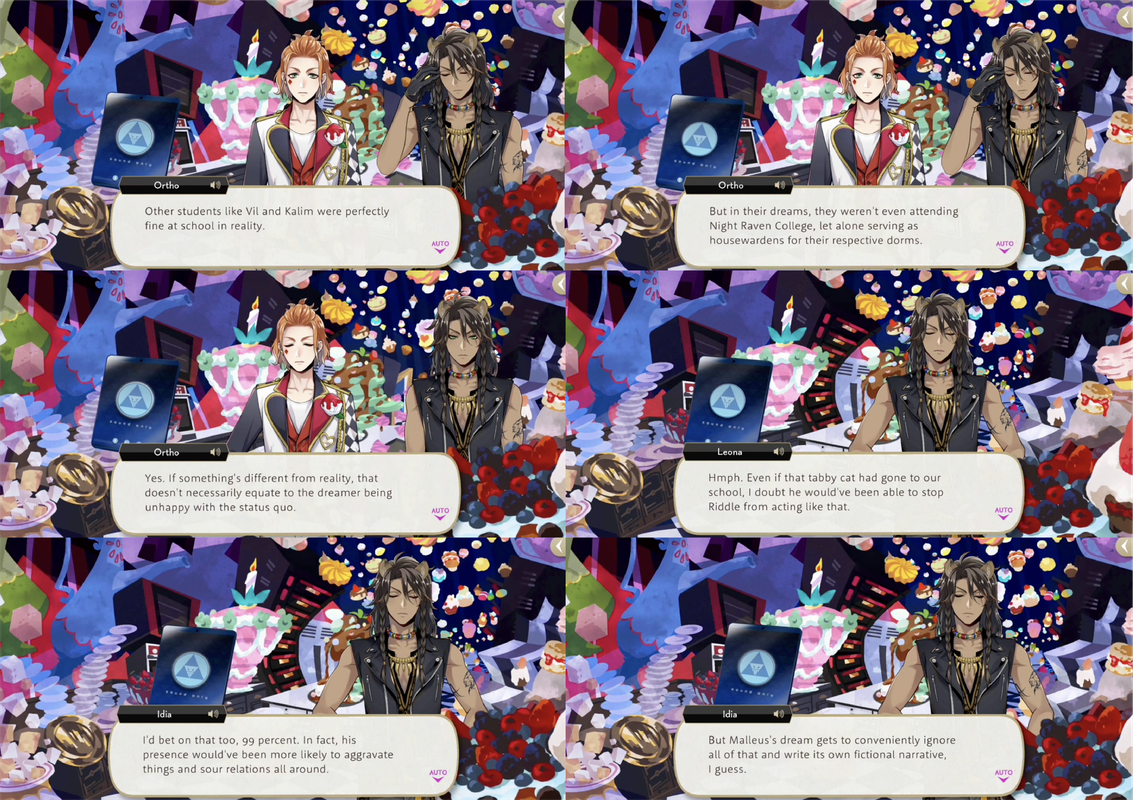
Ortho explains that something in a dream being different from reality doesn’t necessarily mean that the dreamer is unhappy with the status quo.
Trey’s dream makes Chenya into Housewarden of Heartslabyul to avoid Riddle’s overblot, and when Leona points out that Chenya likely would not have been able to change the outcome in reality Idia agrees, saying: “Malleus’ dream gets to conveniently ignore all of that and write its own fictional narrative, I guess.”
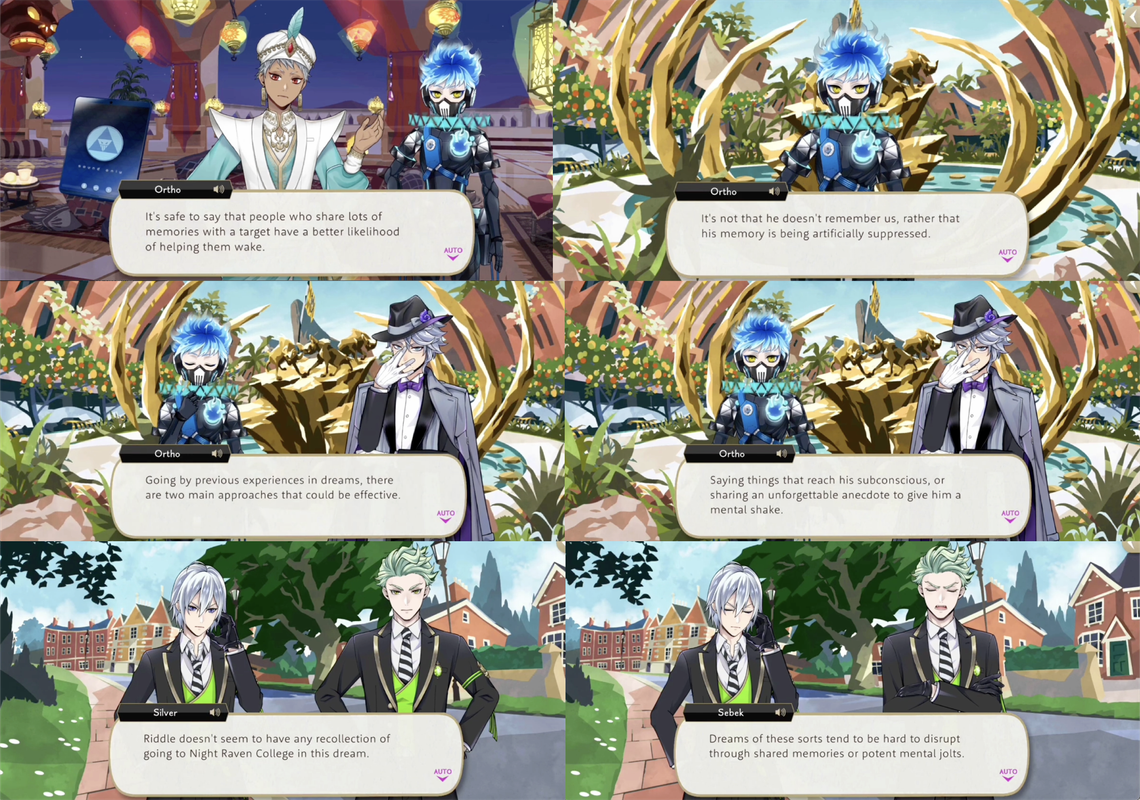
6. People who shares lots of memories with a dreamer have a better likelihood of helping them wake up, even if the dreamer themselves does not remember the experiences they shared in reality. The dreamers’ memories are not removed, only artificially repressed.
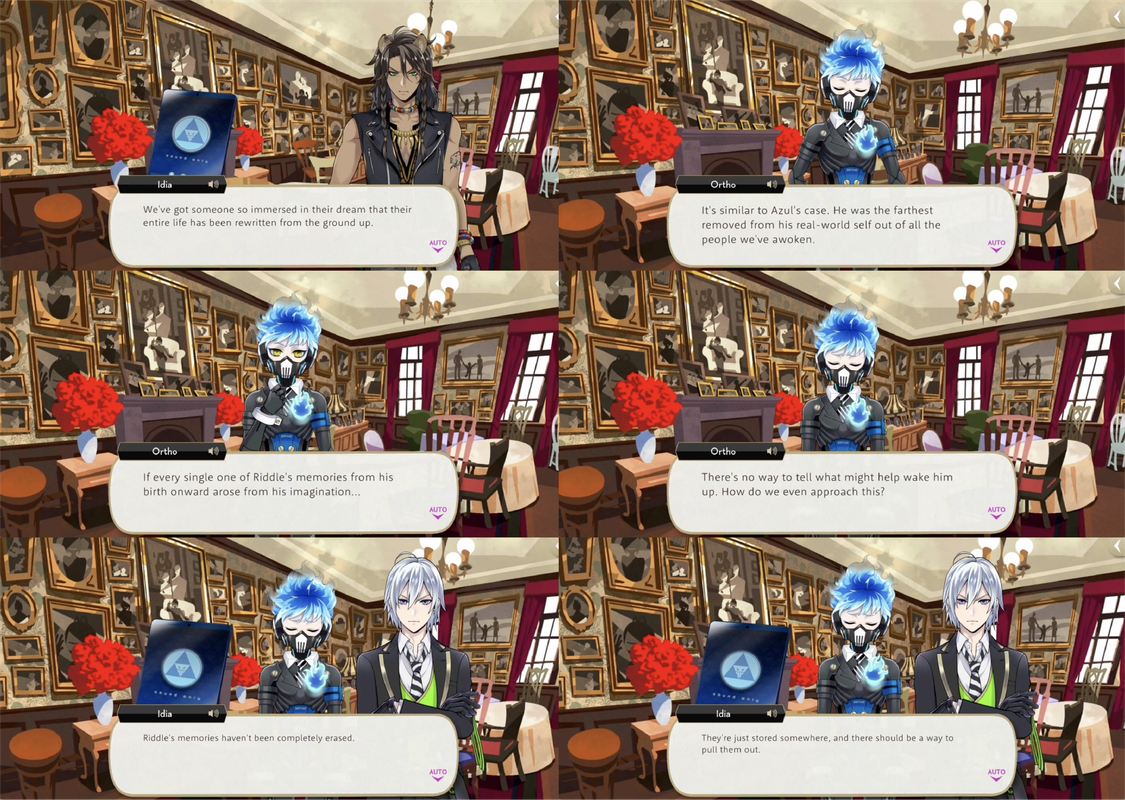
Riddle’s dream is the most extreme example of this, with his entire life rewritten from the ground up and the memories he thinks he has having been born of his own imagination.
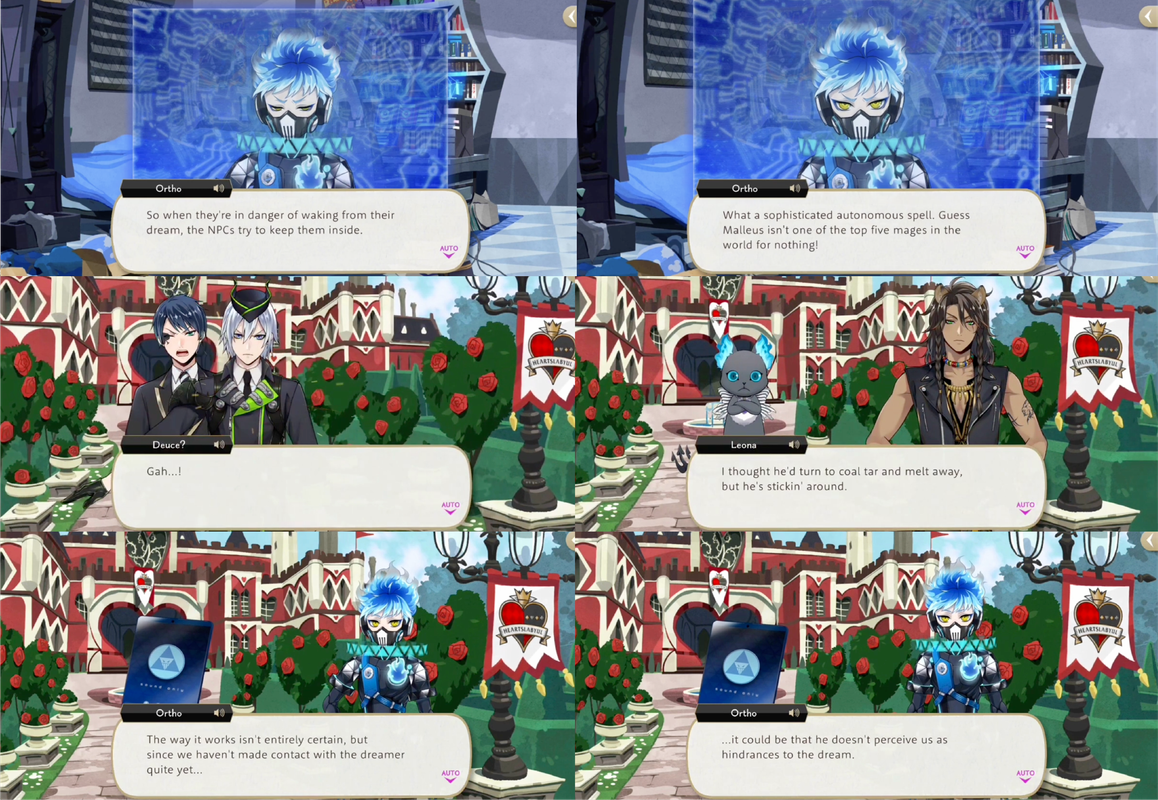
7. When someone is in danger of waking from their dream, the “NPCs” will try to keep them inside. Defeating these NPCs in battle will typically dissipate them into darkness, but not always: in Cater’s dream a dream-version of Deuce loses a fight to the dream group but retains his physical form as a Deuce Spade doppelgänger.
Ortho suggests that it might be because they hadn’t made contact with the dream at the time, so they had not yet been perceived as hindrances to the dream.
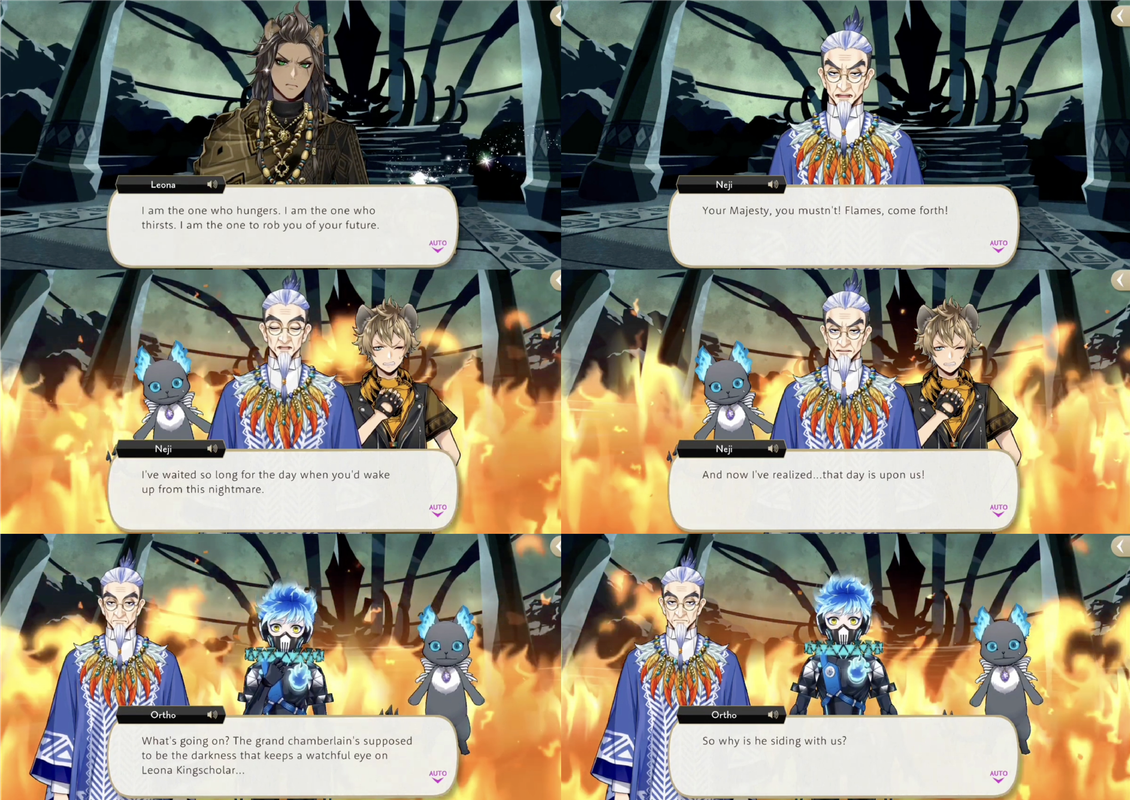
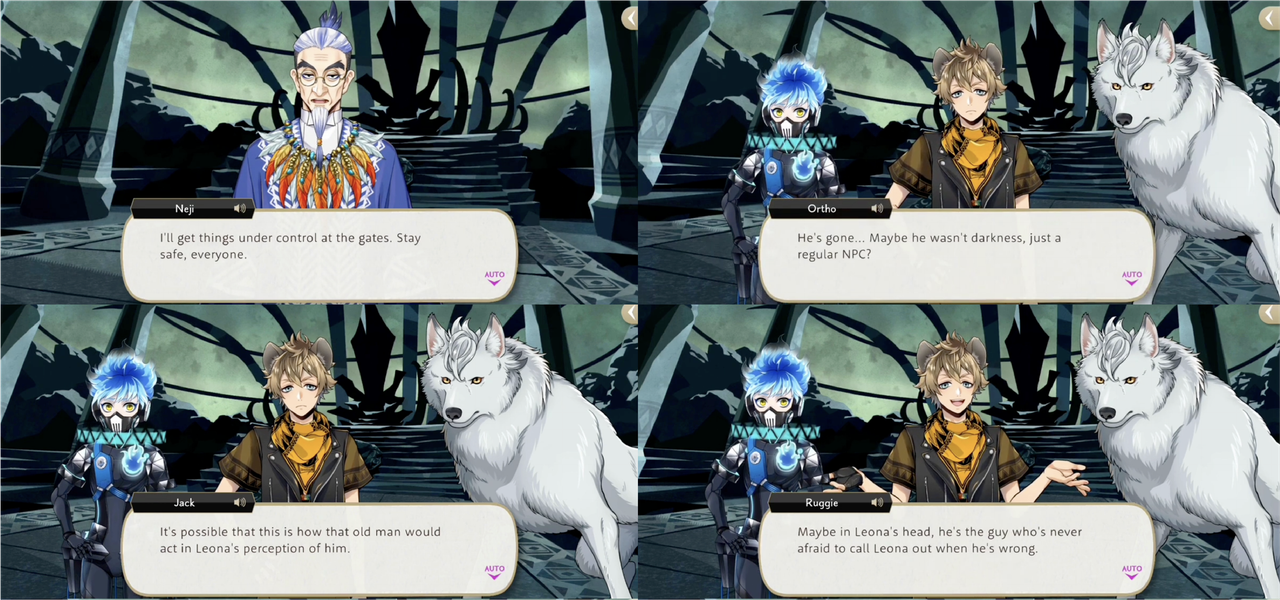
Not all NPCs are created equal: in Leona’s dream we see an example of an NPC made from Leona’s mind, not from the darkness, who rescues the dream group from Leona himself and had apparently been awaiting the opportunity to awaken Leona from his dream in direct contrast to Malleus’ efforts.
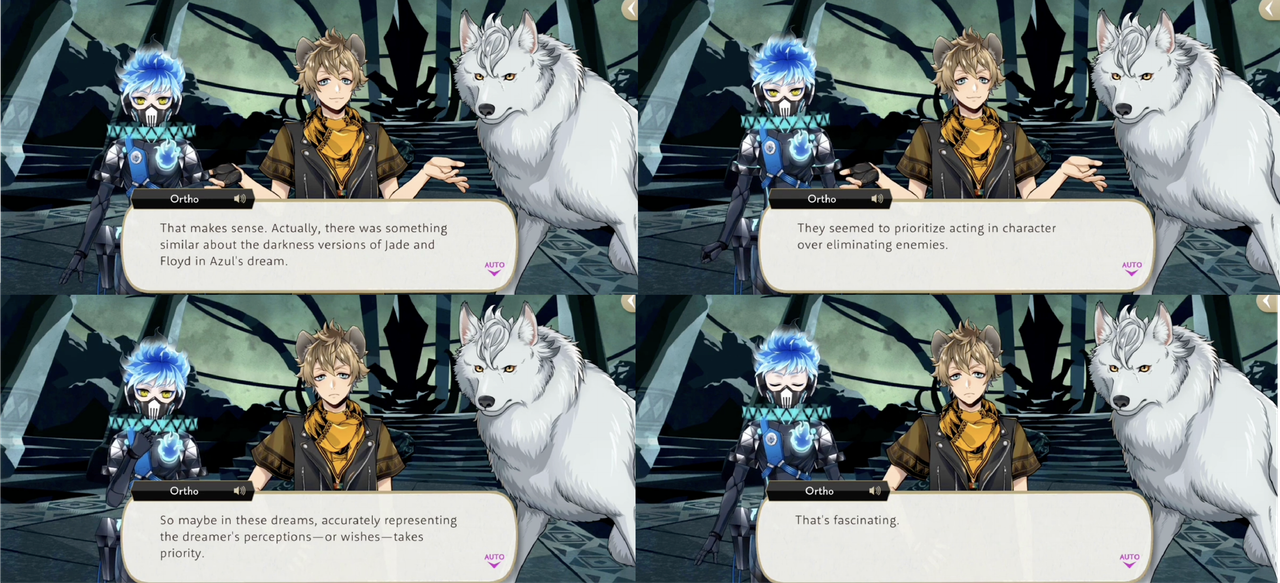
Ortho theorizes that NPCs like Kifaji, Jade and Floyd prioritized acting in character over eliminating enemies, “So maybe in these dreams, accurately representing the dreamer’s perceptions—or wishes—takes priority.”
8. Dreams can enhance someone’s abilities based on the dreamer’s interpretation of them. In Jack’s dream, for example, the dream group theorizes that Jack’s admiration for Leona will make dream-Leona even stronger than Leona is in reality.

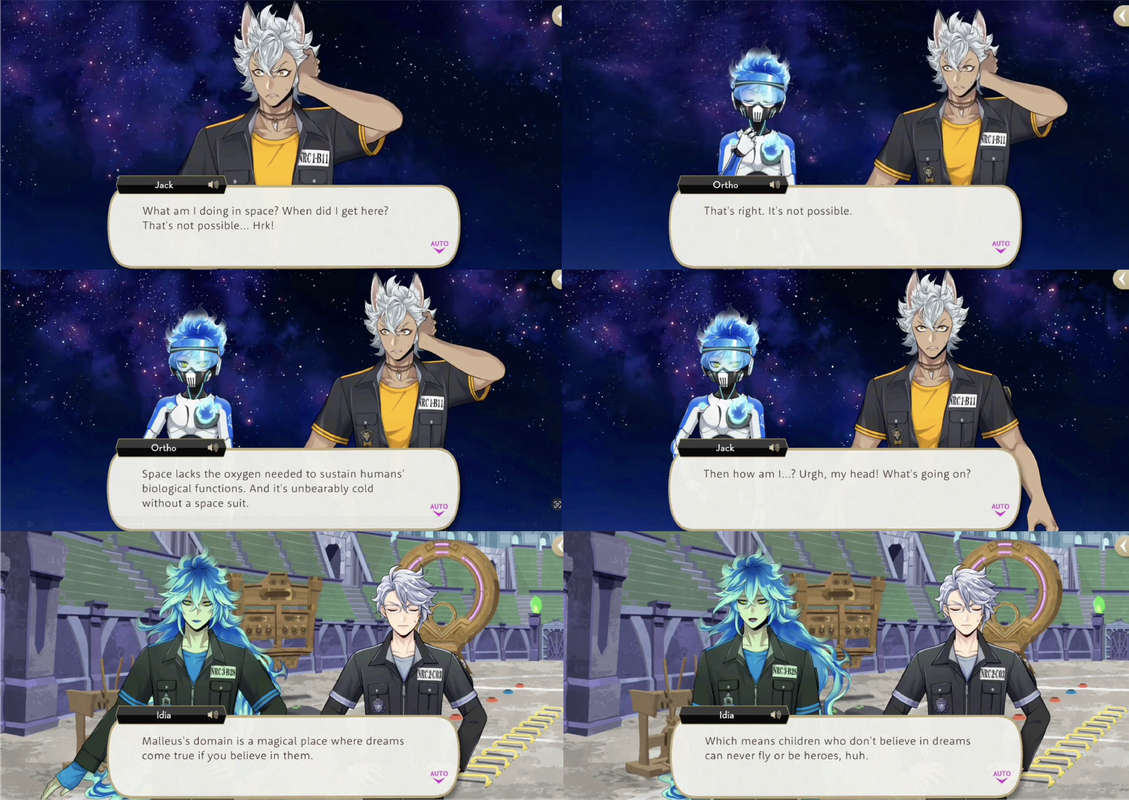
9. Dreamworlds are limited by a certain degree of logic. Idia explains, “Malleus’s domain is a magical place where dreams come true if you believe in them. Which means children who don’t believe in dreams can never fly or be heroes.”
Floyd became bored of Briar Valley in his dream when everyone was too weak to stand against him. When Sebek points out that he would be defeated by Malleus and the queen Floyd points out that a random person like him would never be able to meet royalty (Sebek: “Why are you suddenly thinking rationally?!”)
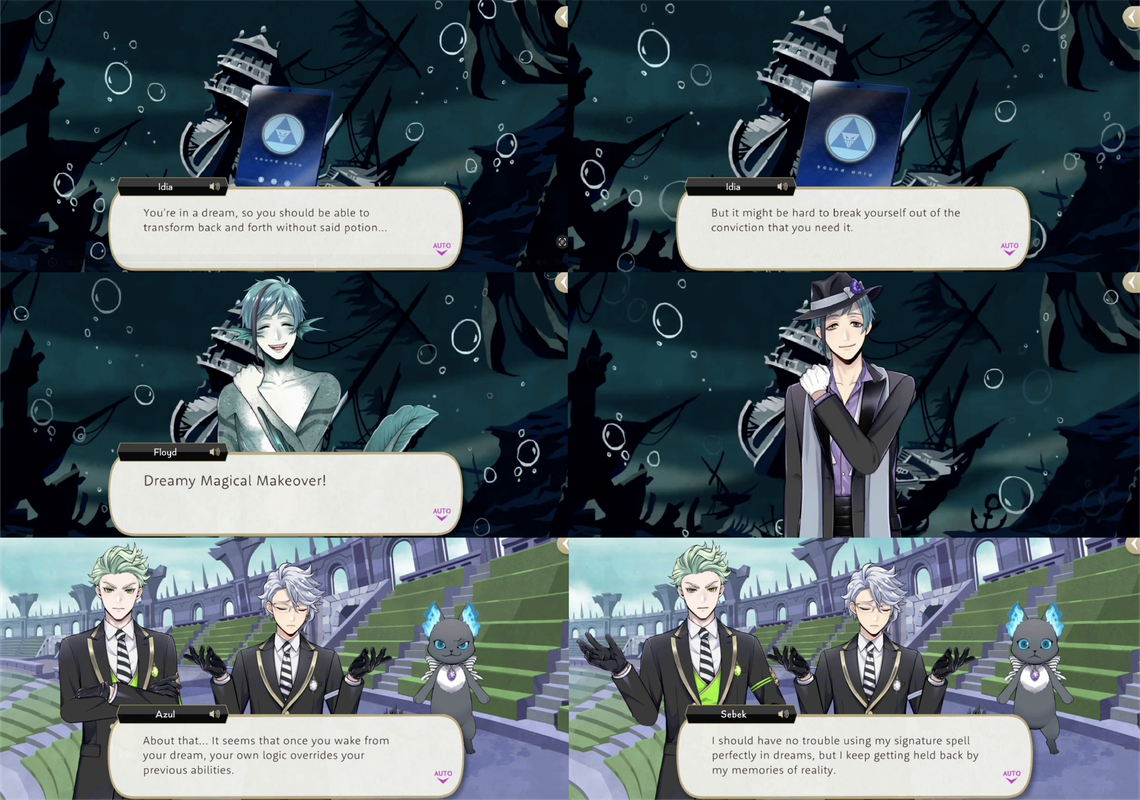
Idia explains that, in theory, Floyd should be able to change into his human form in a dream without a potion, but Floyd seems incapable of doing so due to his conviction that he cannot.
For this same reason Sebek is unable to use his unique magic properly and Trey is unable to imagine himself as being able to see without glasses, while Jack is awoken from his dream due to the logical fallacy of being able to chase Ortho into outer space.

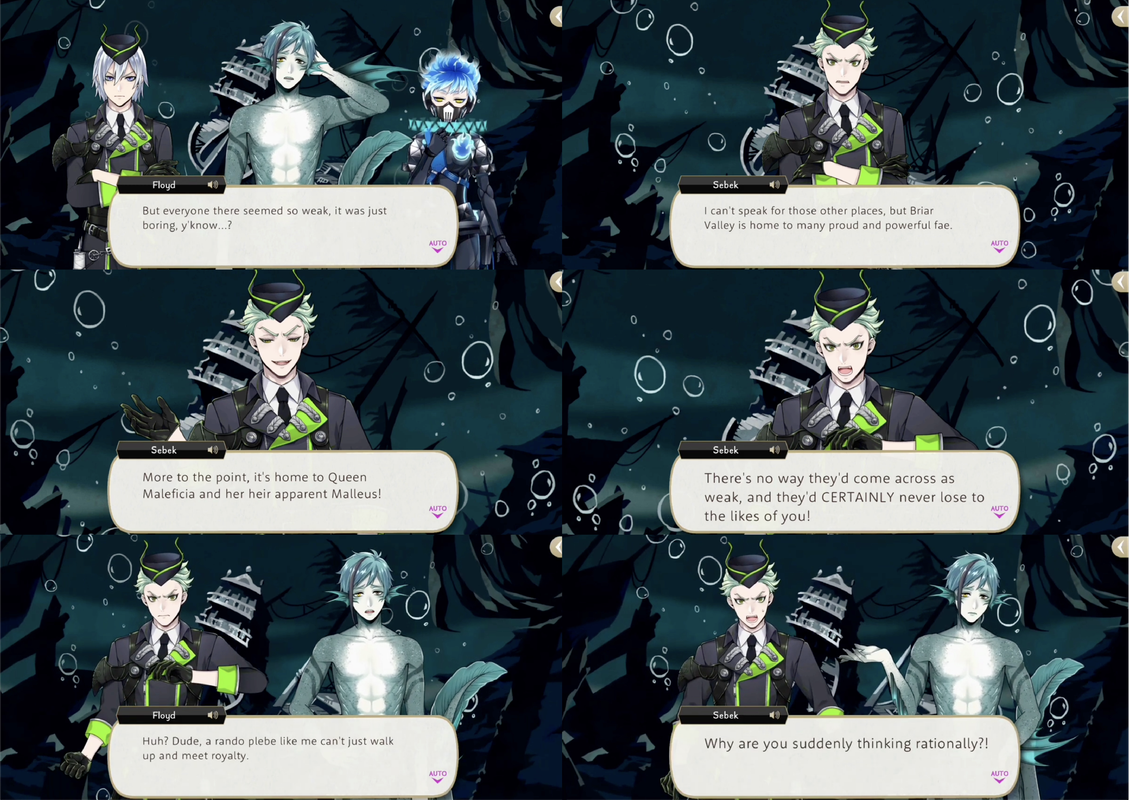
10. No one has a corporeal form in dreams, but dream-characters are capable of fooling Ortho’s ability to read aetheric structure: he falsely identifies a version of Cater created out of darkness as the real Cater.
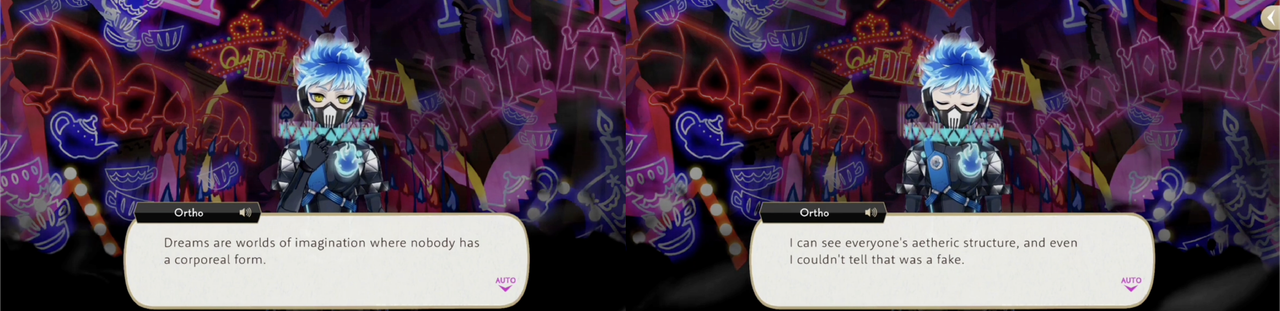
11. It is possible that consuming food in a dream aids in mental recovery.
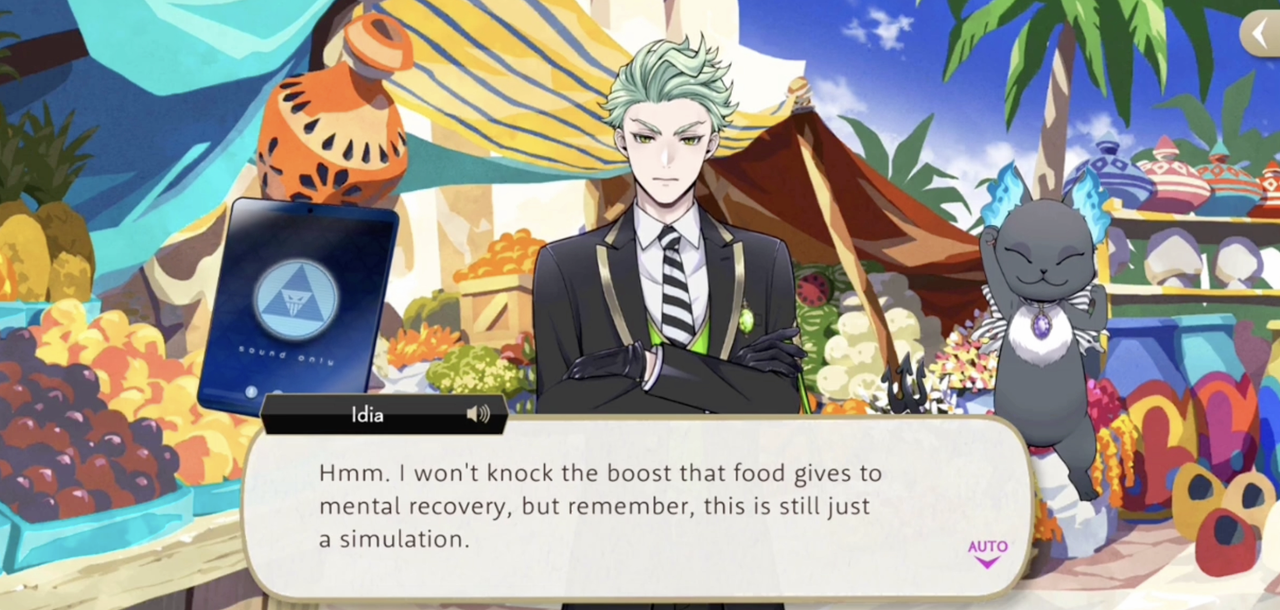
12. It is possible to run out of breath through exertion and feel pain when hit in a dream.

13. Malleus is possibly keeping the strong mages under tighter surveillance than others, with Idia and Vil being constantly attended by their dreams “GM” (human-Ortho for Idia, Neige for Vil).
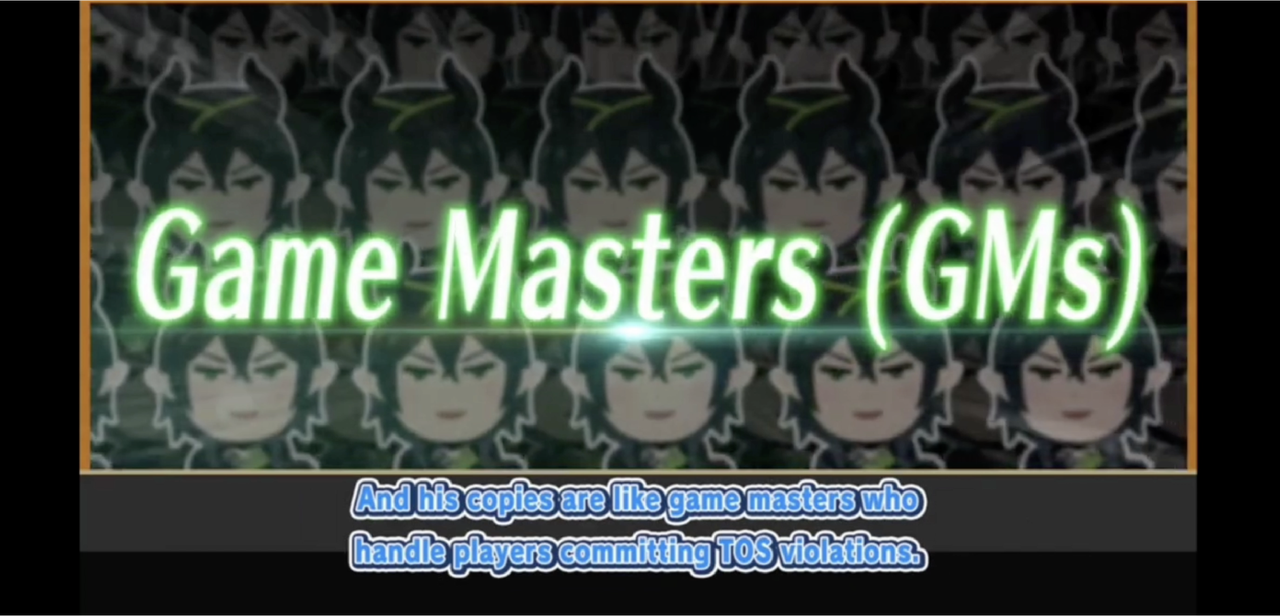
GMs are also described as Malleus’ “clones.” Though they do not physically look like him they are Malleus’ solution to being unable to include himself in dreams likes Vil’s without awakening Vil through the logical dissonance of Malleus Draconia watching over him.

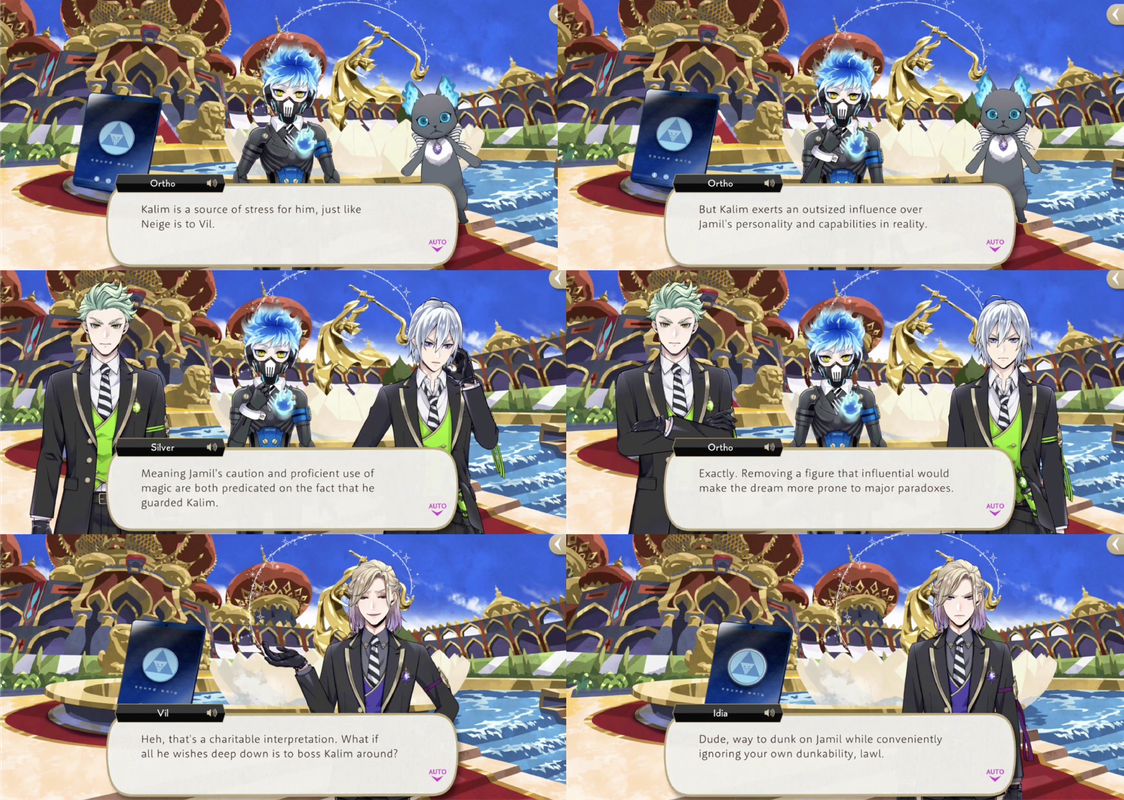
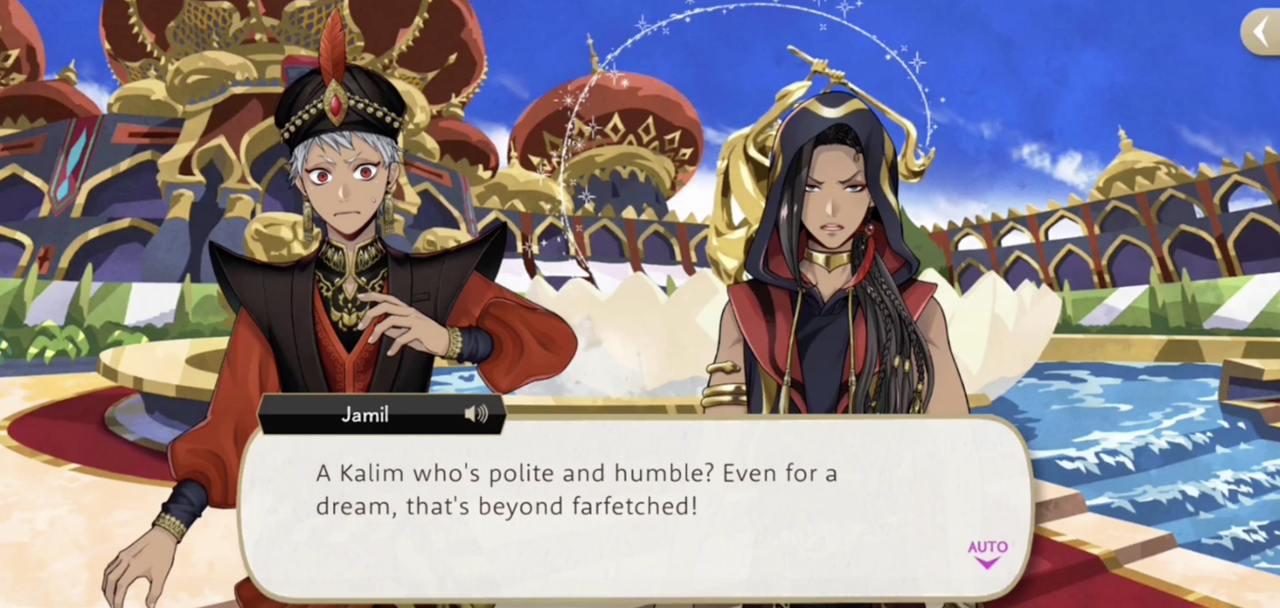
14. In instances where a real-world source of negativity is too much a part of who the dreamer is to separate them, their absence is likely to cause paradoxes and dream-breakdowns.
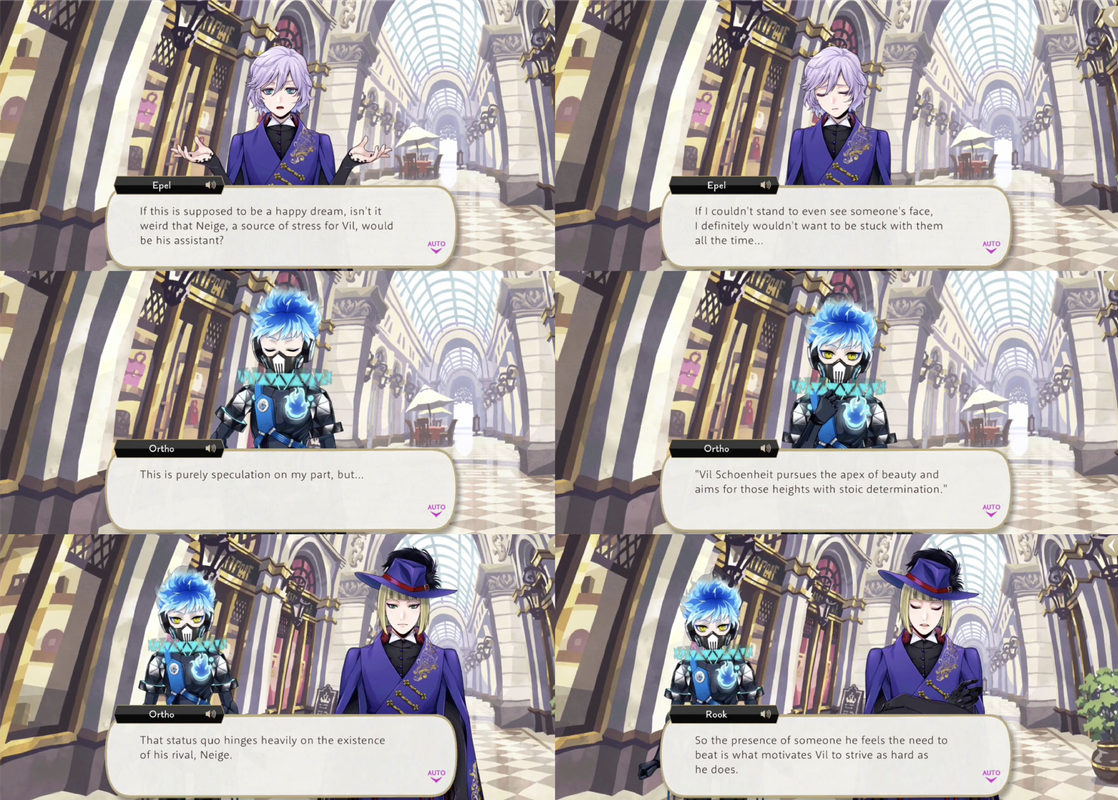
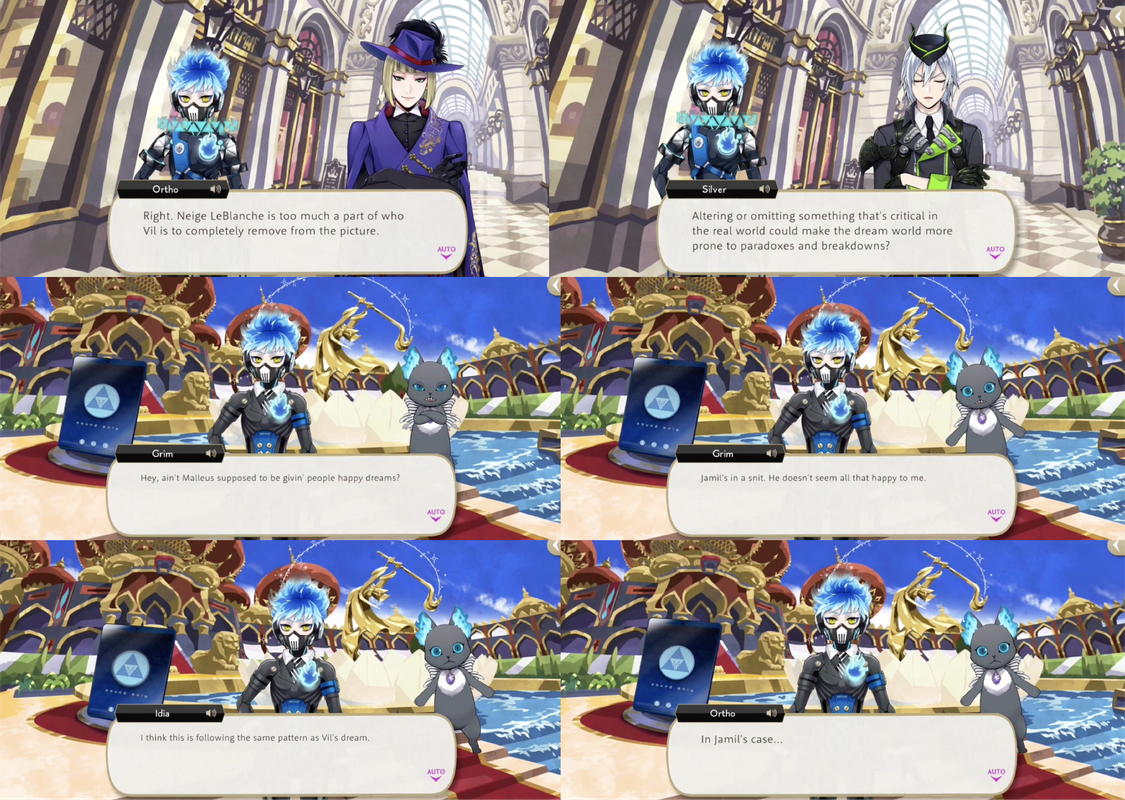
The dreams adapt to this by rewriting the source of stress into something less offensive: a bumbling assistant version of Neige who could never hope to rival Vil and a more polite and humble version of Kalim for Jamil.
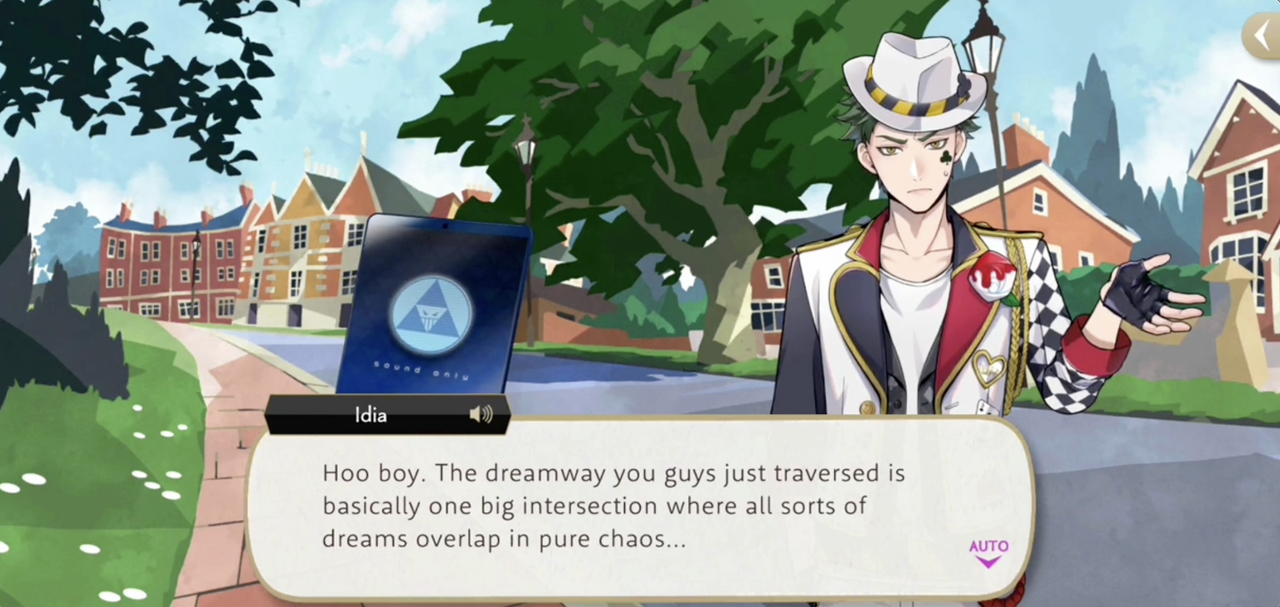
15. People with abilities like Silver’s pass from one dream to another through what the characters refer to as “dreamways.” Idia describes them as “basically one big intersection where all sorts of dreams overlap in pure chaos.”
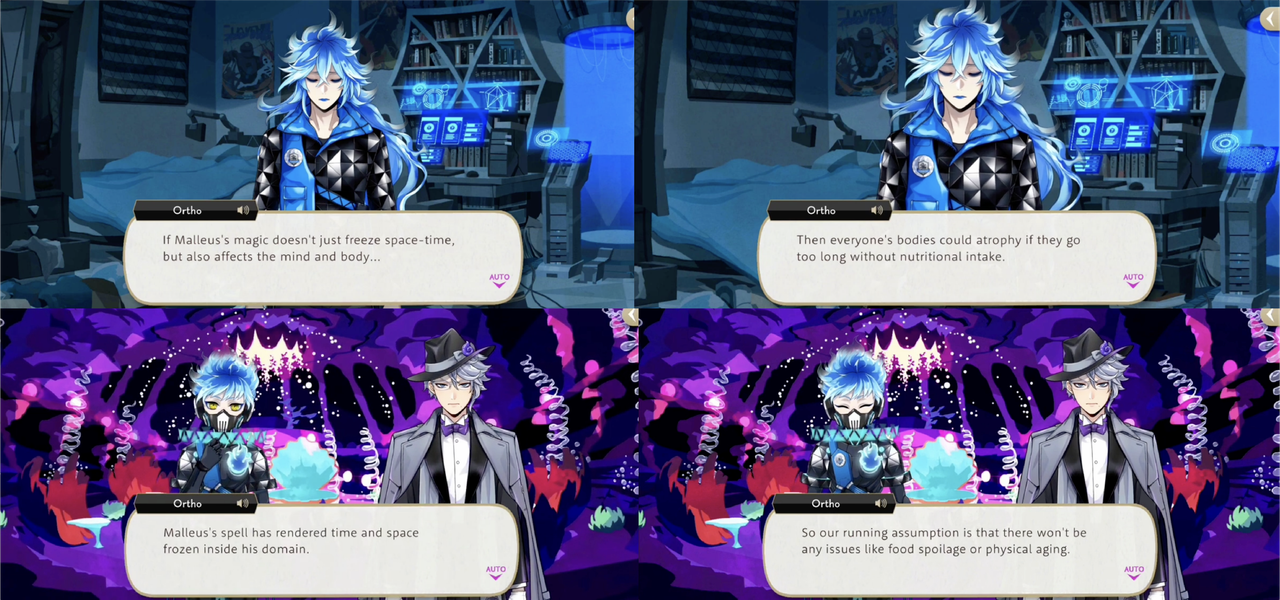
16. Malleus’ magic freezes both time and space in the real world. Though at first Ortho worries about bodies atrophying, he later explains, “our running assumption is that there won’t be any issues like food spoilage or physical aging.”
 Twisted Wonderland Reference Note