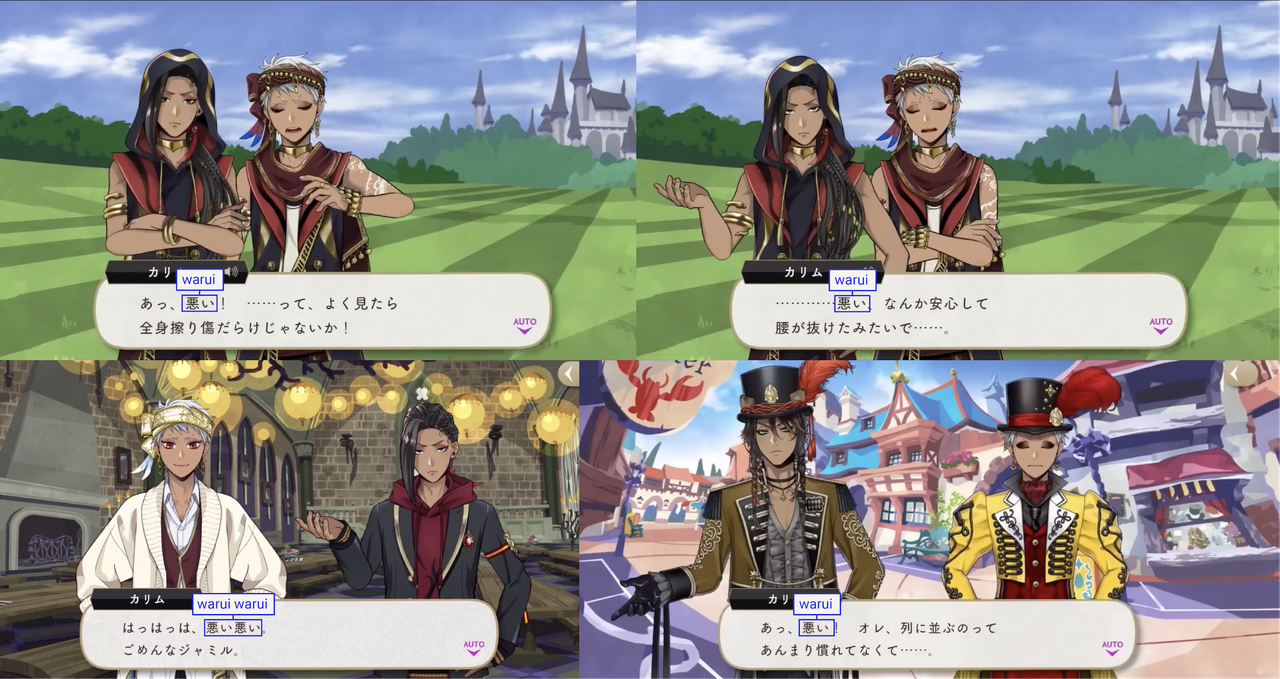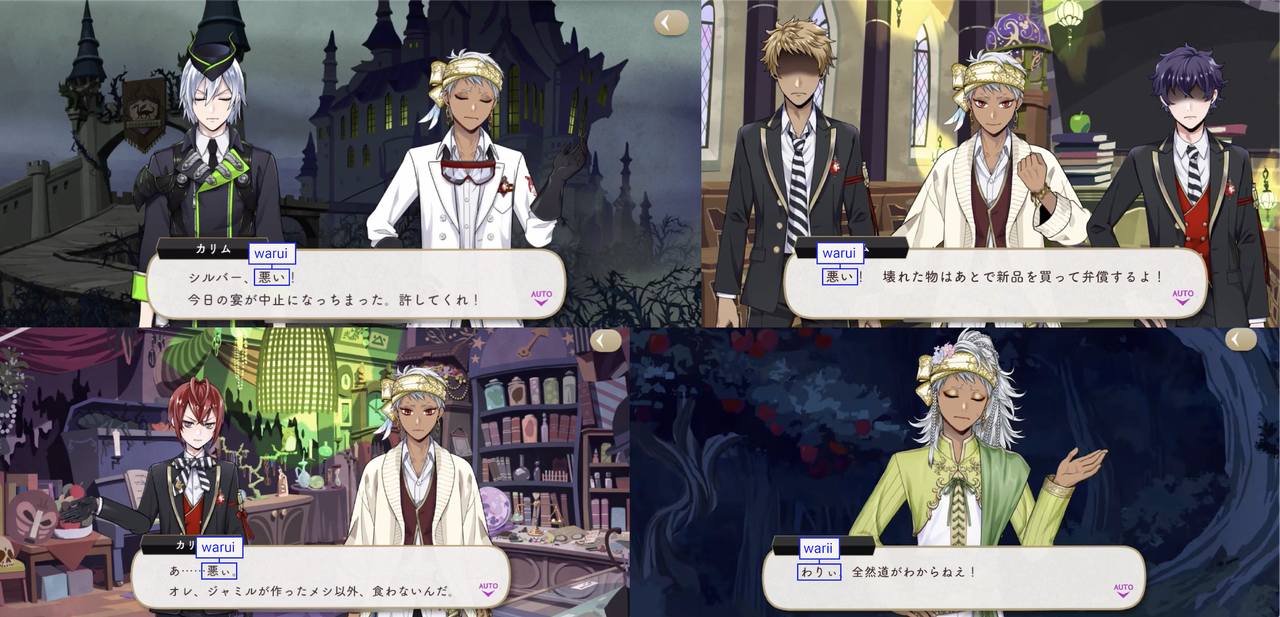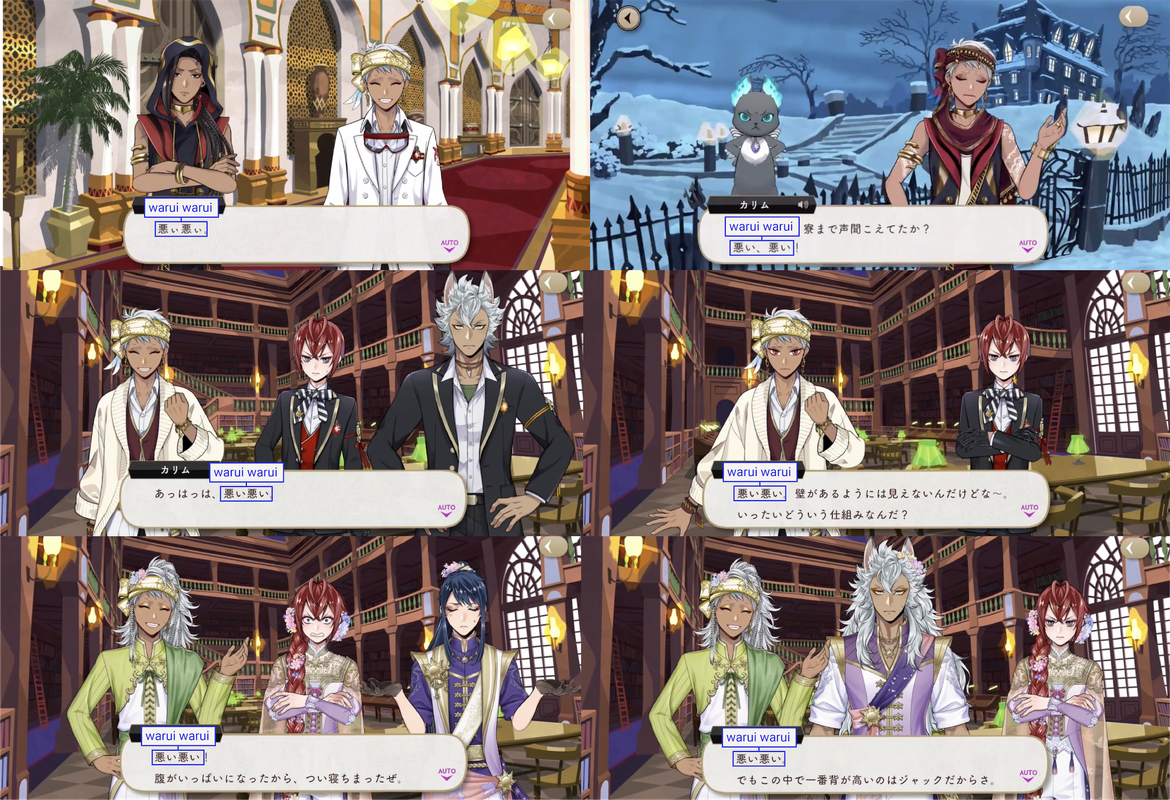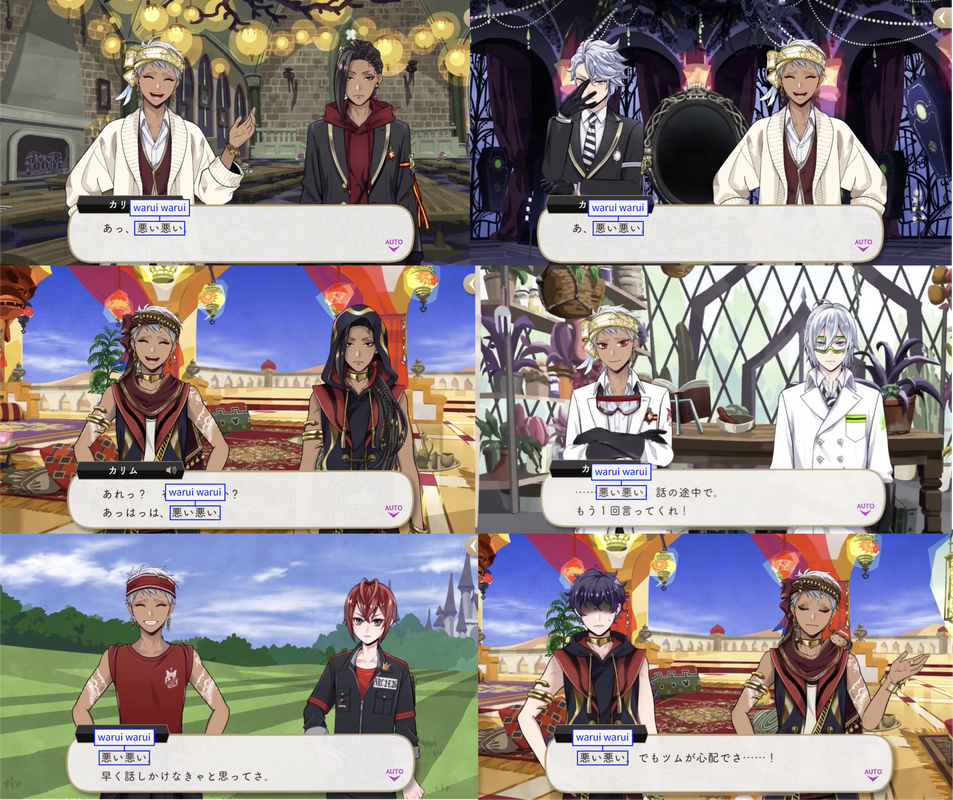

It is possible that Kalim has never said “please”:
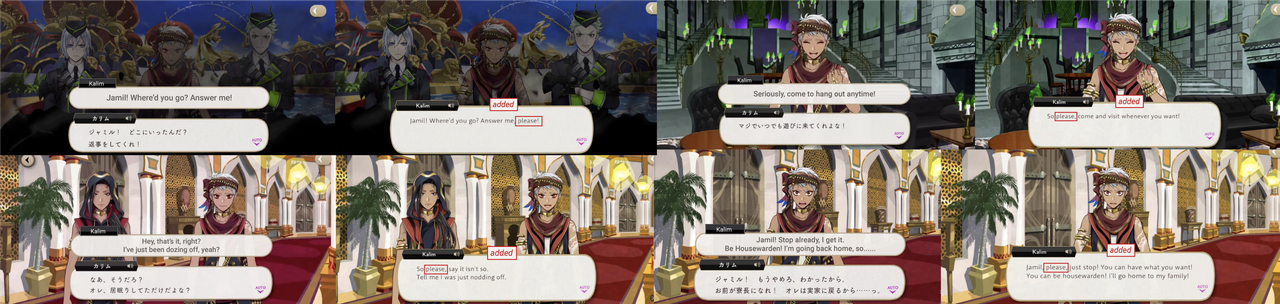
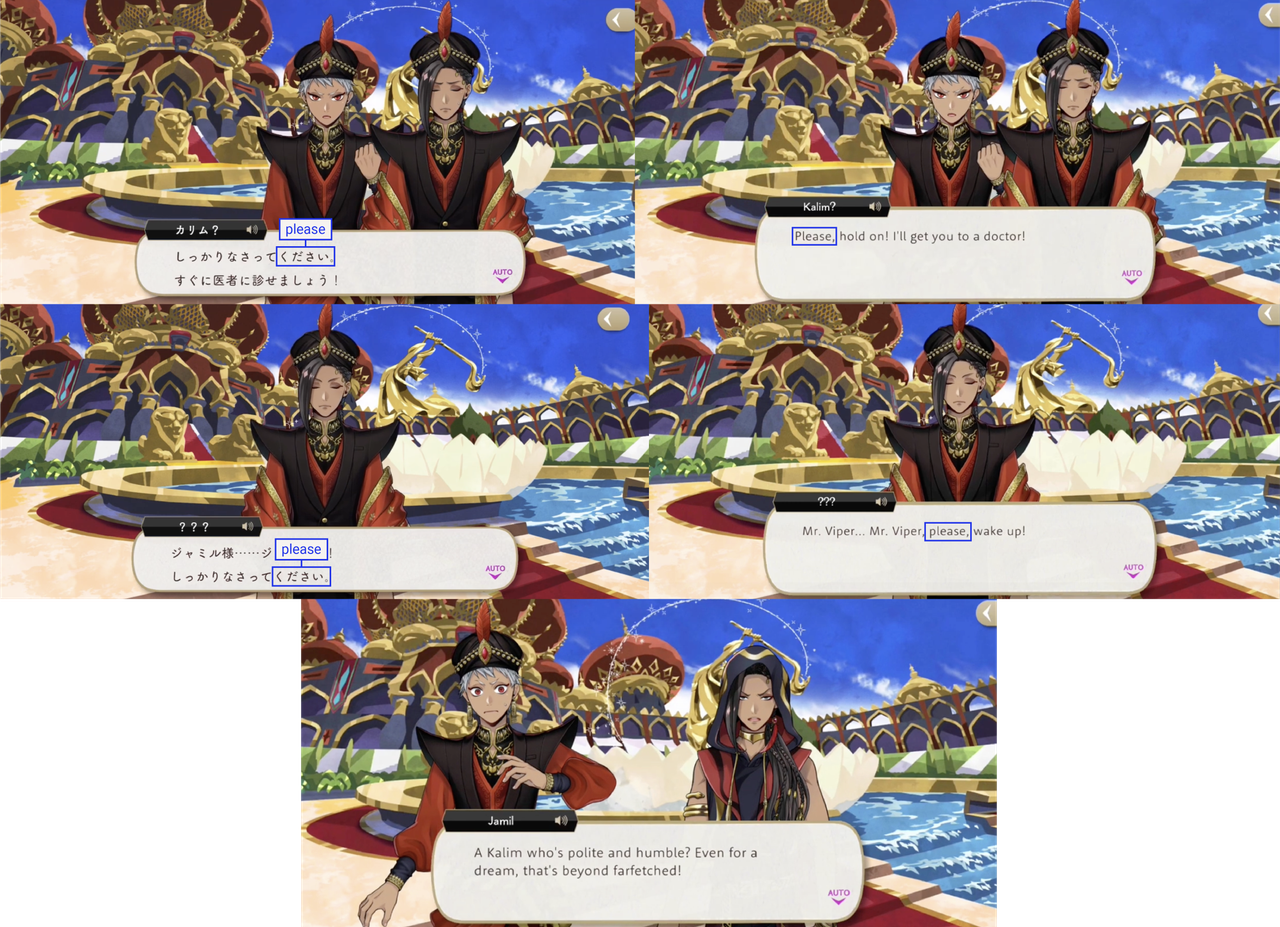
While the word will be added to his dialogue on EN, there are maybe no matching instances in the original game, with one exception: the dream-Kalim (made of darkness) whom Jamil calls out for its politeness and humility being “beyond farfetched” to believably be Kalim.
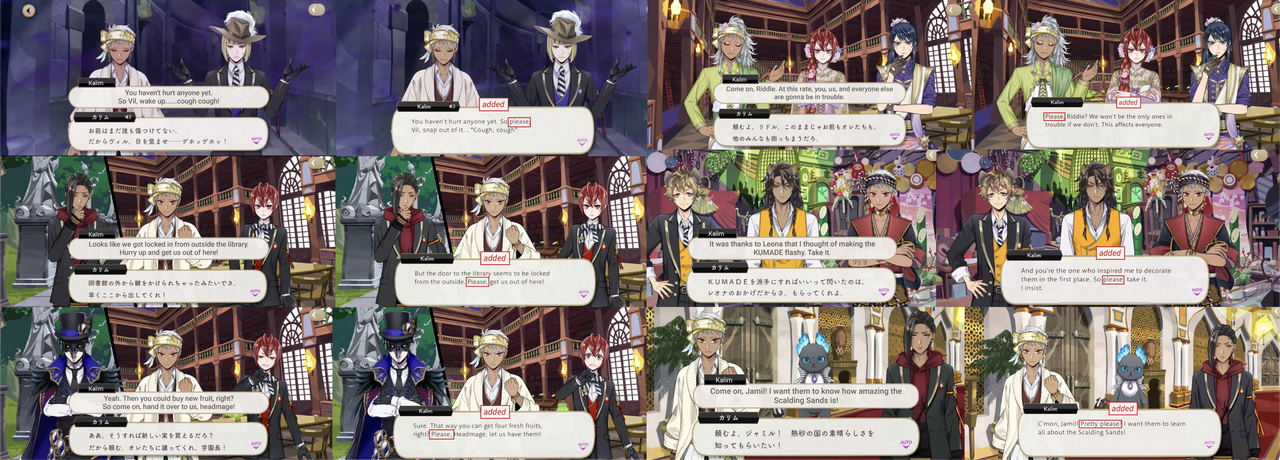
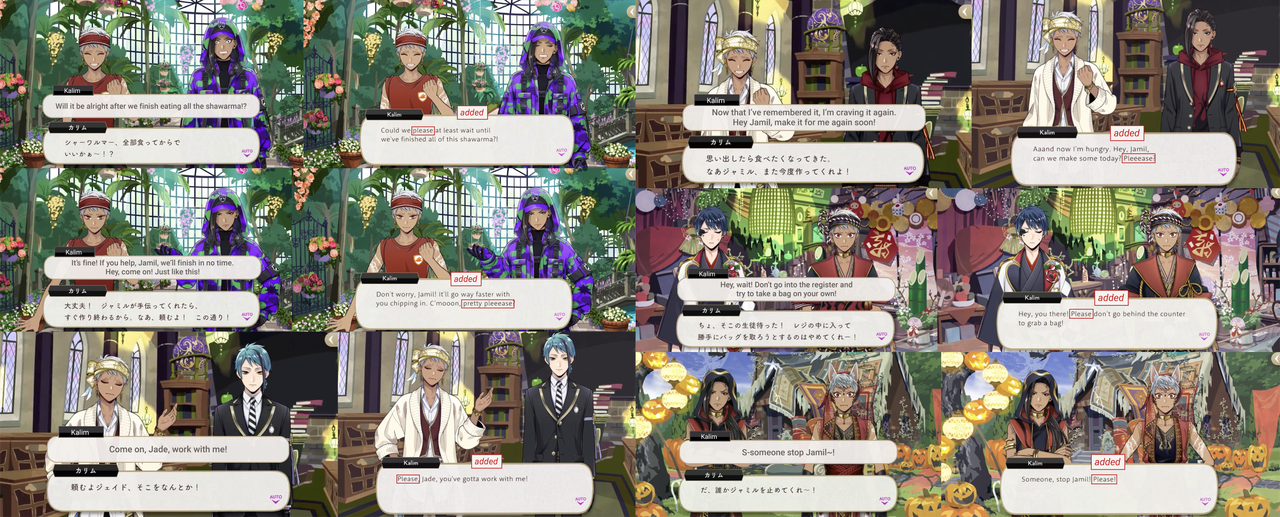
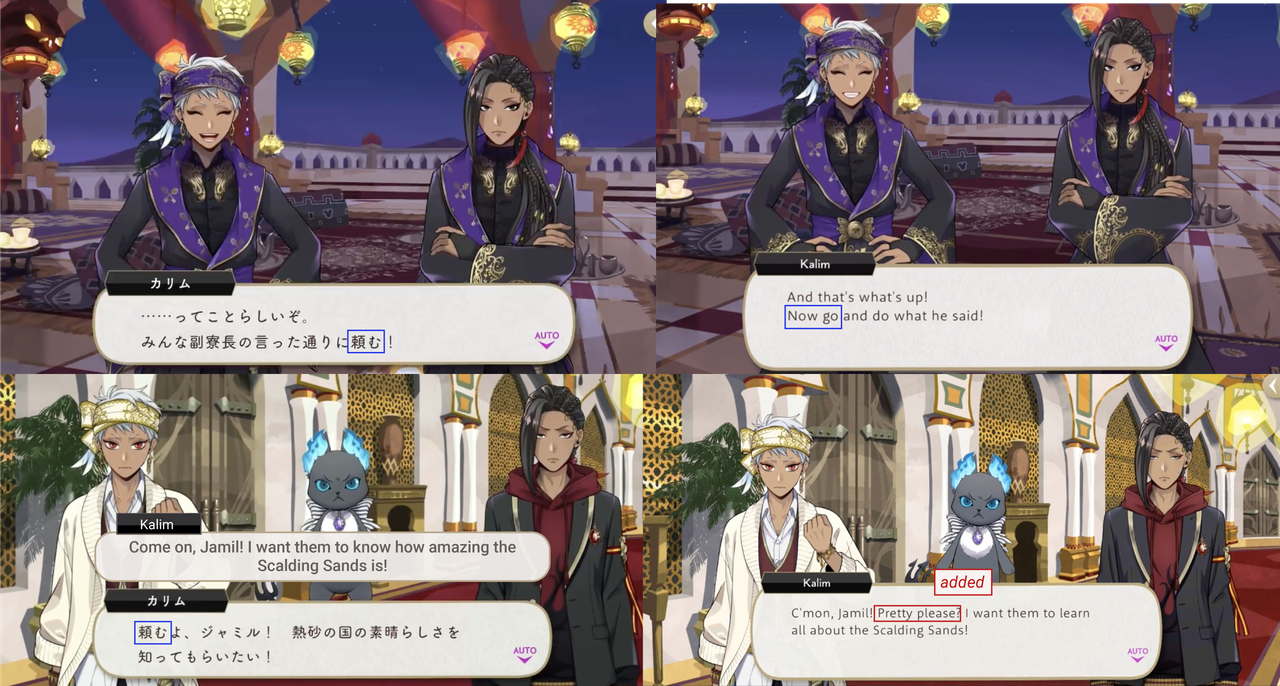
Kalim will often say 頼む (tanomu), which is something close to “Do this for me” or “I need you to do this,” it can even feel pushy/presumptive depending on context, and Kalim himself has said that he knows he can be pushy: it is a part of his character that is being represented through his speech patterns.
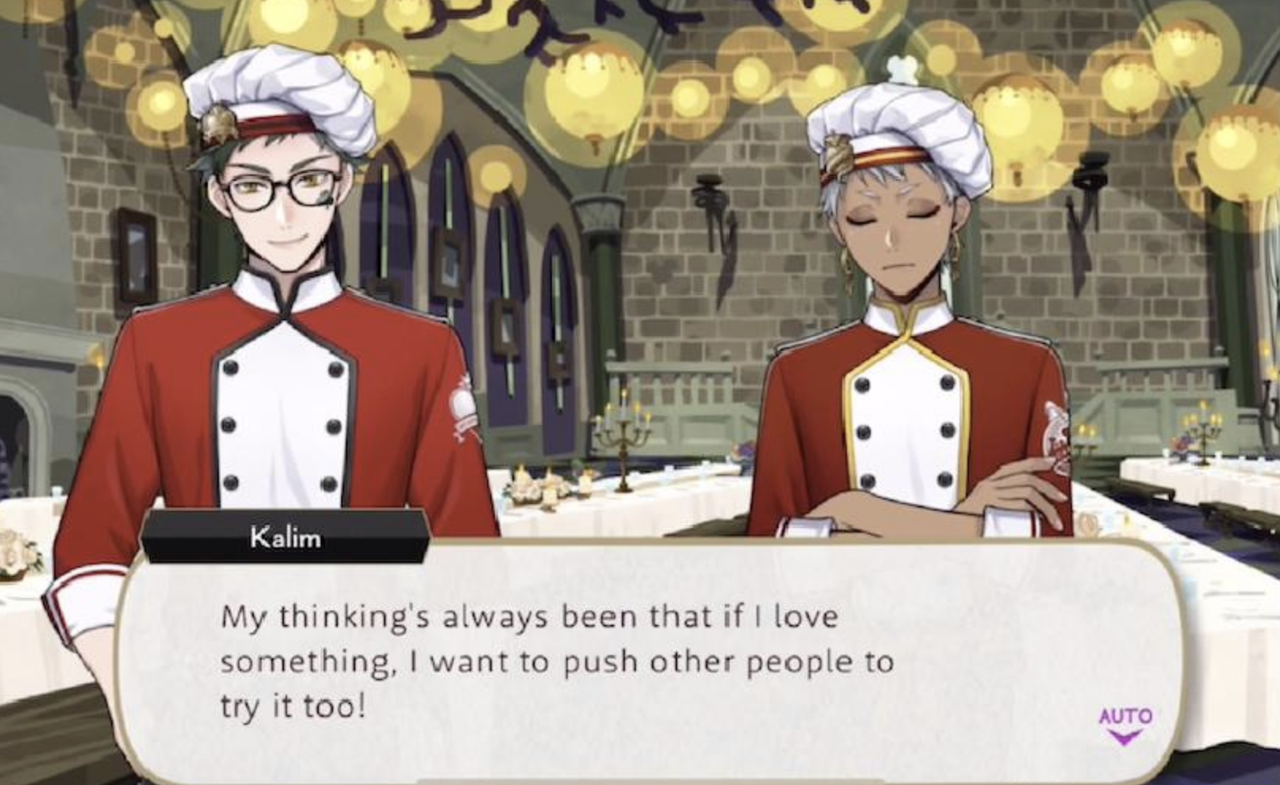
This might not be having the same effect on EN, however, where the word will sometimes be translated as “please,” but “please” is not what it means, and it is also not a polite form of the verb.
Examples:
Original Kalim: Come on, Jamil! I want them to know how amazing the Scalding Sands is!
EN Kalim: C’mon, Jamil! Pretty please? I want them to learn all about the Scalding Sands!
Original Kalim: It’s fine! If you help, Jamil, we’ll finish in no time. Hey, come on! Just like this!
EN Kalim: Don’t worry, Jamil! It’ll go way faster with you chipping in. C’mooon, pretty pleeease:
There are ways in Japanese to denote politeness and humility without having to use a literal word for “please” just through polite/formal verb forms and honorifics, which Kalim also does not use.
Kalim’s go-to verb form is 「くれ」 described on this language-study site as, “…sounds rude and is only used by a few elder men.”
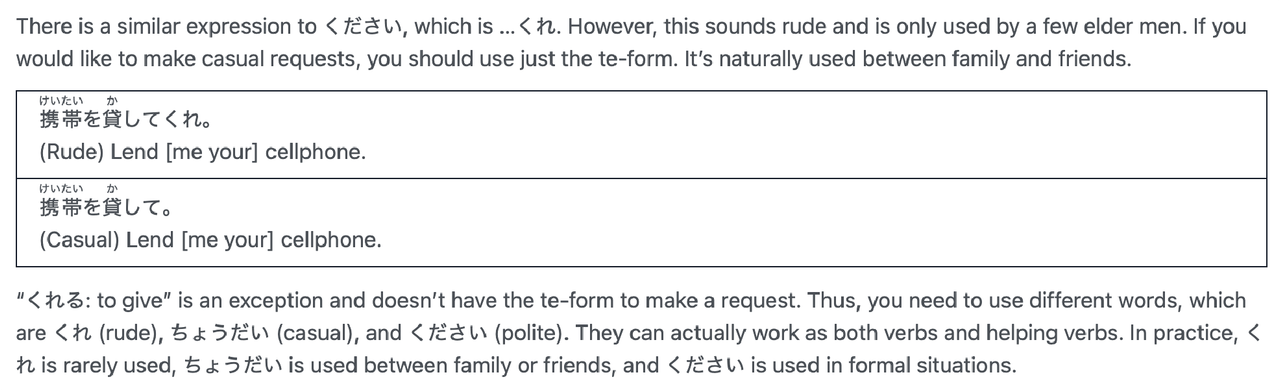
And it is that “rude” verb form that Kalim is using all of the time: as he grew up very wealthy with many servants and is used to having his needs fulfilled immediately, it is possible that his dialogue is being written as Kalim speaking as though he knows he will be obeyed rather than making requests that can be refused, even now that he is surrounded by fellow students instead of servants, because that is all he has ever known.
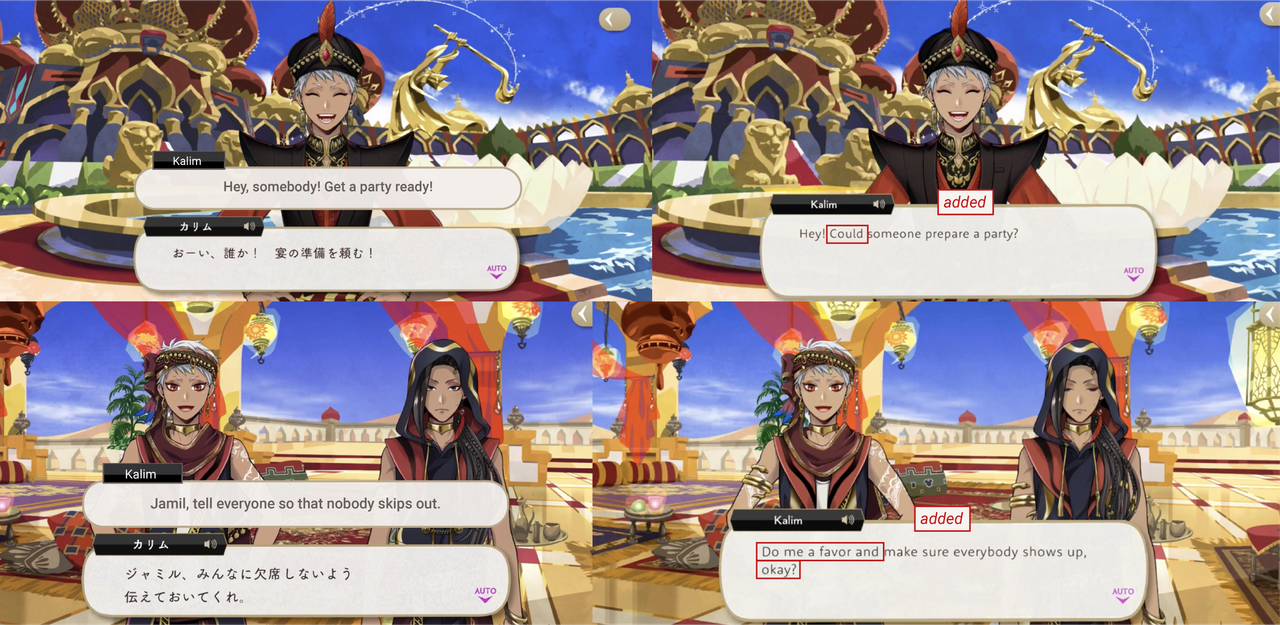
This is important to keep in mind for players on EN server, where Kalim’s dialogue will be made more polite: the localization will not just translate differently but selectively soften identical sentence structures, introducing politeness that doesn’t exist.
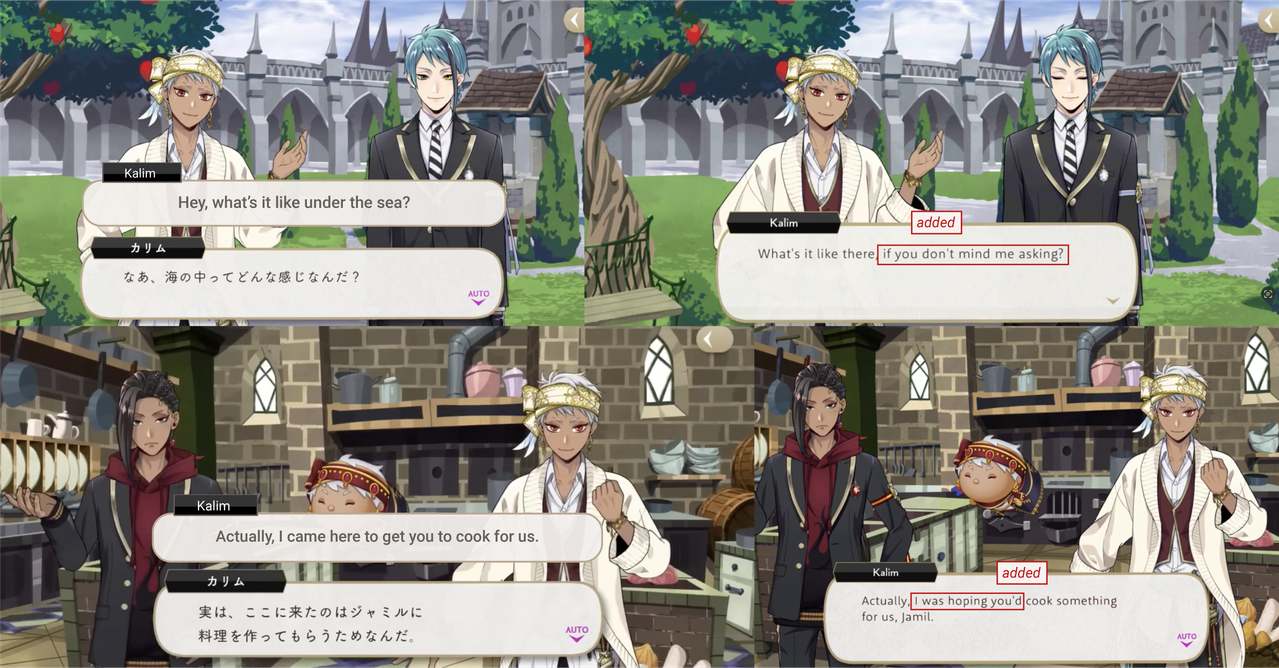
Examples:
Original Kalim: Tell everyone so that nobody skips out.
EN Kalim: Do me a favor and make sure everyone show’s up, okay?
Original Kalim: Come to the party.
EN Kalim: I think you should come to the party.
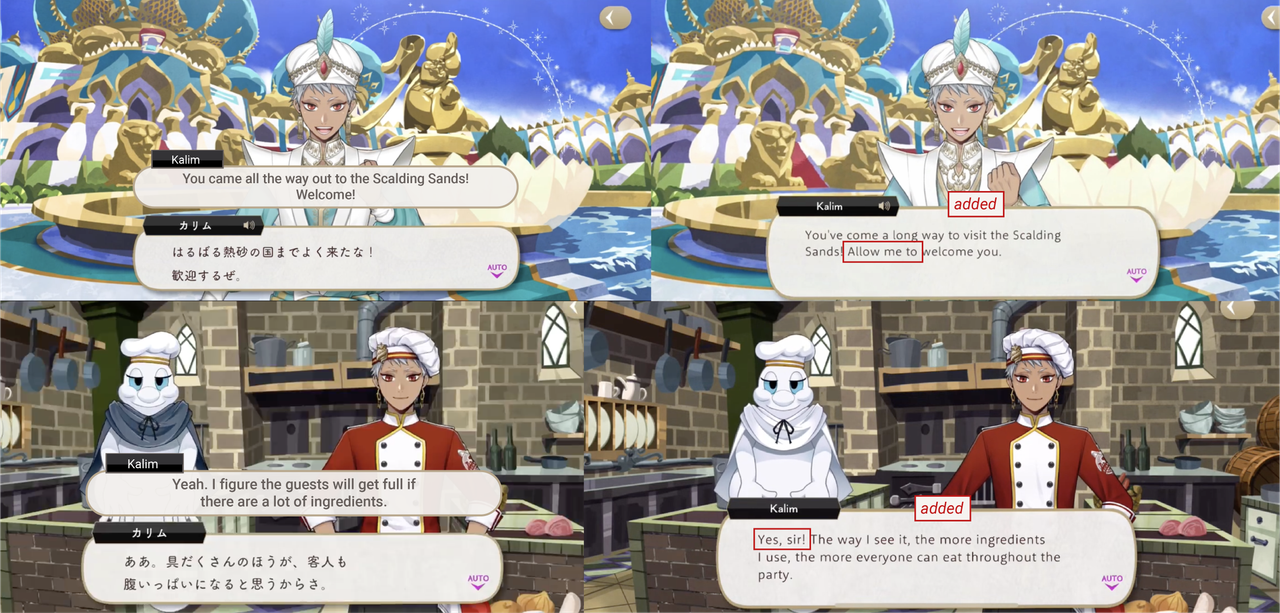
Original Kalim: What’s it like under the sea?
EN Kalim: What’s it like there, if you don’t mind me asking?
Original Kalim: I came here to get you to cook for us.
EN Kalim: I was hoping you’d cook something for us.
Original Kalim: Yeah.
EN Kalim: Yes, sir!
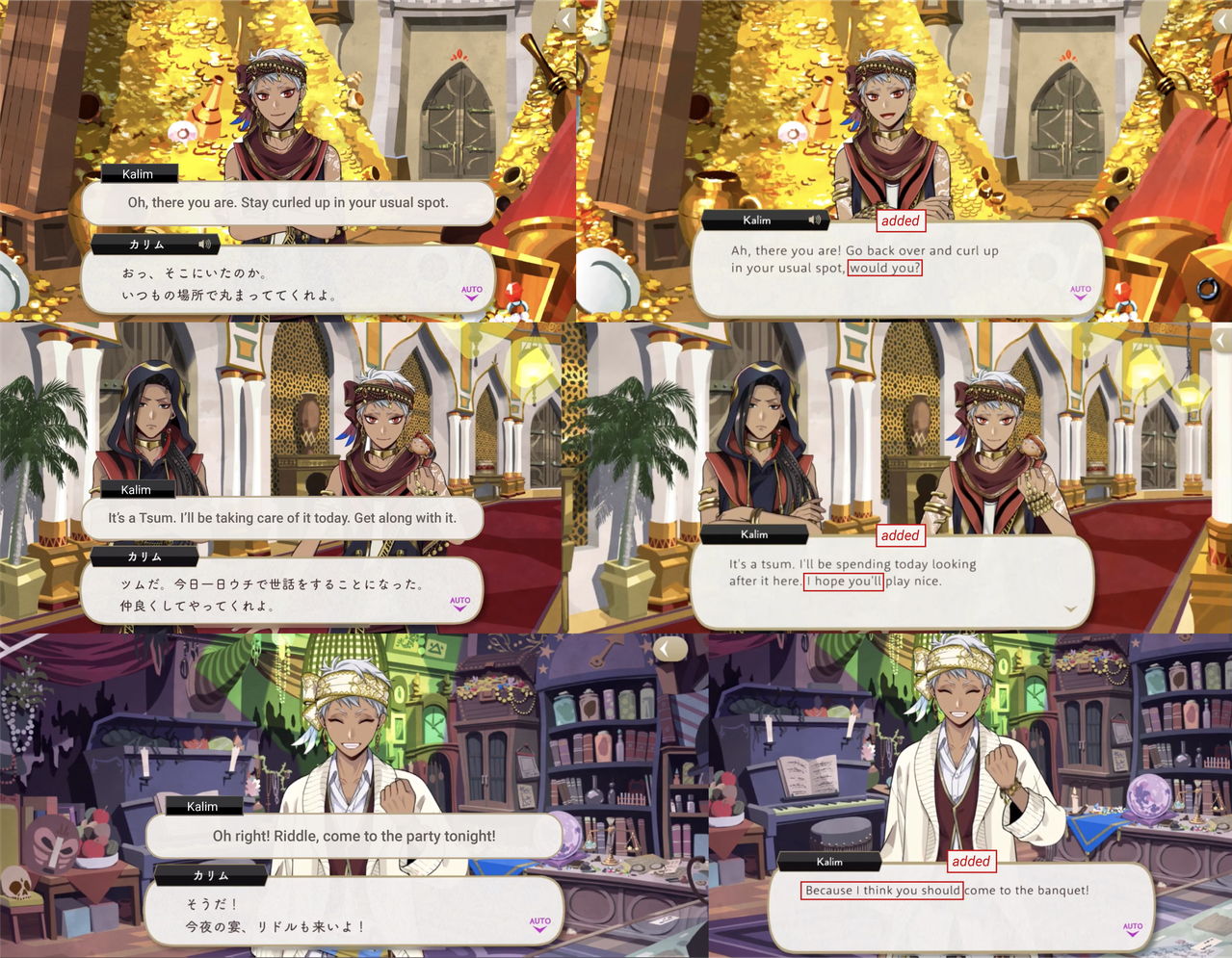
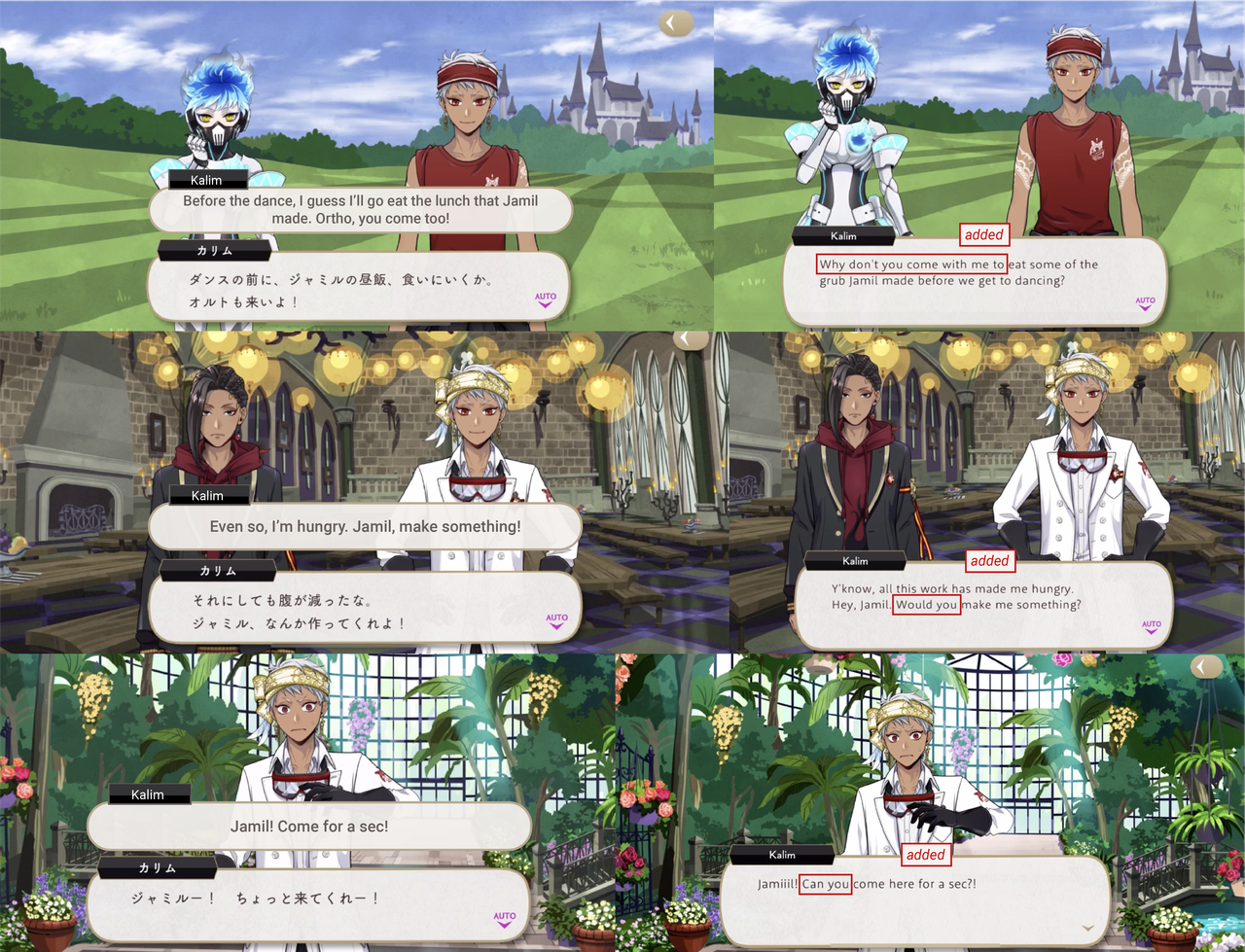
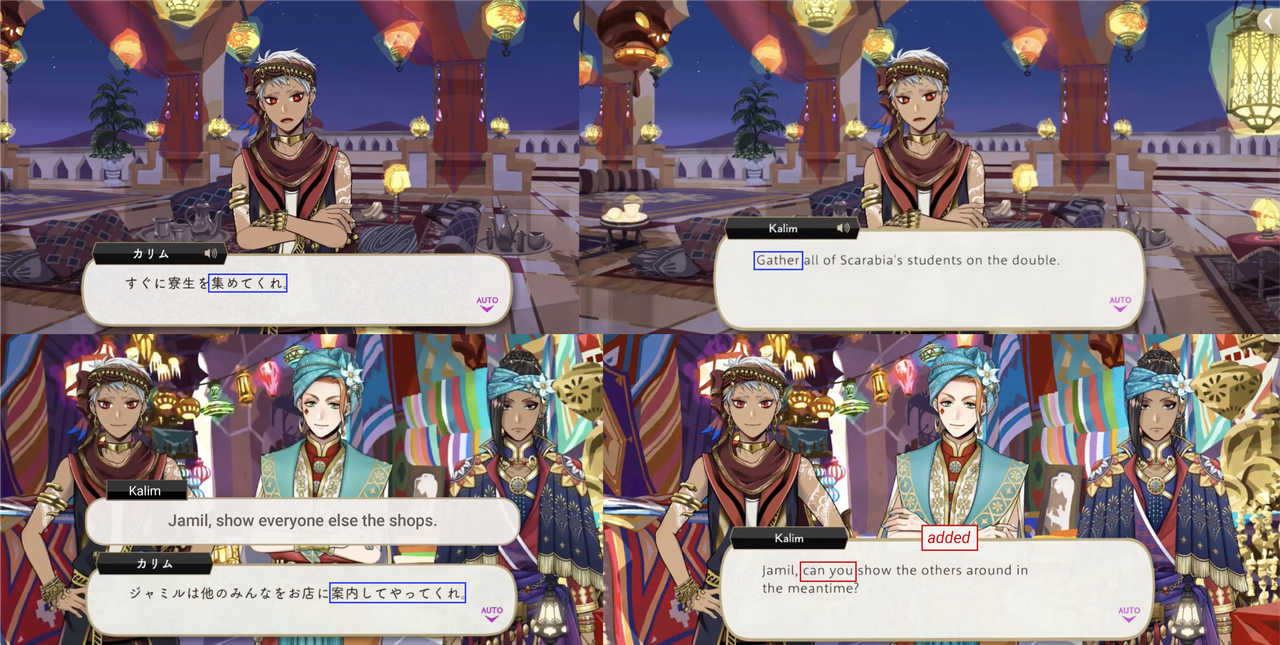
When Kalim is being hypnotized by Jamil his authoritative phrase, “Gather all of Scarabia’s students,” was translated correctly, but when Kalim uses the same verb form in Firelit Sky it was softened to him asking Jamil “Can you (do this)?,” despite being phrased the same way.
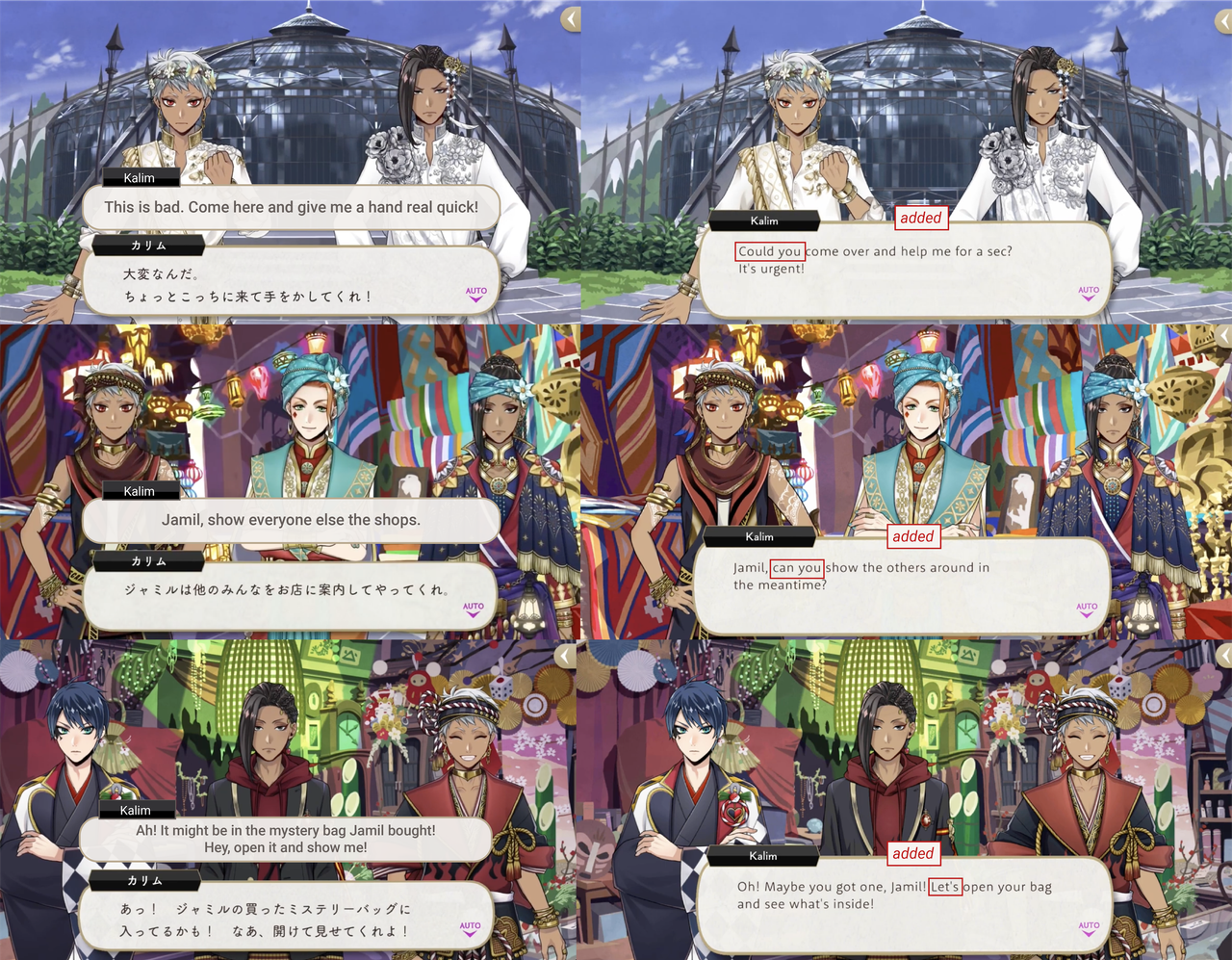
Original Kalim: Jamil, show everyone else the shops.
EN Kalim: Jamil, can you show the others around in the meantime?
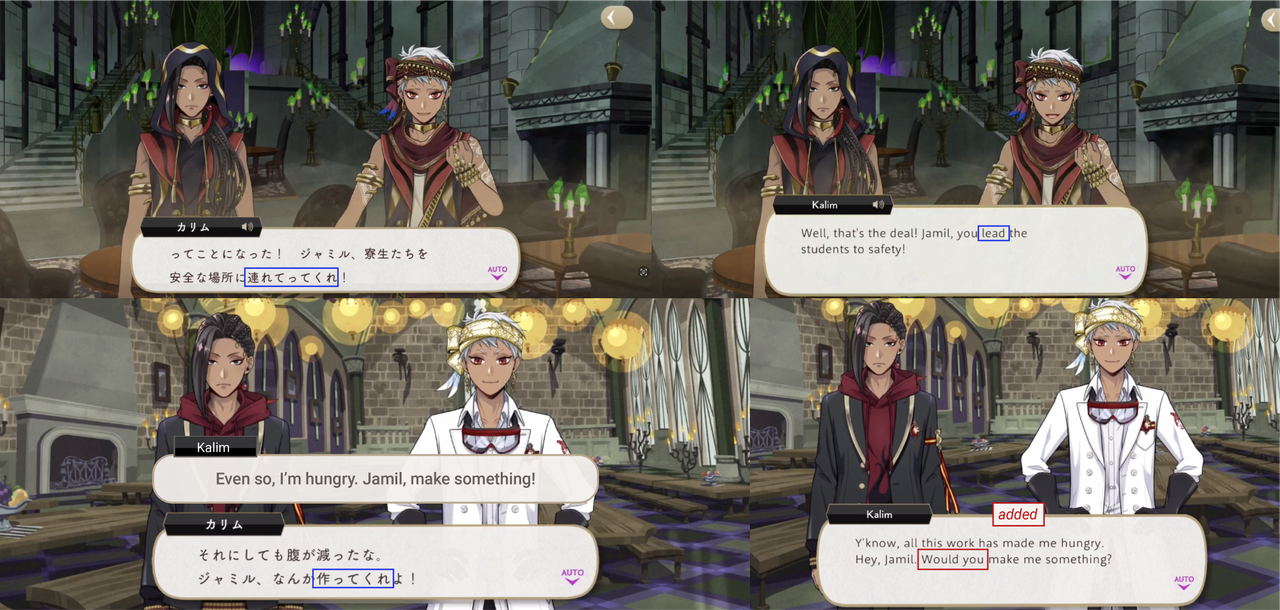
When Kalim tells Jamil to lead the student to safety in Book 7 it was translated accurately for EN, but identical phrasing in a vignette was changed to, “Would you (do this)?”, instead, as though Jamil had the option of refusing, when both times he is speaking with authority in his original dialogue.
Original Kalim: Jamil, make something!
EN Kalim: Hey, Jamil. Would you make me something?
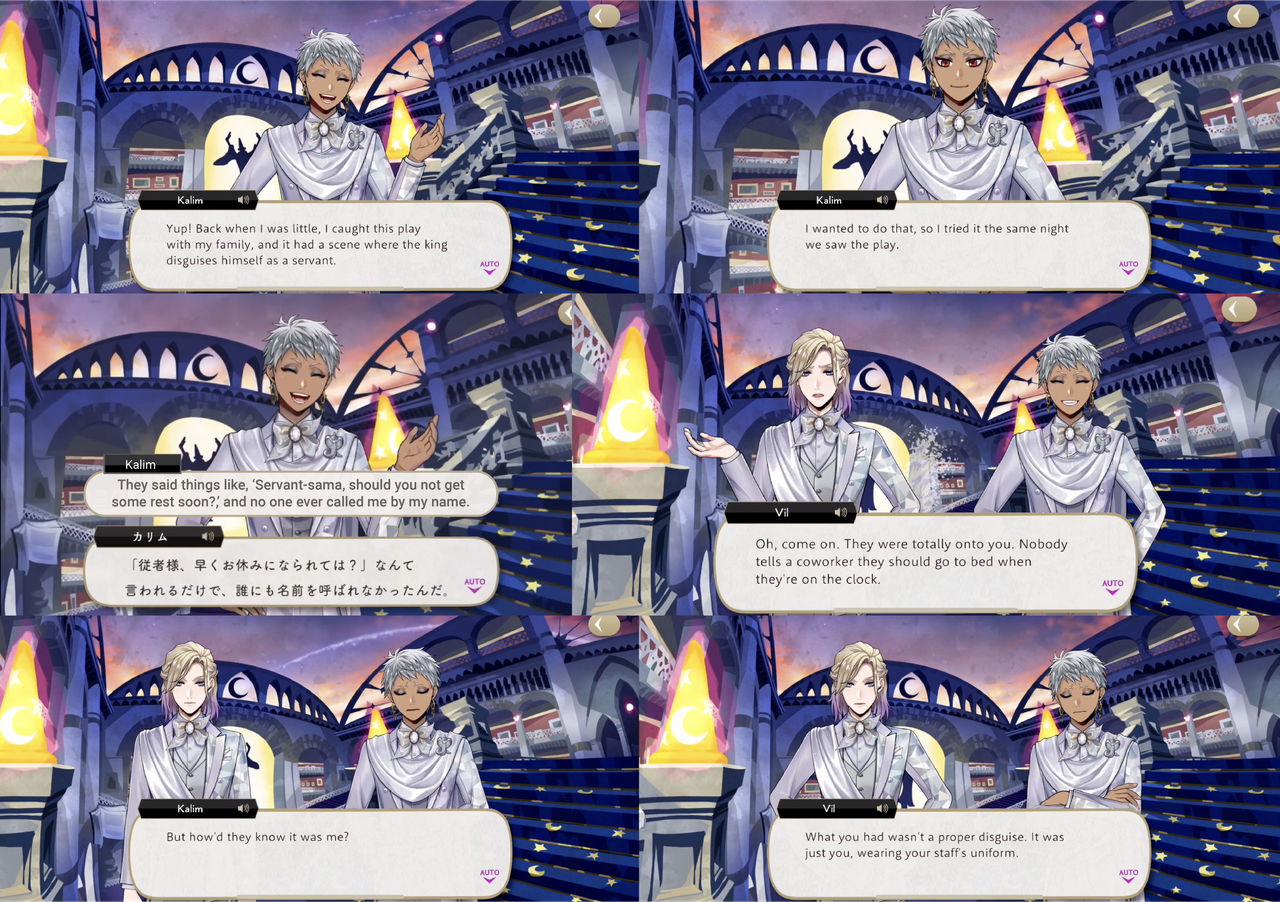
The game itself touches on Kalim’s unawareness of his own authoritative speech patterns in a vignette where he talks about a time he dressed up in servant’s clothes and Vil points out that no one actually fell for his ruse because he changed his appearance, but not how he speaks.
Kalim: Does that mean I’m not supposed to talk like I normally do?
Vil: Exactly. Think about the demeanor the staff have when they address you.
Kalim concludes that he should have used “watashi” as a pronoun instead of his usual “ore” in order to trick the servants into thinking he was one of them, to which Vil responds, “I wasn’t referring to superficial details like that…,” maybe highlighting Kalim’s lack of awareness of how his speech patterns alone are sending out signals of his status and authority.
Overall Kalim is possibly one of the least polite-speaking characters in the game, coming second to Leona: while Leona does sometimes use polite/formal verb forms it is generally with sarcasm. As opposed to Kalim, who seems to speak impolitely out of ignorance, Leona’s rudeness is intentional, maybe earning him first place.
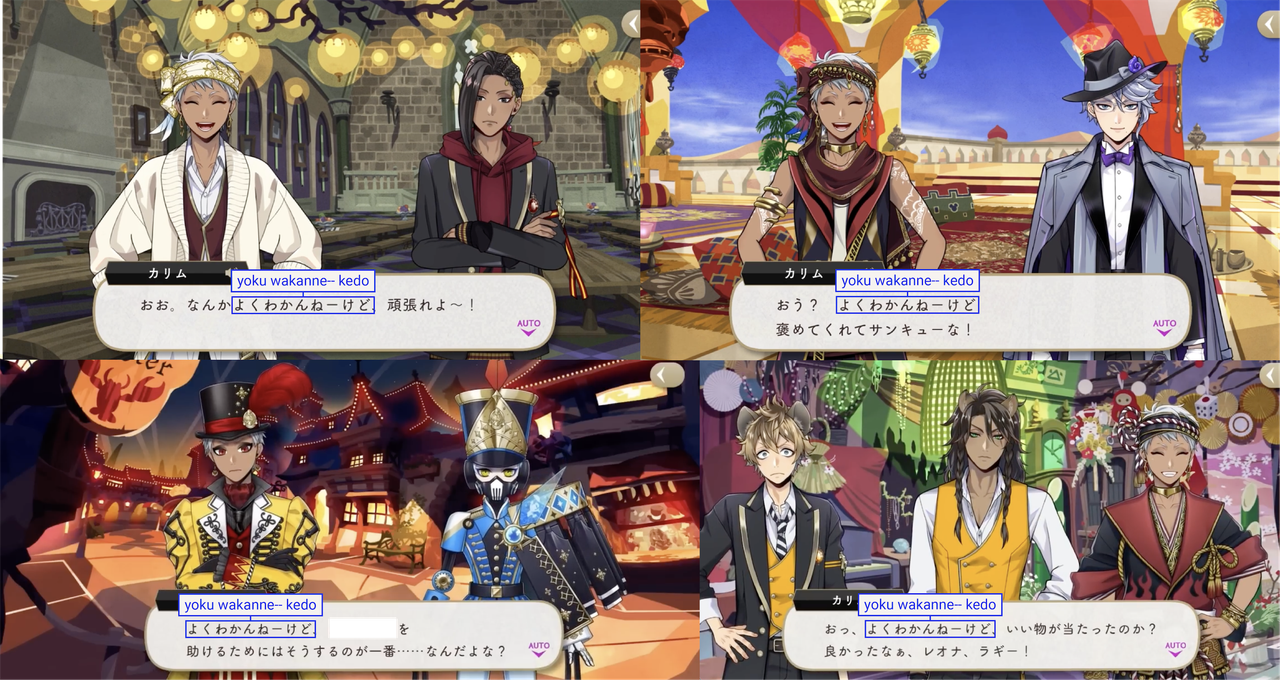
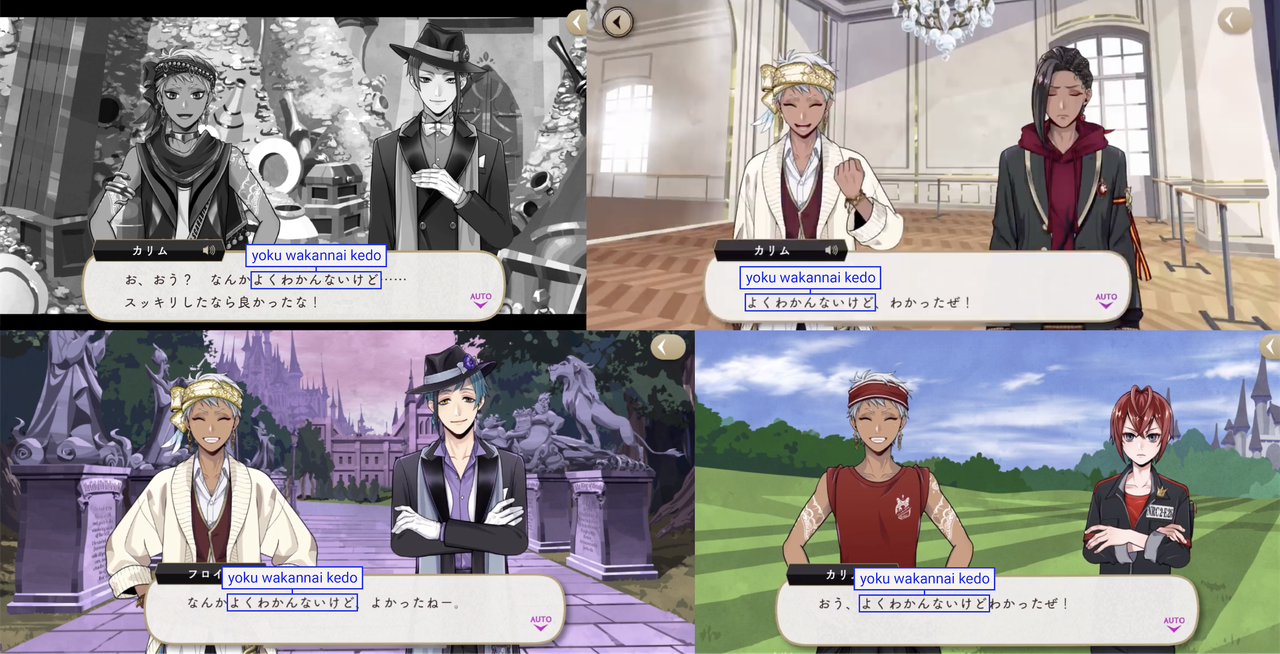
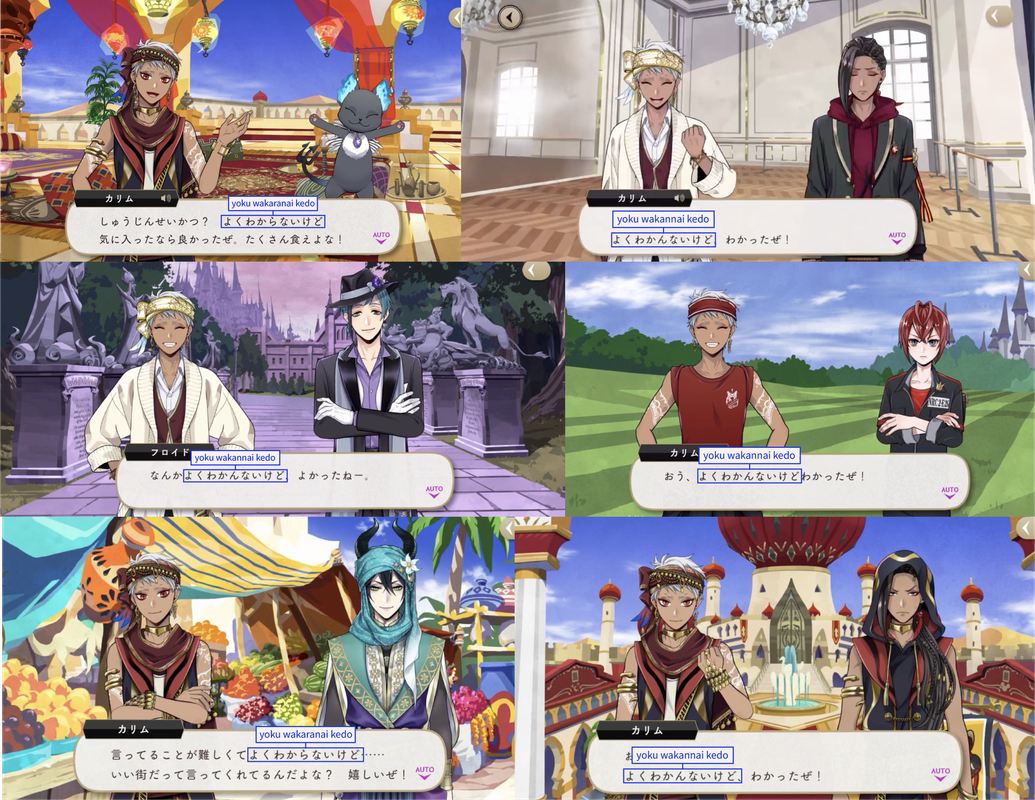
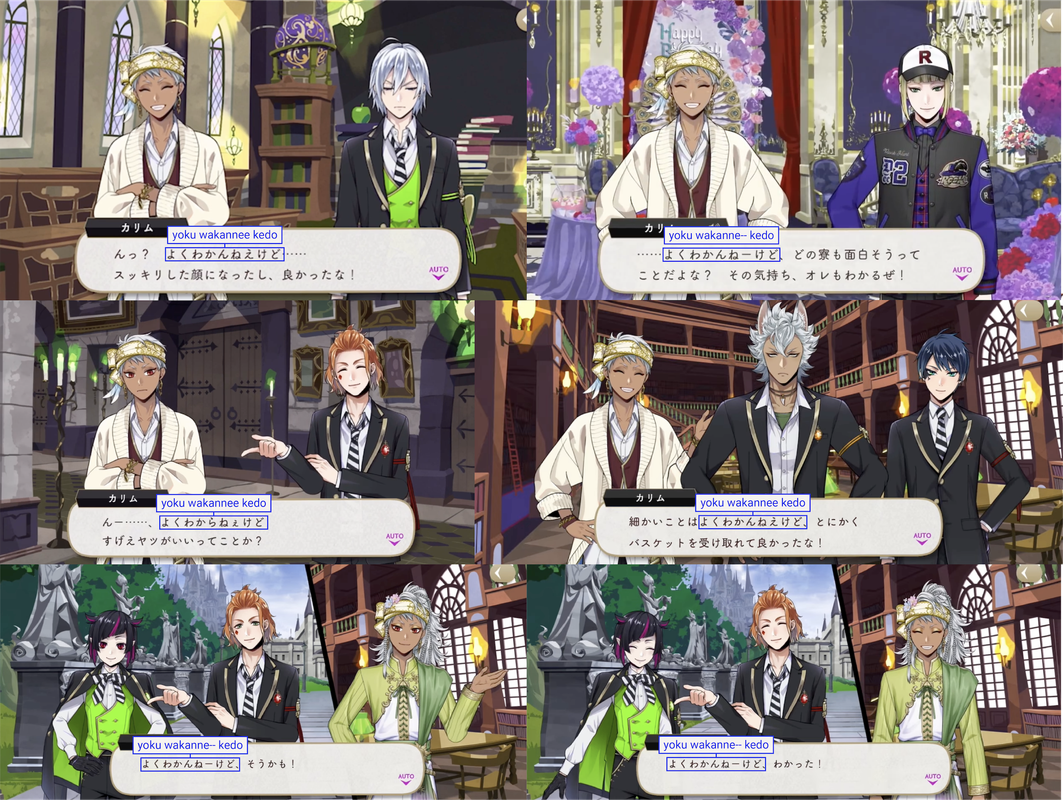
Kalim is often saying よくわかんないけど (yoku wakannnai kedo) or slight variations to emphasize how he is often confused.
It means something close to “I don’t really get it,” “I’m not sure,” “I don’t really understand,” etc.
He will also often say 悪い (warui) and usually twice in a row, which literally means “bad” but in context is a casual/light/dismissive form of apology, similar to “my bad” or “sorry, sorry.”