
The Japanese-to-English translation and localization differences in Twisted Wonderland’s “Nightmare Before Christmas: First Christmas” event, including speech patterns, pronouns, dialogue changes, and differences between the original and English versions.
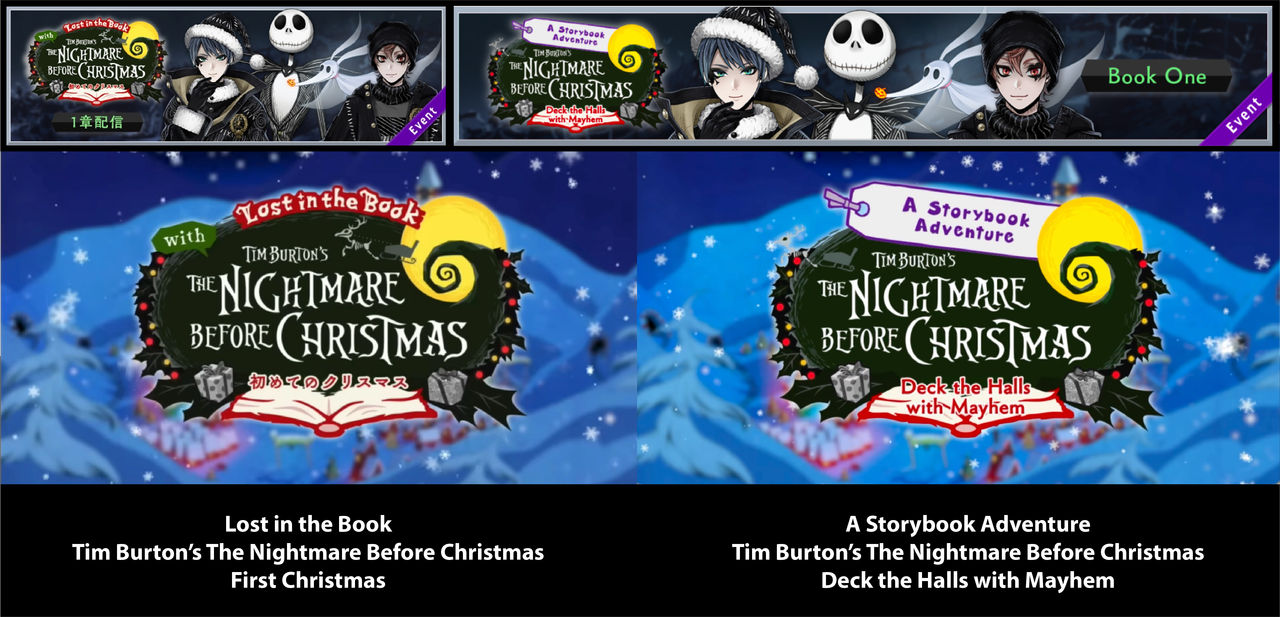
Original Game: Lost in the Book with Tim Burton’s the Nightmare Before Christmas: First Christmas
EN Server: A Storybook Adventure: Tim Burton’s the Nightmare Before Christmas: Deck the Halls with Mayhem
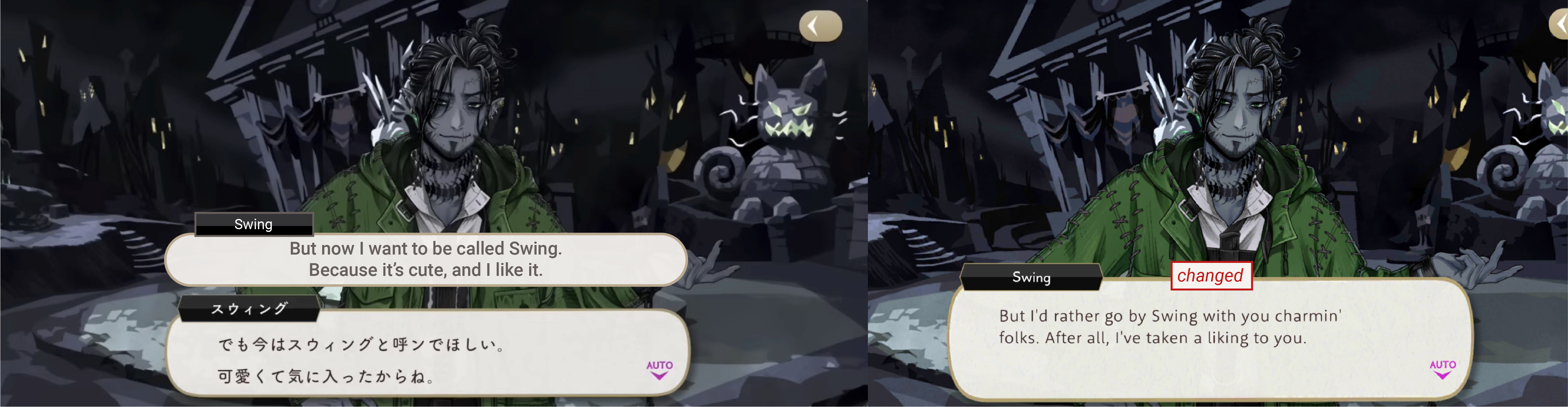
Original Swing: But now I want to be called Swing. Because it’s cute, and I like it.
EN Swing: But l’d rather go by Swing with you charmin’ folks. After all, I’ve taken a liking to you.
The English-language localization changes what Swing says he has taken a liking to, from his name to the NRC students. EN-server will sometimes mistakenly change sentence objects in character dialogue, so it is maybe difficult to tell if this was an intentional change or done on accident. More here ▶︎
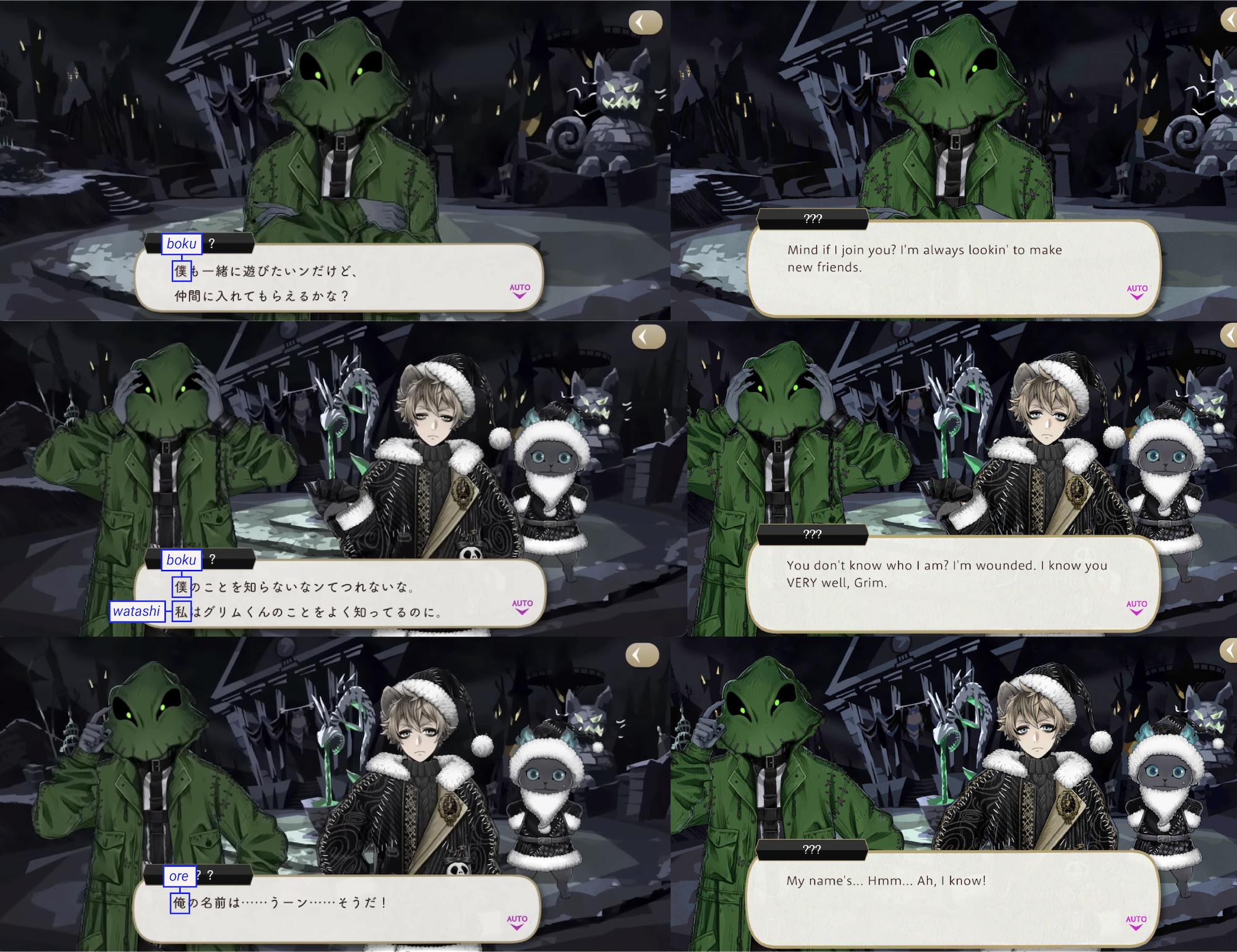
Upon meeting the group of NRC students for the first time, Swing rotates between three different personal pronouns within three sentences, using “boku” twice, and “watashi” and “ore” once each before settling on referring to himself in the third-person as “Swing-san” exclusively rather than a first-person pronoun.
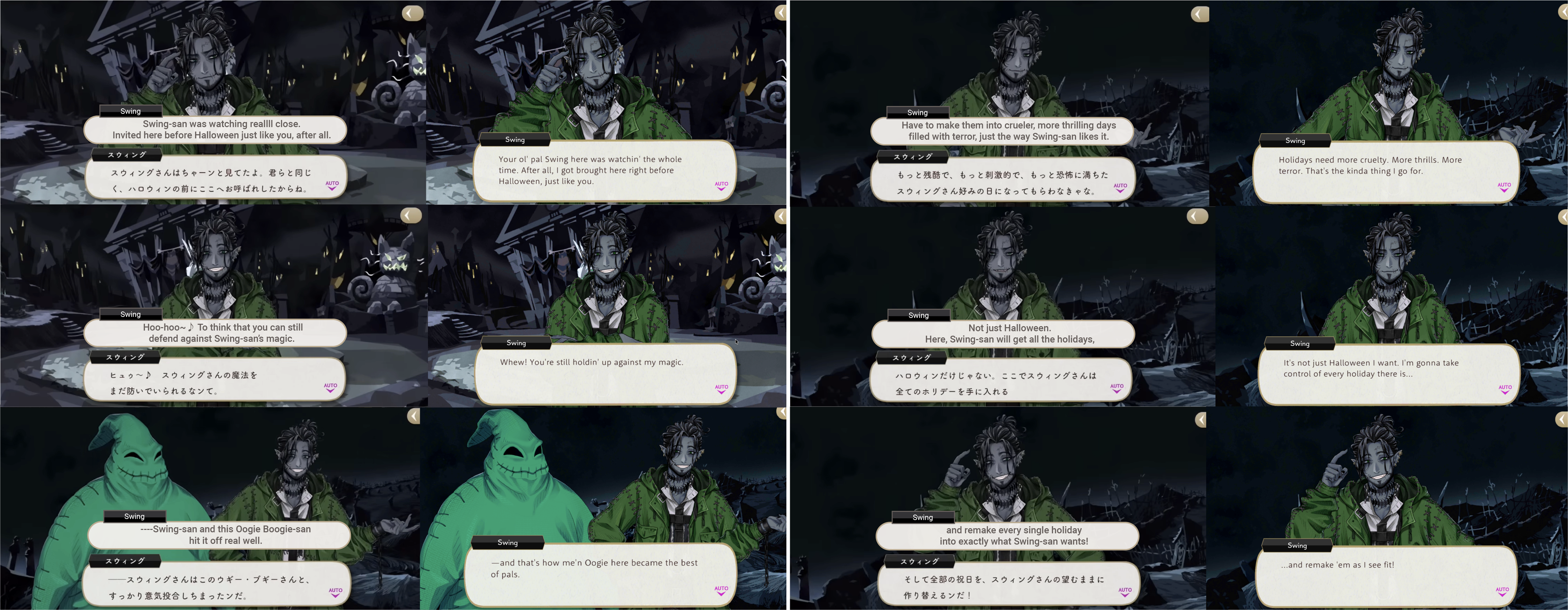
This third-person usage has largely been removed from the English-language localization, translated literally above to give a general idea of Swing’s speech patterns, for the curious.
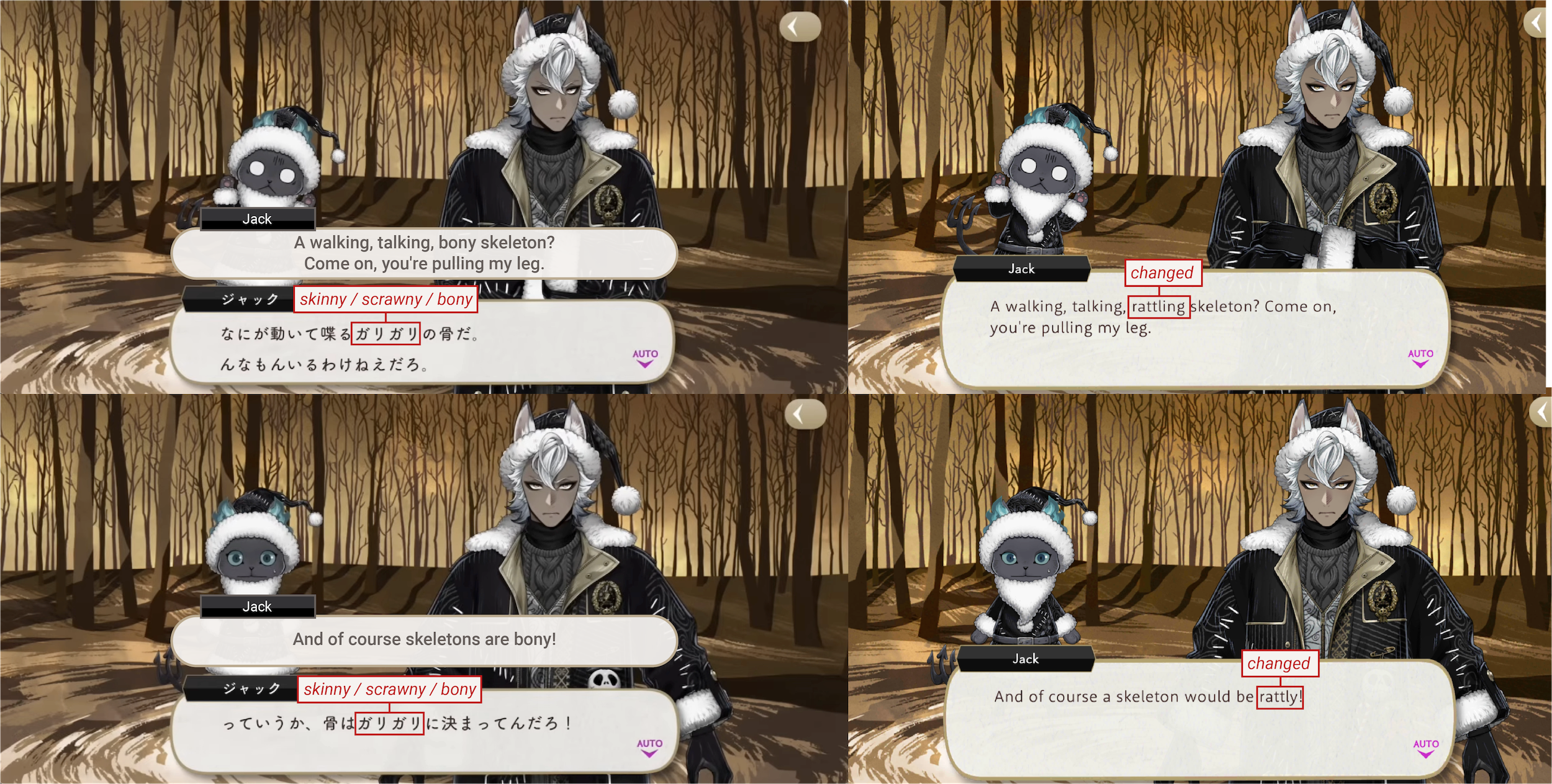
Original Jack: A walking, talking, bony skeleton? Come on, you’re pulling my leg. And of course skeletons are bony!
EN Skully: A walking, talking, rattling skeleton? Come on, you’re pulling my leg. And of course a skeleton would be rattly!

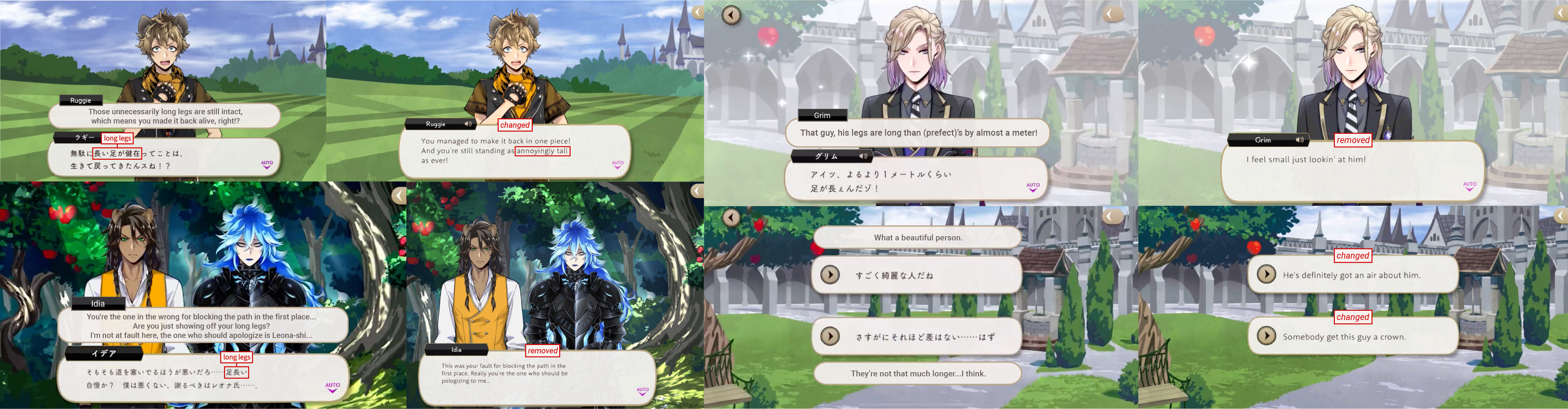
This might be part of a pattern for the English-language localization, where dialogue about Leona, Vil and Jack Skellington having long legs has all been removed from EN-server.
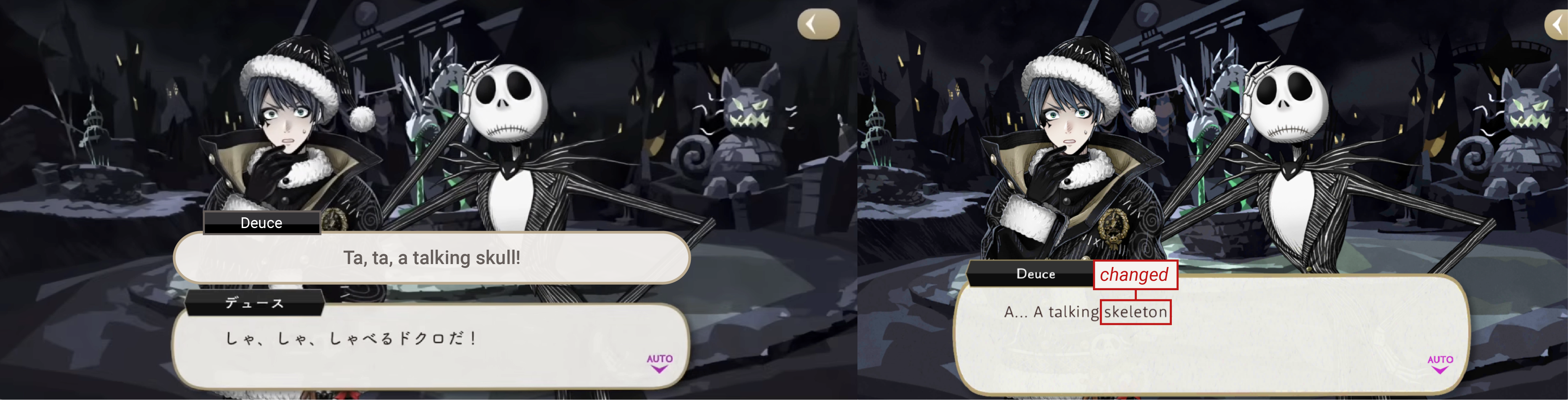
Original Deuce: Ta, ta, a talking skull!
EN Deuce: A…a talking skeleton!
For language learners: skull is ドクロ (dokuro), and skeleton is 骸骨 (gaikotsu).
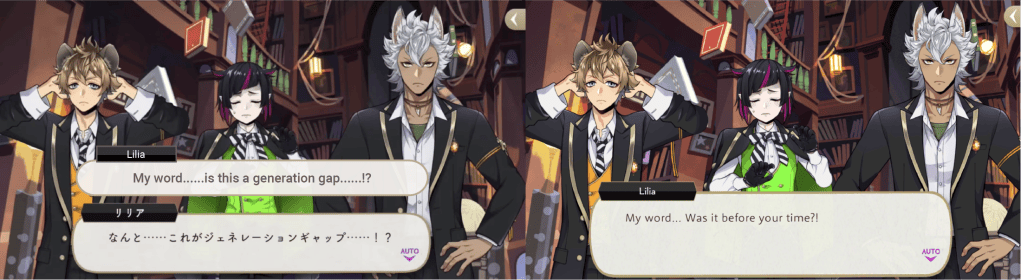
Original Lilia: Is this a generation gap……!?
EN Lilia: Was it before your time?!
For language learners: Lilia is using the english-language term “generation gap,” written in katakana.
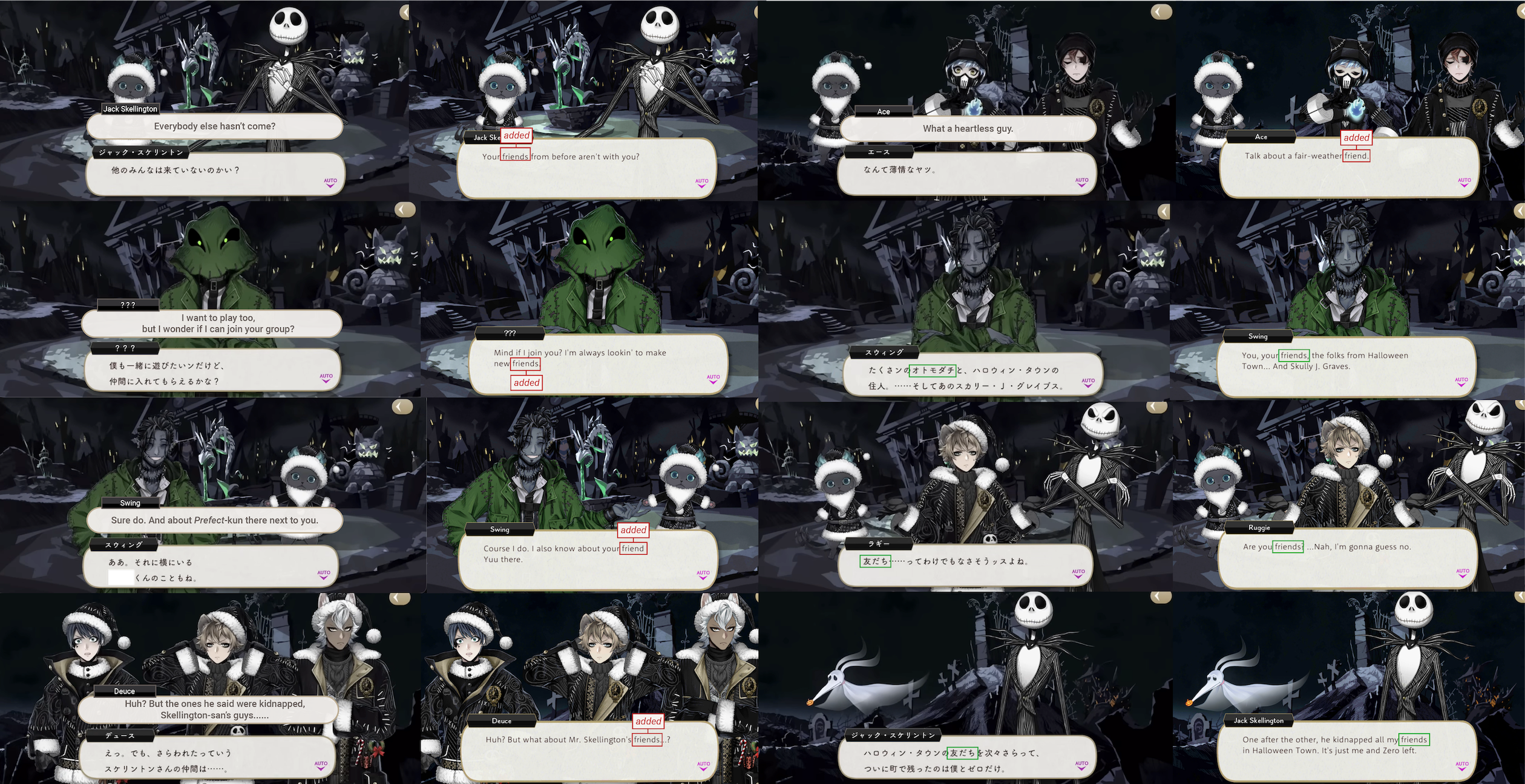
As of Chapter 1 of the event, the word “friend” has been added to character dialogue in 5 places where it was not actually said.

