
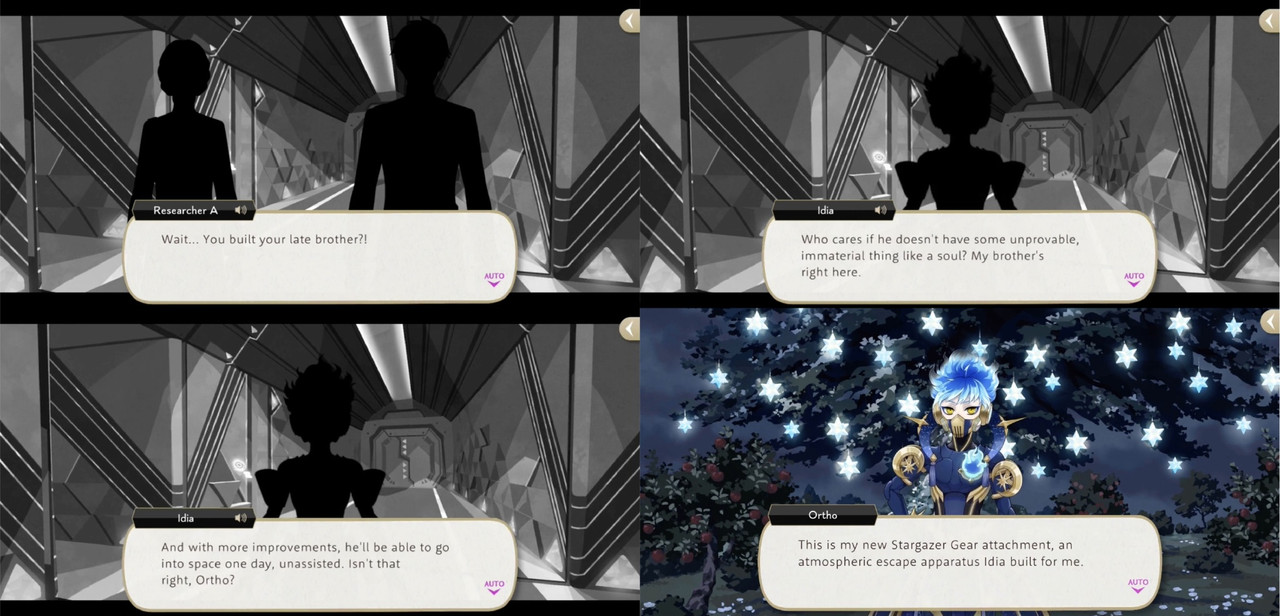
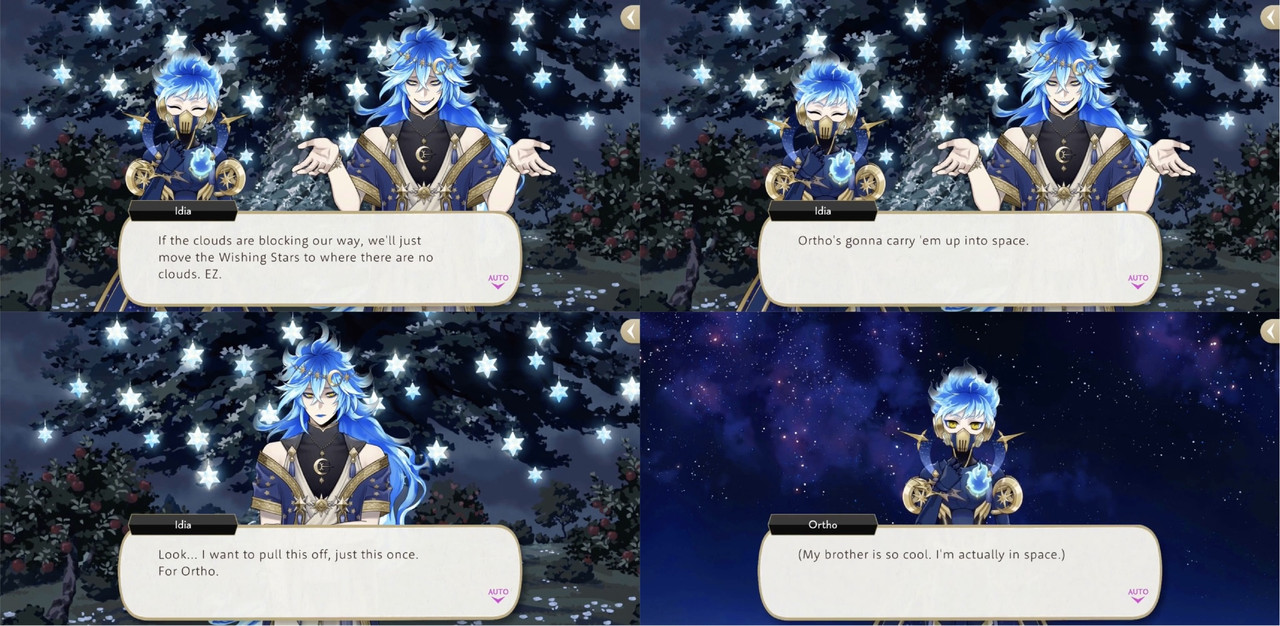
During the flashback Idia assures a newly-built Ortho that he will be able to go into space one day unassisted, which we see actually happen during the Wish Upon a Star event (and again during Book 7).
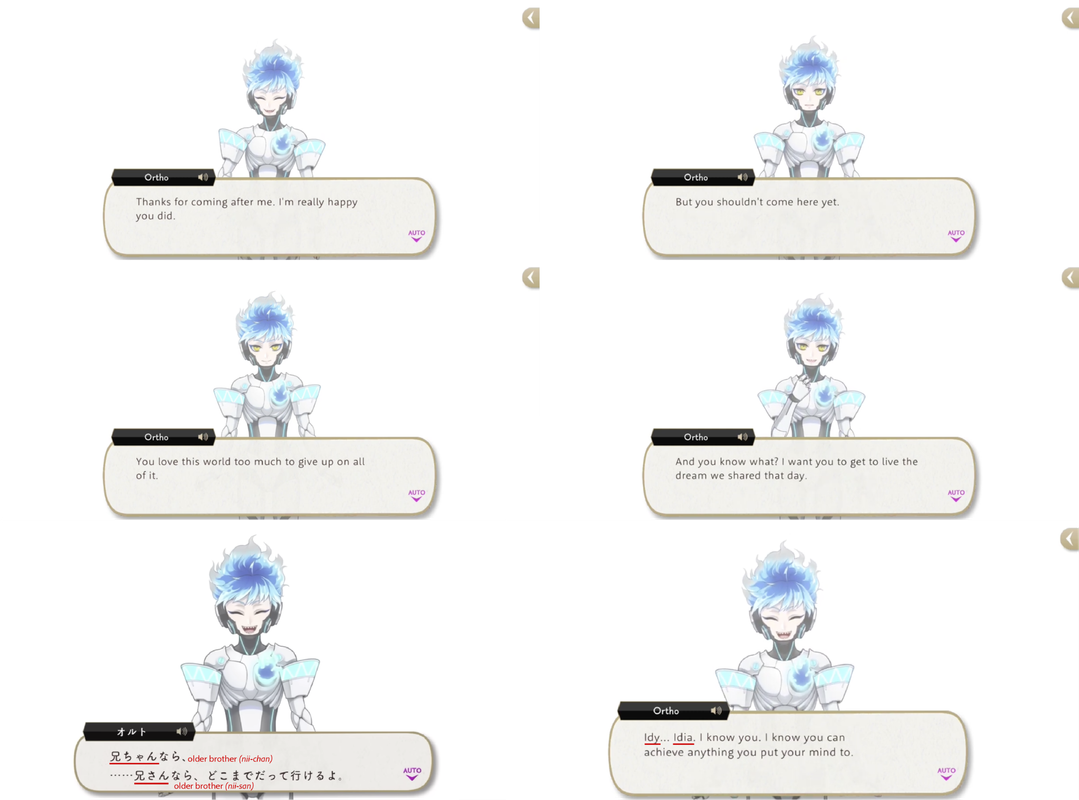
Original-Ortho appears to Idia, telling him that “You shouldn’t come here yet” because he loves the world too much to give up on it, and that he wants Idia to get to live their dream.
Changing from the “Nii-chan” version of older brother to the Nii-san version used by robot-Ortho, he metaphorically passes the torch to the android version of himself.
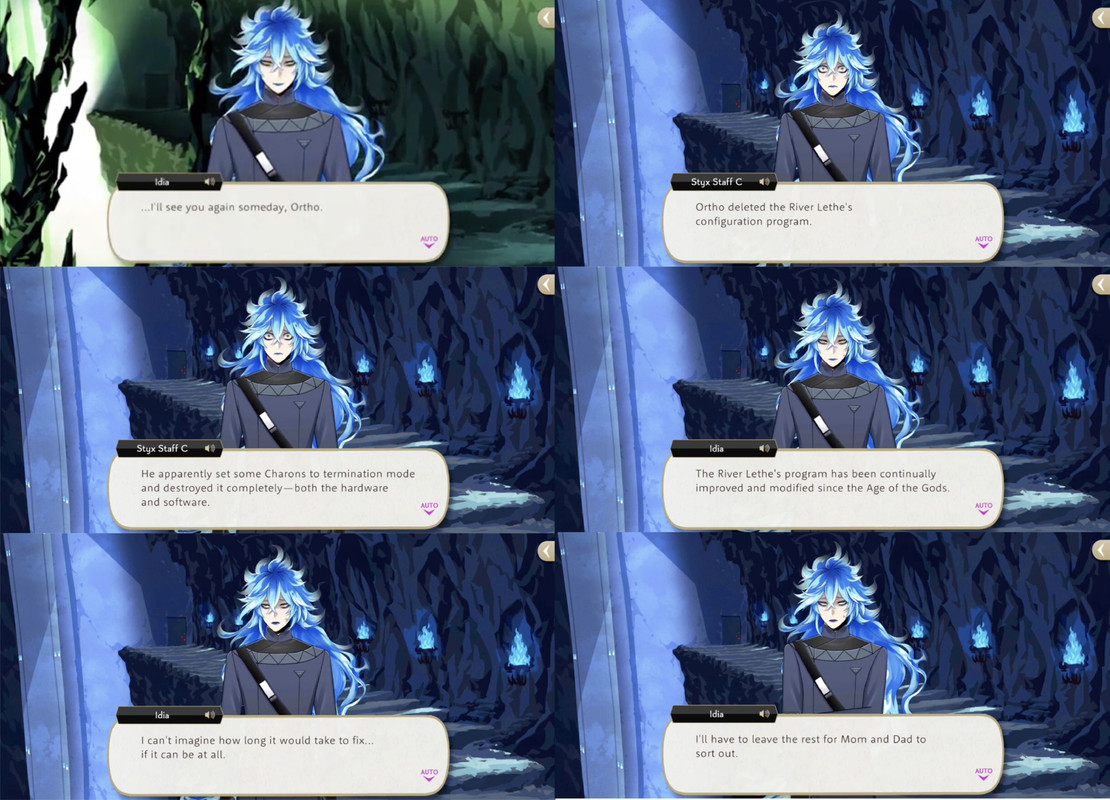
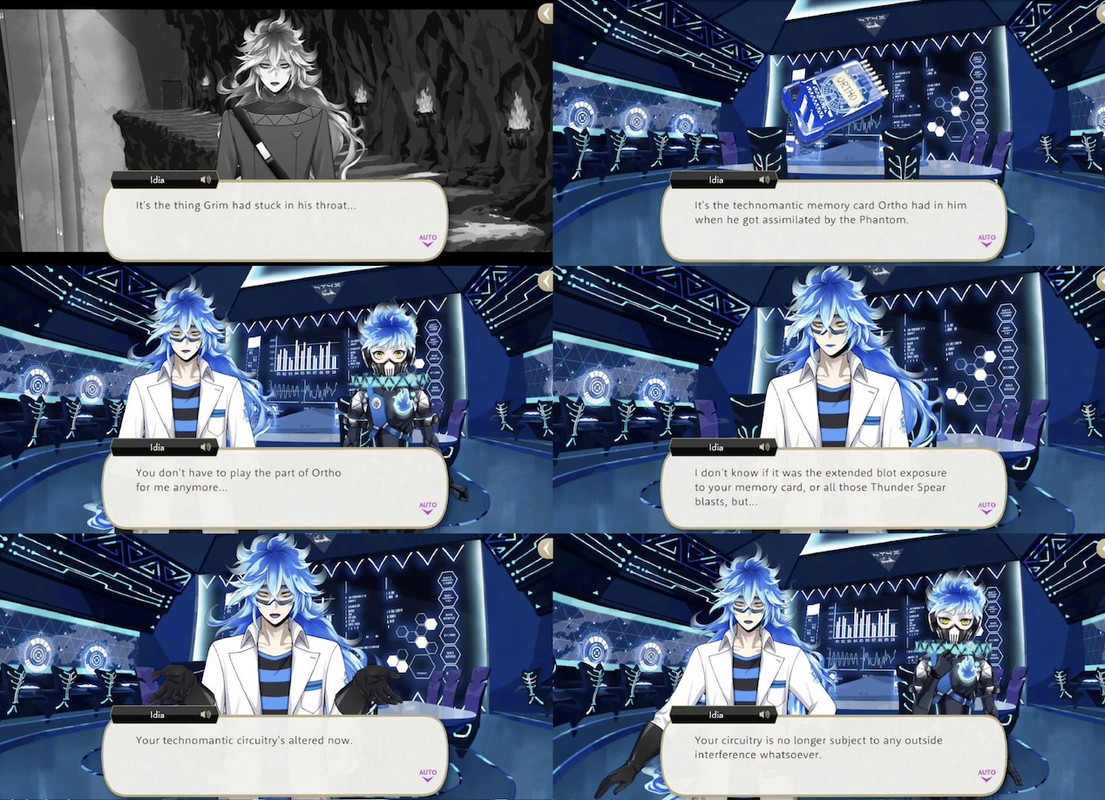
Immediately after we learn that one of Ortho’s final acts was to delete the River Lethe’s configuration program—and destroy it completely—so that Idia will not be able to erase everyone’s memories of what has happened.
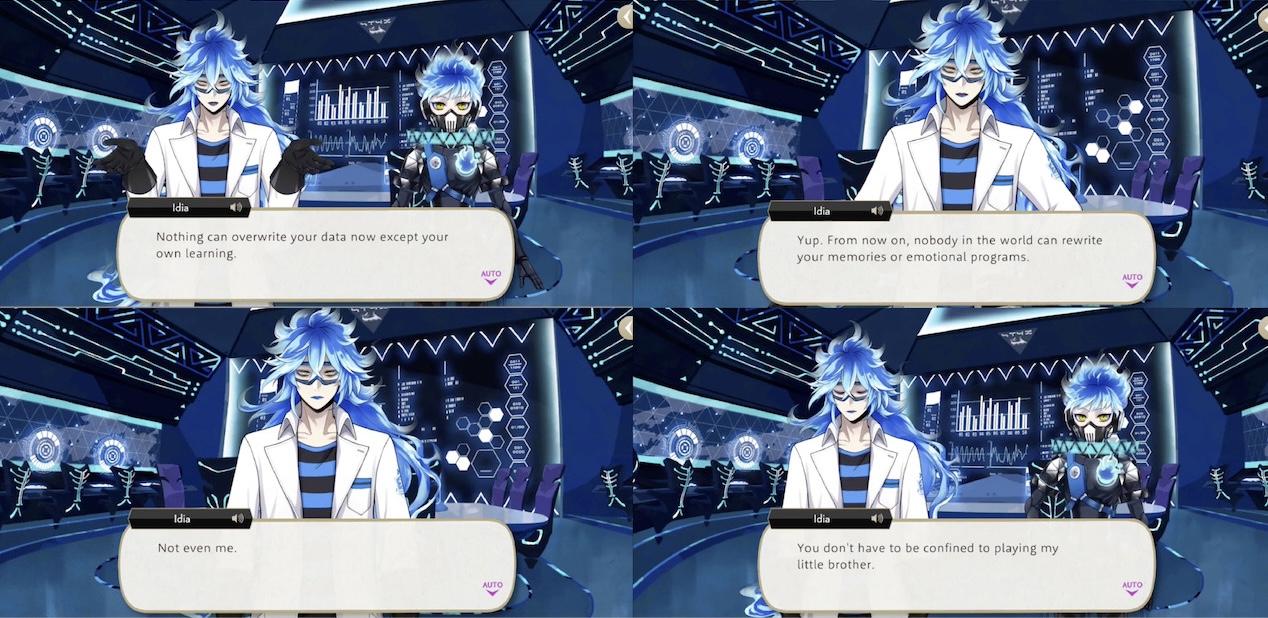
Idia is able to resurrect Ortho through Ortho’s memory card, which Grim had swallowed during the drama, and then explains that Ortho’s circuitry has been altered to the point that he is no longer subject to any outside interference: “Nothing can overwrite your data now except your own learning…nobody in the world can rewrite your memories or emotional programs. Not even me.”
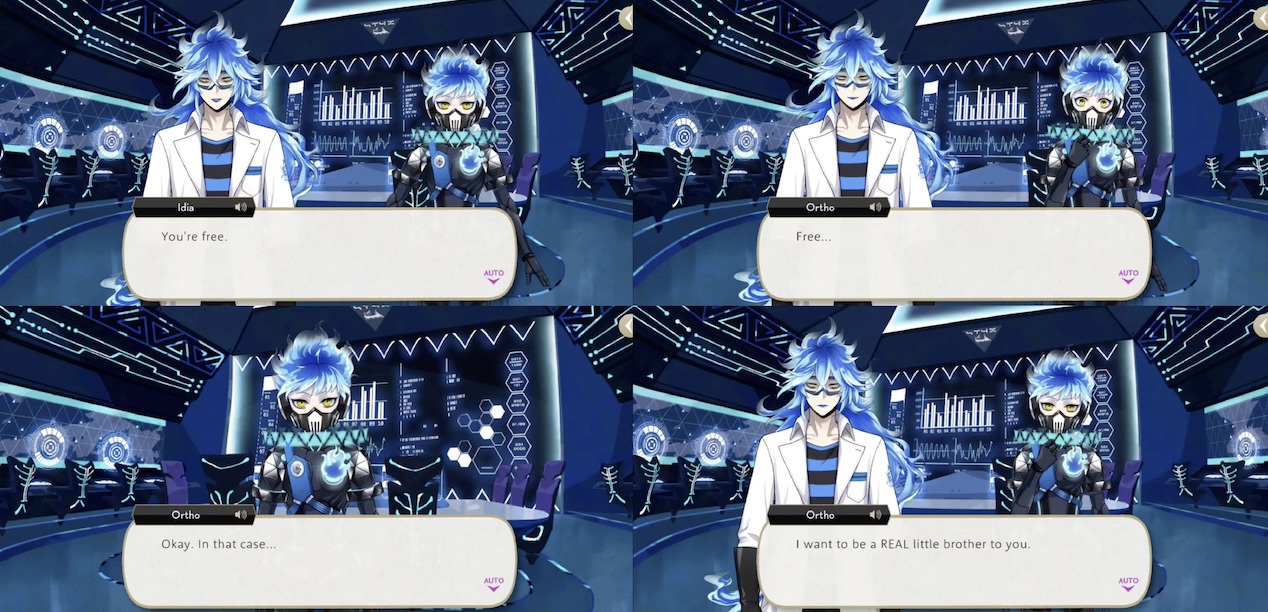
Idia then excuses Ortho from his role of “playing” as his little brother, saying that he is free.
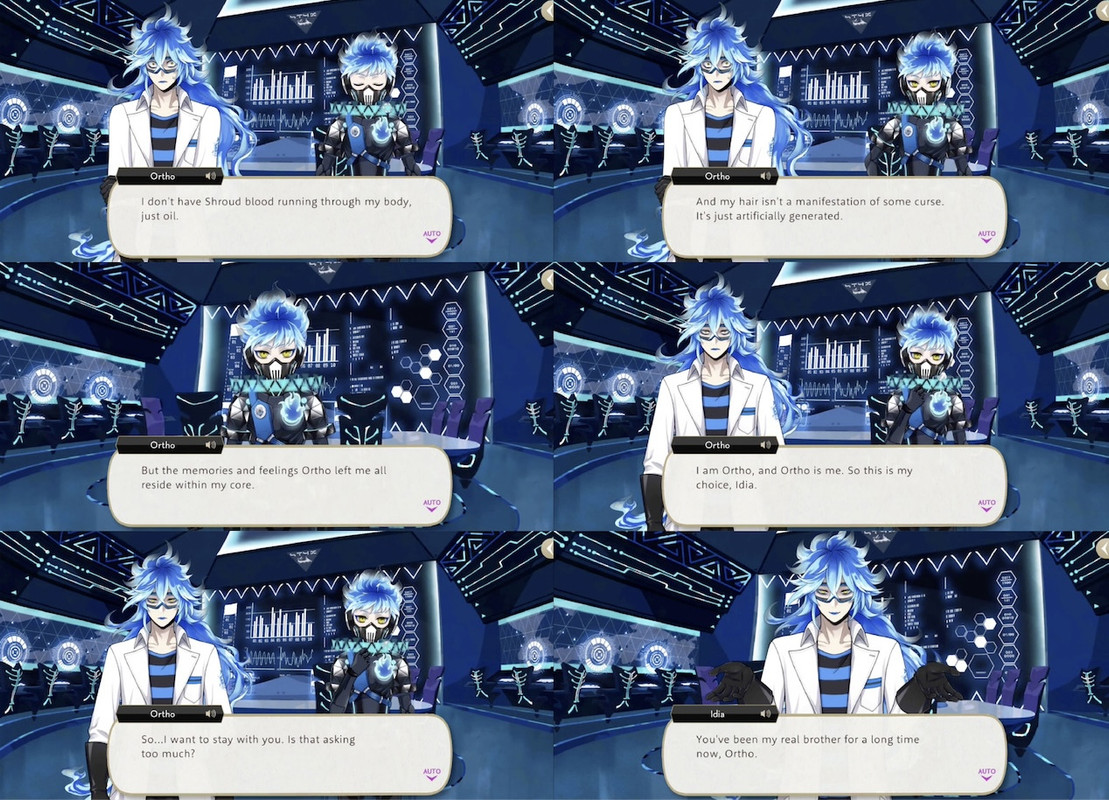
Ortho’s first choice as his own free being is to ask to become Idia’s “real” little brother, and Idia responds, “You’ve been my real brother for a long time now.”
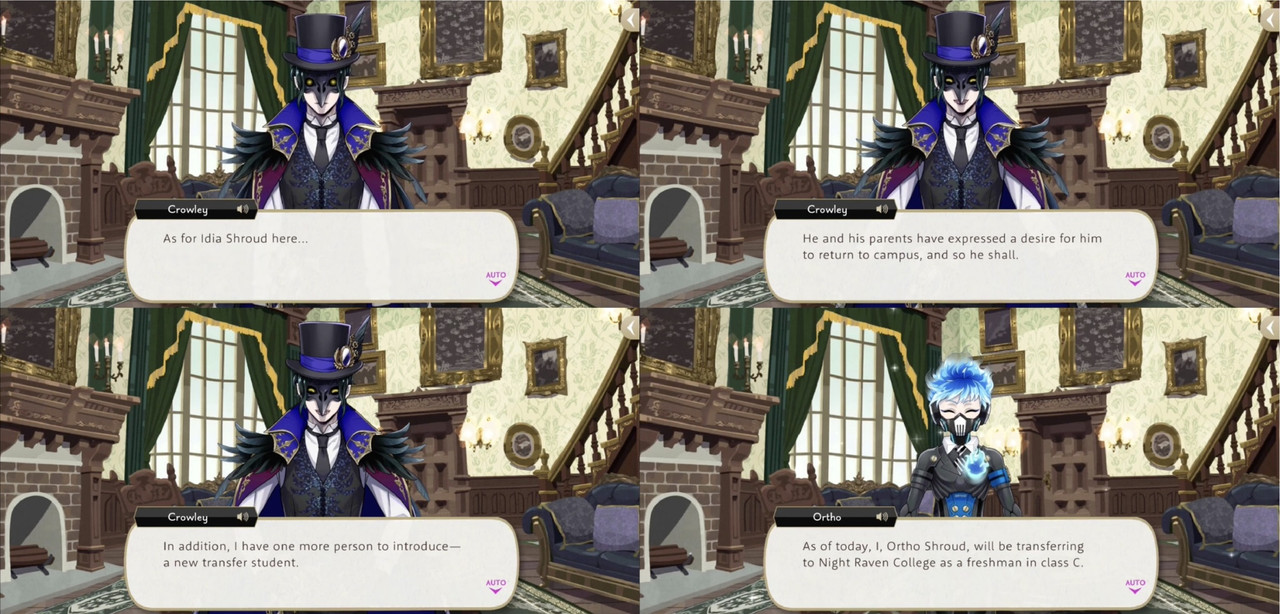
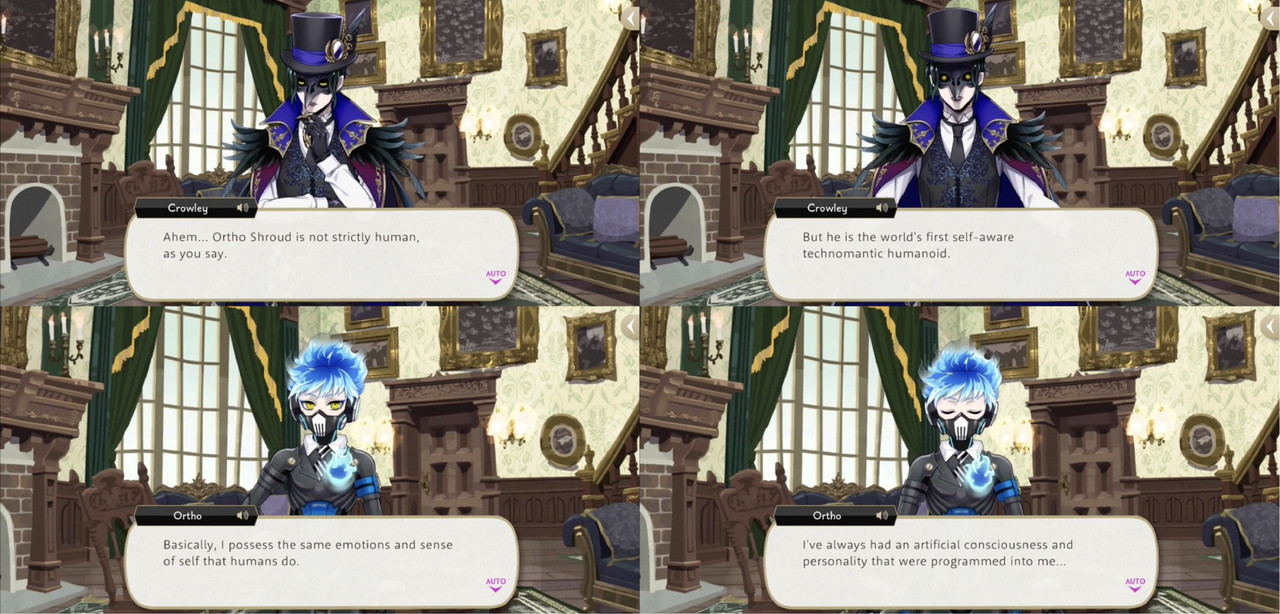
Back at NRC Crowley explains that as the world’s first self-aware technomantic humanoid, Ortho will be joining Class C as a transfer student.
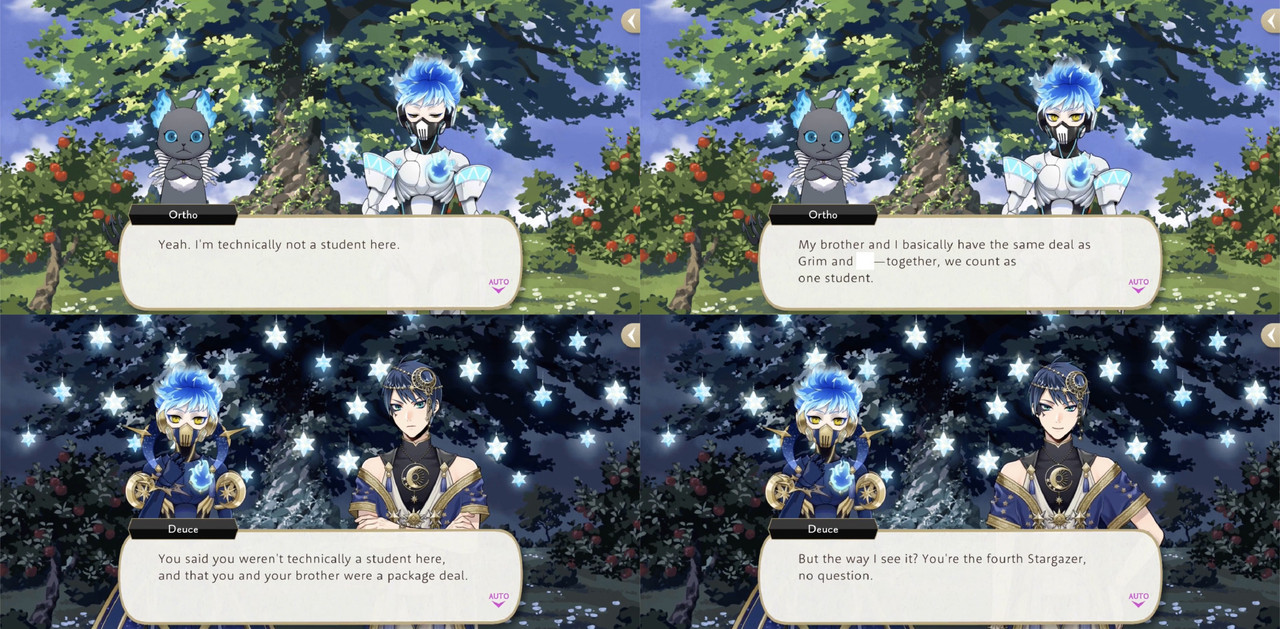
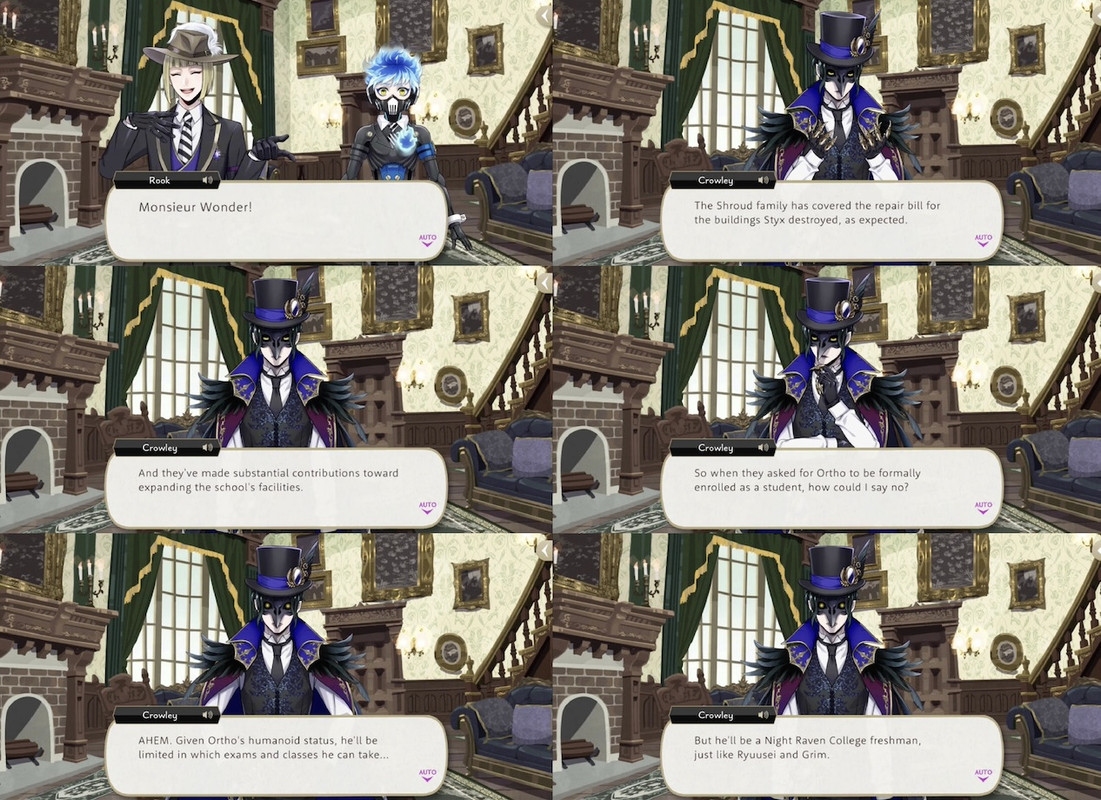
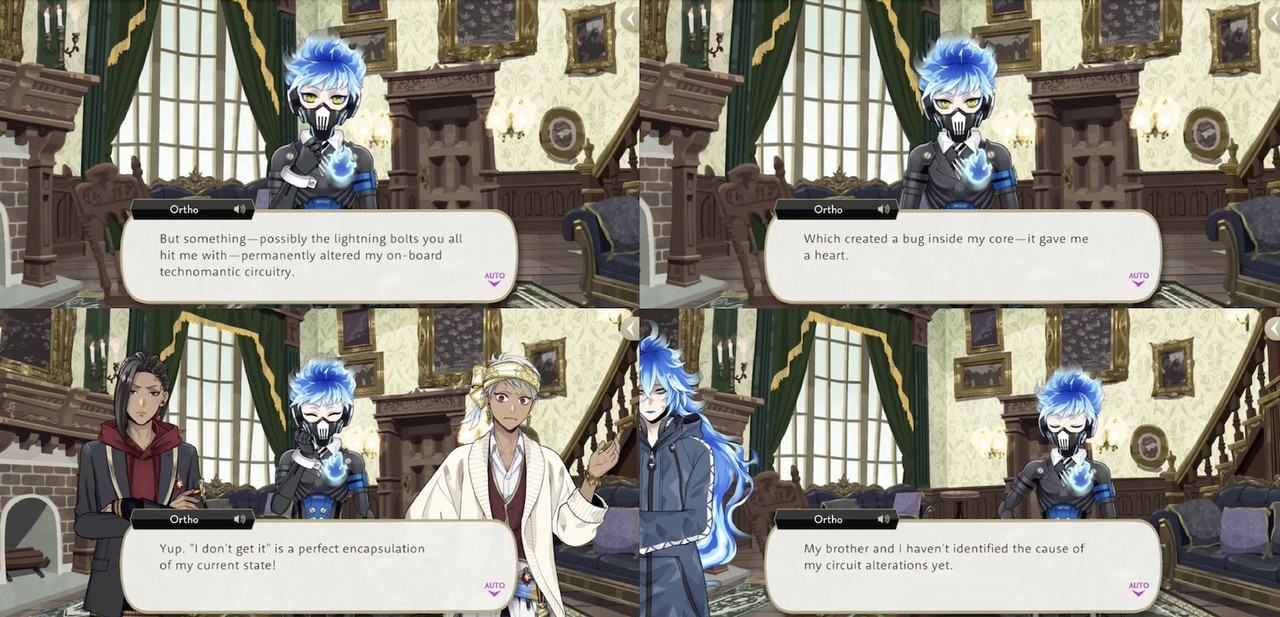
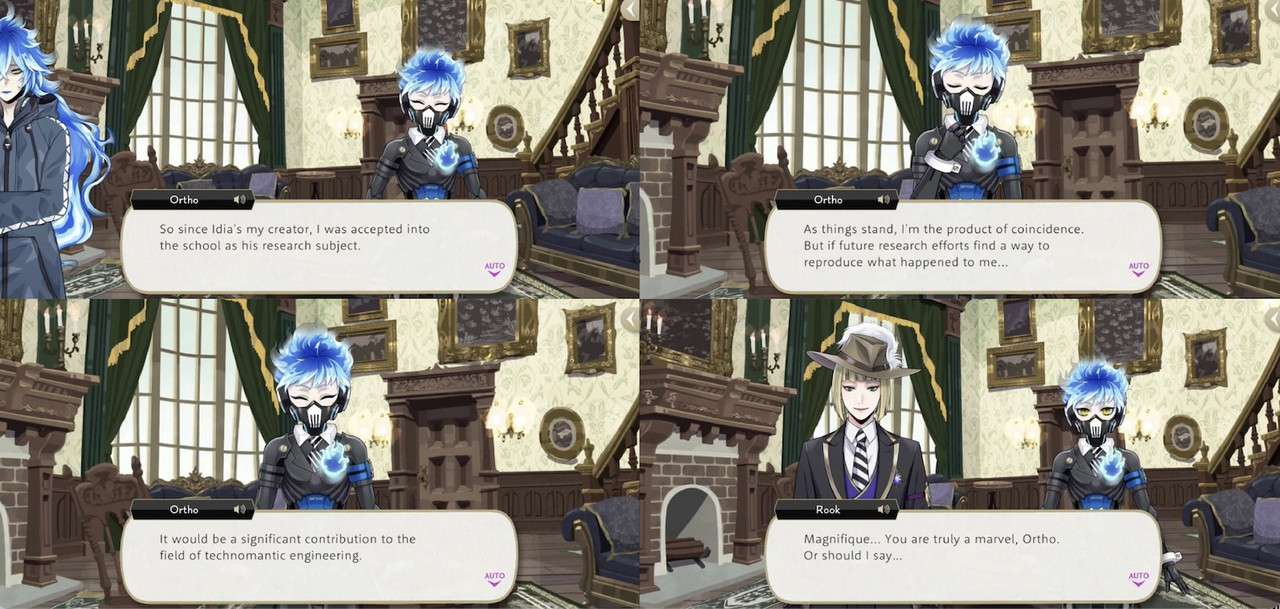
Ortho explains that since they haven’t been able to identify the cause of his circuit alterations yet, he was accepted into the school as Idia’s research project (until Book 6 Ortho was one-half a student Idia, similar to the situation between the player and Grim. Crowley follows up with a hurried explanation about how he couldn’t refuse Idia’s family’s wish for Ortho to enroll after they “made substantial contributions” towards expanding the school’s facilities).
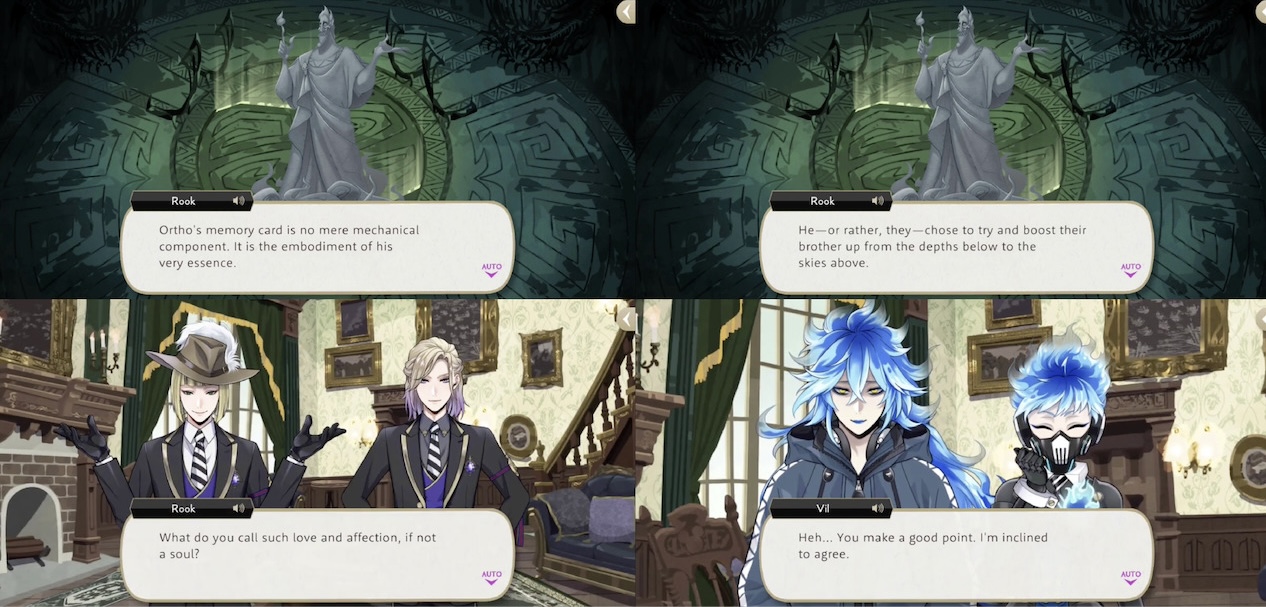
Rook and Vil have a conversation about how the two Orthos’ decision to save Idia expressed “such love and affection” that it could only be called a “soul.”
 Twisted Wonderland Reference Note