


The short, spoiler-free answer is: the way that Epel is used to speaking back home includes something that is particular to the Japanese language, and it might be impossible to translate into English.
Aniplex USA is doing their best with the localization but a lot is getting lost in translation because the Japanese language and the English language are so very different: Epel’s natural dialect uses forms of speech that are inappropriate to use with teachers and upperclassmen, and that don’t exist in English.
Since everyone back in his village treated him like family (there were no other children his age), he is used to speaking very casually with older people as though they are his equals. Vil cannot have a member of Pomefiore obliviously insulting the students of not only his own dorm but those of other dorms and the school’s faculty.

But Epel isn’t intentionally being rude; it’s just all he knows. So he is rankling at Vil instituting what he sees as frivolous rules, but it is Vil’s responsibility as Epel’s housewarden to guide him in this new territory.
It is not a personal vendetta: it is just Vil doing his job, though neither character is very happy about it.
And there is a possibility for additional misunderstanding on EN in particular, as a line where Vil told Epel that he needs to “speak more politely” was written as “speak properly,” which is a significant change, in context.

This also came up back in 2023, and a user from a Scandinavian country (and Epel’s hometown can come across as fairly Scandinavia-coded, even borrowing words from the Finnish language) mentioned a similar experience in their own life. It is possible that real-world experiences were intentionally integrated into the creation of Epel’s character and his head-butting with Vil.
The user explained:
I’m from a Scandinavian country and even here we have dialects. I haven’t heard them myself, but my mom has and she says they are literally impossible to understand and you need a translator to speak with them. And it’s not a bad thing–we don’t say those people are less than or anything of the sort–it’s just like holy cow we cannot understand anything they’re saying, how are we supposed to communicate like this (especially when they understand us since our dialect is the ‘base’ dialect).
If anything, it’s funny because of how a dialect can make the same language not understandable, and also disappointing/frustrating that we can’t talk to them because we literally don’t know what they’re saying. So to me it seems like part of the reason Vil wants Epel to not speak in his dialect is simply so people can understand him better and so people can actually communicate with him.
We’ve seen in the Harveston event (if I remember correctly) that the others have no clue what Epel says before they jump the gap, and they need to ask his grandma to translate. That’s an example of how if he didn’t remove his dialect people would not know what he’s saying. I don’t think it has anything to do with negative connotations towards the dialect (I bet Vil would encourage it if they were in a situation where it would be beneficial/welcoming), but rather Vil trying to teach Epel that it’s not about hiding your dialect/culture, it’s about being considerate to those around you to have them understand you (like how you pointed out his granny changed to polite speech when talking to the NRC boys).
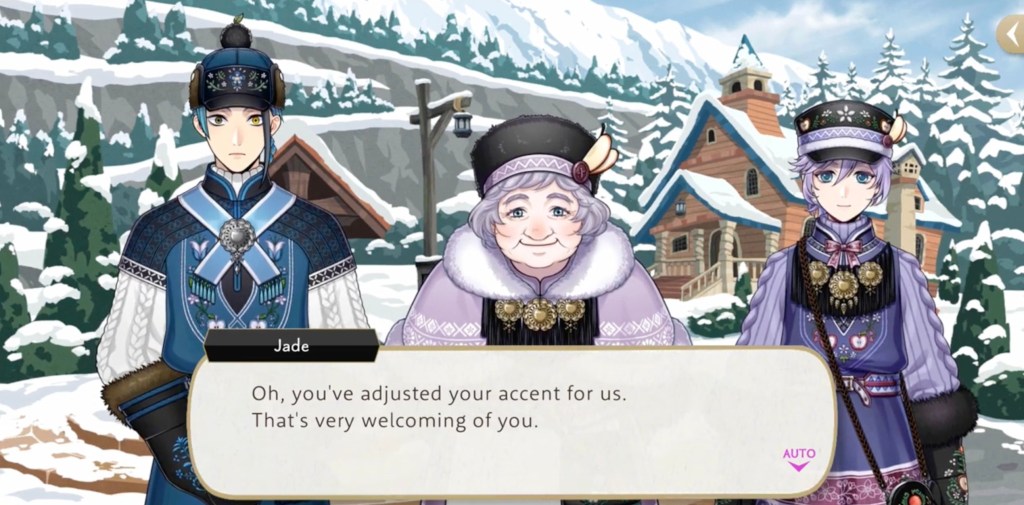
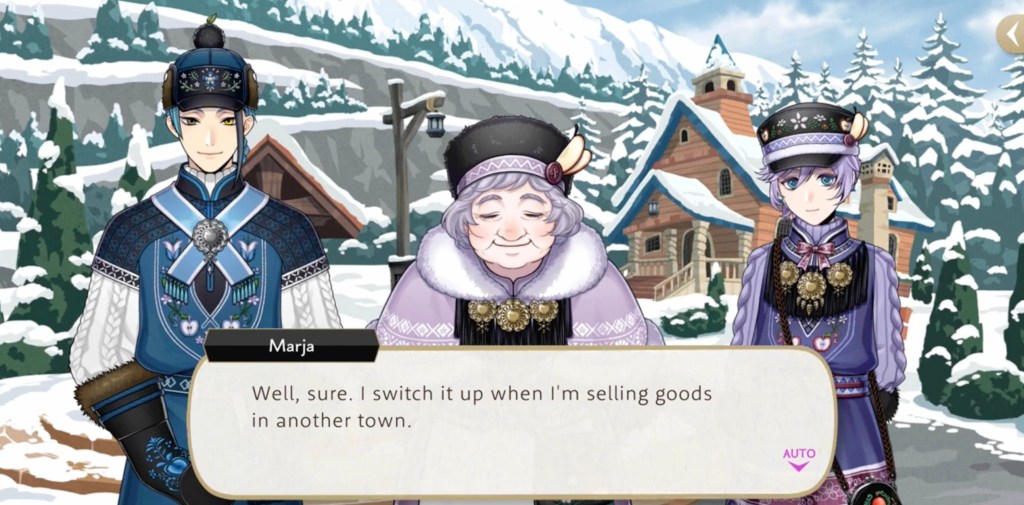
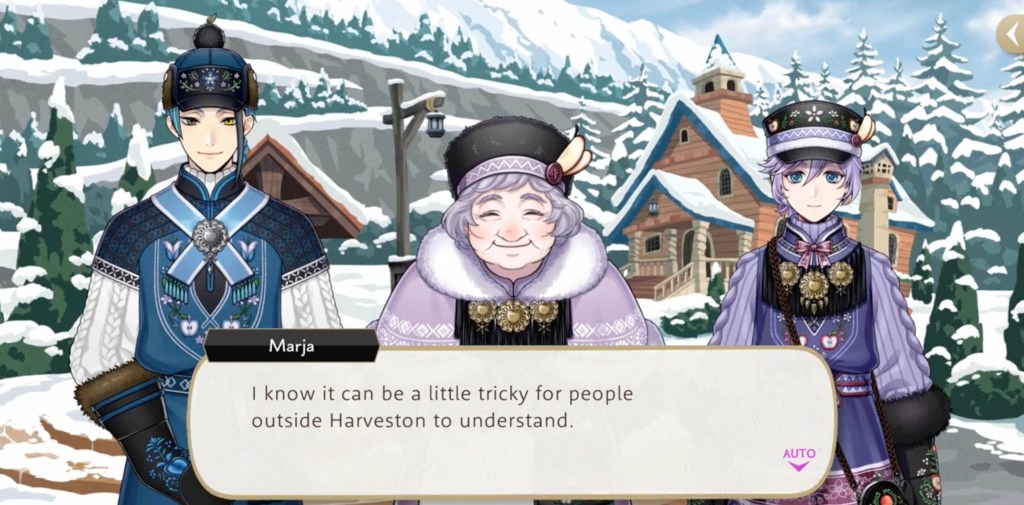
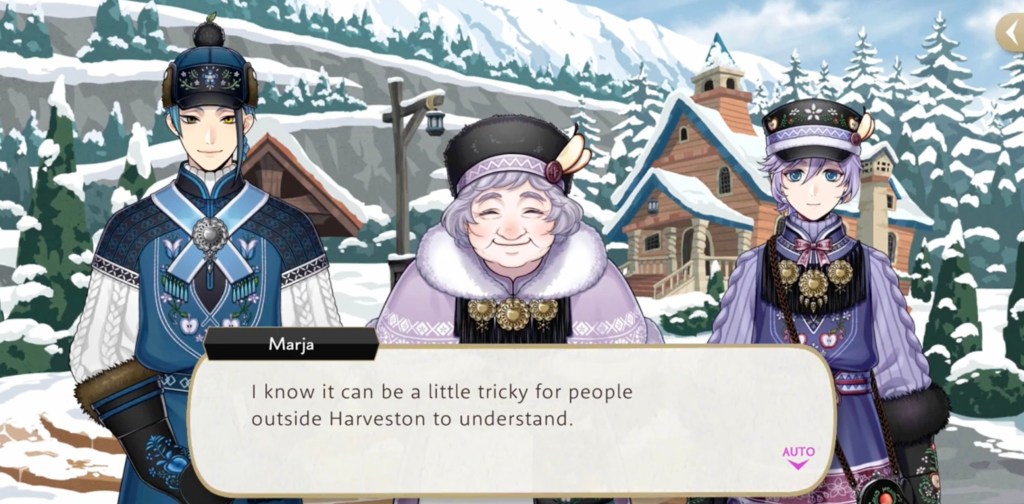
Epel’s grandmother Marja herself is shown having no problem with adapting to the time/place/occasion, which Vil is trying to teach to Epel, but as Epel is still a child with limited exposure to people from other cultures, we are watching him experience this learning process in real time, in a form of culture shock.
In a way, Epel’s experience at NRC could maybe be interpreted as Vil encouraging him to be more like his grandmother. Epel was likely aware that the older people in the village adapt their speech patterns when necessary, but maybe never made the connection about exactly why?
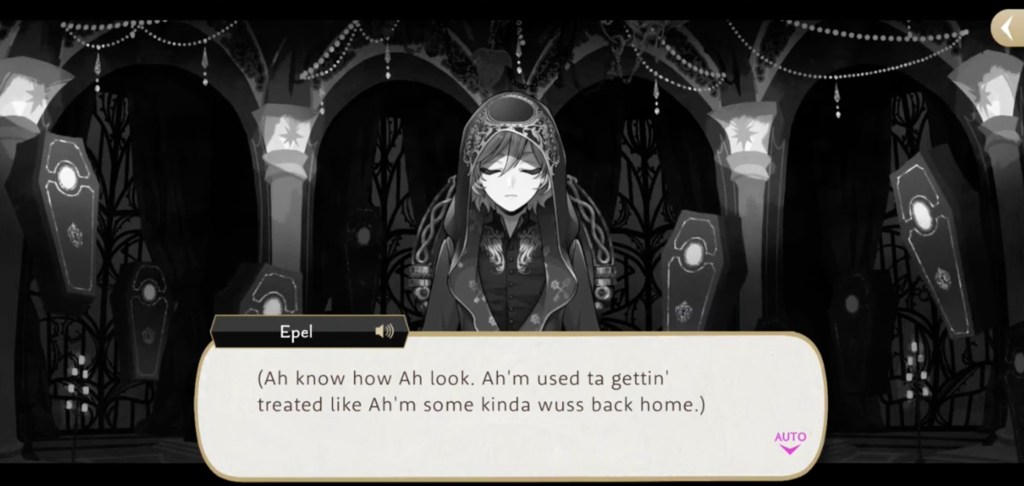
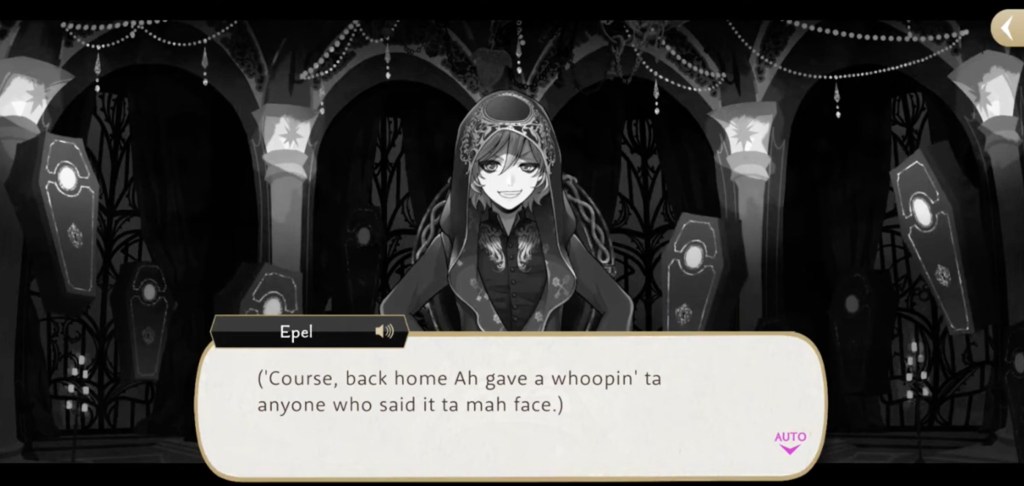
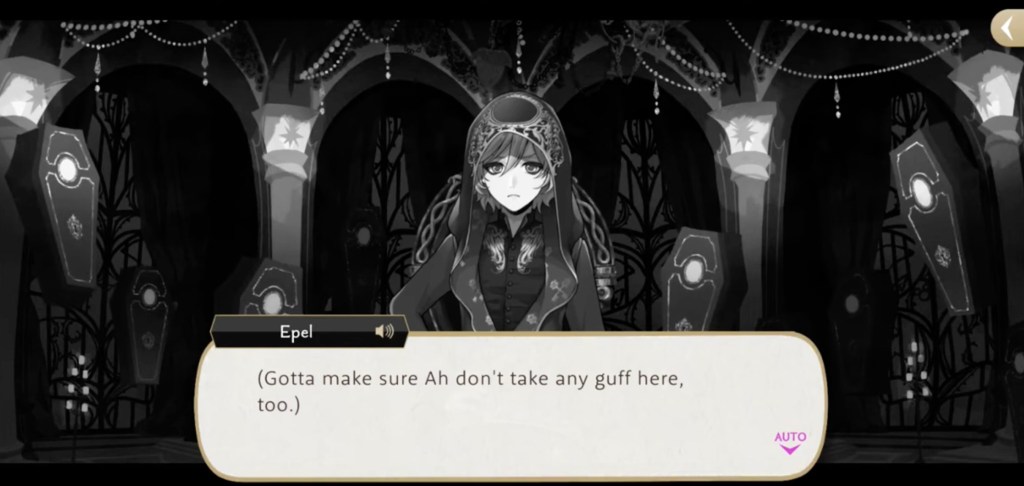
He knew it was polite, but when early-Epel shows up at NRC, he is already in fighting mode: he has no interest in being polite, which he might have seen as making concessions and, thus, a weakness.
Bullied his whole childhood for his appearance he decides he is going to set the record straight from day one at NRC so that people know not to mess with him, and then Vil appears.
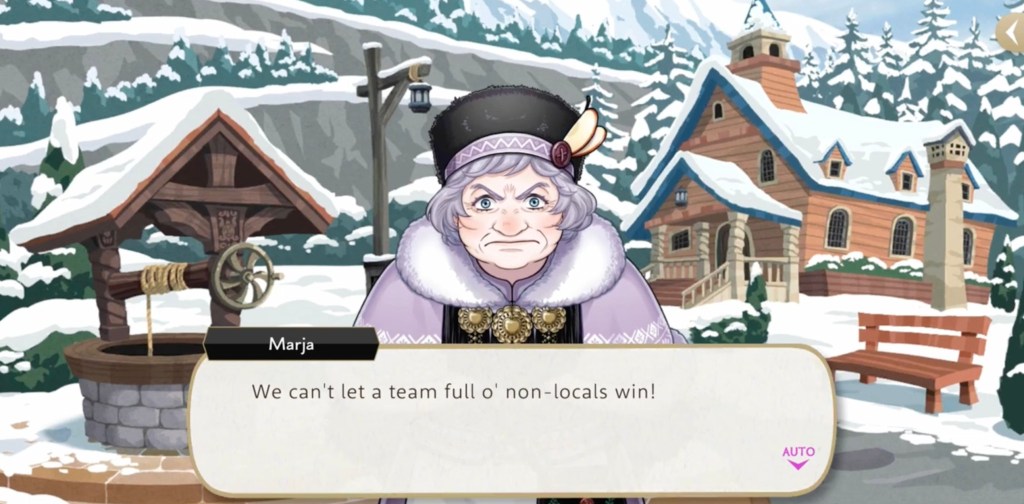
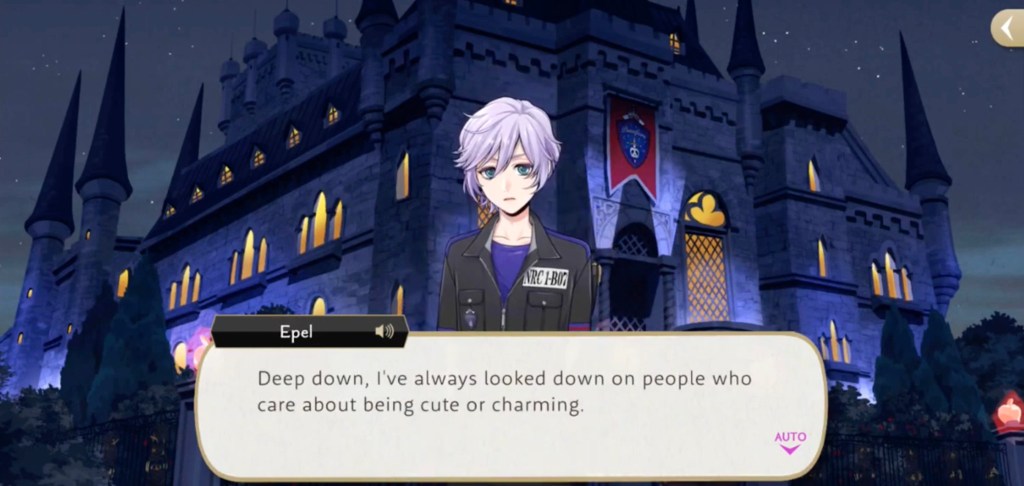

It seems like it all connects to Epel’s arc as he learns that you can be conscientious of time/place/occasion (like his grandmother), but still be proud of your heritage and strong (like his grandmother). And you can be beautiful (like Vil), but still be strong (like Vil).
Vil is trying to prepare Epel for life in society outside of his mountain village.
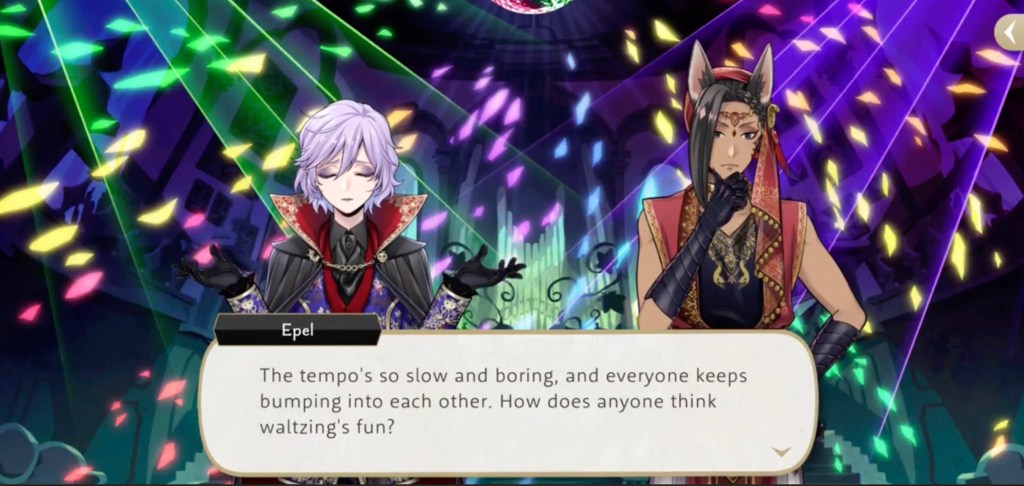
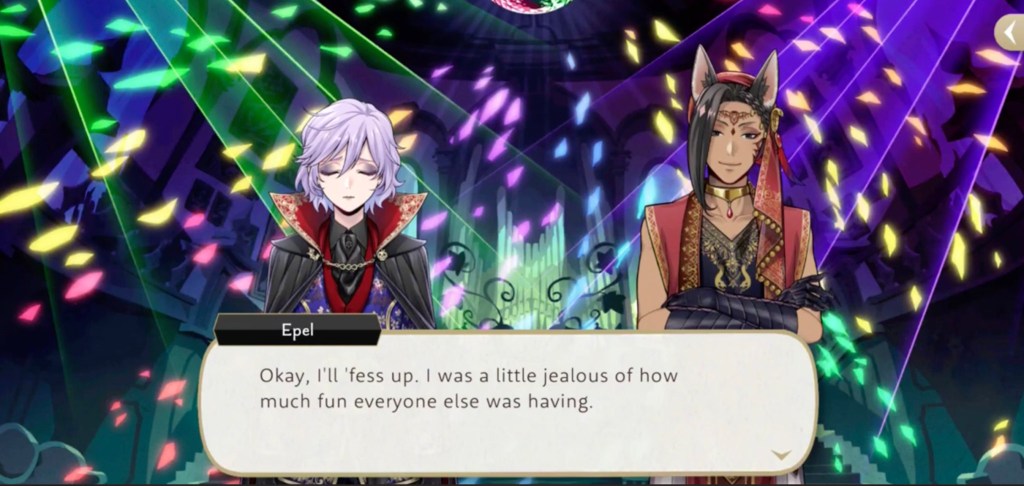
There is an ongoing theme with Epel that we see in Book 5 and Halloween where he gets jealous of people who can do things that he can’t, so he doubles down that he is right and they are wrong in order to make himself feel better about his shortcomings.
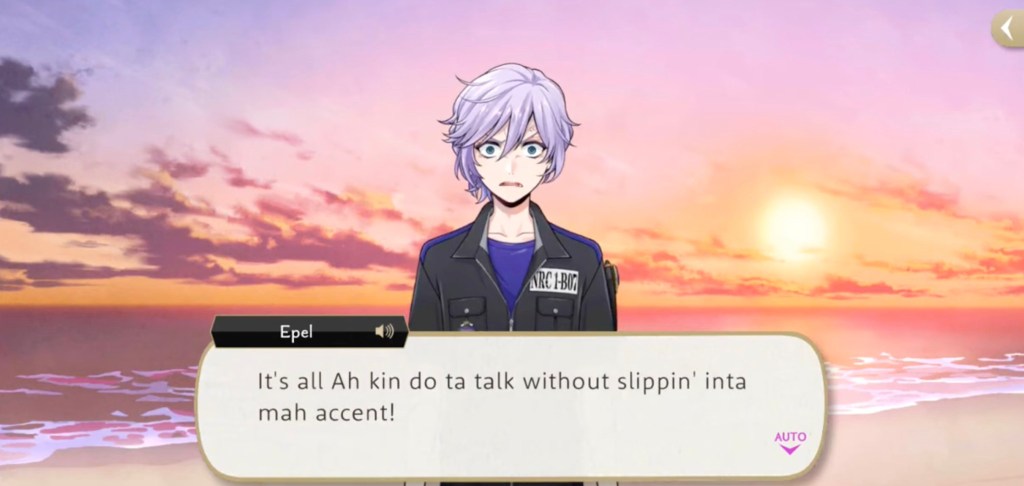
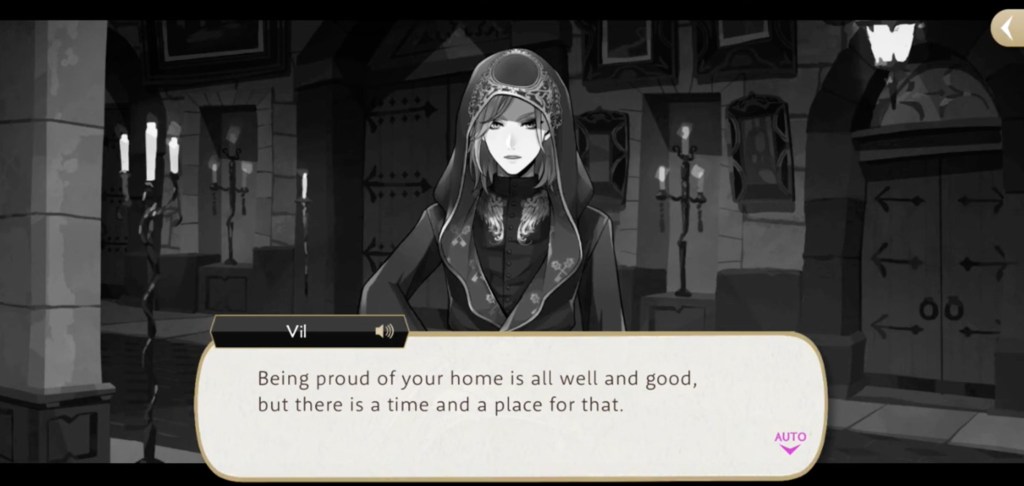
That might also tie in to his frustration with Vil’s restriction of his dialect: He has more difficulty expressing himself without it, so rather than do what Vil is trying to get him to do and work on it, until the middle of Book 5 he is still doubling down and insisting that Vil is the problem, not himself, despite how he was raised watching everyone around him do exactly what it is that Vil is saying he needs to do.

So Epel is essentially speaking in code, but what exactly is he saying that Vil is taking issue with?
The Japanese language has multiple verb forms that change depending upon who you’re talking to at the time. “Meshiagaru,” “taberu” and “kuu” are three different ways to say “eat,” for example, depending on how polite you want to be.
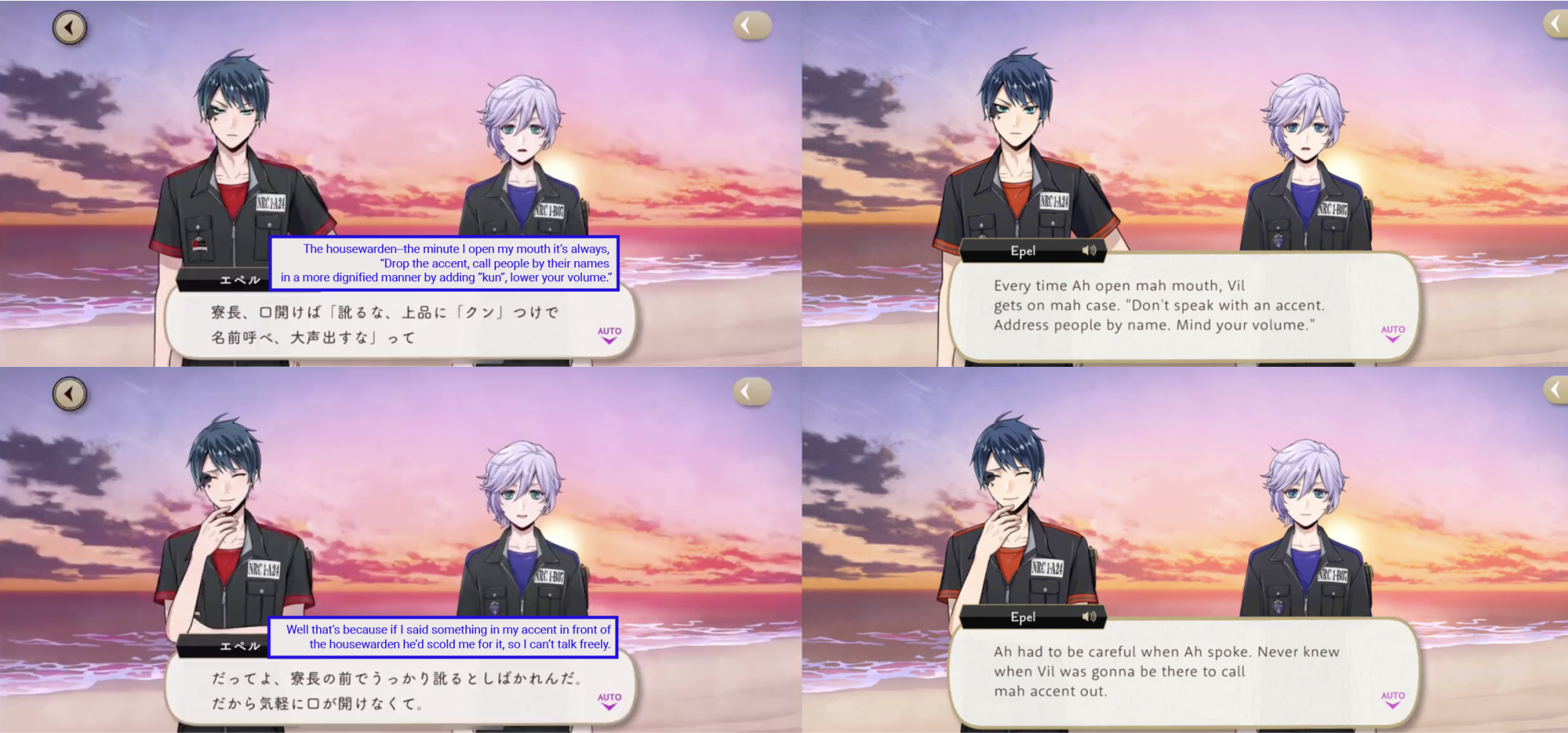
In the beach scene (and anywhere we get his Harveston dialect), Epel immediately shifts into casual/impolite verb forms.
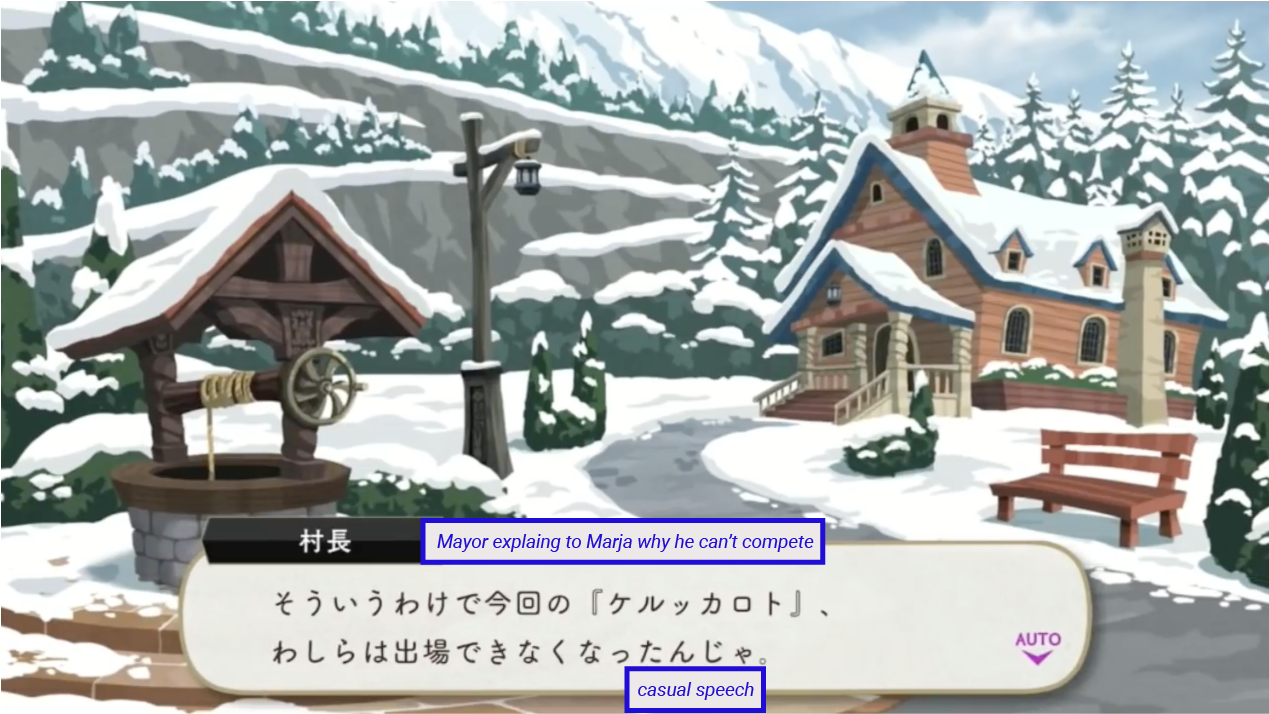
During the most formal interaction involving characters speaking in the Harveston dialect that we have seen, where the mayor is apologizing to Marja, the character still uses casual/informal verb forms.
So that is what Vil is actually getting at: he wants Epel to use polite speech around his senpai and teachers, but Epel’s original dialect might just not adhere to that system.
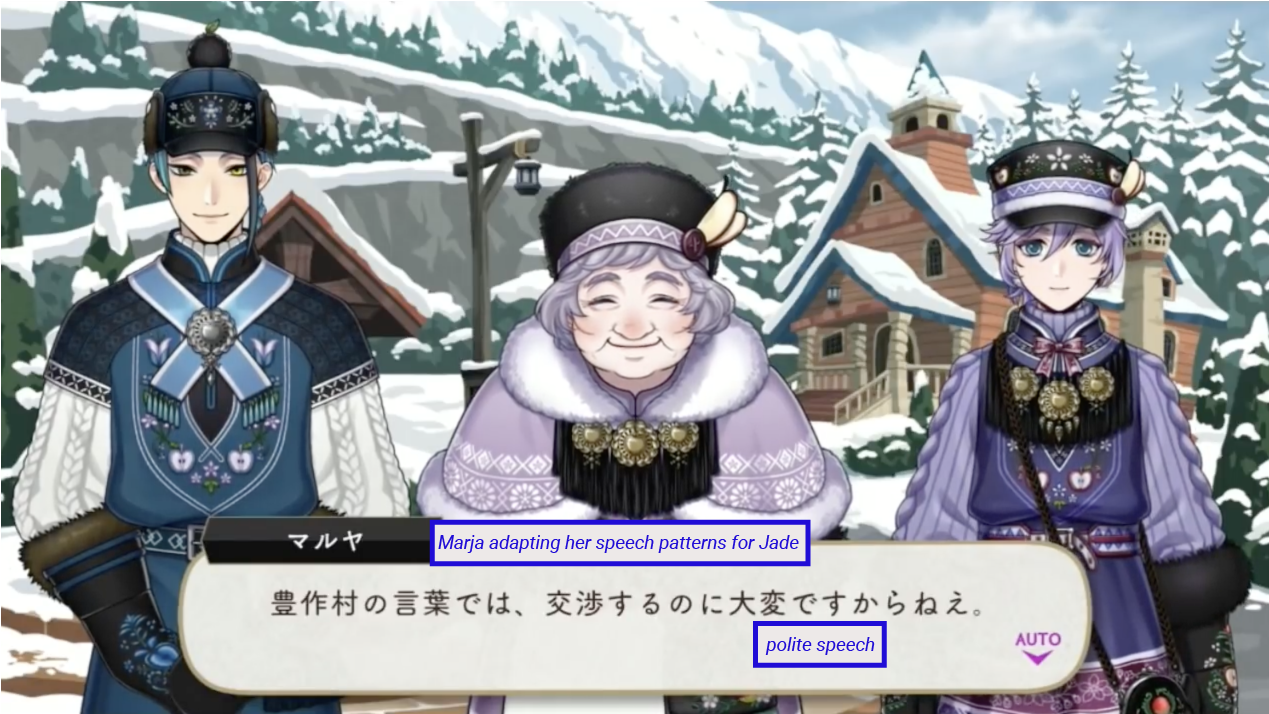
The Harveston dialect clearly has its own ways to denote politeness, which must make sense when you’re there, but outside of Harveston what is a harmless and natural way of speaking becomes offensive from the perspective of everyone else (when Marja adapts her speaking patterns so that the visiting NRC students can understand her, she uses polite forms).
Not able to have a student from his dorm obliviously insulting everyone around him through his verb forms, Vil bans Epel’s dialect entirely, presumably so that Epel can grow more accustomed to interacting with people from other countries and then learn to judge for himself the times, places and occasions outside of Harveston where that degree of informality is appropriate, just like Epel’s grandmother does.

