
On EN Ruggie refers to Leona by his first name (with no honorific), “Your Highness”, “Housewarden” and “Boss”, but canonically he only rarely deviates from “Leona-san,“ and something fascinating happens during Book 2.
In Japanese there are several forms of “you”, but none of them are as polite as referring to someone in the third person.
If you have ever been reading a manga where a character suddenly says “Stop calling me ‘you,’ my name is XX,” this is why: it can be rude to refer to someone by most forms of “you” in Japanese. It is more polite to call someone by their name to their face.
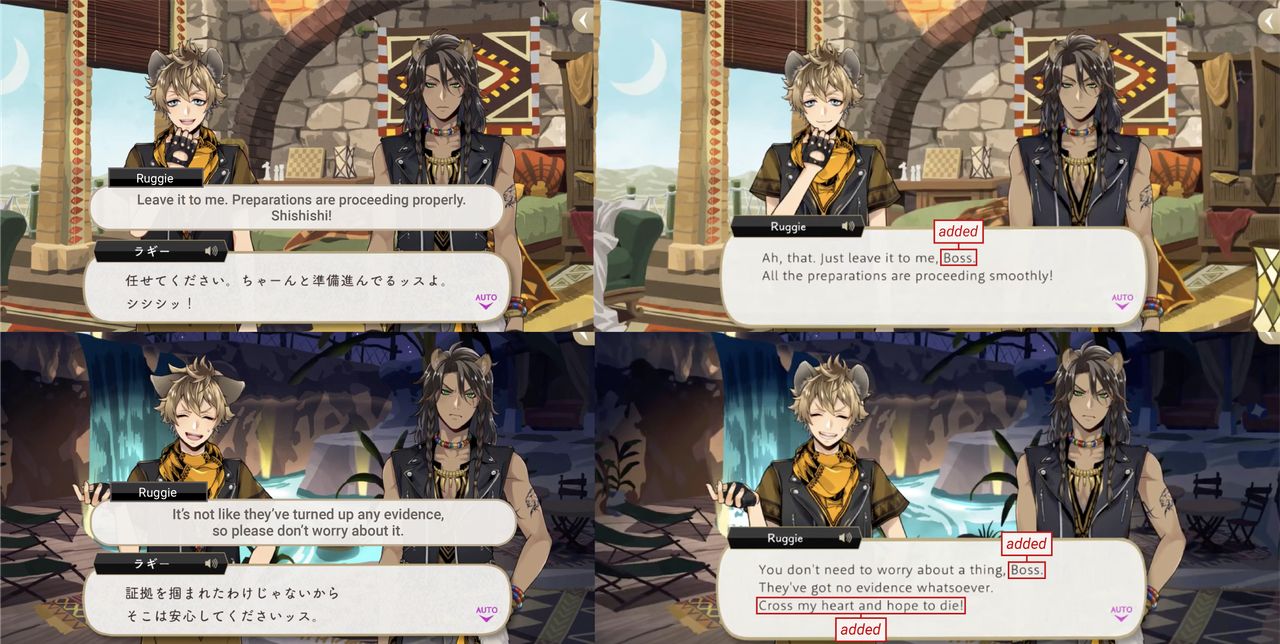
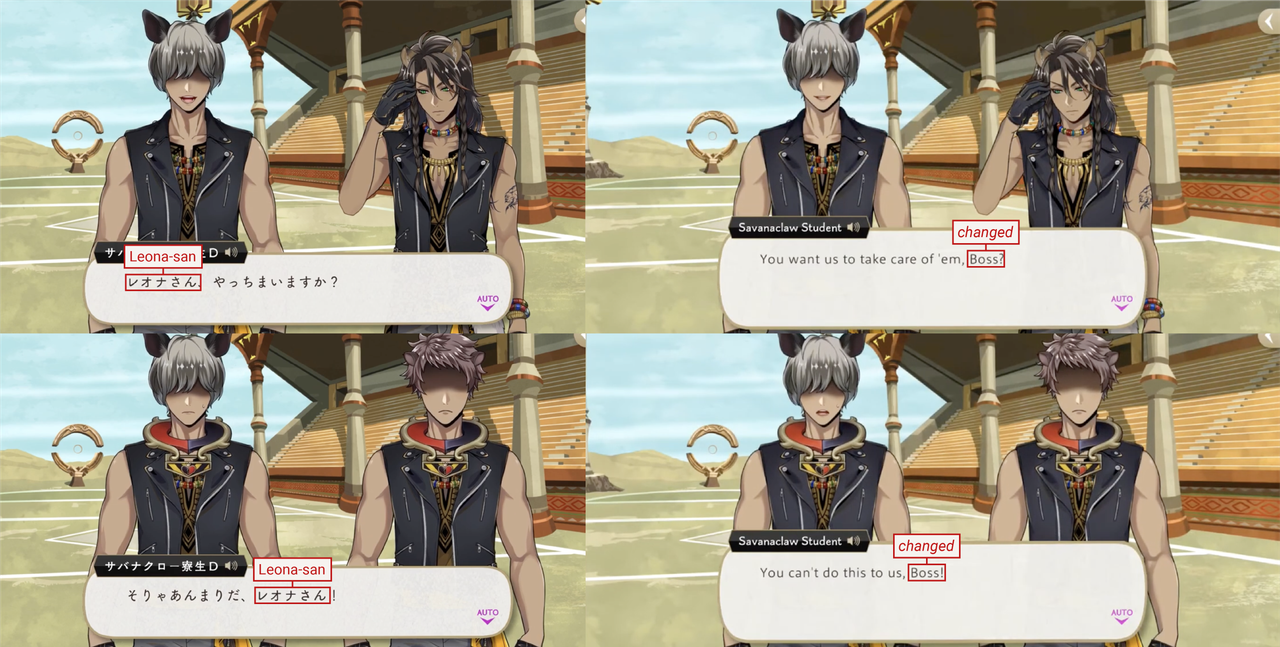
On EN Ruggie only refers to Leona as “boss” when they are alone. When their plot is revealed they start acting like they have nothing left to hide, with even unnamed Savanaclaw students referring to Leona as “Boss”, as though Leona is secretly running his dorm like a gang behind the scenes but now the truth has come to light.
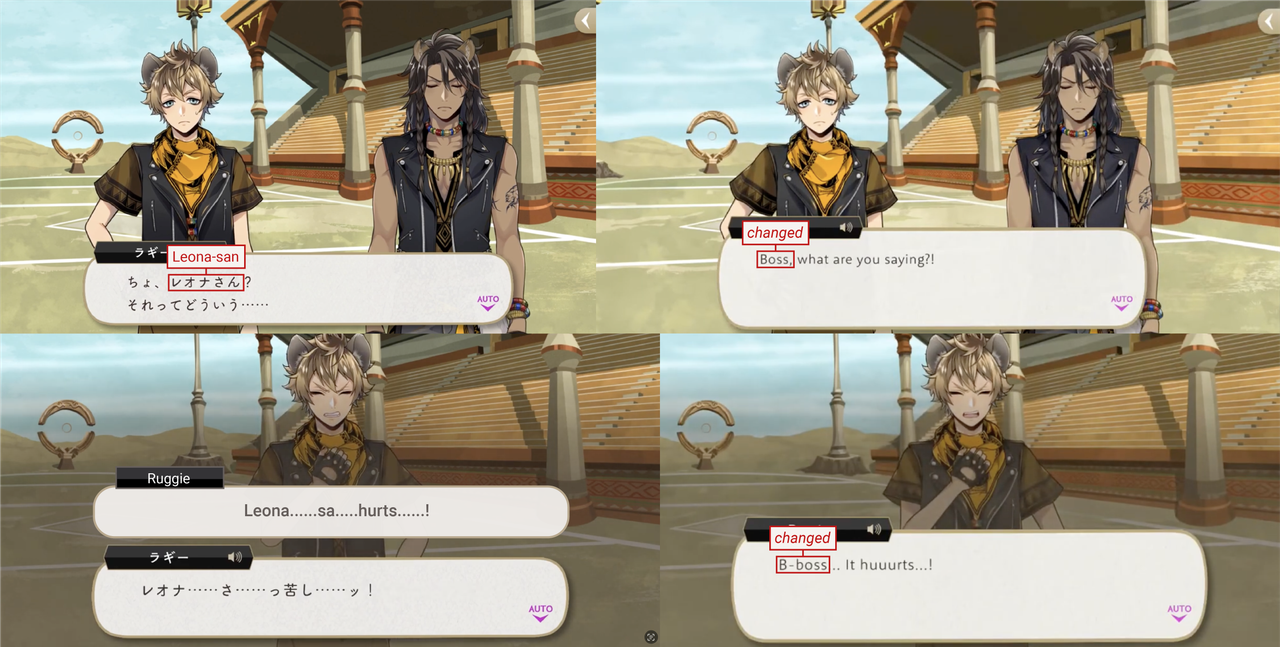
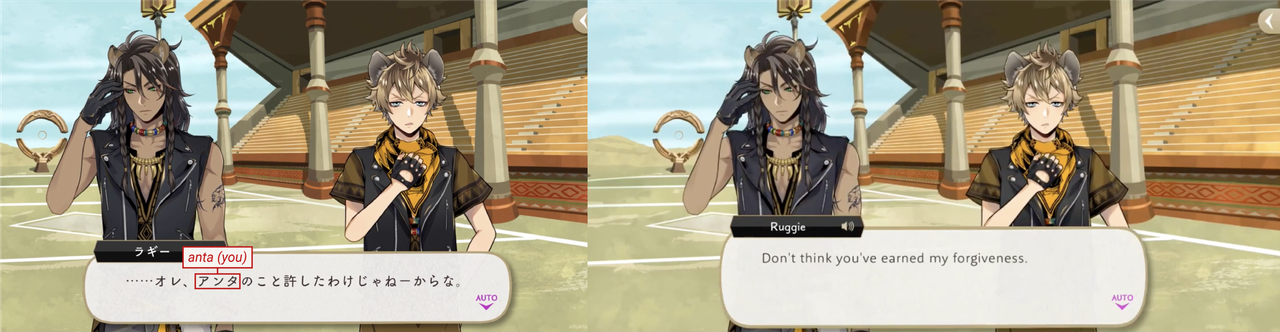
Canonically, no one ever refers to Leona as “boss” in Book 2. Ruggie not only never stops referring to Leona as “Leona-san”, trying to use an honorific even as Leona is actively choking him to death, but when the extent of Leona’s emotional damage is revealed Ruggie actually refers to him as a form of “you” for the first time, which is a huge development.
Looking at earlier scenes again “Housewarden” and “Your Highness” were added to Ruggie’s dialogue, but what he is originally doing is saying “Leona-san” to Leona’s face as though they are discussing a different Leona who is not in the room.
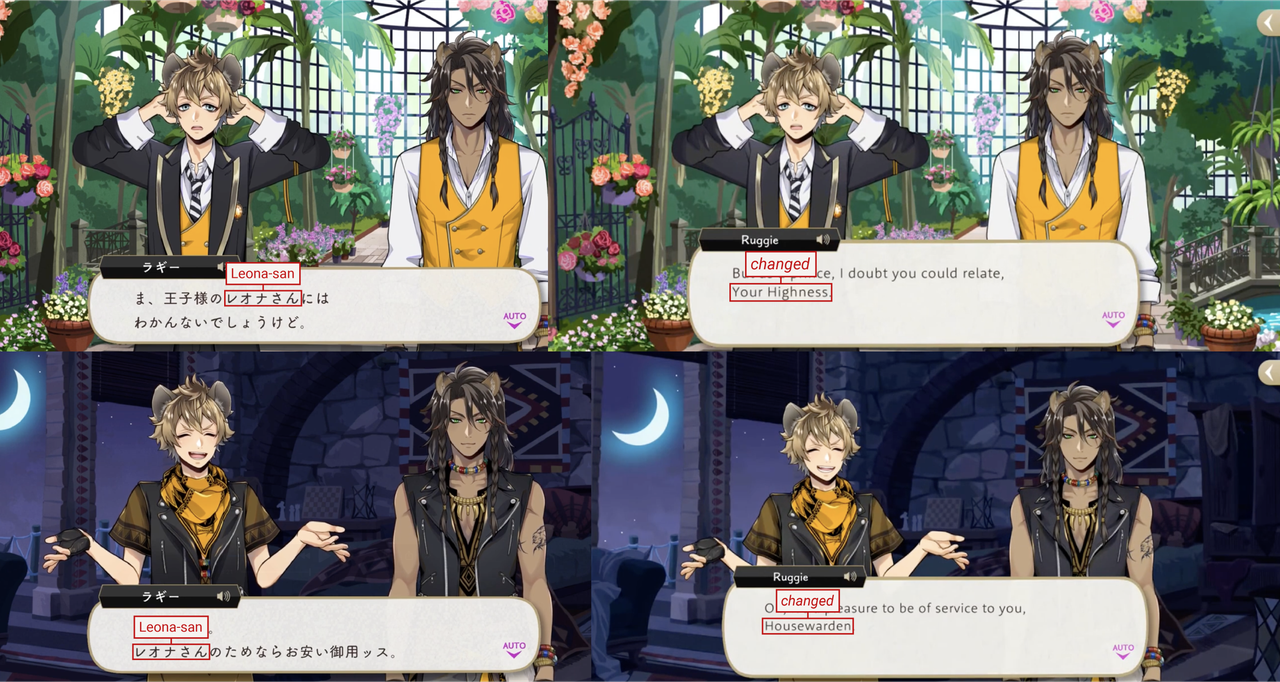
Since saying things like “If it’s for Leona-san” to Leona himself is odd in English it needed to be localized into “you”, but in Japanese this is not only normal, it is polite. You never, ever refer to a figure of authority as any form of “you” in Japanese; it is just too familiar.
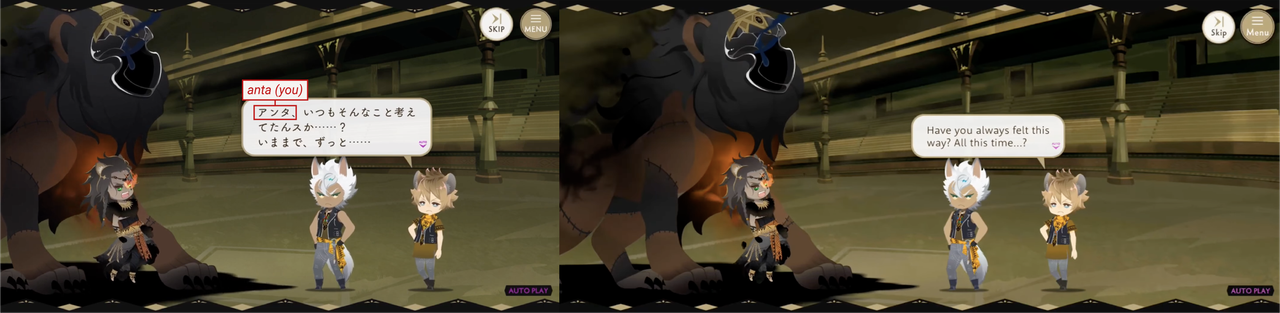
But during and after Leona’s overblot that is just what Ruggie does, referring to Leona as “anta,” a very familiar form of “you.“
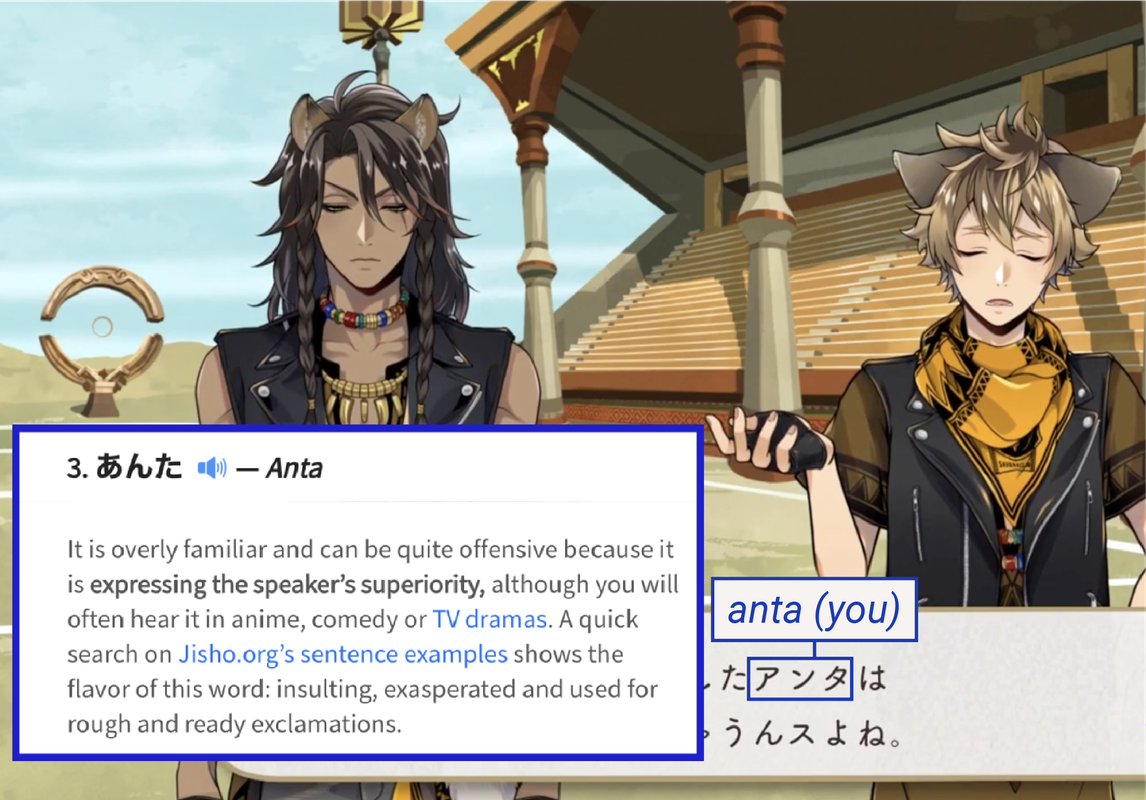
It is like the seriousness of the situation causes Ruggie to step outside their power dynamic and approach him as an equal, and it happens again only one other time: in Book 6 with Leona’s surrender.
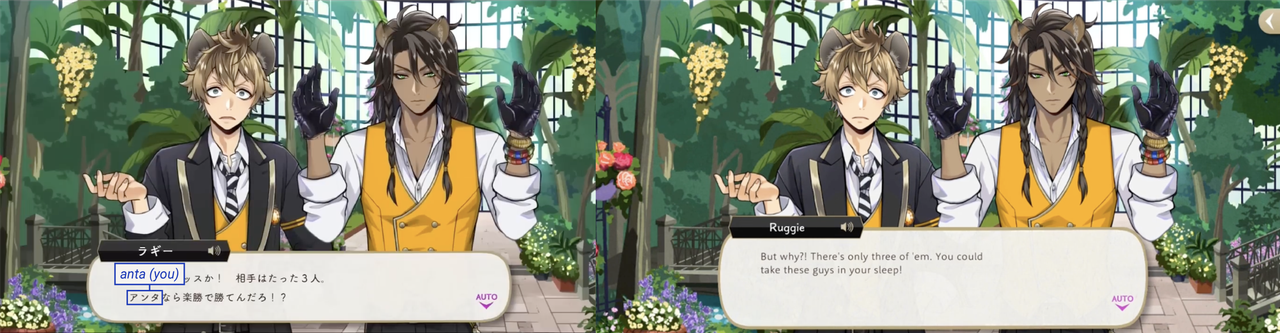
※ Note: the inclusion of “anta” alone is not what is so revealing.
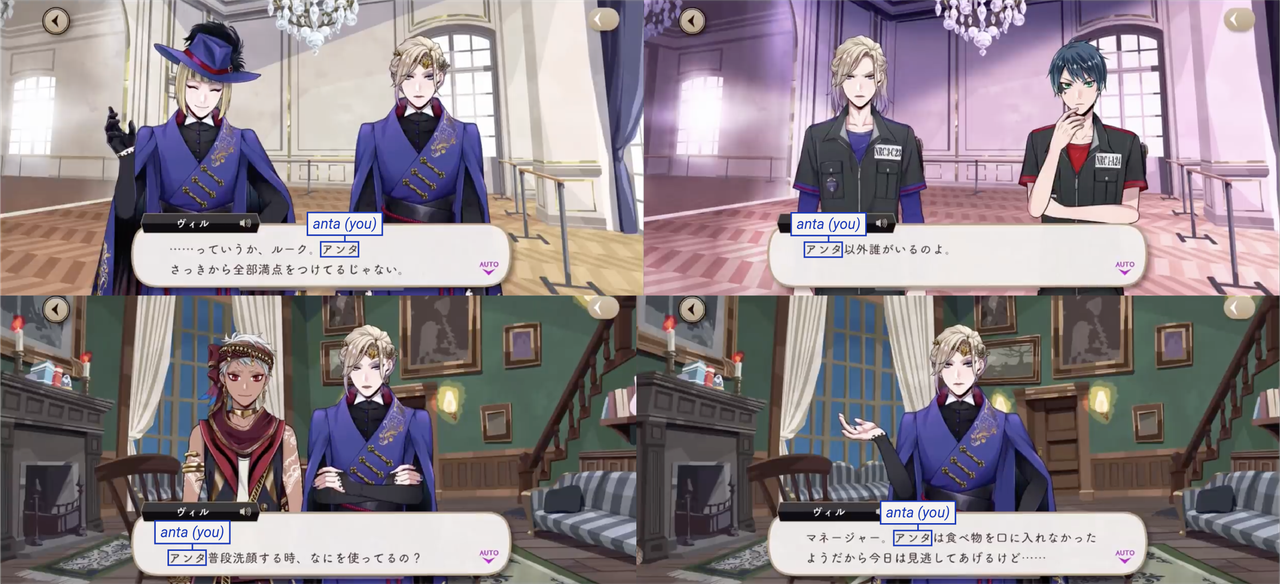
Vil, for example, refers to everyone from Rook to Kalim using the same word, and it is not saying anything particular about those relationships because Vil uses it all the time, and Ruggie himself uses it when referring to Cater and Riddle.
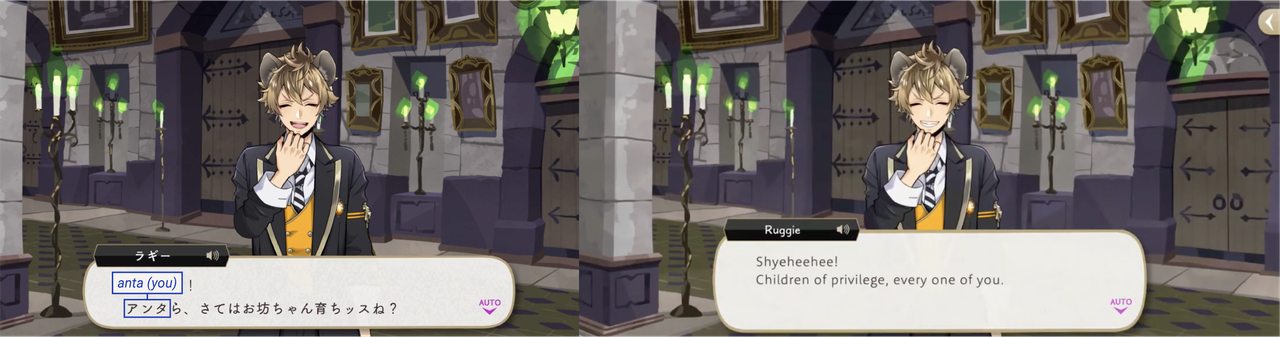
It is the fact that Ruggie never went as far as to say it to Leona until his overblot. This might be insinuating that Leona’s overblot resulted in a subtle shift in their relationship, and that Ruggie will now be calling Leona out on his behavior when he thinks it is necessary, as we see in Book 6.
More on the characters and the various forms of “you,” here ▶︎
 Twisted Wonderland Reference Note