
The English-language adaptation of Twisted Wonderland can suffer from the occasional discrepancy, but part of what seems like a mistranslation is sometimes an accurate translation of the meaning behind the characters’ dialogue; they’re just not saying what they mean!
In order to understand the language rules that Yana is breaking, let’s have a quick rundown of what the rules actually are.
The Japanese language involves four different alphabets:
・Romaji: the roman alphabet
・Kanji: Adapted from Chinese kanji, Japanese kanji have largely evolved over generations, though there is still a lot of overlap between the different writing systems
・Katakana: phonetic symbols for words adopted from other languages
・Hiragana: originally based on kanji, hiragana are also phonetic symbols
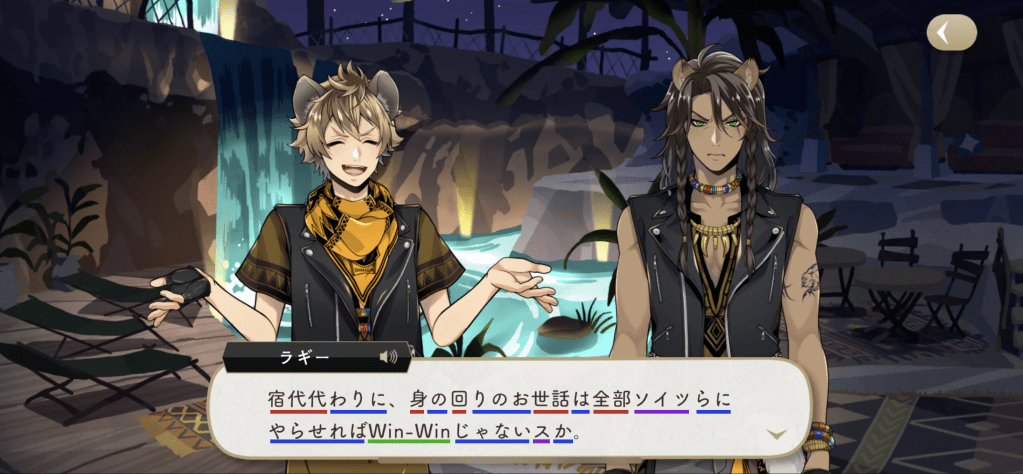
Here is a screenshot of Ruggie using all four alphabets in a line of dialogue: Green for the romaji, red for the kanji, purple for the katakana and blue for the hiragana.
In video games, novels, manga, subtitles and any place where there is kanji, there will often also be smaller hiragana or katakana written above it to tell the reader how it is pronounced. This is called “furigana”.

The kanji 猫, for example, has the furigana “ねこ”. The kanji means “cat”, and the hiragana ね is “ne”, while こ is read as “ko”. So 猫 = ねこ = neko = cat.
Furigana’s purpose is to tell us how to pronounce a kanji.
Here are some examples in everyday life:
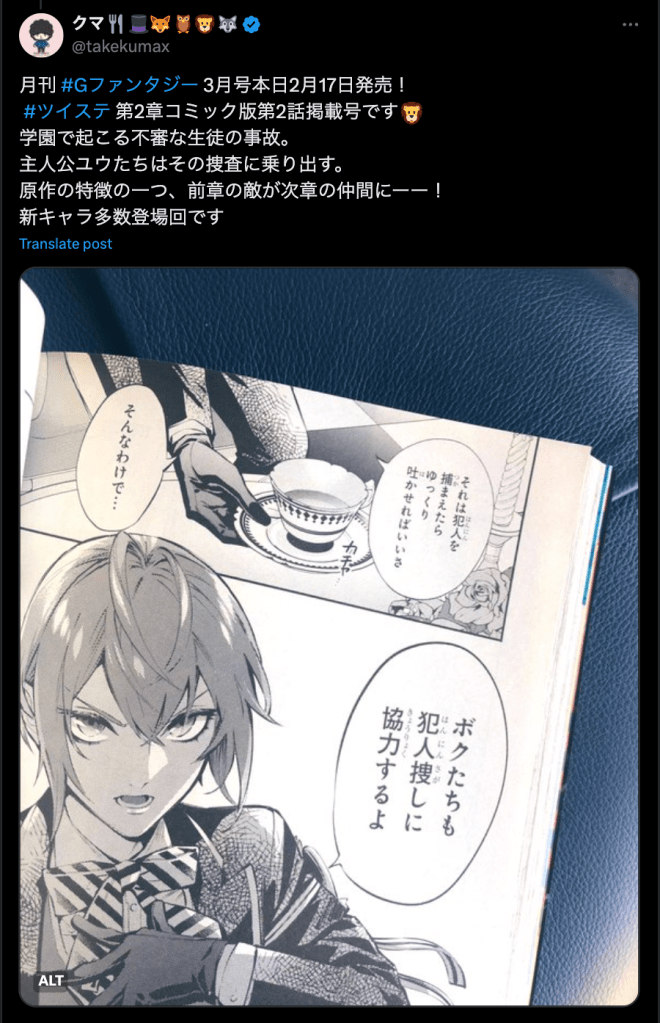
In this page from the Episode of Savanaclaw manga (left), all of the kanji comes with accompanying furigana (written in the hiragana alphabet).
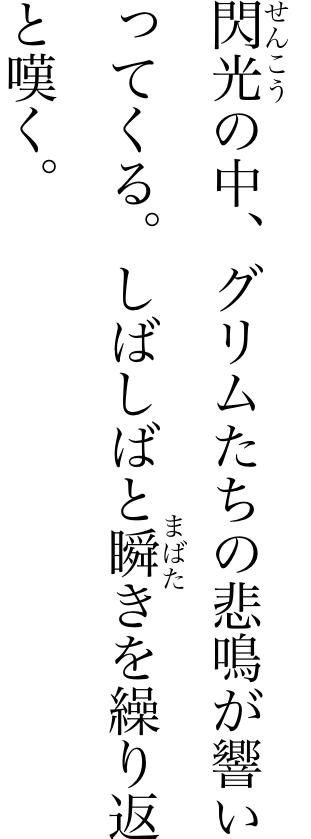
In this screenshot from the first Twisted Wonderland novel (right), only more complex kanji are accompanied by furigana, as the novel is aimed at an older audience than the manga.


Much like the Twst manga, in Zelda: Breath of the Wild, even the simplest kanji are also accompanied by furigana (left).
Just like the example of Ruggie’s dialogue, this realty office advertisement (right) also utilizes all four alphabets, without any furigana at all.
Now that we know what furigana is and how it’s used, here is how Twst uses it for wordplay:

The most obvious examples in the game are the characters’ unique magics. When Trey uses his unique magic on JP, this is what we see: The command itself is inside the 『quotation marks』, where we see a combination of kanji and hiragana.
Above it are a small line of furigana (in green) that are, in this instance, written in katakana. The kanji/hiragana phrase is read as “bara wo nurou”, which should be what the furigana above it is saying, and would be what it would be saying in a normal situation, but it isn’t.
If you have your audio on you know that Trey is audibly saying “Doodle Suit”, with “suit” referring to a “suit of cards” and “doodle” being just that, as his magic is overwriting (or “doodling” over) other people’s magic. And if you’re on EN, you know that Trey’s unique magic has been translated as “paint the roses”, which doesn’t match his audio clip at all.
And that is because “Doodle Suit” is the katakana, while “bara wo nurou” is the hiragana/kanji beneath it. And “bara wo nurou” means “let’s paint the roses”.
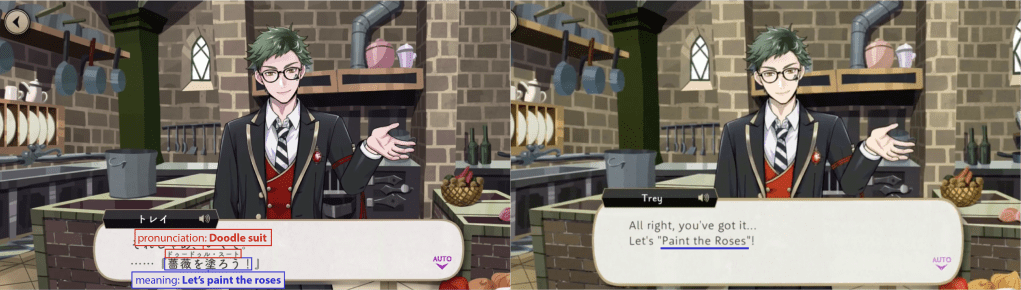
The game is telling us that “Paint the Roses” is what Trey is actually saying, but he is pronouncing it as “Doodle Suit”. This is no different from writing your name as “Alice” but telling people it is pronounced “Bob”.
English doesn’t have four different alphabets for authors to play with and say “this is what the character is saying aloud, but it’s not what they mean,” so the EN team has to decide on which set of text to use—or even come up with entirely new phrases that don’t relate to the original text at all—for each person’s unique magic on a case-to-case basis.
Riddle, for example, has a voice clip that matches the English-language translation of his unique magic, “off with your head”…mostly.

When Riddle uses his unique magic on JP, this is what we see: Just like Trey, a combination of kanji and hiragana, with a small line of katakana above it that is supposed to be telling us how it’s pronounced, but is instead introducing entirely new sounds altogether.
The actual command itself is read as “Kubi wo hanero”, but Riddle is pronouncing it as “off with your head” (which is what it says in the katakana), so in his case the words he is saying and the English-translation of his unique magic match, while Trey’s do not.
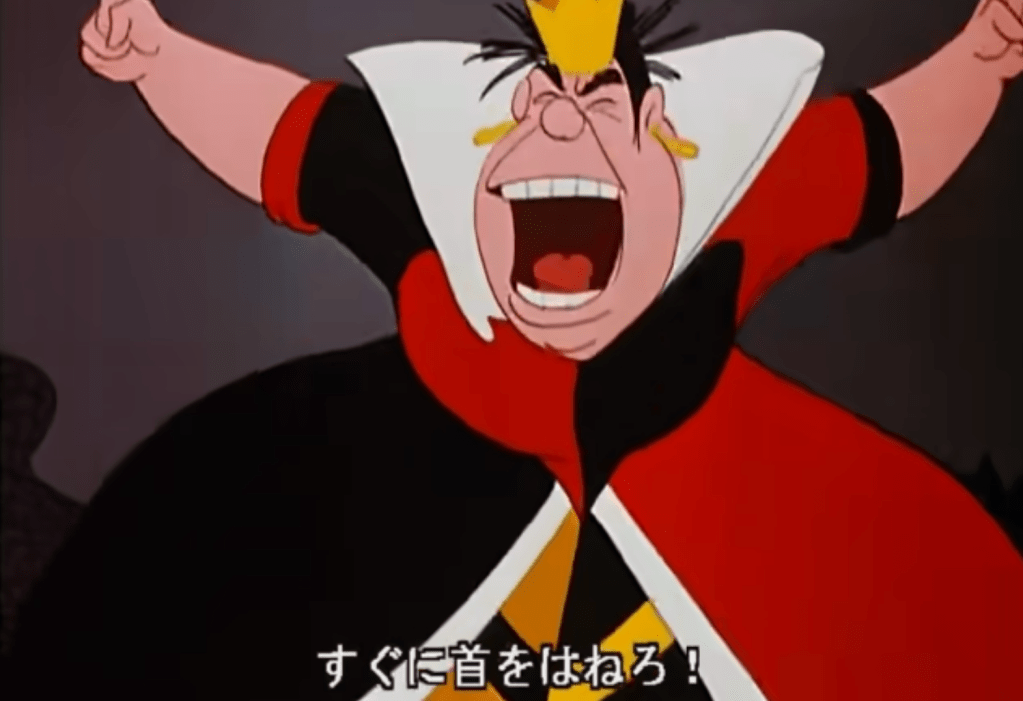
(Note: This is “mostly” accurate because “kubi wo hanero” is the literal line said by the Queen of Hearts in the Japanese-language version of Disney’s original Alice in Wonderland movie. Much like her original line Riddle is actually giving a command to an unspecified third person, which was changed to “Off with your head” in the audio and on EN, while the original meaning of his spell is closer to, “Off with their head.”)
In trying to come up with the best possible names for the various spells, EN has landed on three different solutions that change from character to character:

1) Translating what the character is saying out loud (the katakana) and ignoring the meaning behind it.
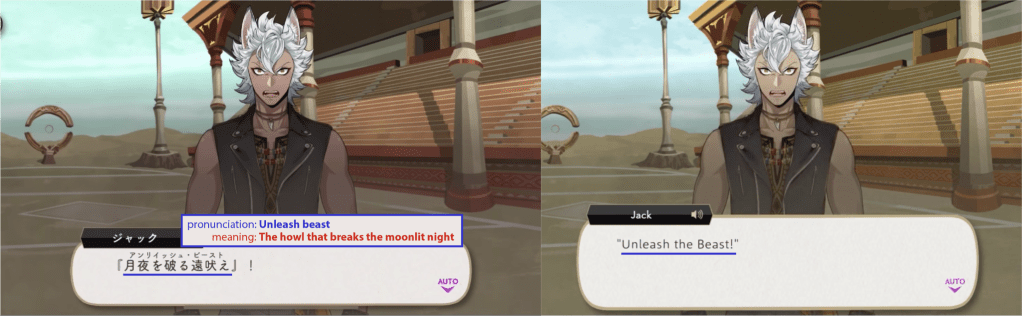
This is the most popular solution, used with Riddle, Cater, Leona, Ruggie, Jack, Azul, Jade, Floyd, Kalim and Vil.

While the name of the spell matches the audible command, NA has no way to know that Jack’s “unleash beast” is just how he pronounces “howl to break the moonlit night”, that Jade is actually saying “the tooth that takes out a bite”, etc.

Leona is the only character whose audible command is already the literal, English-language translation of what his spell means.

2) Translating what the character actually means (the kanji/hiragana) and ignoring the audio
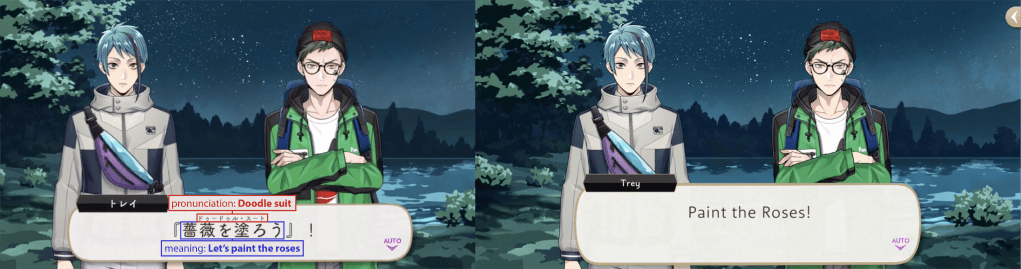
Interestingly, Trey is the only one that they did this with, but it is not word-accurate translation: Trey’s original spell is the entire phrase, “Let’s Paint the Roses,” as if it were a suggestion, but his EN spell has been changed into a command.
3) Inventing an entirely new command that ignores both the audio and the kanji/hiragana.
Jamil, Deuce and Rook all have names for their unique magic commands on EN that are not translations of what they’re saying out loud, or translations of what their command actually means.
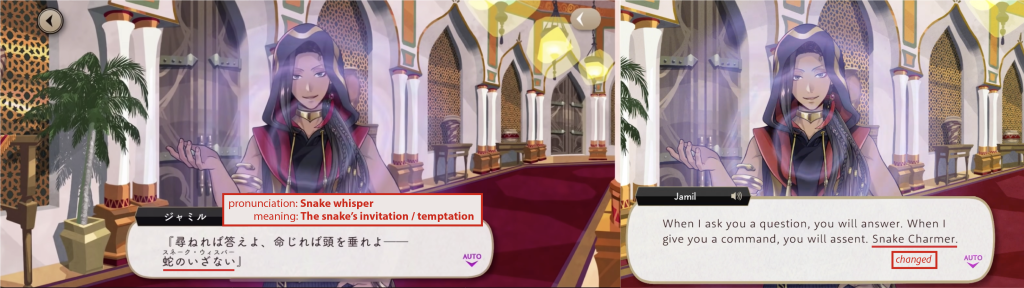
Jamil’s original command is, audibly, Snake Whisper. The “meaning” of the command (蛇のいざない) is closer to “the snake’s invitation” or “the snake’s temptation”.
(For the curious: 蛇のいざない is not what snake charming is in Japanese, so I’m not sure where the EN translation came from. (In Japanese, snake charming is 蛇使い))

Deuce’s original command is, audibly, Bet the limit. The “meaning” of the command (しっぺ返し) is a phrase that means “payback”, “tit for tat”, since his power is to “pay back” damage that has been dealt to him. His audible command, bet the limit, is a poker term.
Betting the limit means to place the maximum bet allowed during a game of poker. It is a risky move that can pay off in spades. This has been rewritten on EN as “Double Down”, which is a blackjack term. It is when you double your bet in the middle of a hand in return for one extra card; also a risky move, it can potentially increase your payout. Both “double down” and “bet the limit” make sense in context.
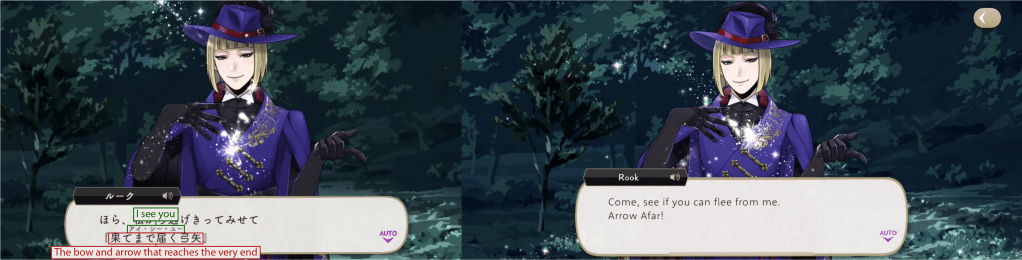
Rook’s original command is, audibly, I See You.
The “meaning” of the command (果てまで届く弓矢) is “The bow and arrow that reaches the very end” (the very end of what is not specified). This has been rewritten to “Arrow Afar” on EN.
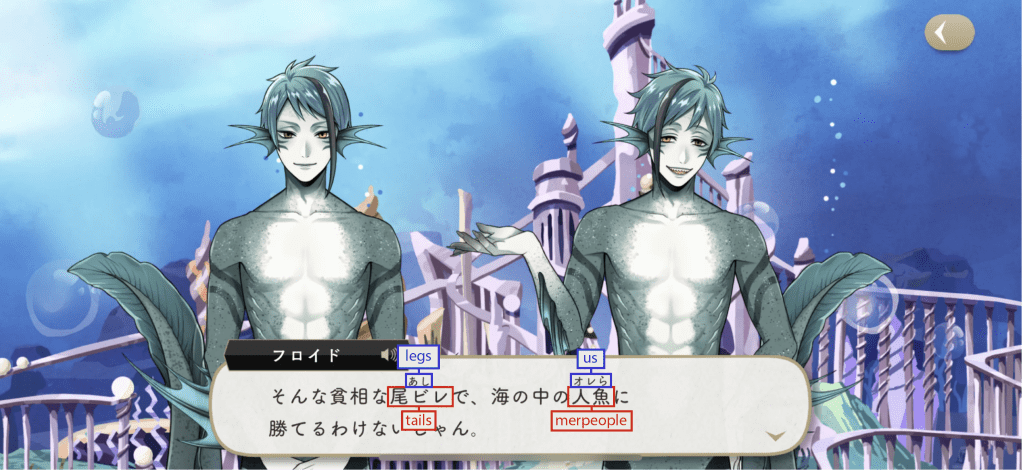
Unique magics are not the only place where furigana comes into play in Twisted Wonderland: we see it in other places like Floyd saying “legs” and “us” aloud when what he actually means is “tails” and “merpeople”, and Jamil once says “Kalim” aloud while in the (literal) subtext we see that he means “the heir of the main house”, emphasizing Kalim’s unspoken importance in the dialogue without him having to actually say as much in the audio.

There is also a chilling line in Book 6 when we are introduced to the entity formerly known as Ortho:
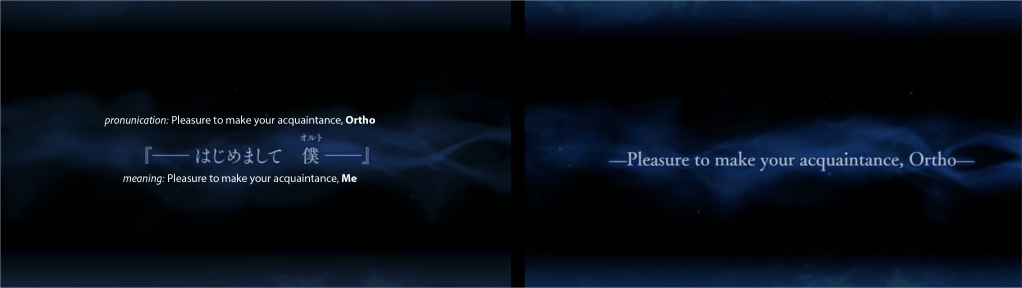
In audio Robot- and Original-Ortho simultaneously say “Ortho,” but in the text we see that that is just how they are pronouncing something entirely different.
The hidden meaning within the phrase is, “Pleasure to make your acquaintance, me.”
 Twisted Wonderland Reference Note