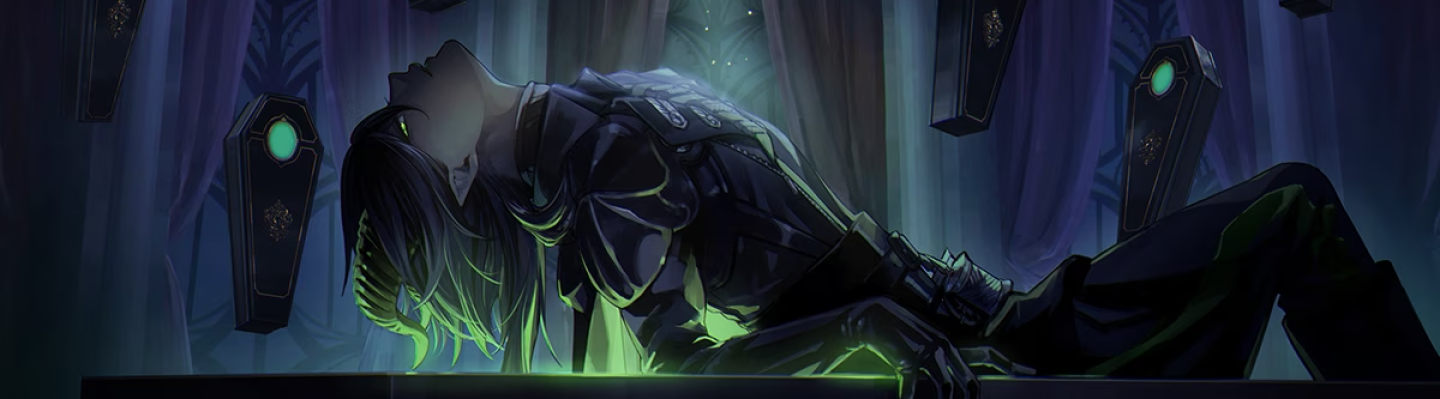

Vil’s first interaction with Epel involves Epel insulting Vil (apropos of nothing, from Vil’s perspective) by calling him girly and weak on his first day as Pomefiore housewarden.
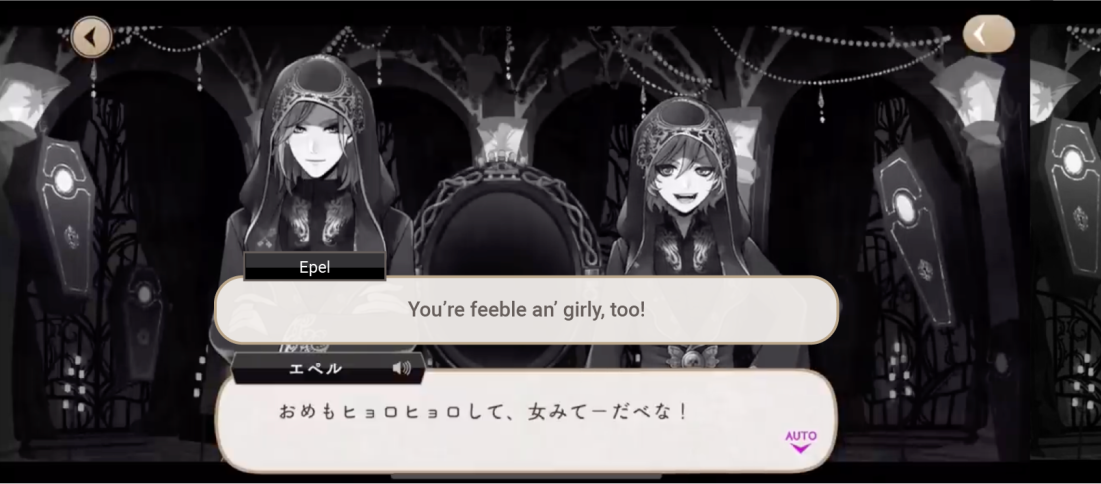

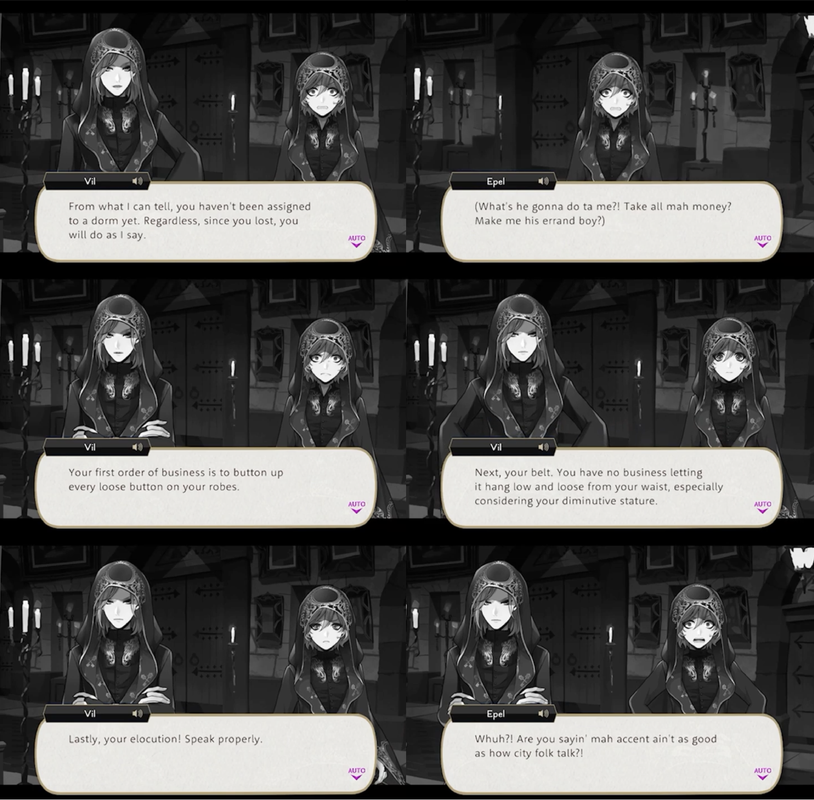
Vil beats Epel in a magicless, physical fight before the opening ceremonies have even begun and explains, “In this school, the rule is that the weak obey the strong…since you lost, you will do as I say.”
Epel worries that Vil will be taking all his money or turning him into an errand boy, but instead Vil insists on Epel improving his appearance, his impolite way of speaking and his attitude, saying “if you want to voice a grievance, you’ll have to beat me in a fight first.”

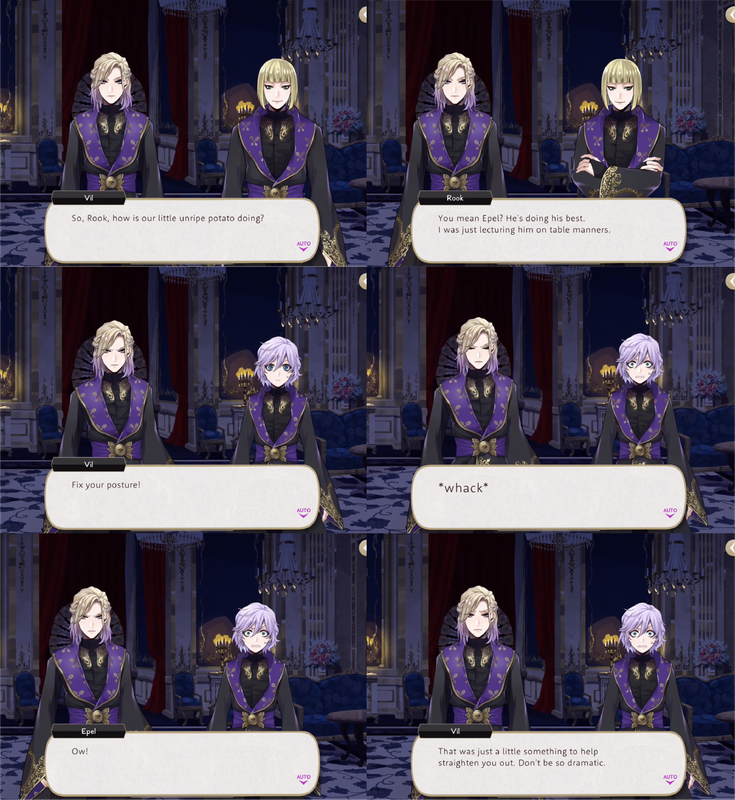
This interaction forms the foundation for the relationship between the two, with Vil trying to correct Epel’s outdated, misogynistic mentality and Epel forced to comply until the day he is able to fight Vil and win.
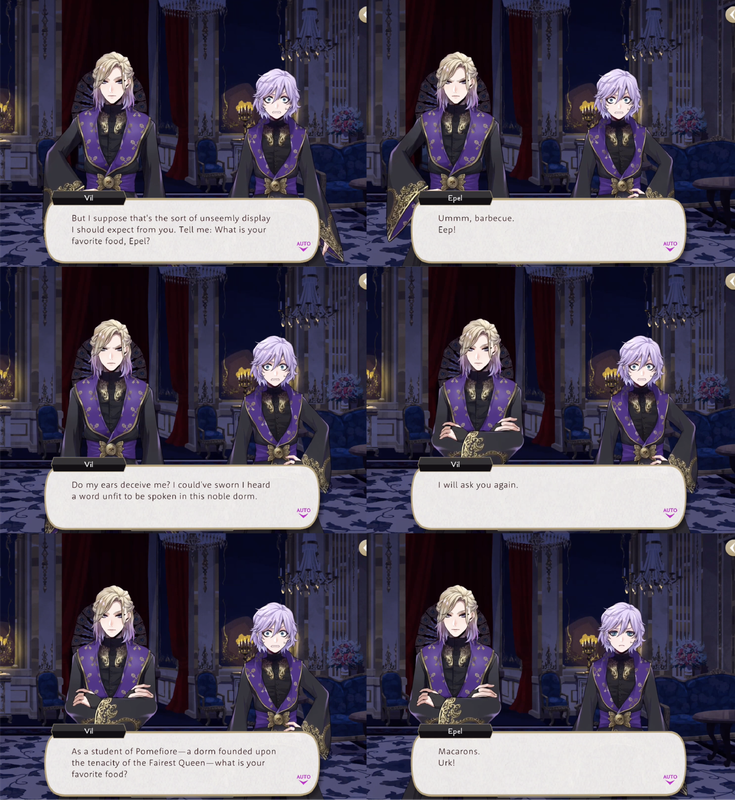
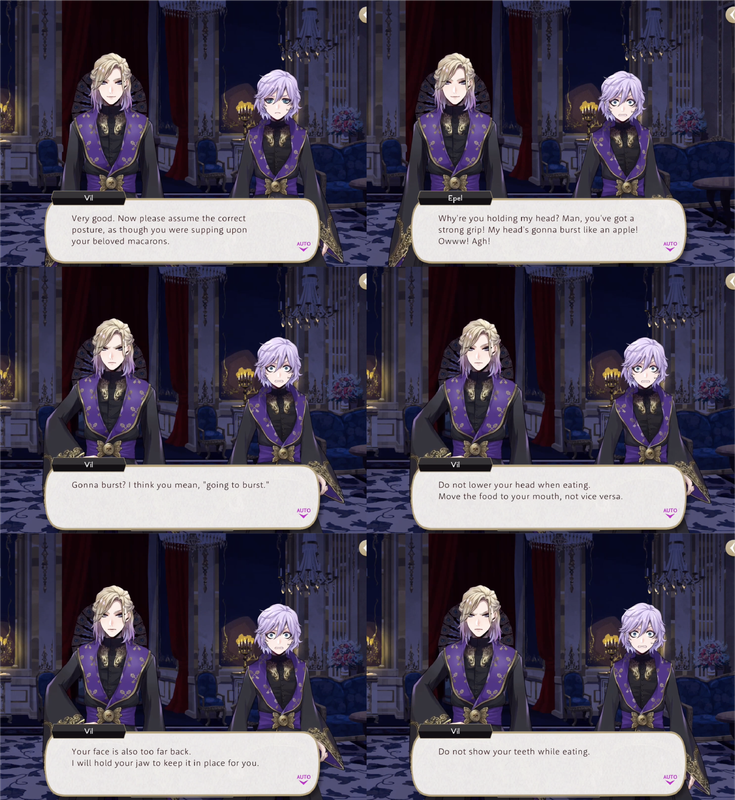
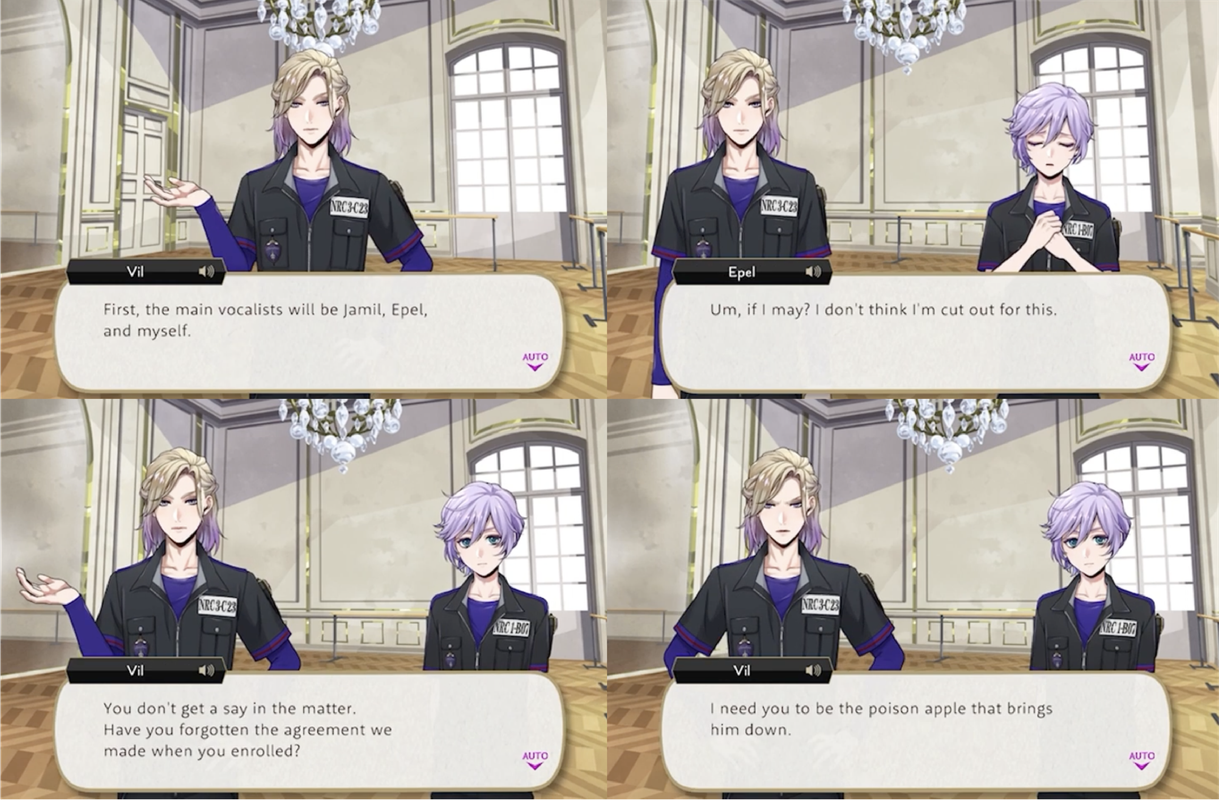
We see Vil correct Epel’s table manners, make Epel say that his favorite food is macarons, correct his speech patterns and beat Ace, Deuce and Grim in a fight when they attempt to stand up for Epel. During Book 5 Vil insists on transforming Epel into “the poison apple that brings (Neige) down”, but Epel is reluctant to perform “girly twisting motions”.
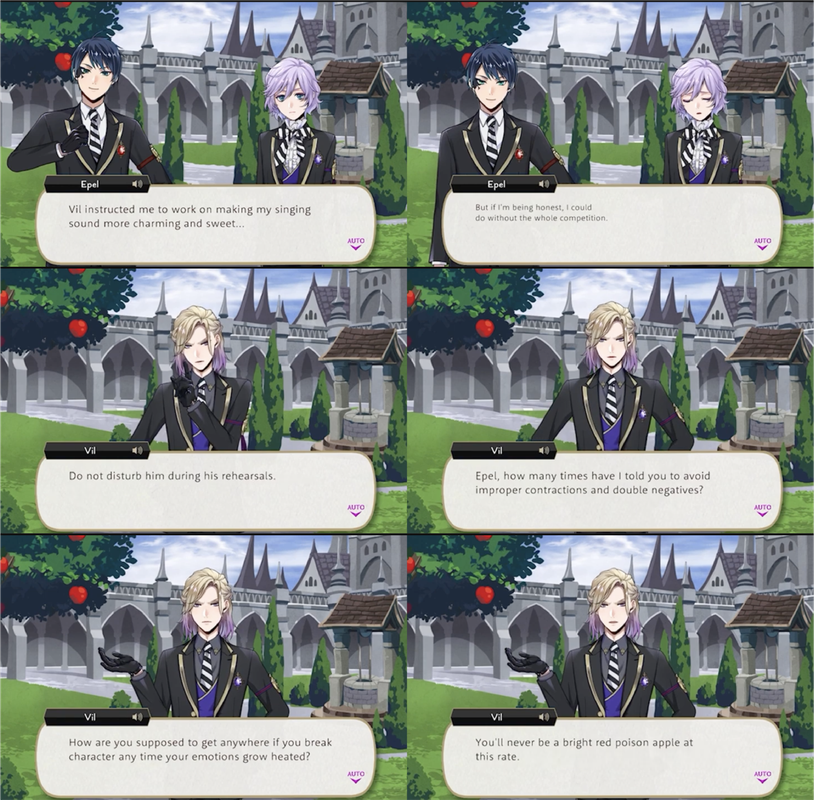

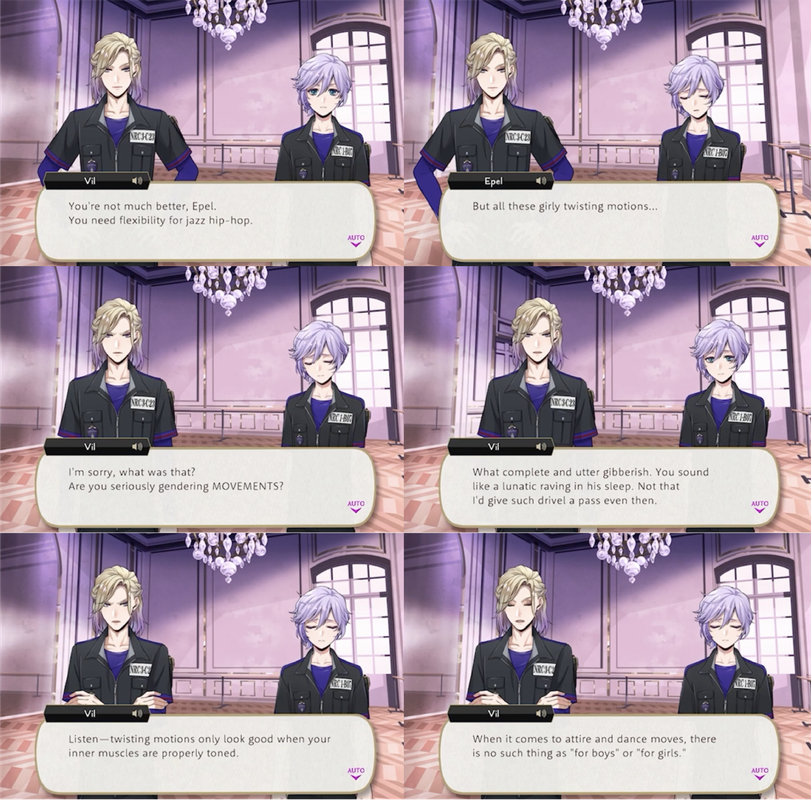
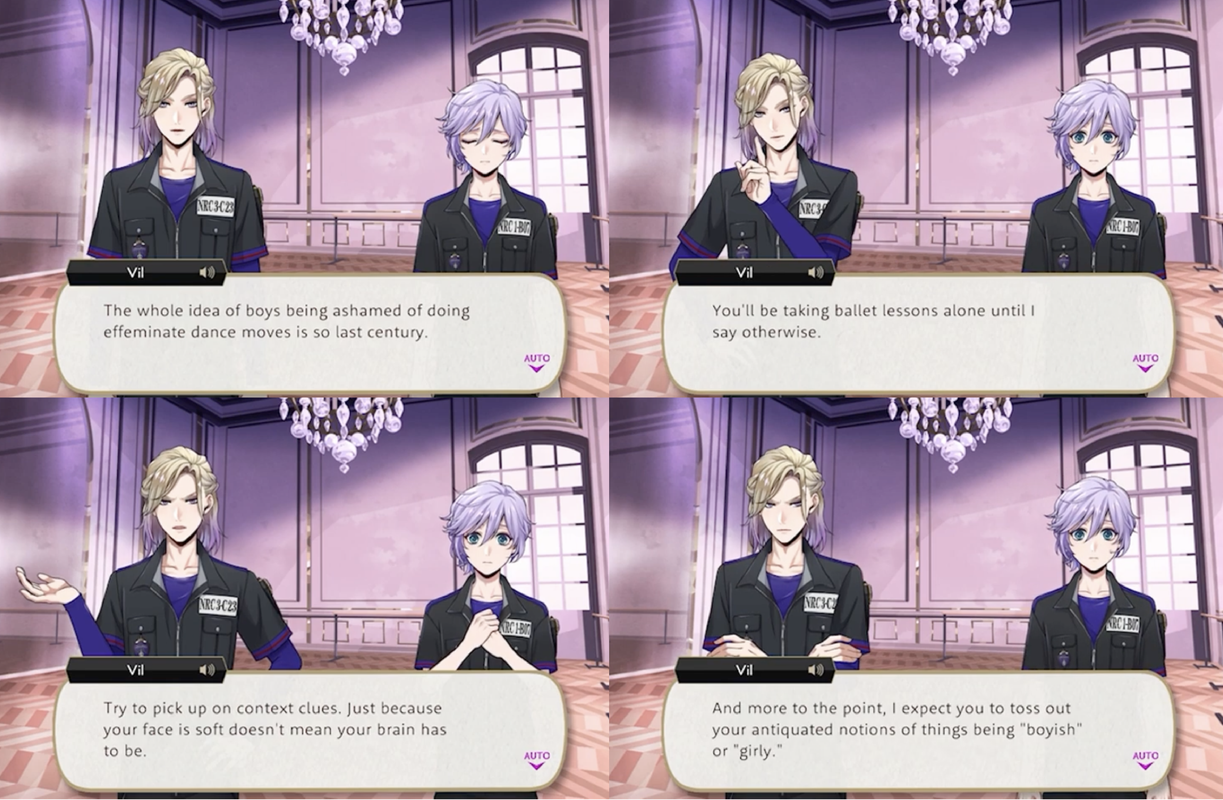
Vil admonishes Epel for gendering movements, saying, “The whole idea of boys being ashamed of doing effeminate dance moves is so last century” and that he expects Epel to get over his “antiquated notions of things being ‘boyish’ or ‘girly’.”
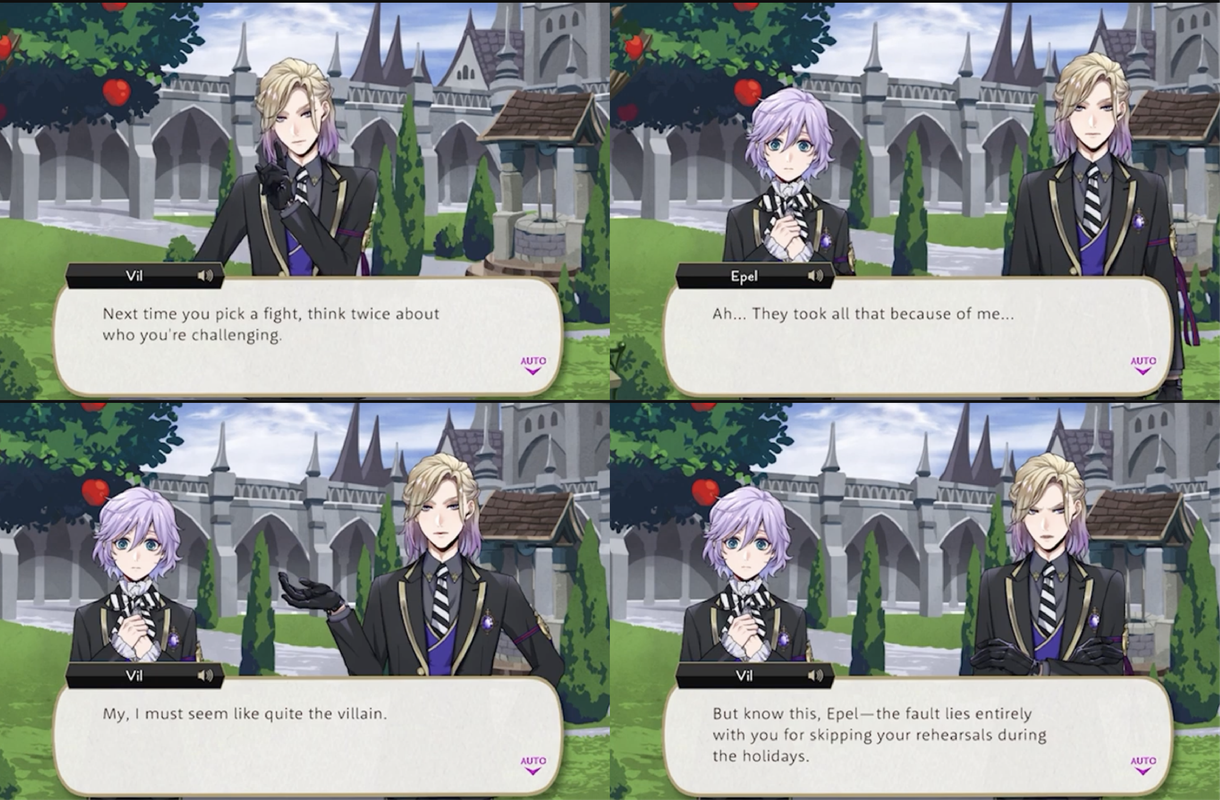
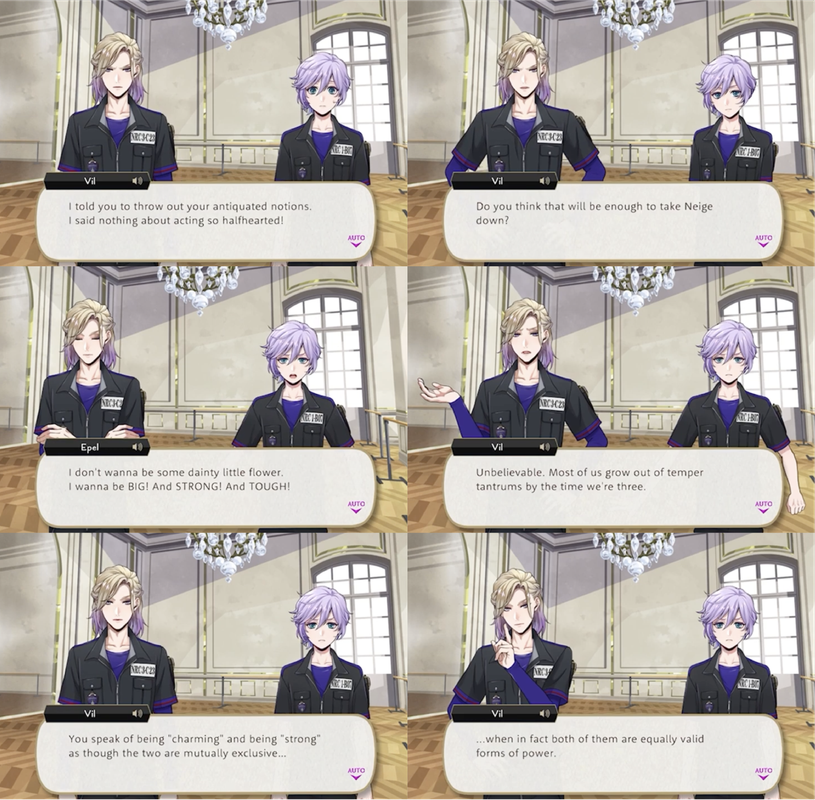
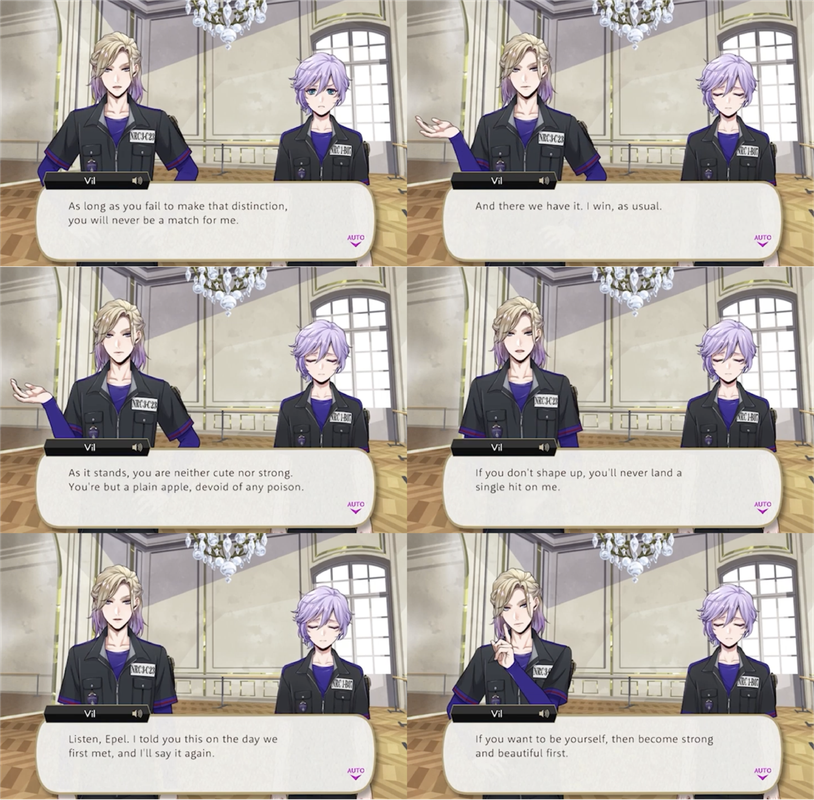
Epel argues that he wants to be big, strong and tough, and Vil says, “You speak of being ‘charming’ and being ‘strong’ as though the two are mutually exclusive, when in fact both of them are equally valid forms of power…If you want to be yourself, then become strong and beautiful first,” beating him in another physical fight.
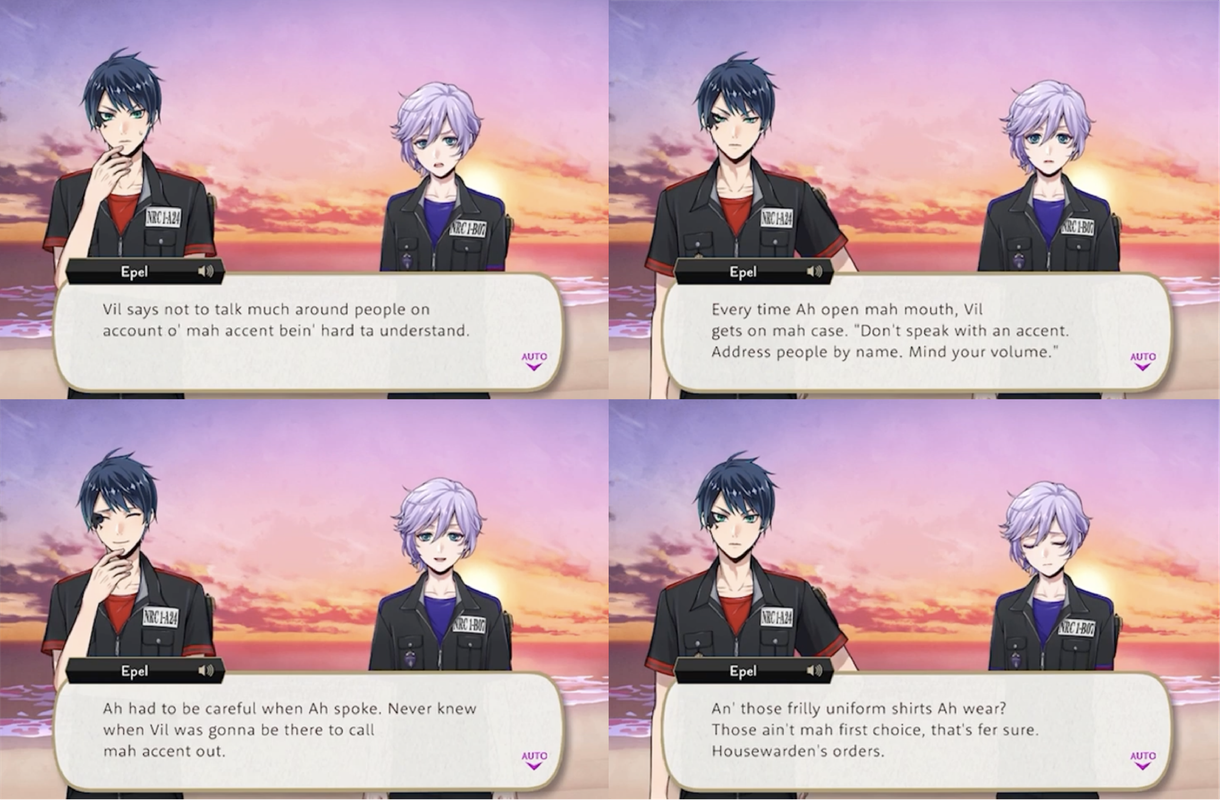
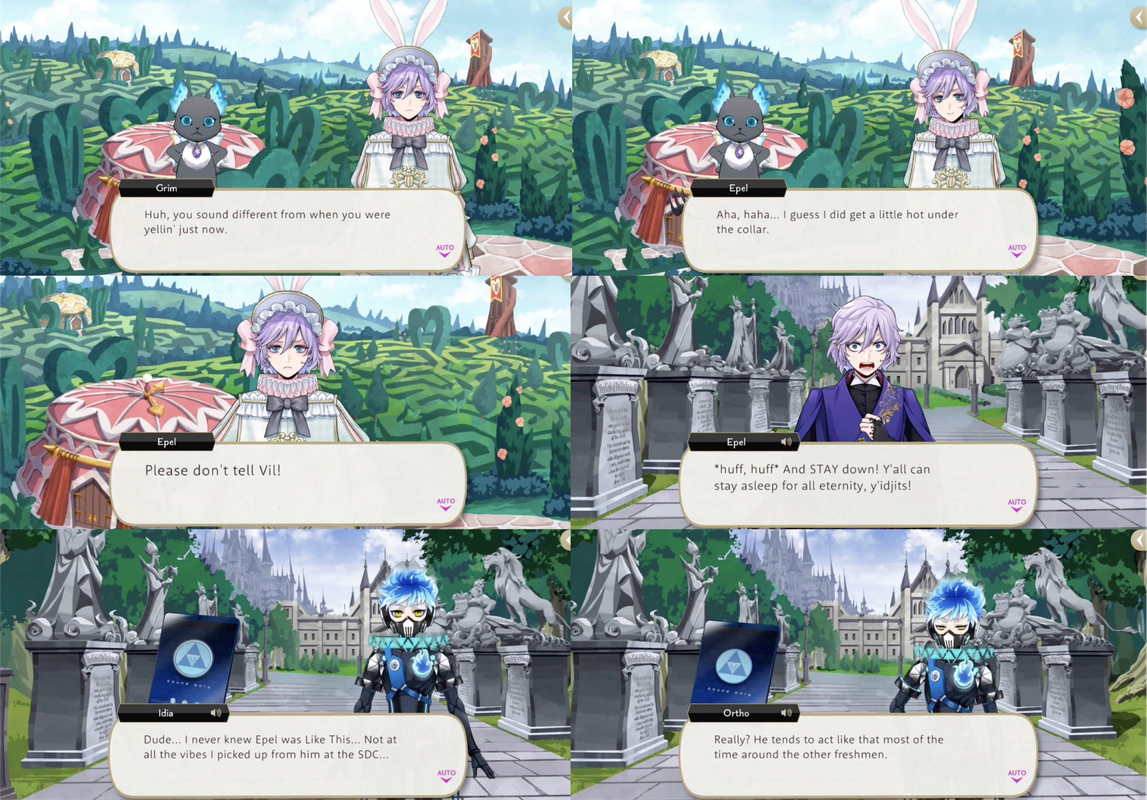
Epel runs away from rehearsals and explains how Vil forces him to wear the frilly shirt worn with his school uniform and has forbade him from speaking in his natural dialect, and when Grim comments on Epel speaking differently during White Rabbit Fes Epel responds, “Please don’t tell Vil!” When Idia reacts with surprise to hearing Epel’s usual way of speaking in his dream Ortho explains that Epel actually tends to act like that most of the time when he is around the other first-year students.
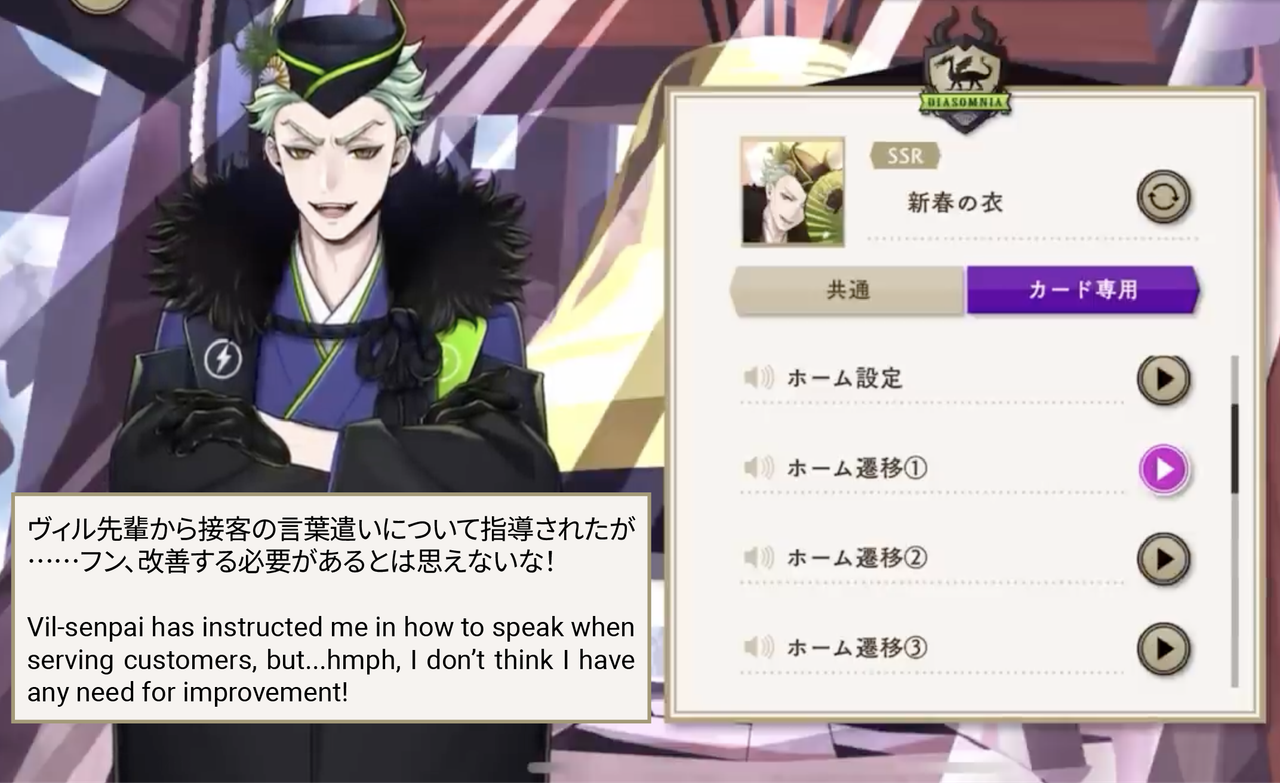
Sebek says that Vil also instructed him in how to speak politely, but he does not believe that he has any room for improvement.
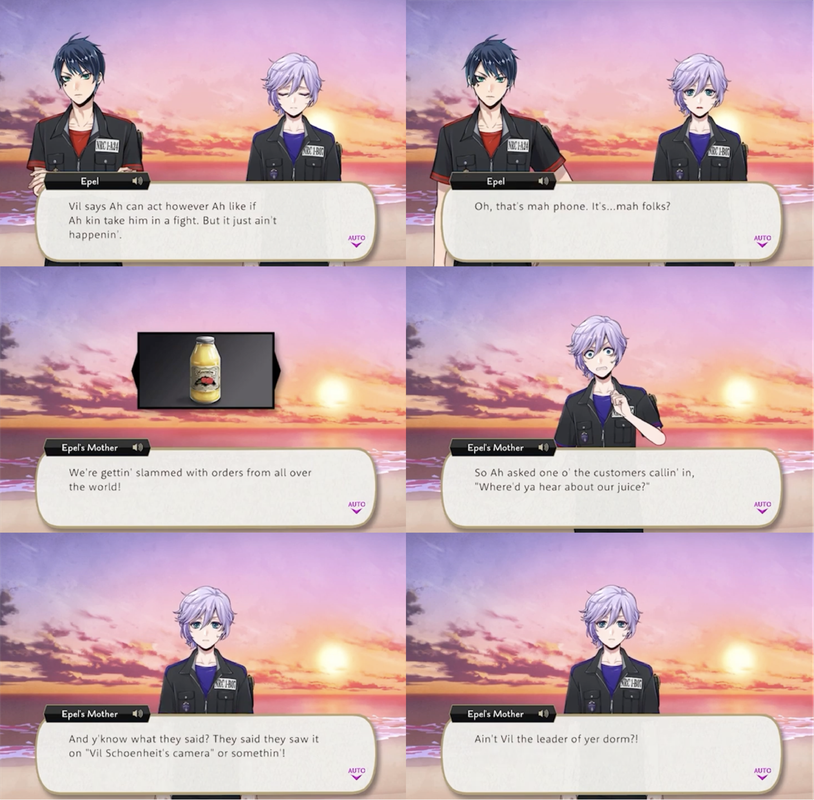
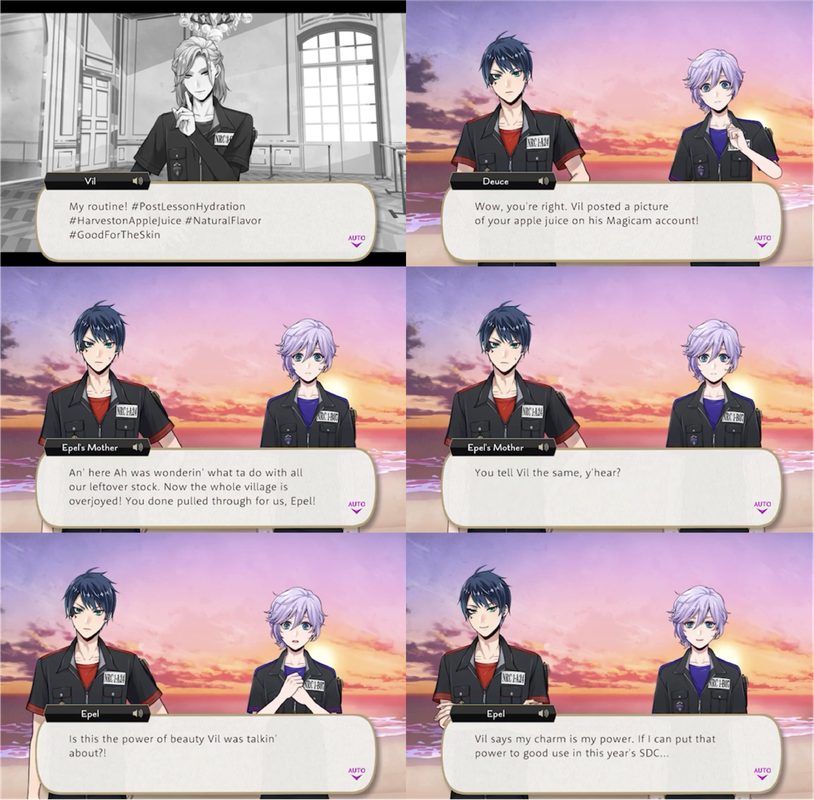
As Epel vents his frustrations to Deuce in Book 5 he receives a phone call from his mother, who reveals that Vil has promoted the apple juice produced by their village on his Magicam, saving them from a financially unstable situation.
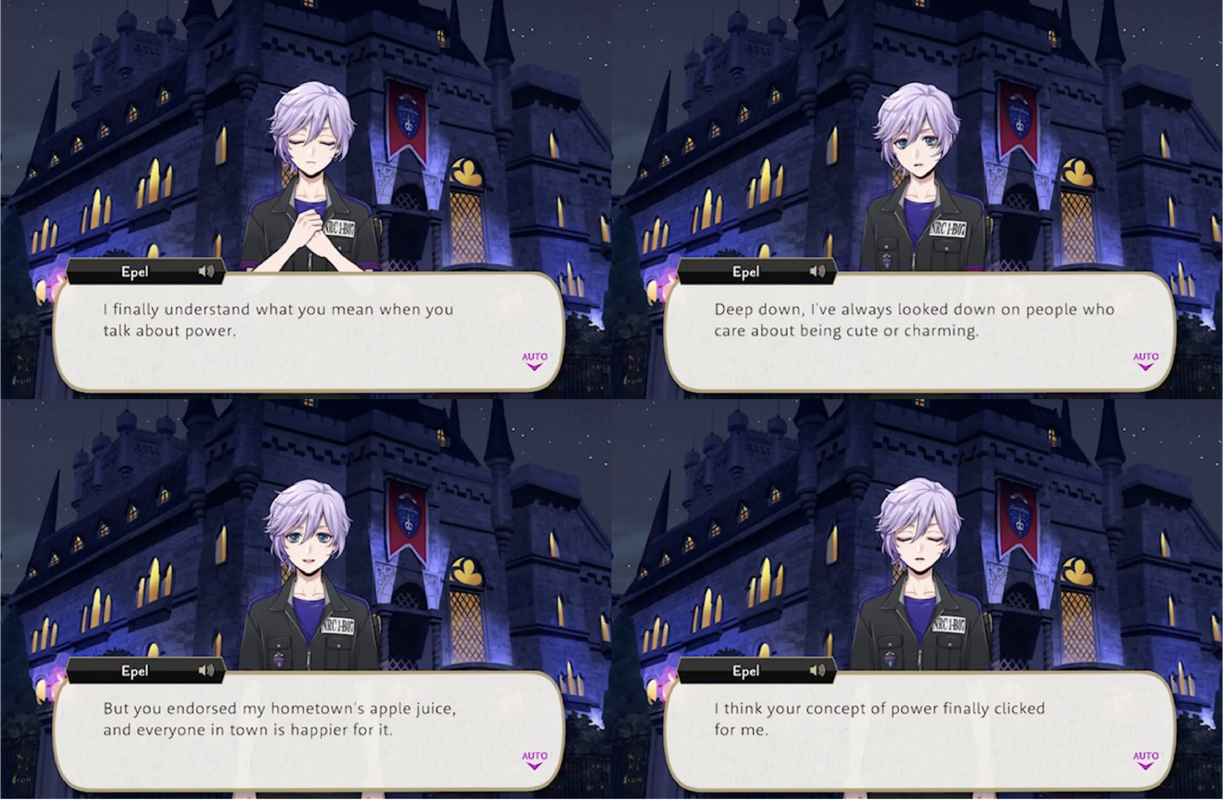
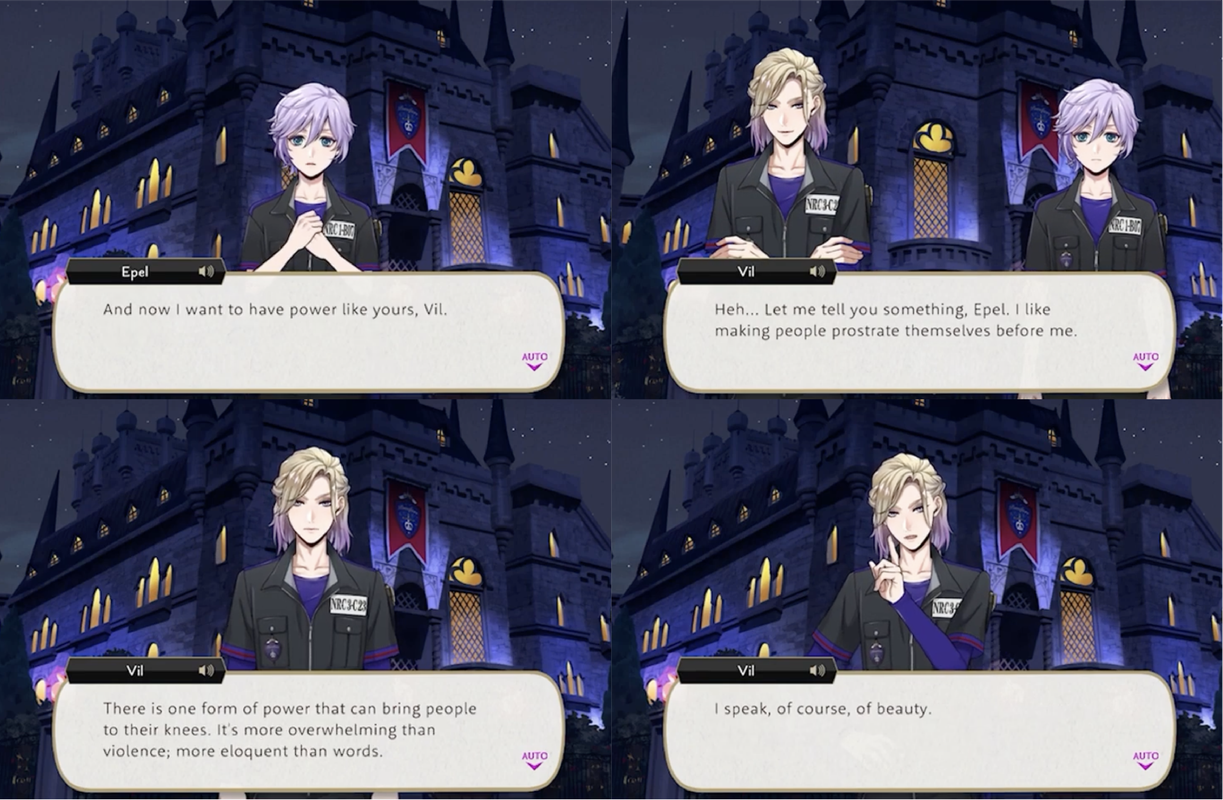
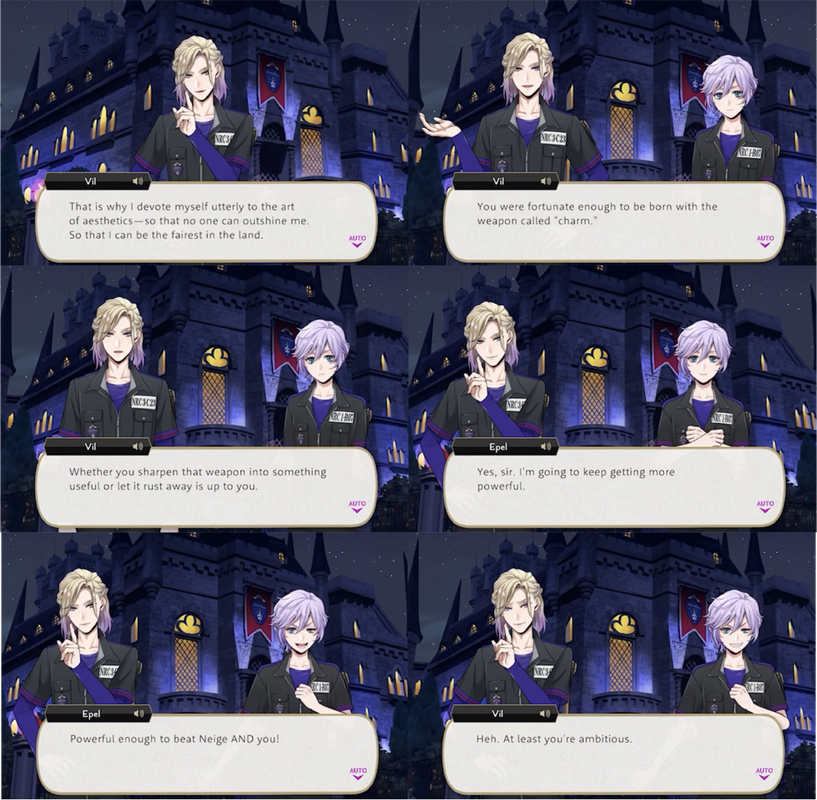
Epel returns to the school and tells Vil that while “Deep down, (he’s) always looked down on people who care about being cute or charming”, he finally understands what Vil meant when he talked about power. Vil responds, “There is one form of power that can bring people to their knees. It is more overwhelming than violence, more eloquent than word. I speak, of course, of beauty…You were fortunate enough to be born with the weapon called ‘charm’. Whether you sharpen that weapon into something useful or let it rust away is up to you.”
Epel says he wants to get powerful enough to beat both Neige and Vil himself.
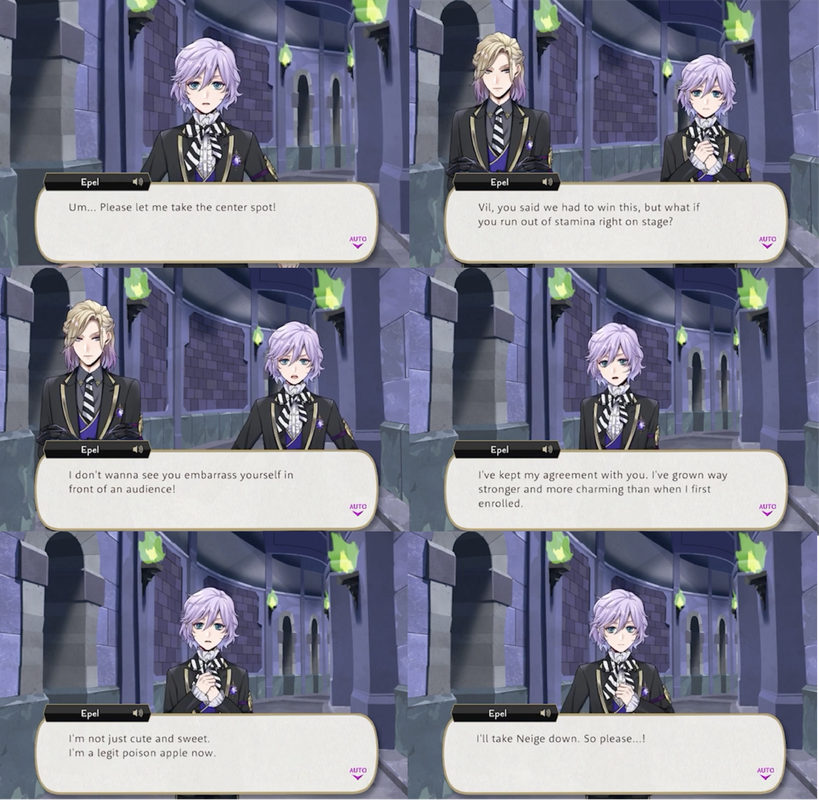
By the end of Book 5 Epel is asking Vil to allow him to take center stage in the performance he never wanted to participate in in the first place, saying that he is “a legit poison apple now” and he wants to take Neige down, not see Vil embarrass himself in front of an audience by performing post-overblot and running out of stamina mid-show.
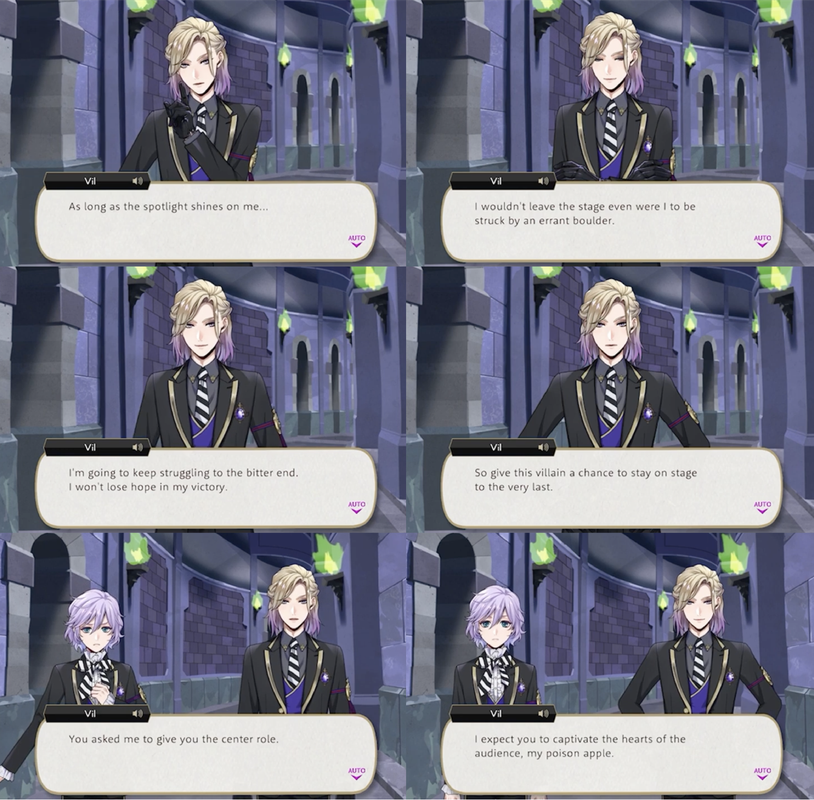
Vil refuses Epel’s offer, saying that he stills expects Epel “to captivate the hearts of the audience,” but, “As long as the spotlight shines on me, I wouldn’t leave the stage even were I to be struck by an errant boulder. I’m going to keep struggling to the bitter end. I won’t lose hope in my victory. So give this villain a chance to stay on stage to the very last.”
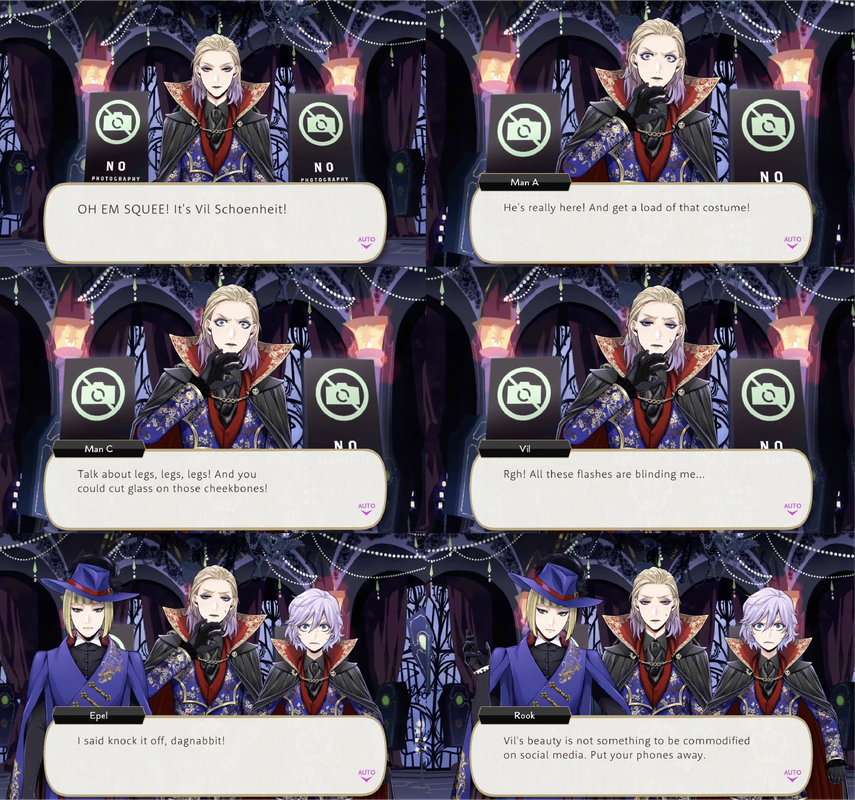
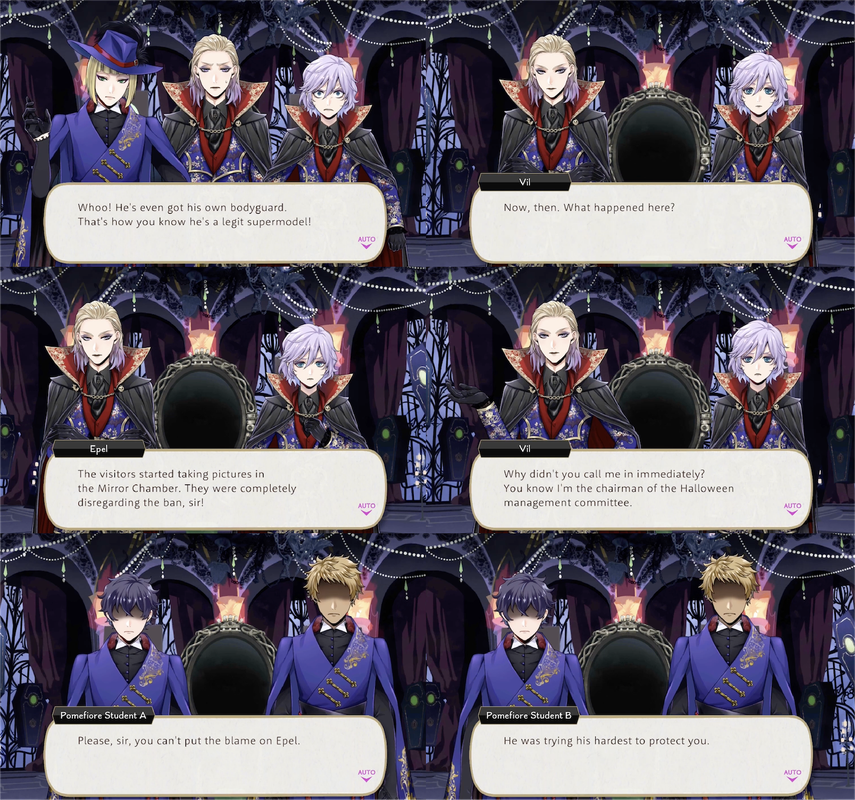
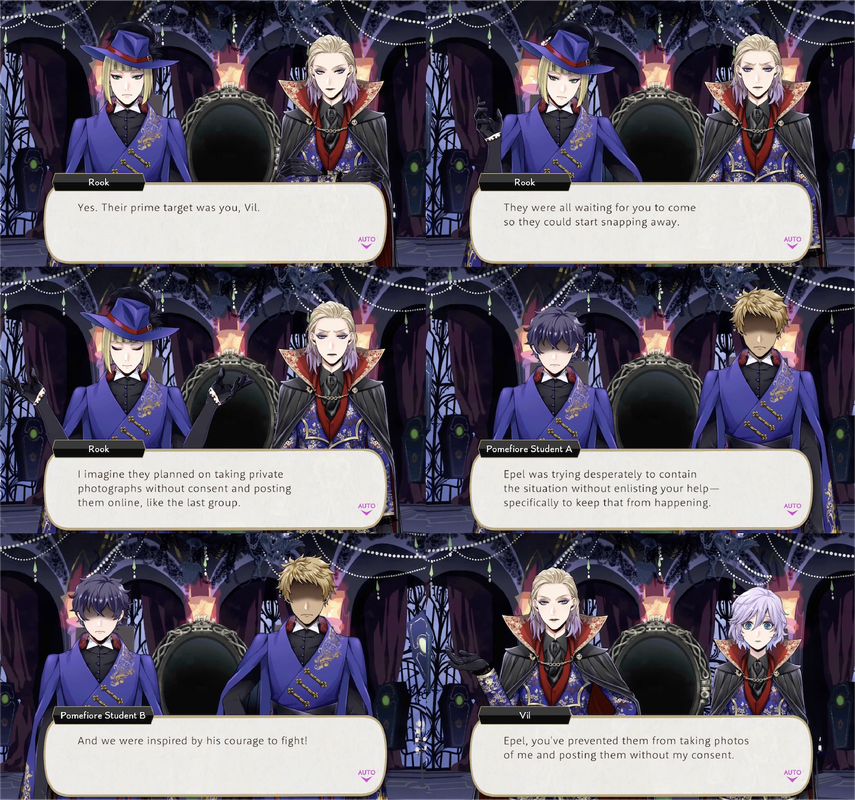
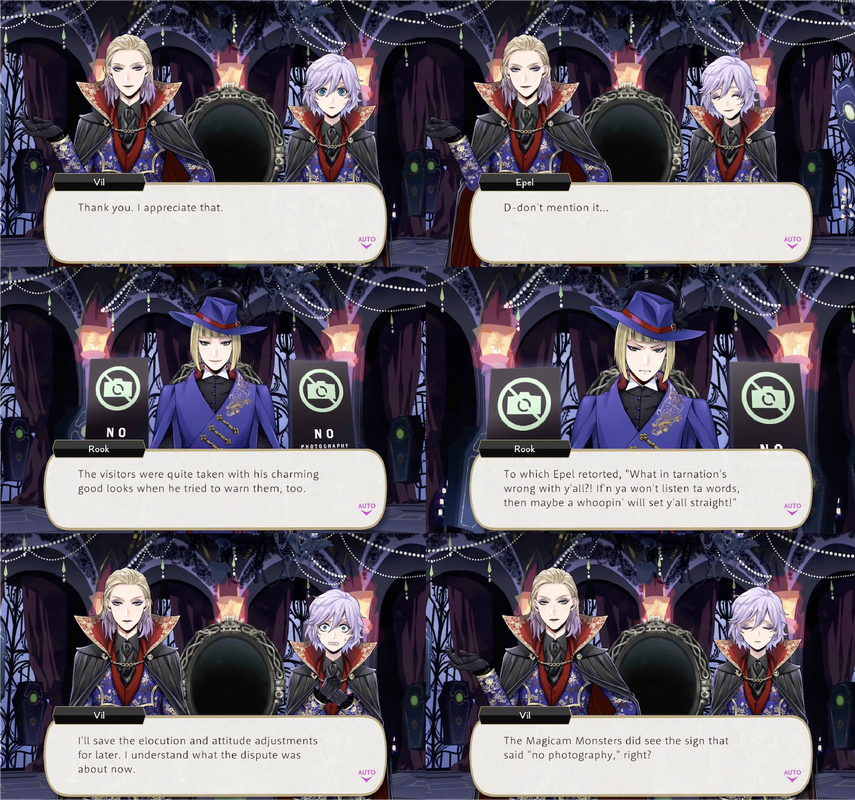
During Halloween we see Epel try to protect Vil from Magicam monsters who would have uploaded his picture without his consent, which earns him Vil’s gratitude.
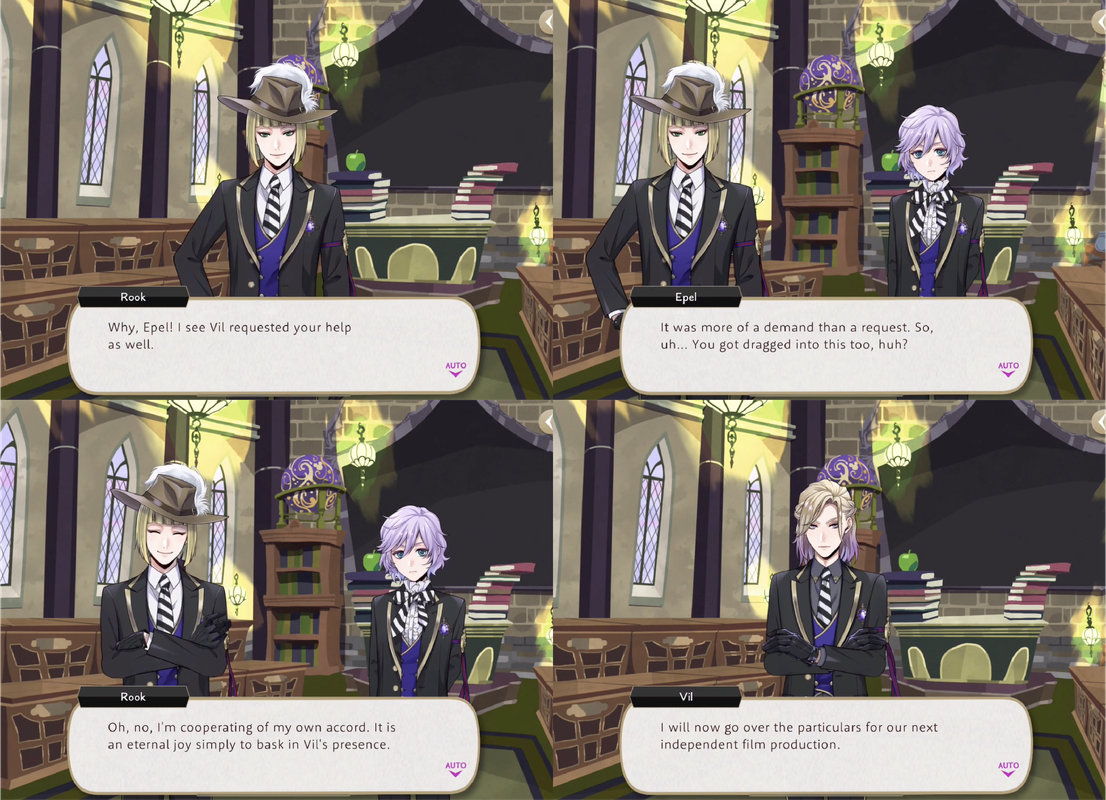
In Epel’s dorm vignette Vil assigns him the task of designing a blastcycle for a film club project, knowing that Epel is passionate about them. When Vil admonishes Epel for his initial design and bans him from the dorm Epel responds that the situation is only so frustrating because Vil is right.
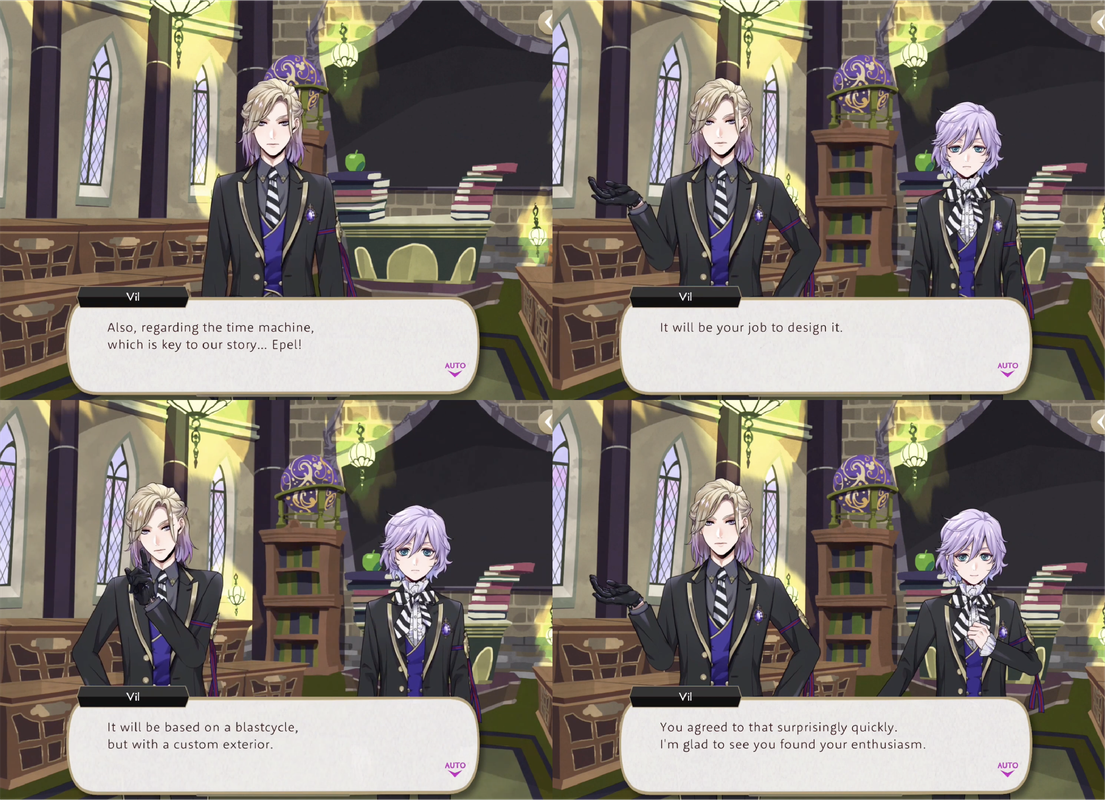
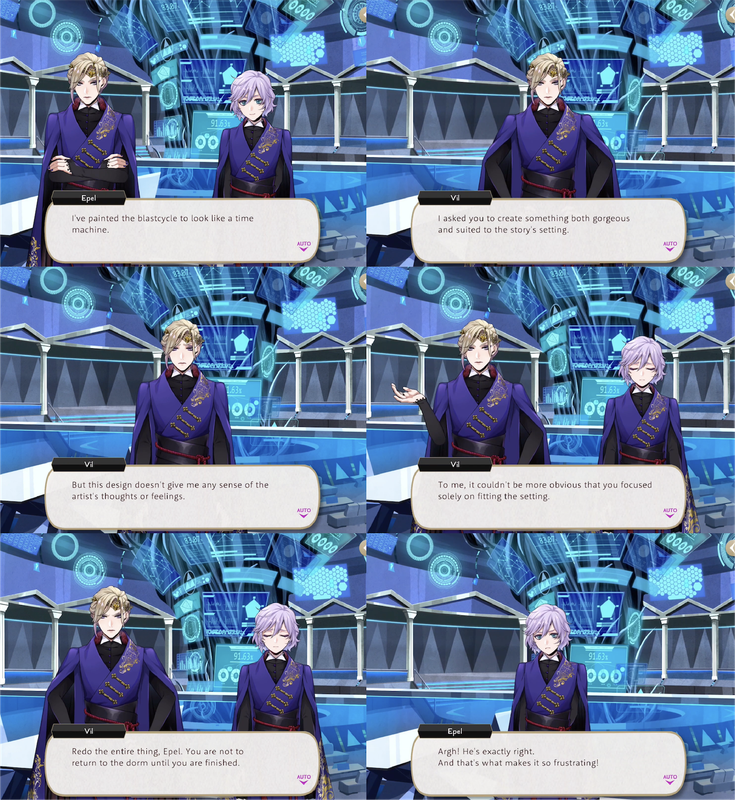
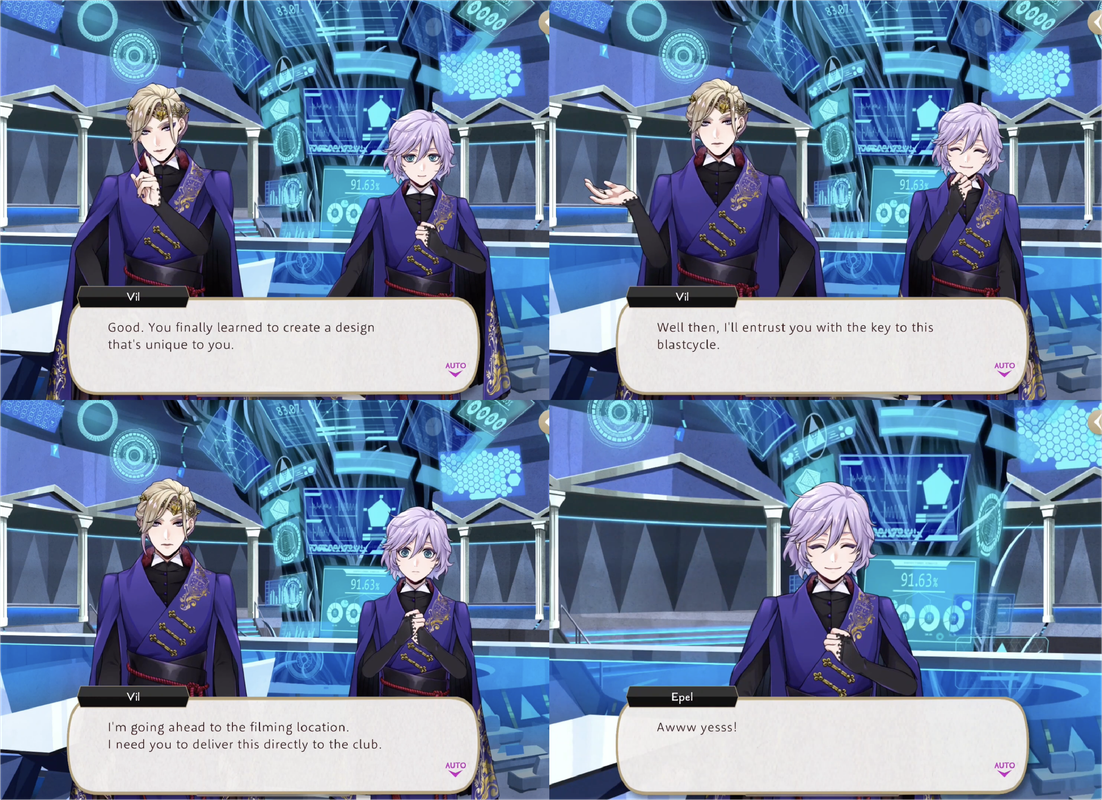
Epel manages to create a blastcycle design that is unique to himself and Vil rewards him with the task of driving it to the film club’s location, to Epel’s delight.
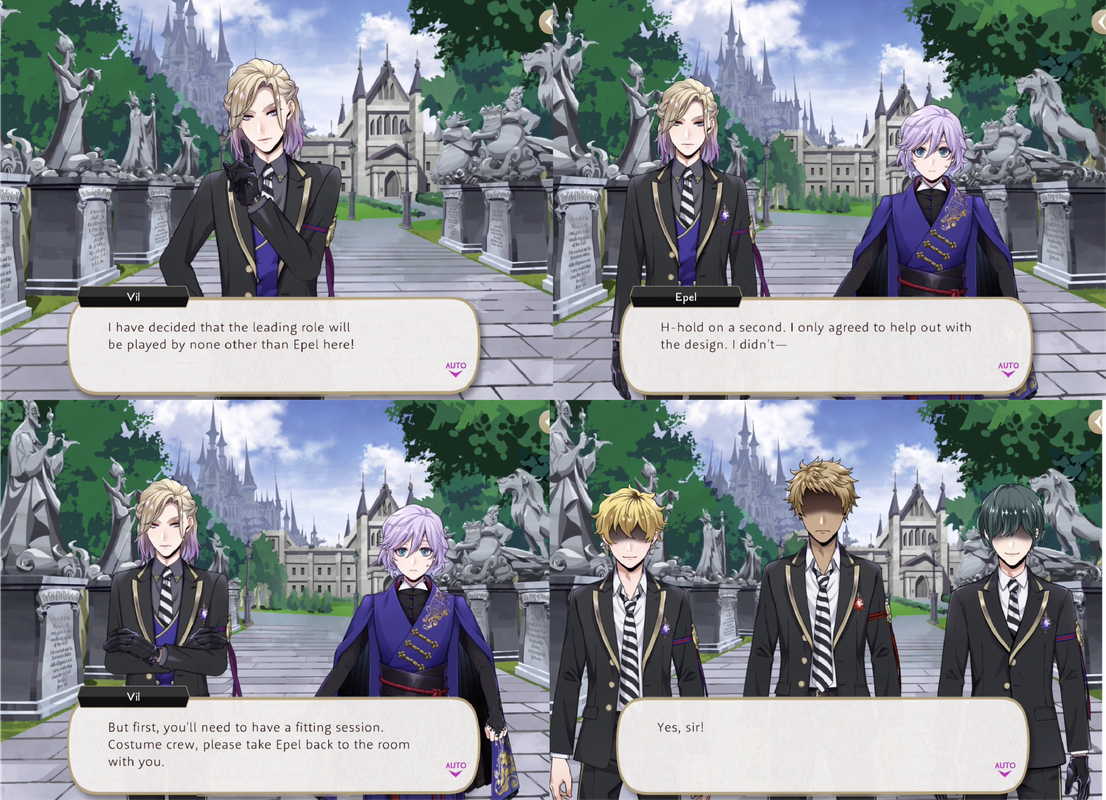
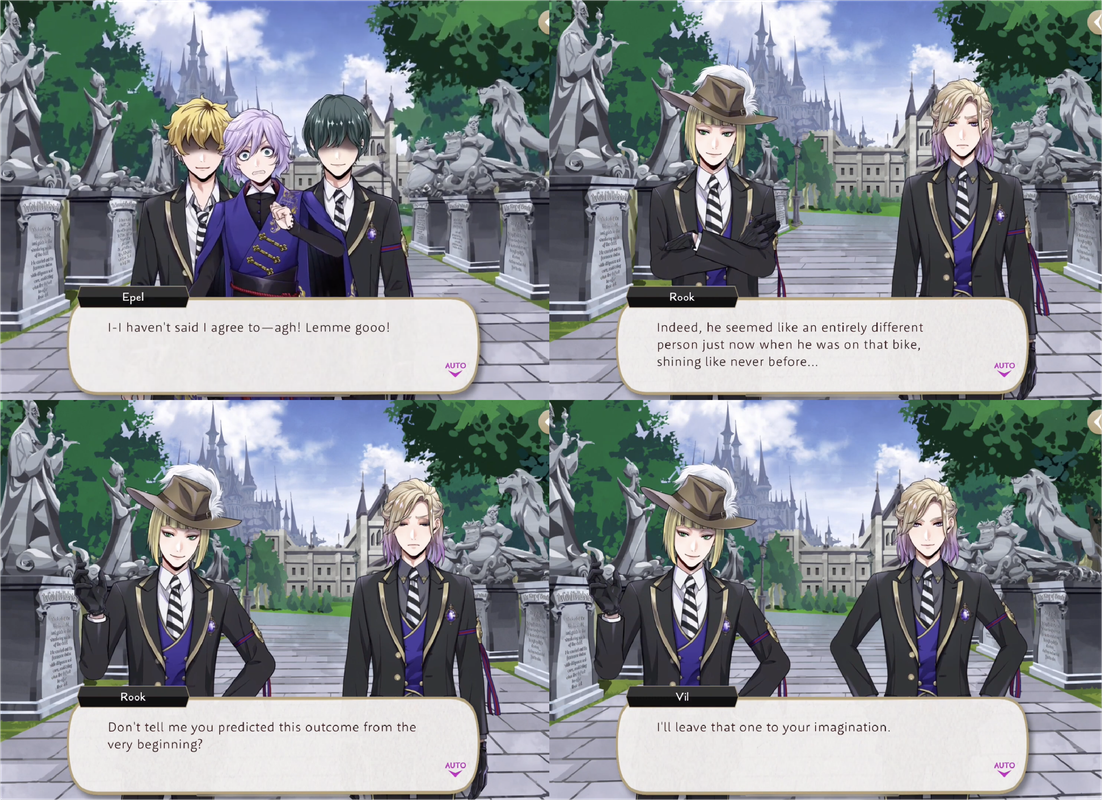
At the conclusion of the vignette Vil strong-arms Epel into lead role of the film club’s next movie despite his protests, with Rook insinuating that such a result was Vil’s intention from the start.
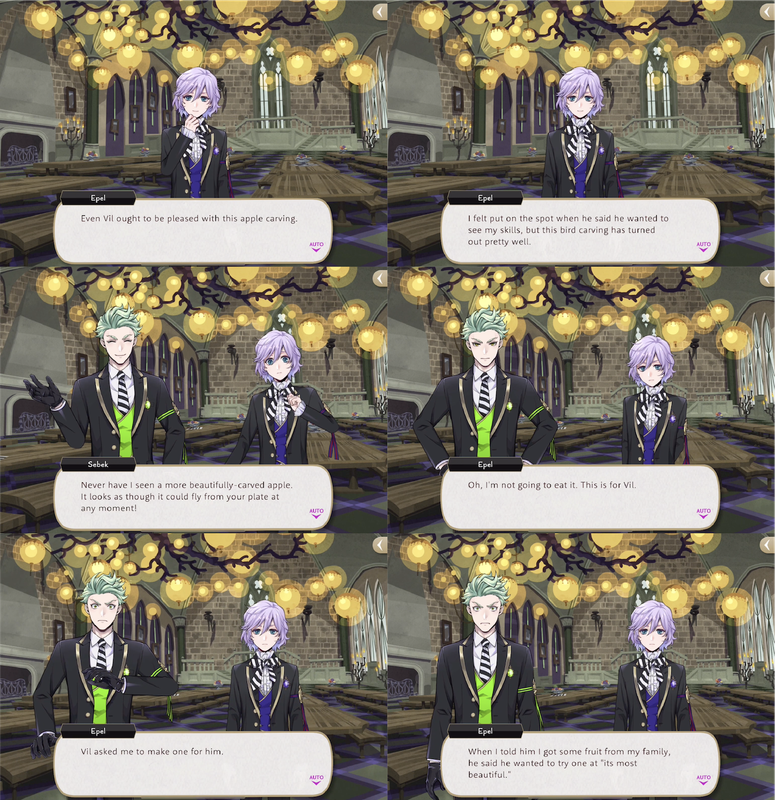
Vil comes up again in Epel’s school uniform vignette, where he impresses Sebek with a bird carved from an apple at Vil’s behest, as Vil said he wanted to try one at its most beautiful.
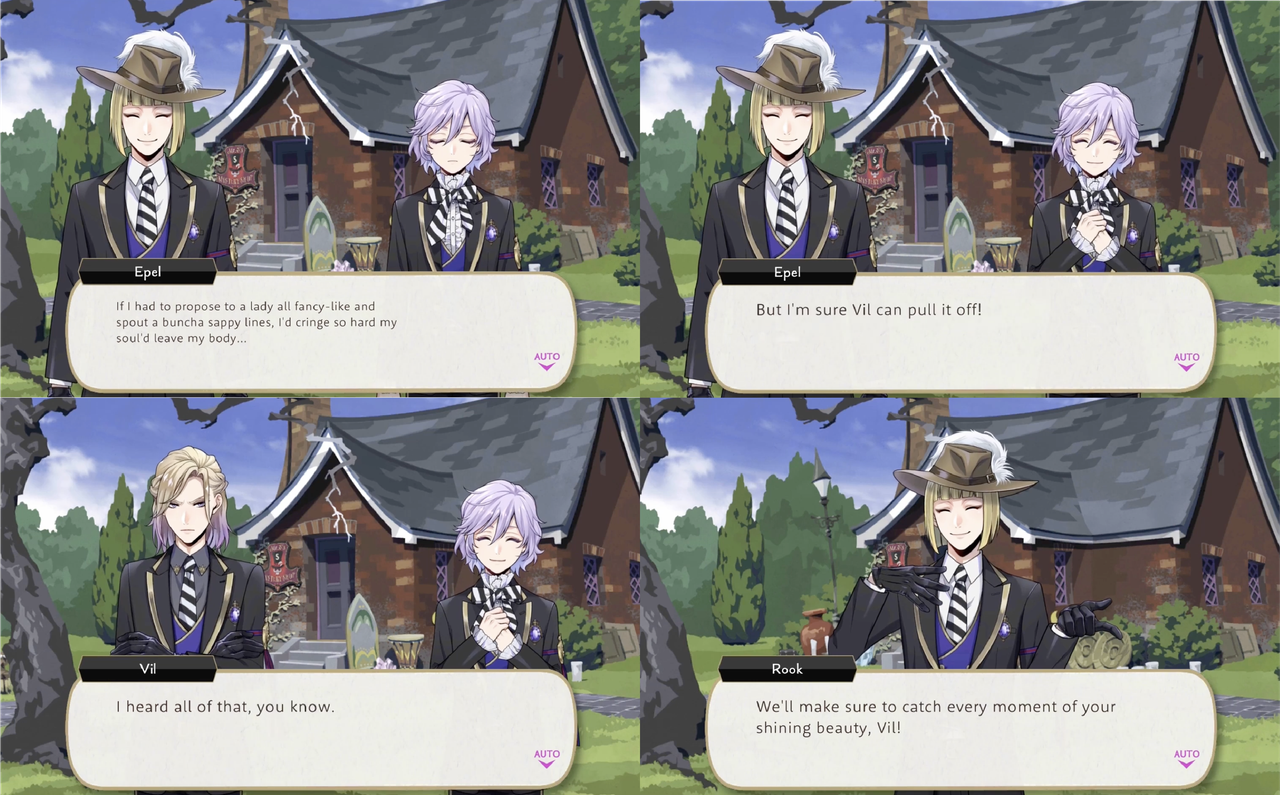
During Phantom Bride Epel mumbles to himself that he would “cringe so hard (his) soul’d leave (his) body” if he had to propose to a lady “all fancy-like and spout a buncha sappy lines,” following with, “But I’m sure Vil can pull it off!” Vil responds, “I heard all of that, you know.”
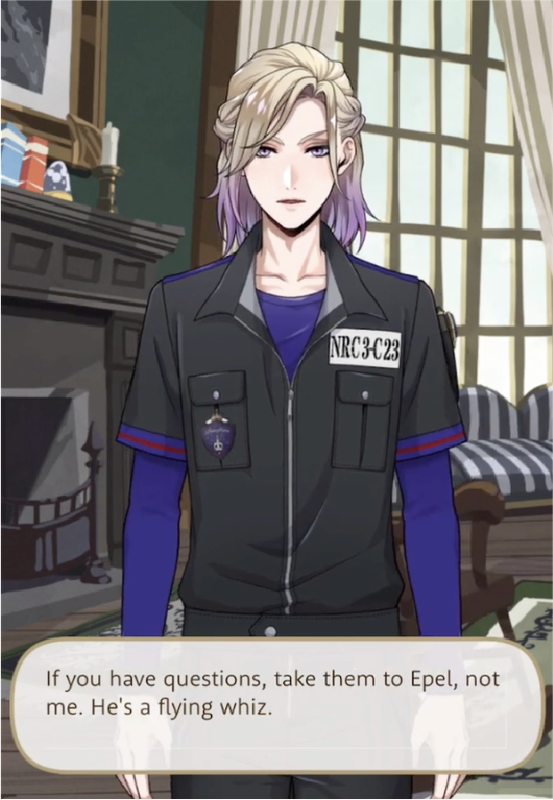
Vil says that, should the prefect have any questions about flying, they should go to Epel instead of him.
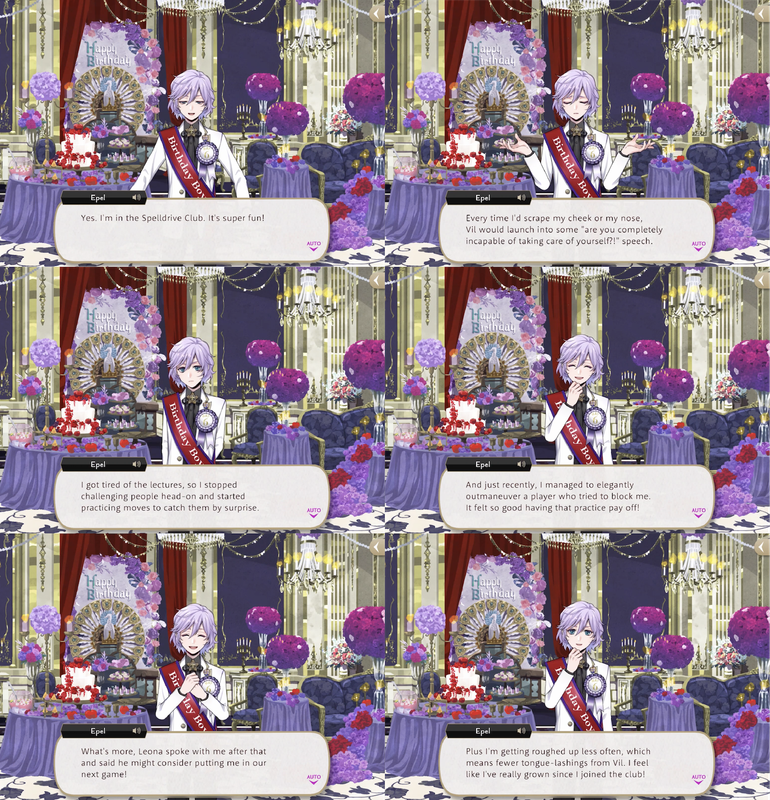
After repeatedly getting lectured by Vil for getting scraped up during practice with the spelldrive club Epel says, “I got tired of the lectures, so I stopped challenging people head-on and started practicing moves to catch them by surprise,” resulting in him outmaneuvering another player and earning him attention from Leona.
Epel says, “Plus I’m getting roughed up less often, which means fewer tongue-lashings from Vil,” but it is not confirmed if Vil was intentionally trying to help Epel improve his athletic skills.
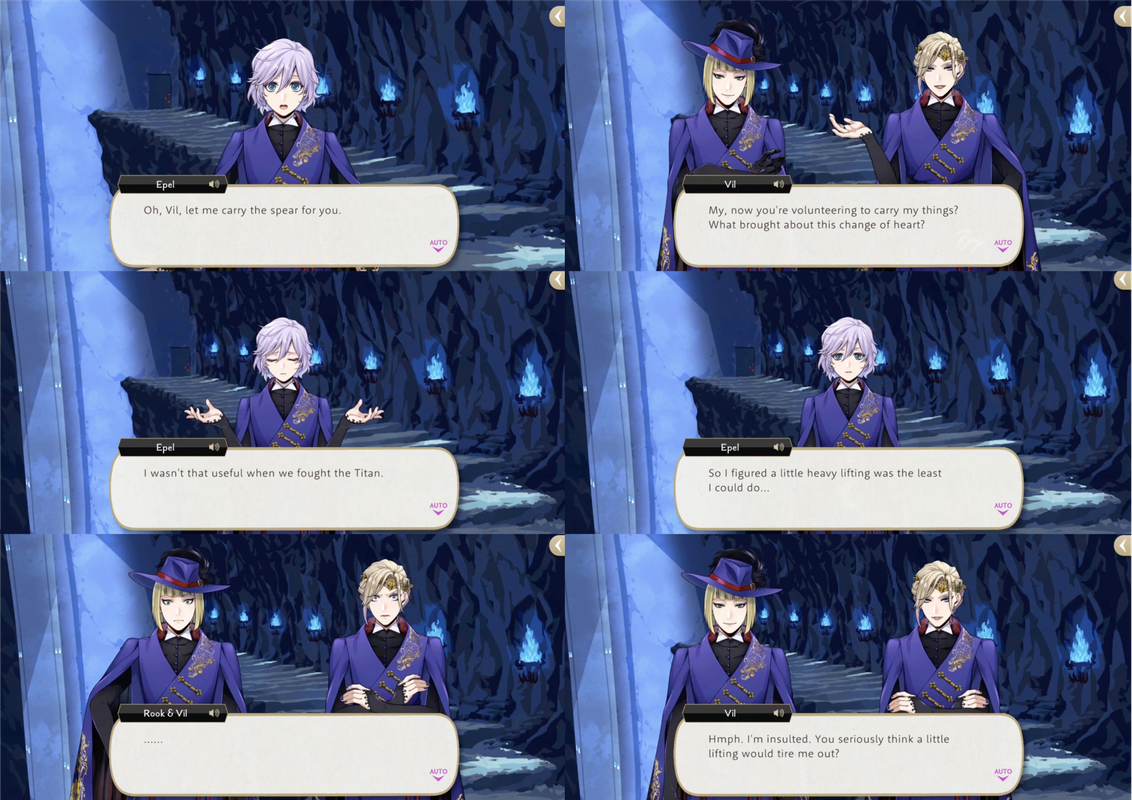
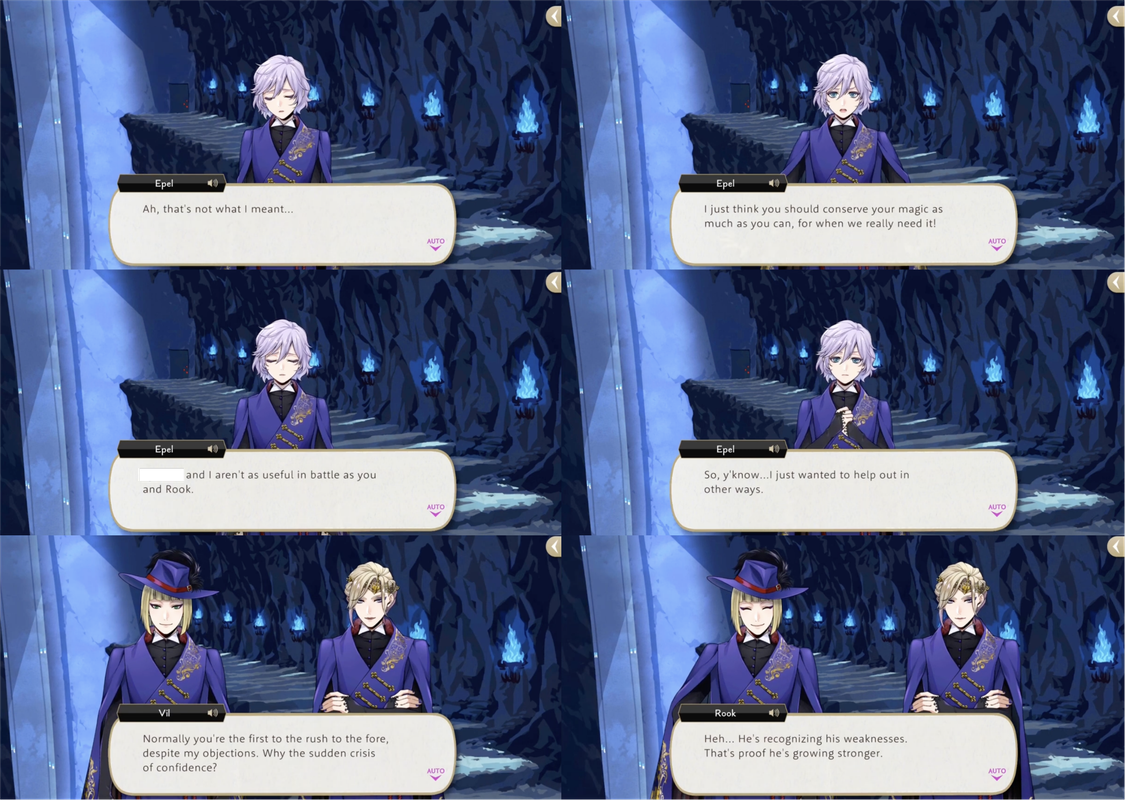
Vil regularly scolds Epel during Book 6. Epel surprises Vil by volunteering to help carrying the thunder spear after their first titan battle, explaining that he feels he should do something to compensate for how little help he was during the fight, so he wants to help in other ways.
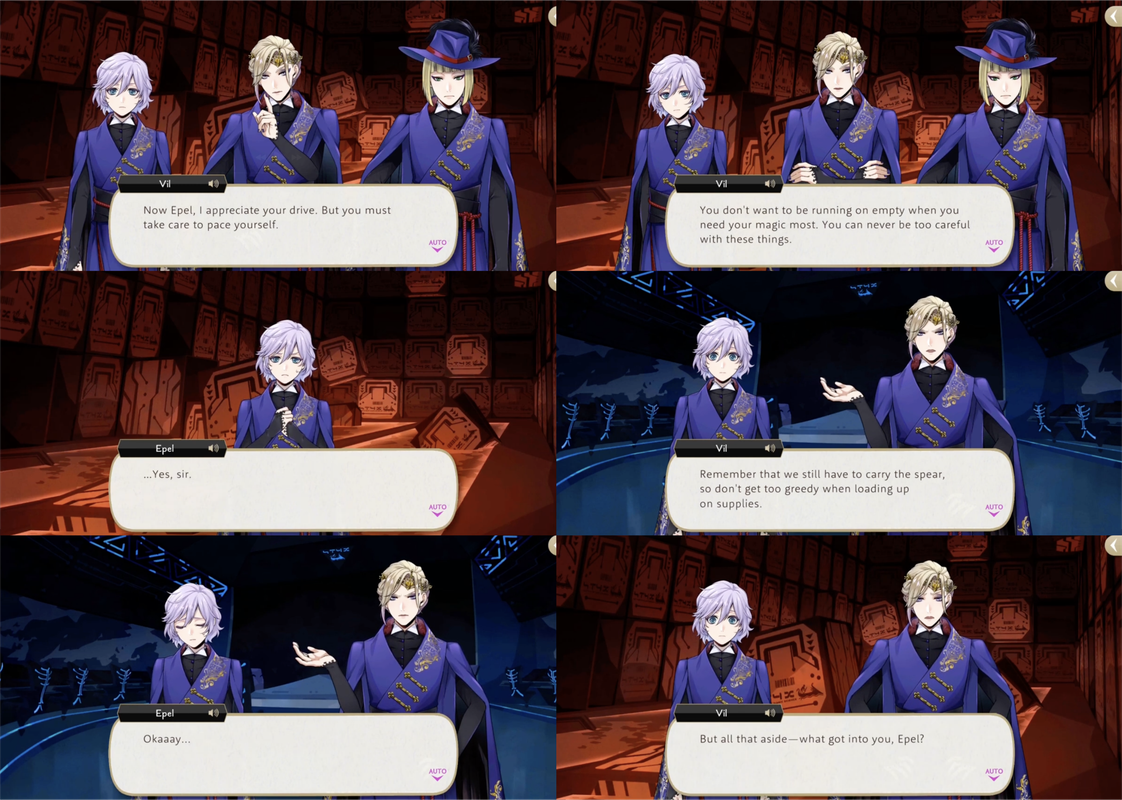
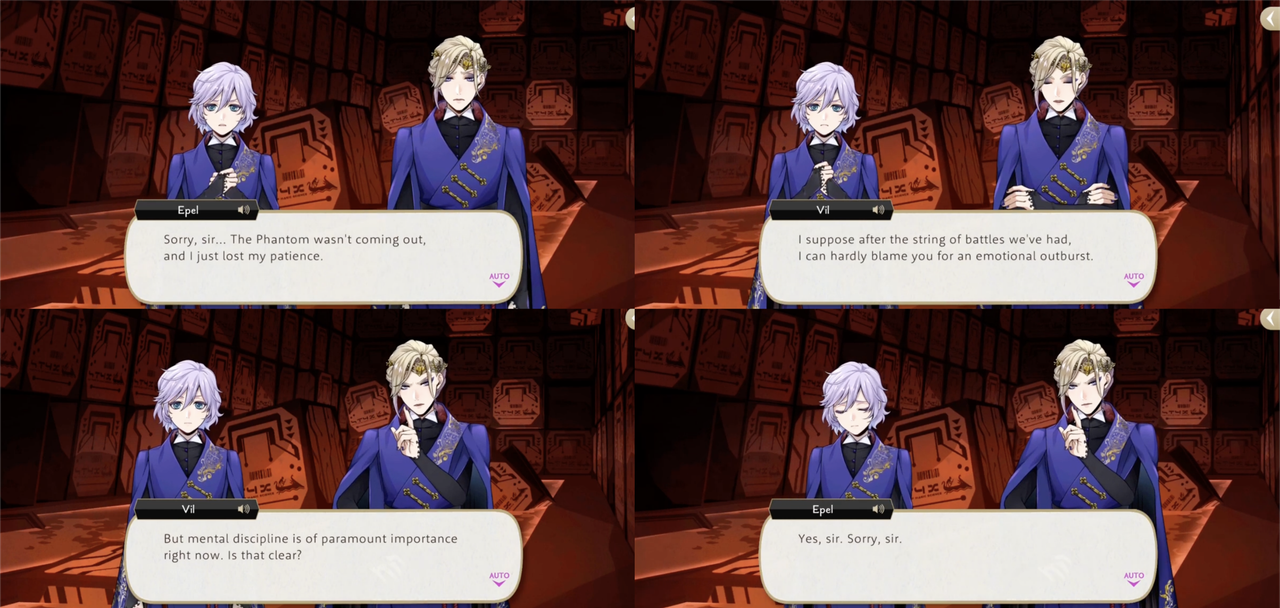
Epel protects Vil from a phantom, and Vil comments on wishing to hear more about what Epel does in spelldrive club, to Epel’s delight.
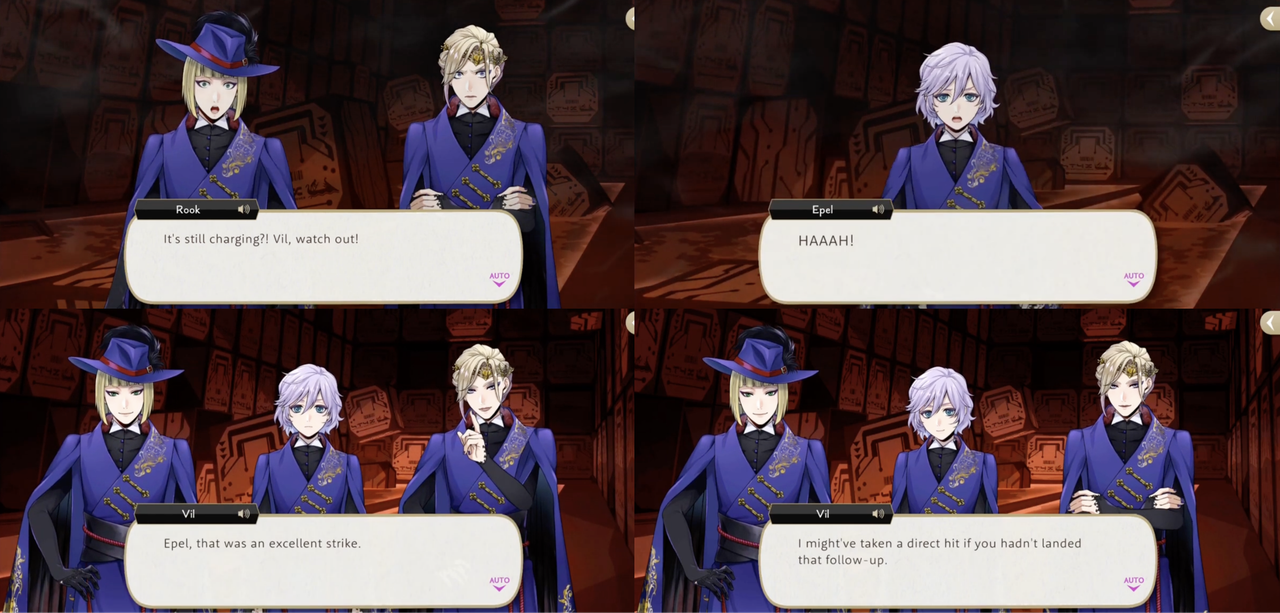
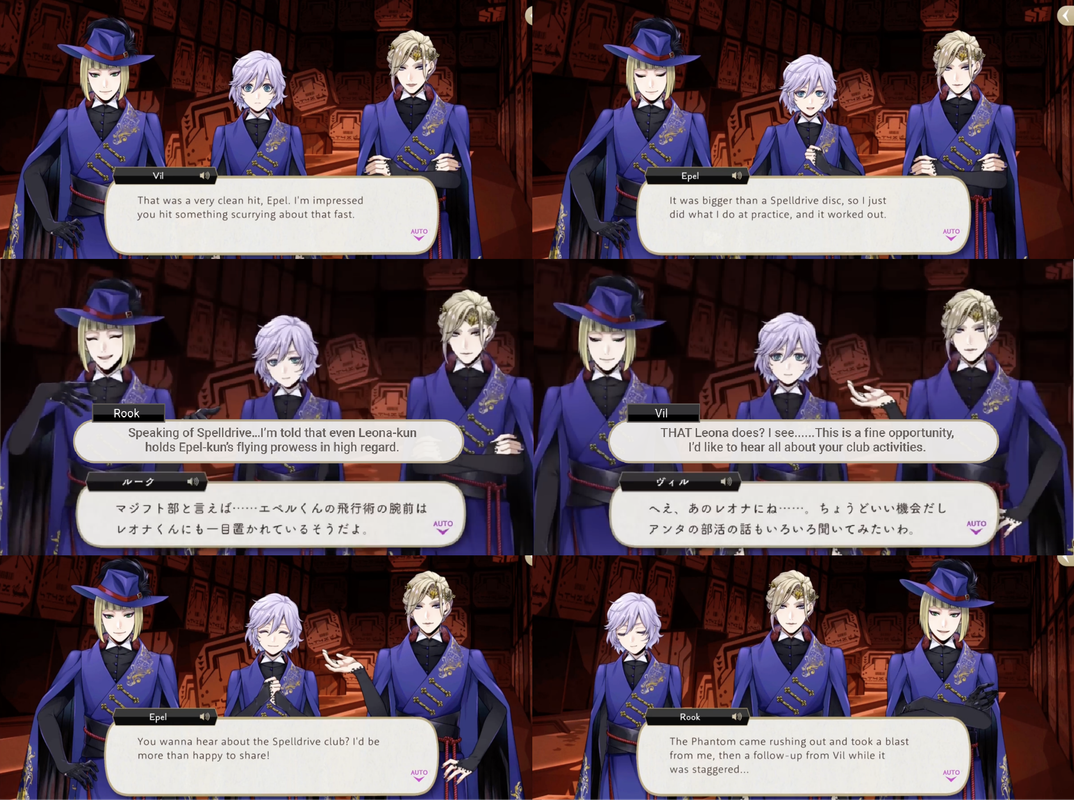
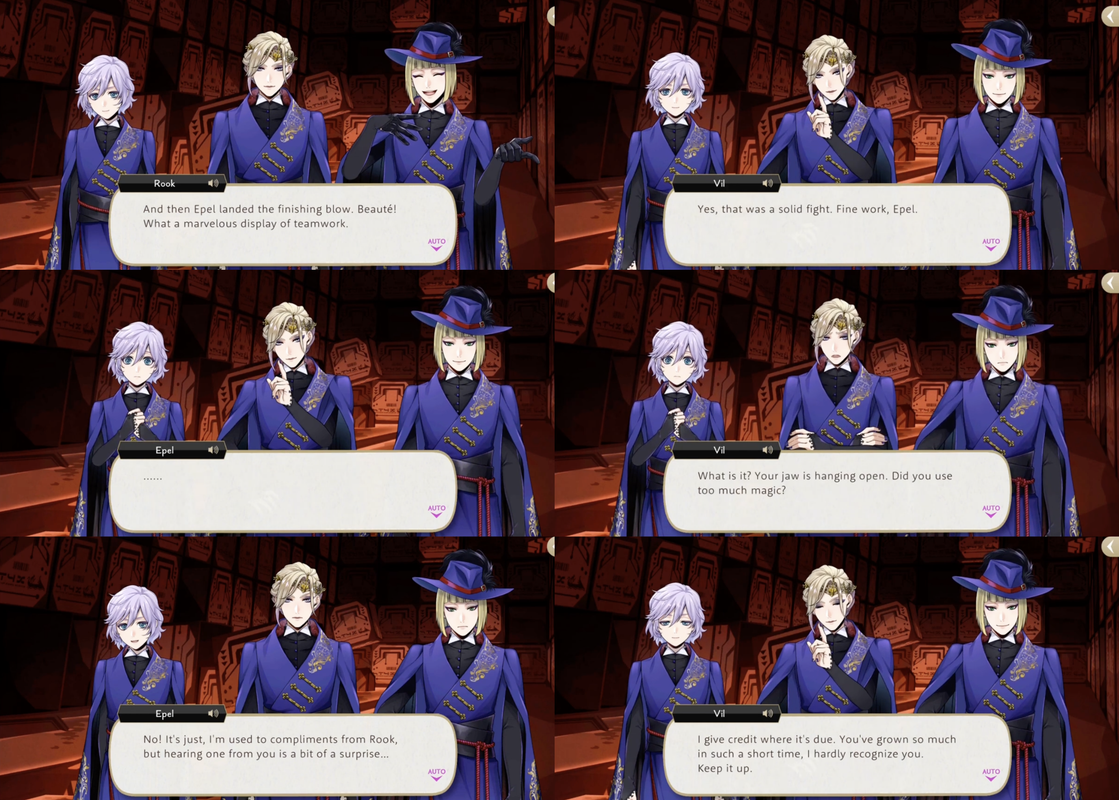
The two work together in “a marvelous display of teamwork” to take out a phantom together, but when Vil compliments Epel, Epel is stunned speechless. He explains, “I’m used to compliments from Rook, but hearing one from (Vil) is a bit of a surprise…”
Vil responds, “I give credit where it’s due. You’ve grown so much in such a short time, I hardly recognize you. Keep it up.”
Later Epel explains, “I was just thinking about how reassuring it is to be with you two.” Vil responds, “You’re only now realizing this? Hah, took you long enough.”
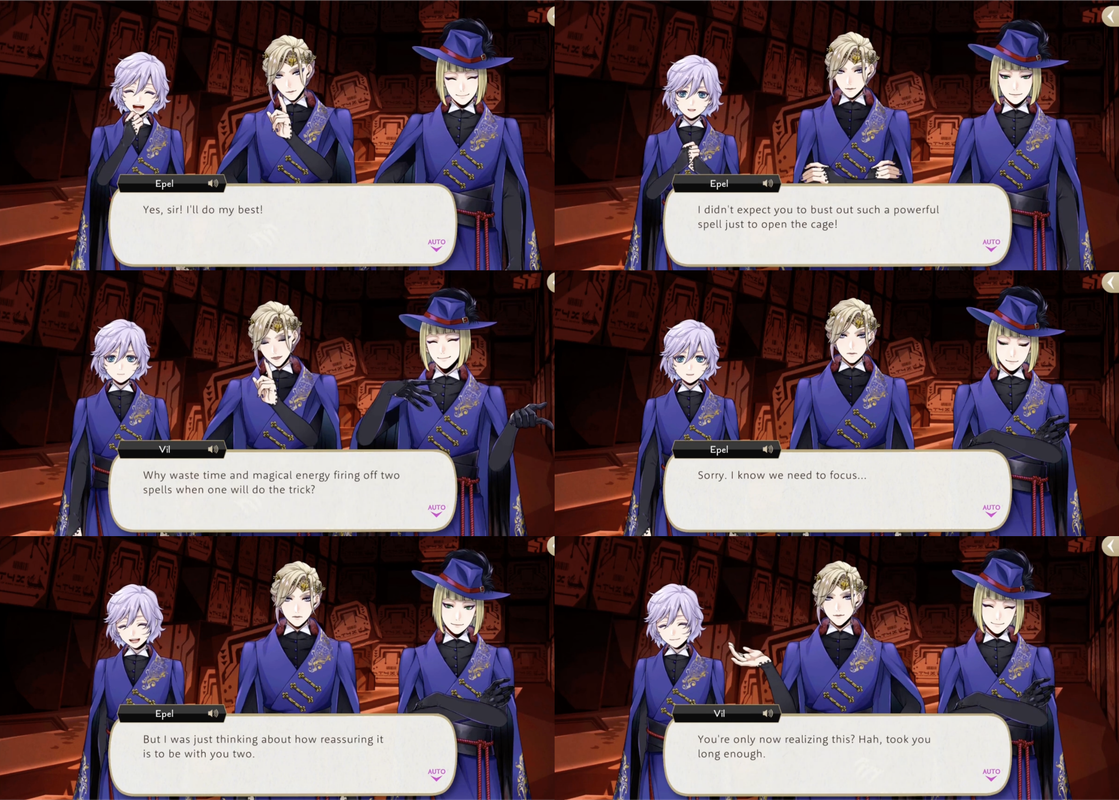
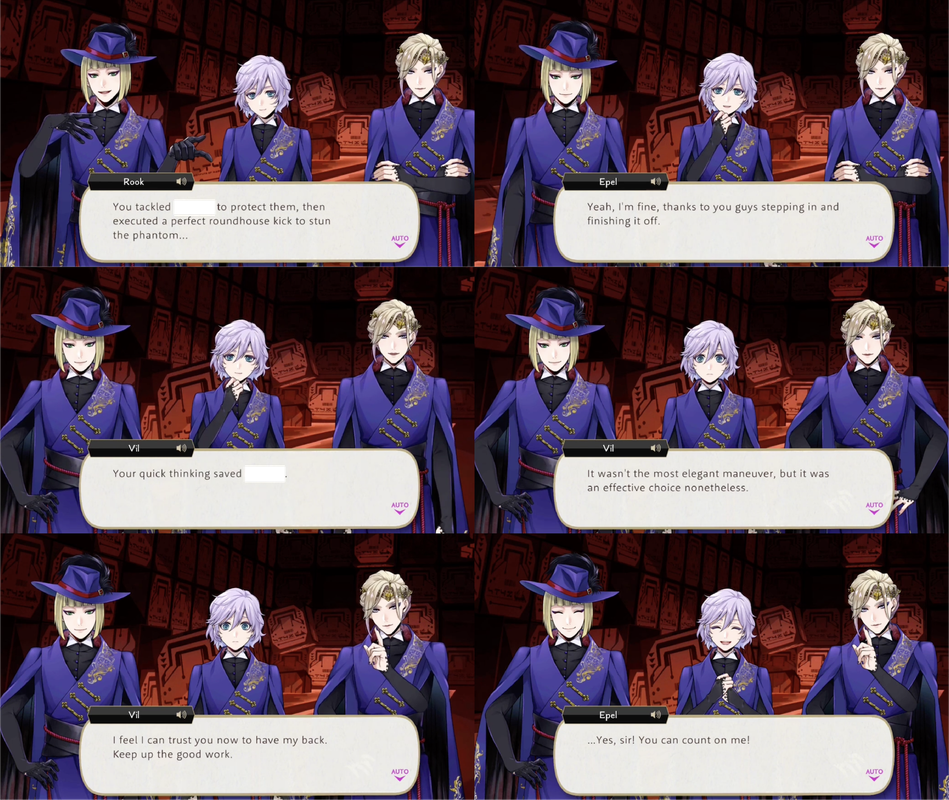
Afterwards Vil compliments Epel on his quick thinking during their battles through Tartarus, saying, “I feel I can trust you now to have my back. Keep up the good work,” and a delighted Epel responds, “…yes, sir! You can count on me!”
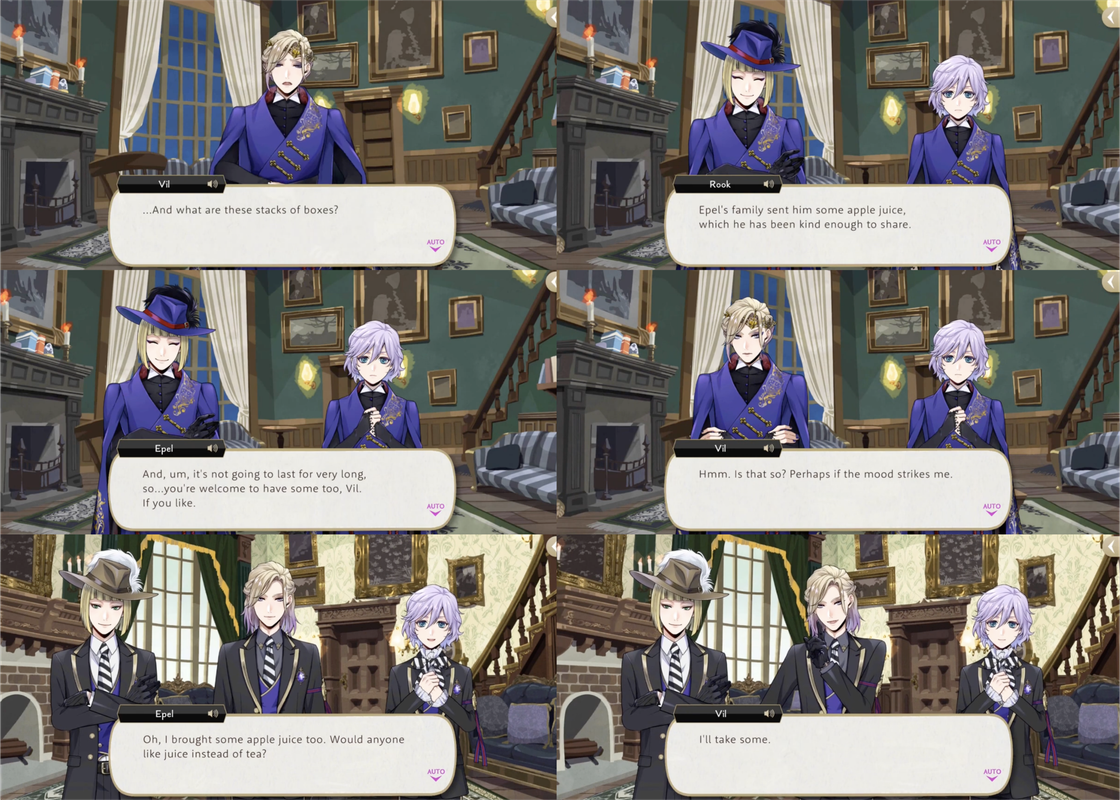
At the end of the story Epel offers apple juice to the group, which Vil accepts immediately in contrast to when Epel offered him the same juice directly in Book 5 and Vil responded, “Perhaps if the mood strikes me.”
In his dorm vignette Vil assigns all of Pomefiore to “carefully curated curriculum” so that they might “reform” themselves and be ready for a visit by an international fashion magazine that is doing a feature on the dorm and the daily lives of its members.
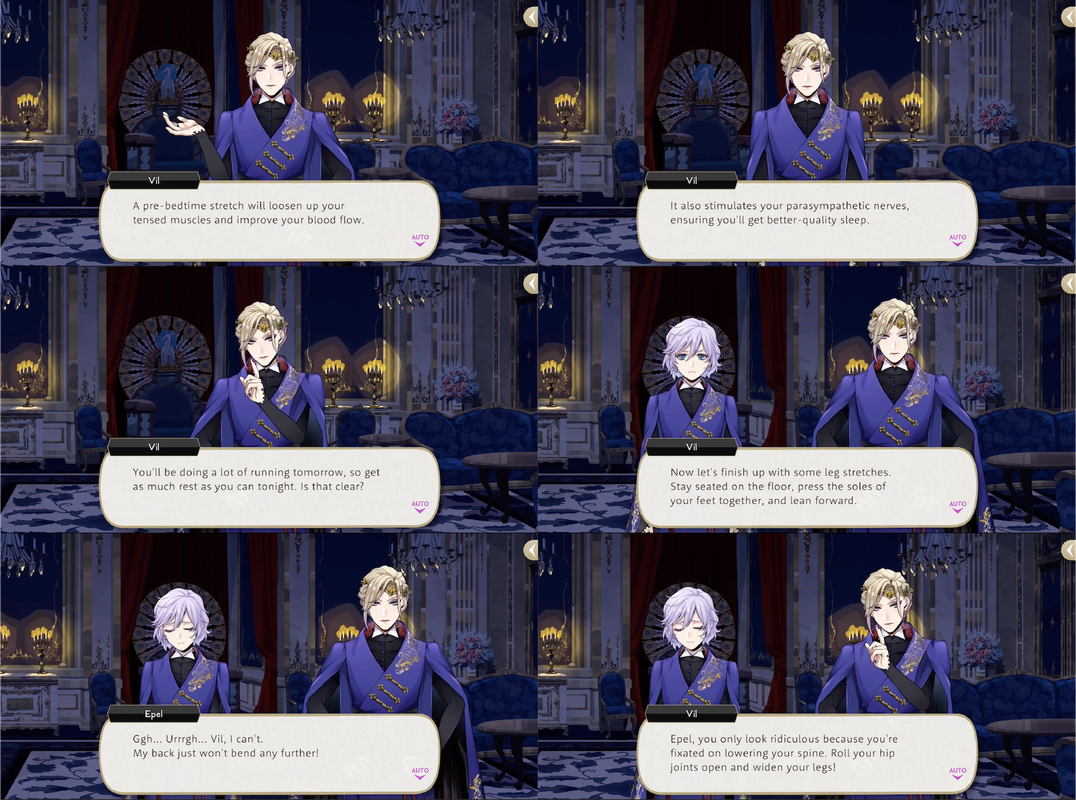
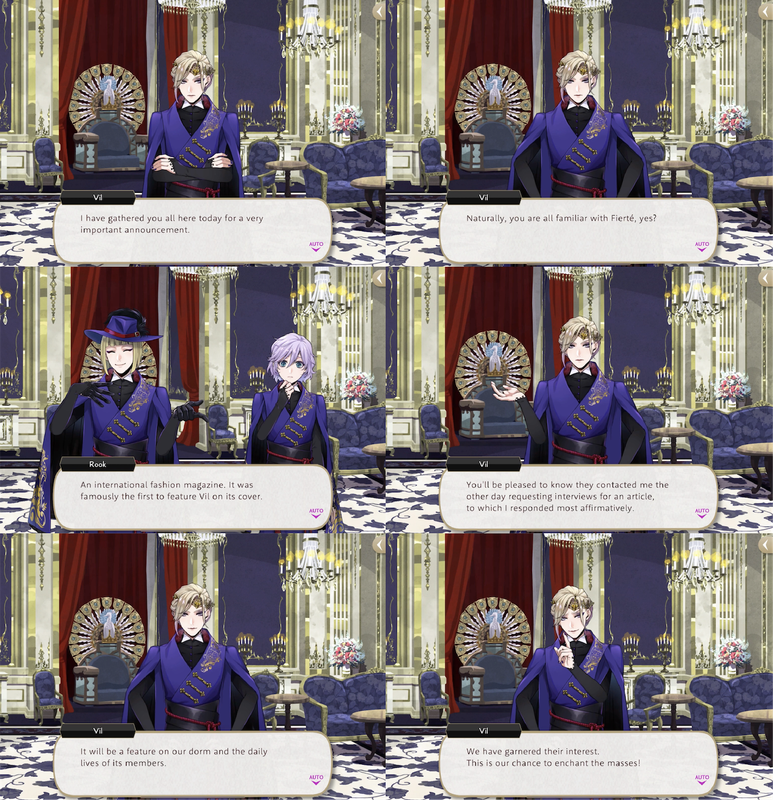
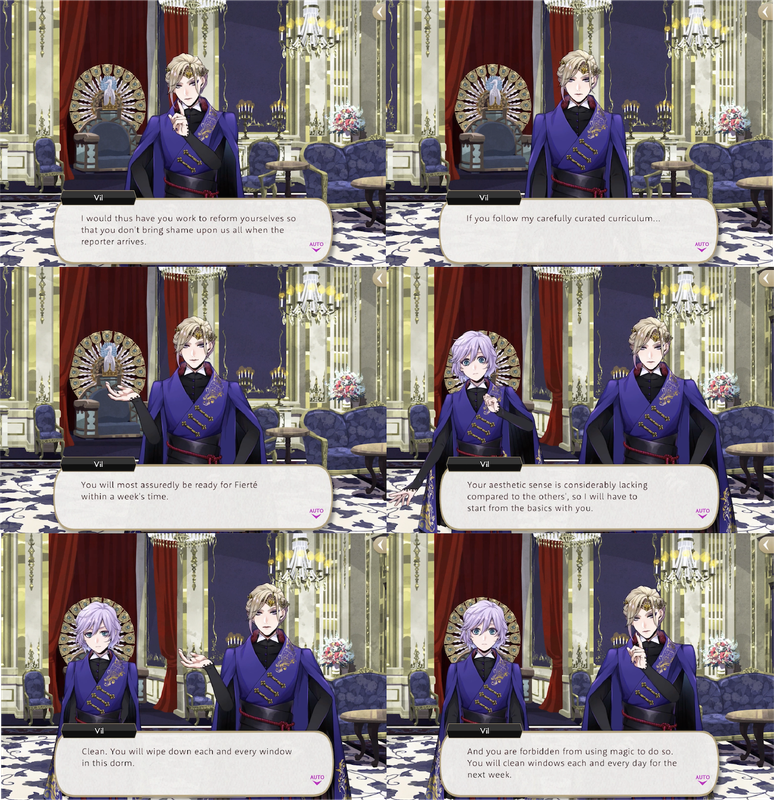
Vil says he will “have to start from the basics” with Epel as his “aesthetic sense is considerably lacking compared to the others” and assigns him a cleaning regime that involves wiping down every window in Pomefiore without magic.
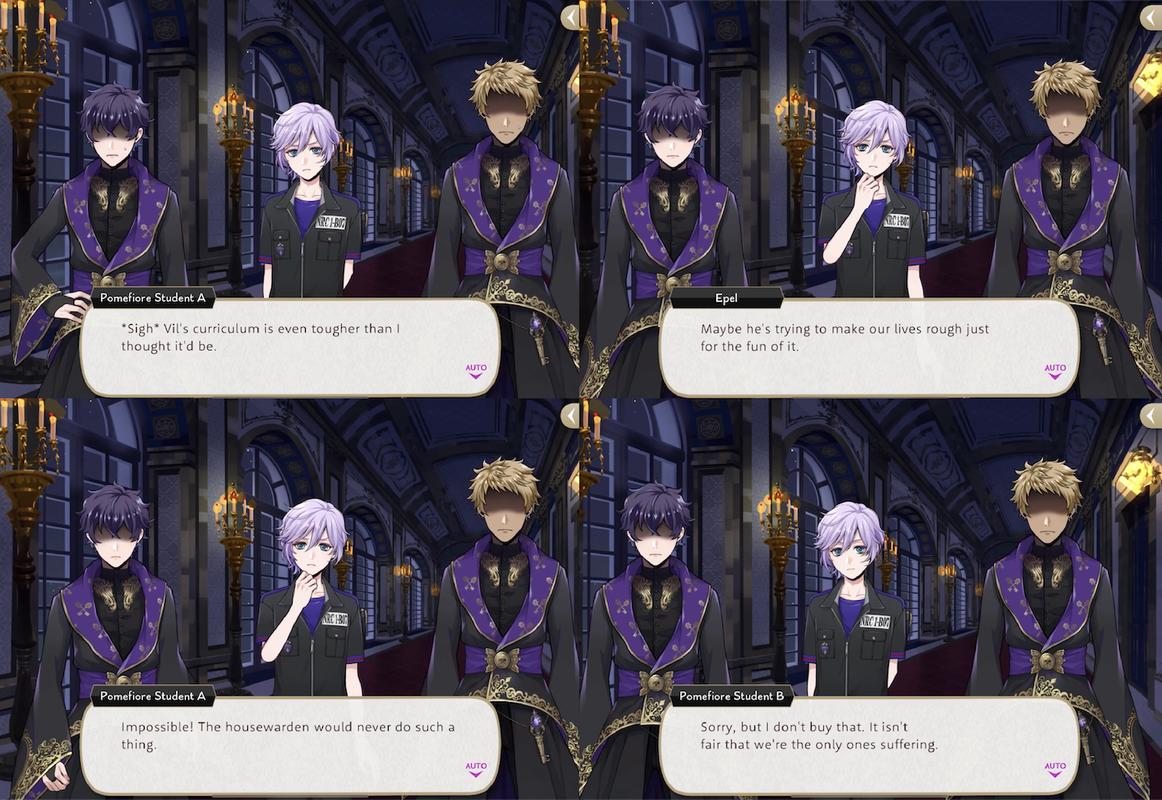
Pomefiore students (and Epel) complain about Vil not suffering along with them and making their lives rough for the fun of it, but then overhear Vil’s plan to stay up late working on his curriculum for the students of the dorm.
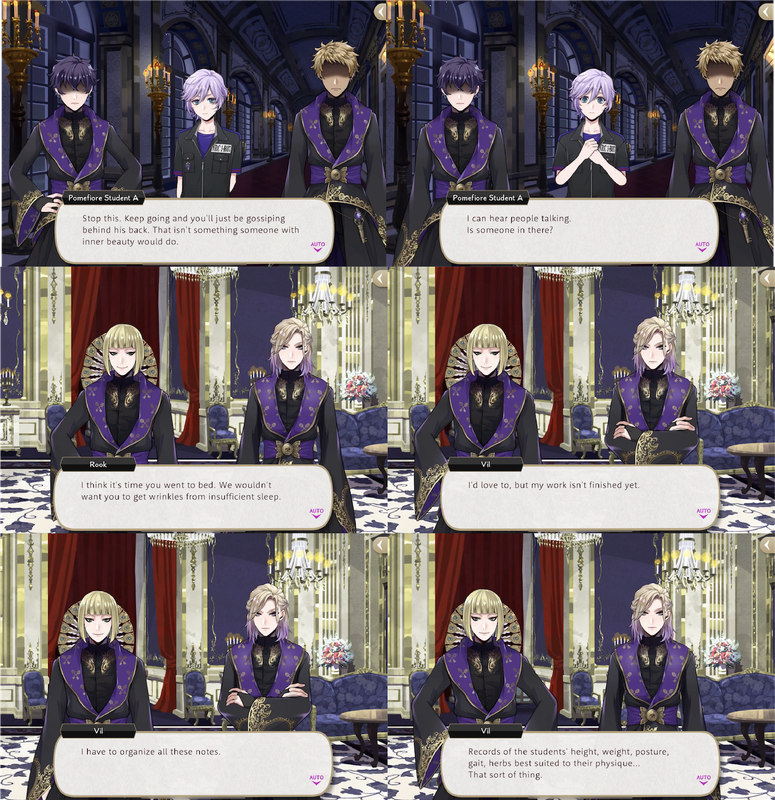
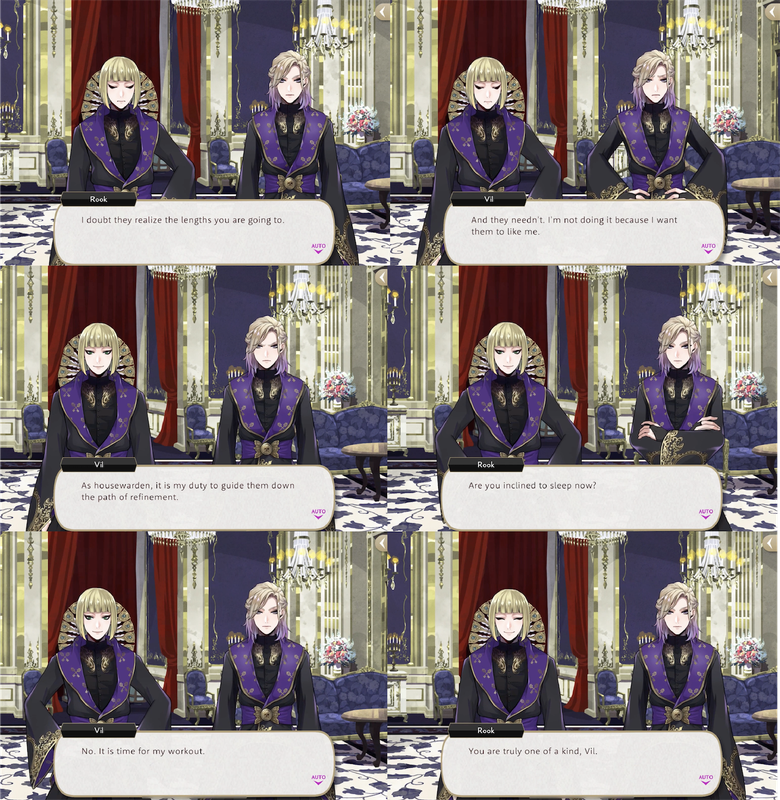
Rook observes that it is unlikely that any of them realize the lengths that he is going to and Vil responds, “And they needn’t. I’m not going it because I want them to like me. As housewarden, it is my duty to guide them down the path of refinement.”
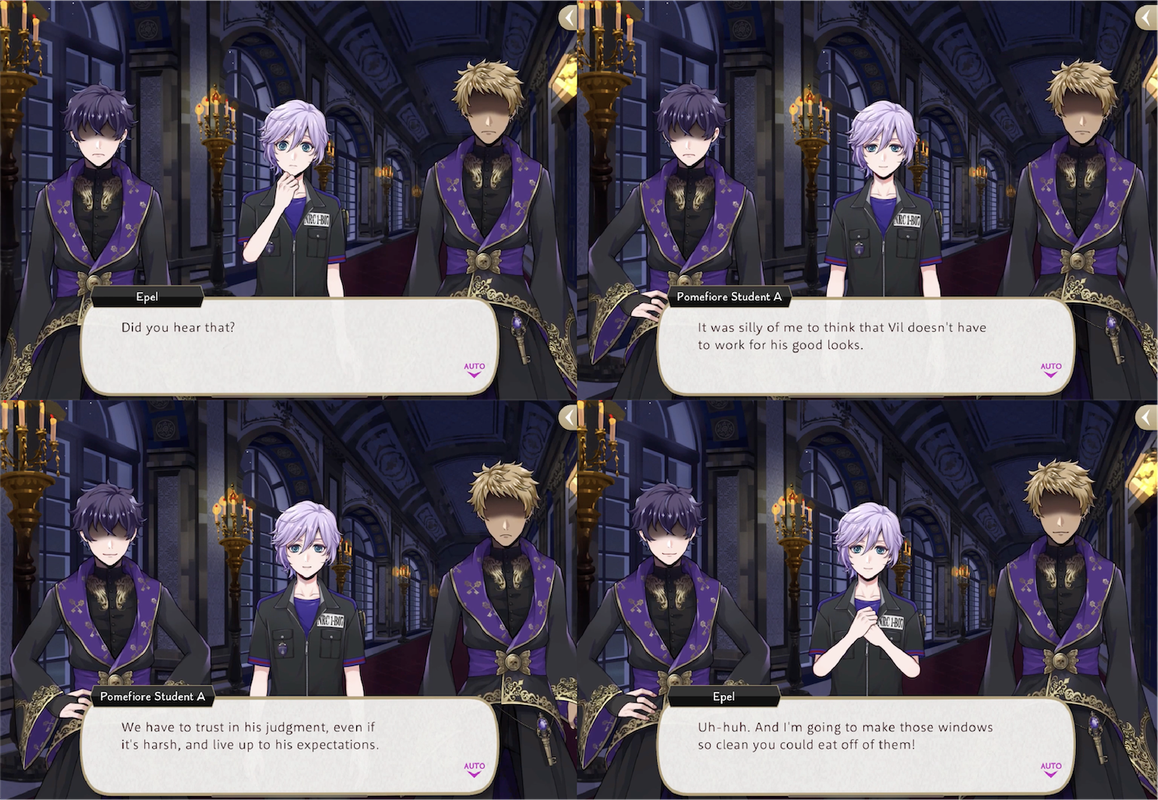
This placates Epel and the other students, who decide they were silly to think that Vil doesn’t work and they should trust in his judgment, even if it is harsh, and live up to his expectations for them.
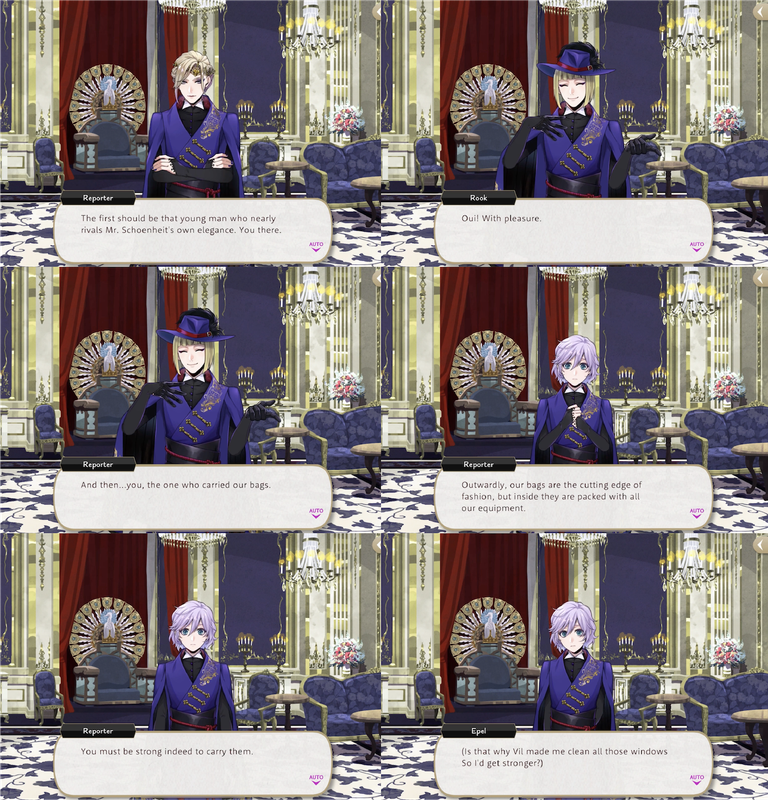
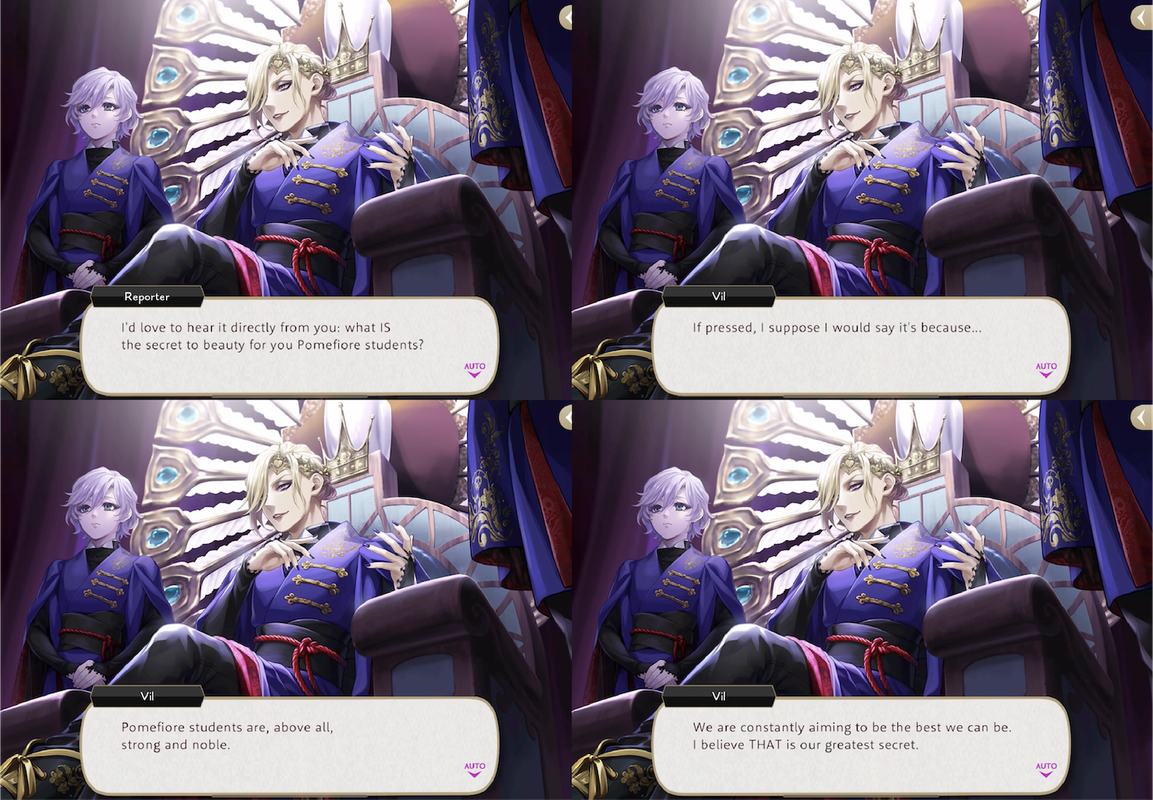
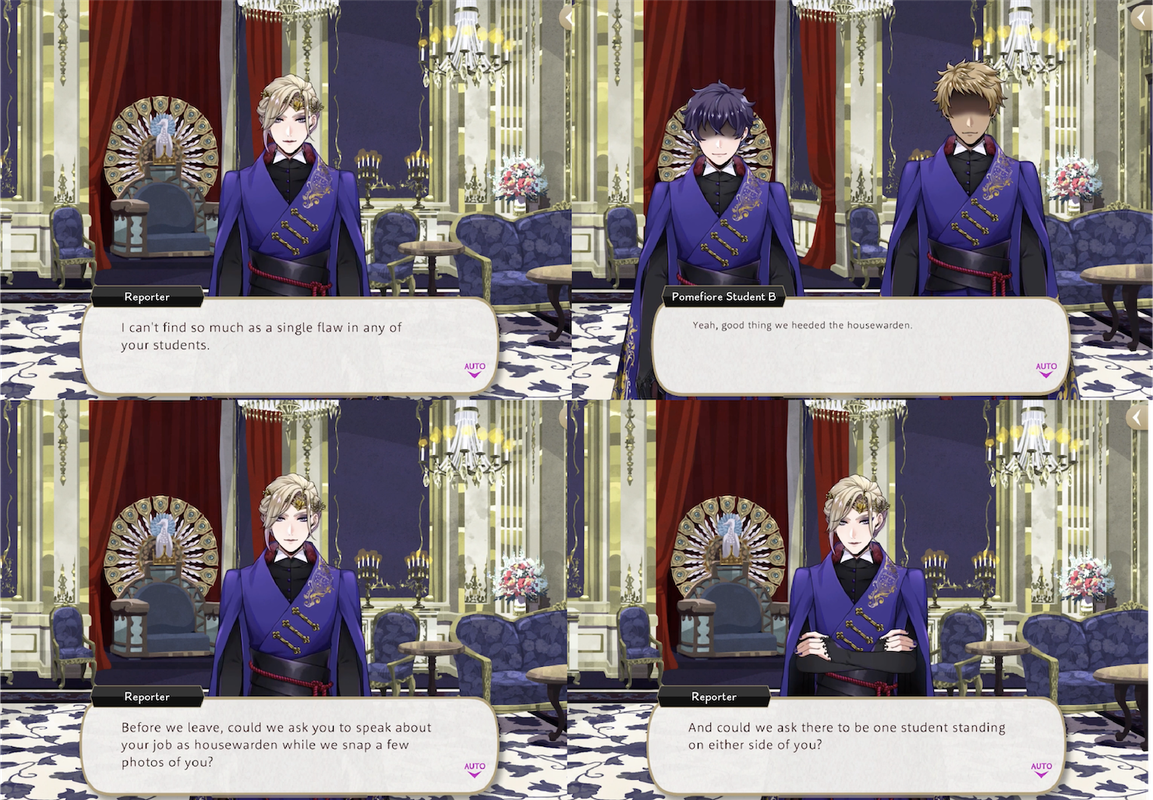
The magazine reporter later says that they can find no flaw in any of Pomefiore’s students and ask Rook and Epel to pose with Vil for a photo, telling Epel that they had been impressed when he had accepted their bags when they arrived, despite how heavy they are. Epel reflects, “Is that why Vil made me clean all those windows? So l’d get stronger?”
When asked about the secret to beauty for Pomefiore students Vil responds, “We are constantly aiming to be the best we can be. I believe THAT is our greatest secret.”
Despite not attending the social at Noble Bell College himself Vil is stringent about checking what it is that Epel packs, saying, “I know you’d just take a change of underwear and nothing else if I didn’t check. I know how you like to cut loose when I’m not around,” and says that he had best not hear any rumors of a student from Pomefiore “goofing off” in Fleur City “in unkempt clothes with unprotected skin.”
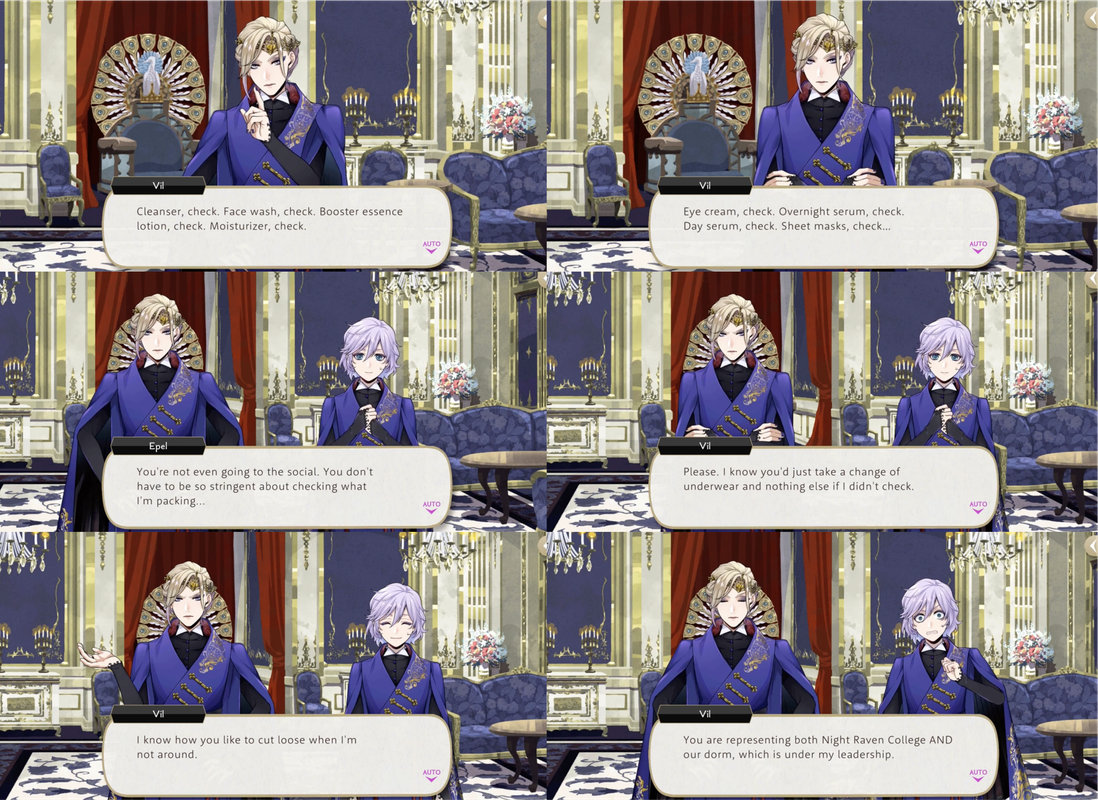
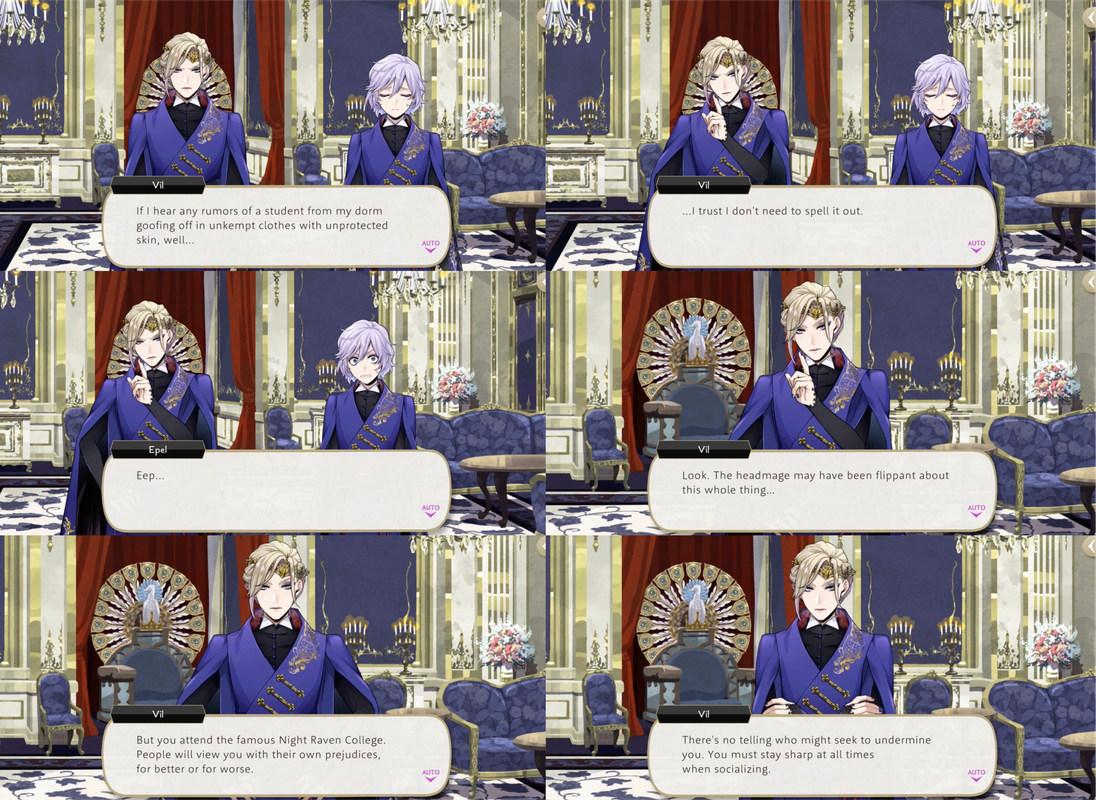
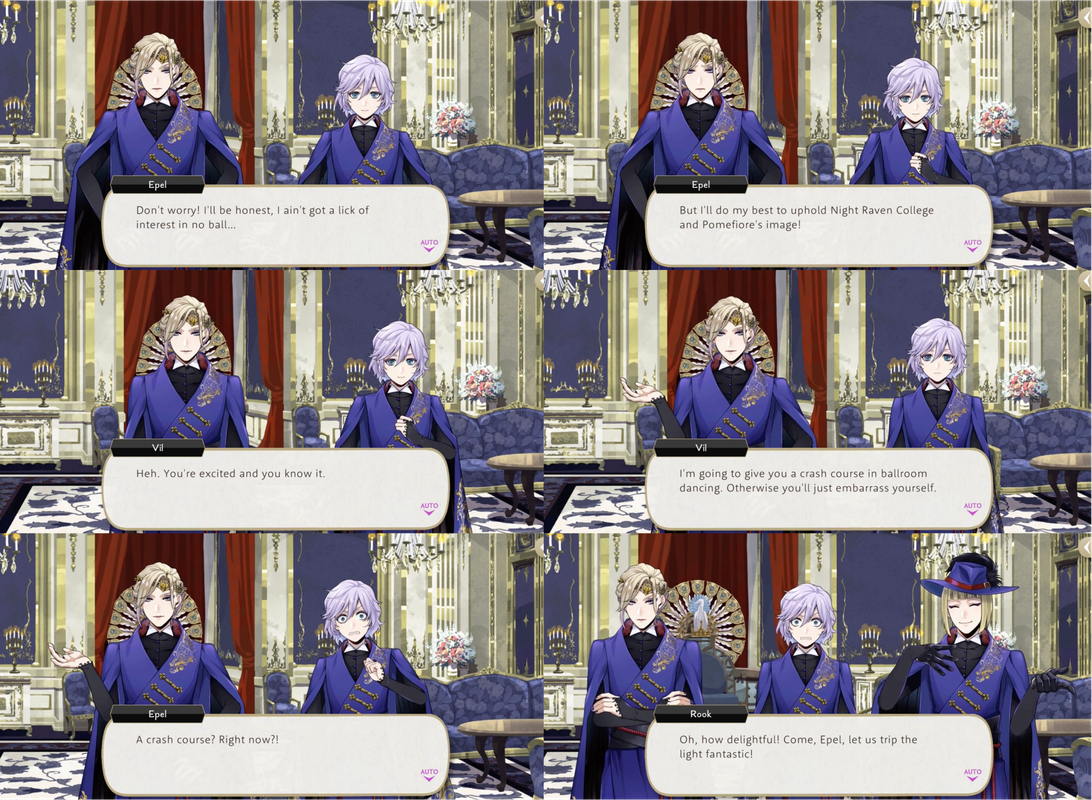
Vil warns Epel to stay sharp at all times when socializing, as people will be viewing them with their own prejudices for better or for worse, and there is no telling who might seek to undermine them. Vil then gives Epel a crash course in ballroom dancing.
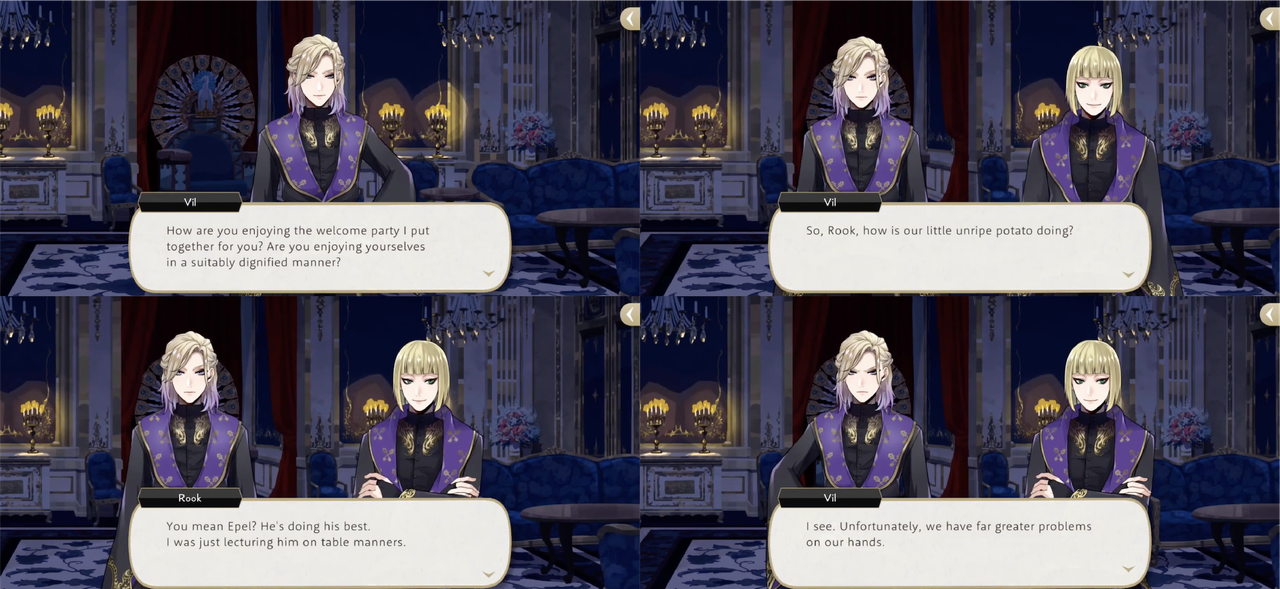
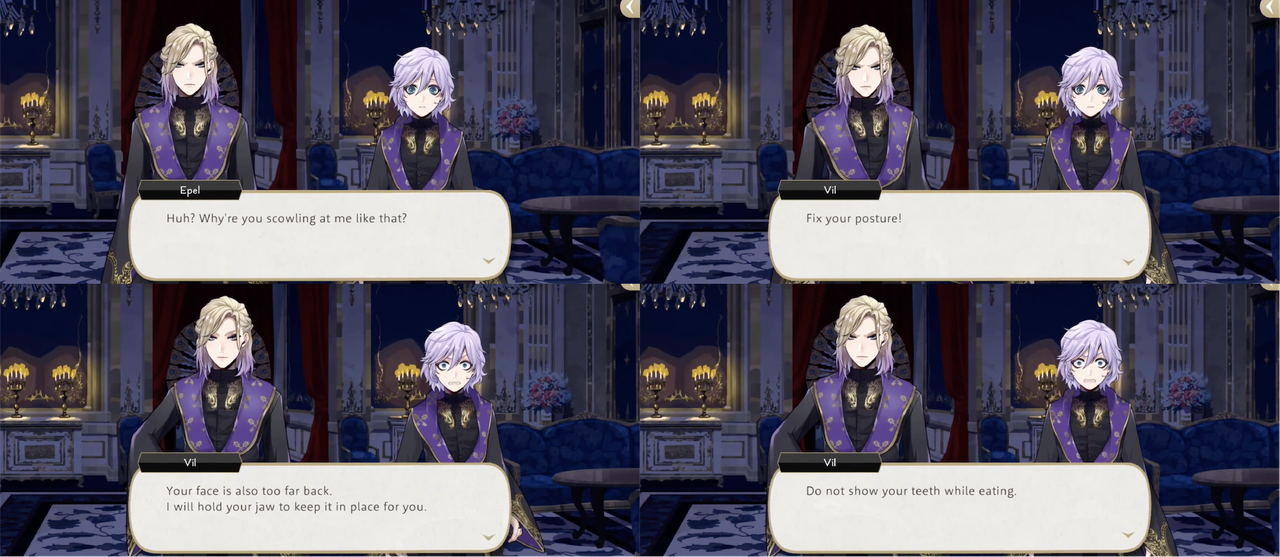
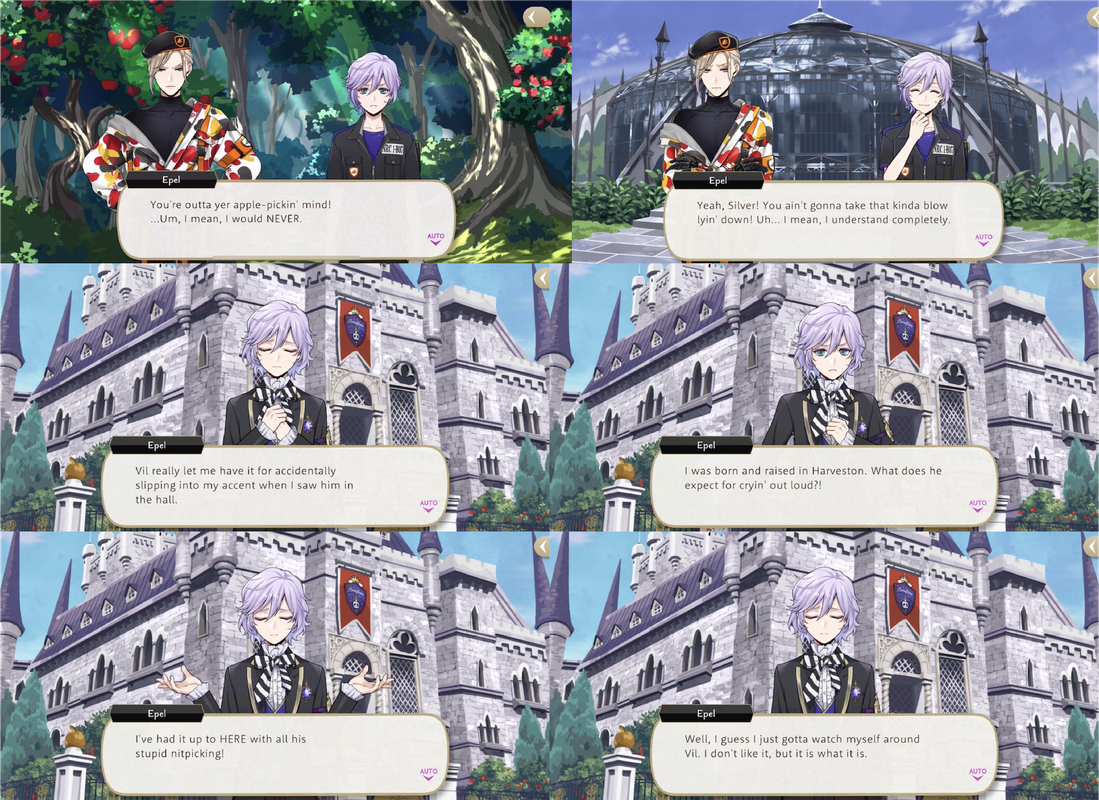
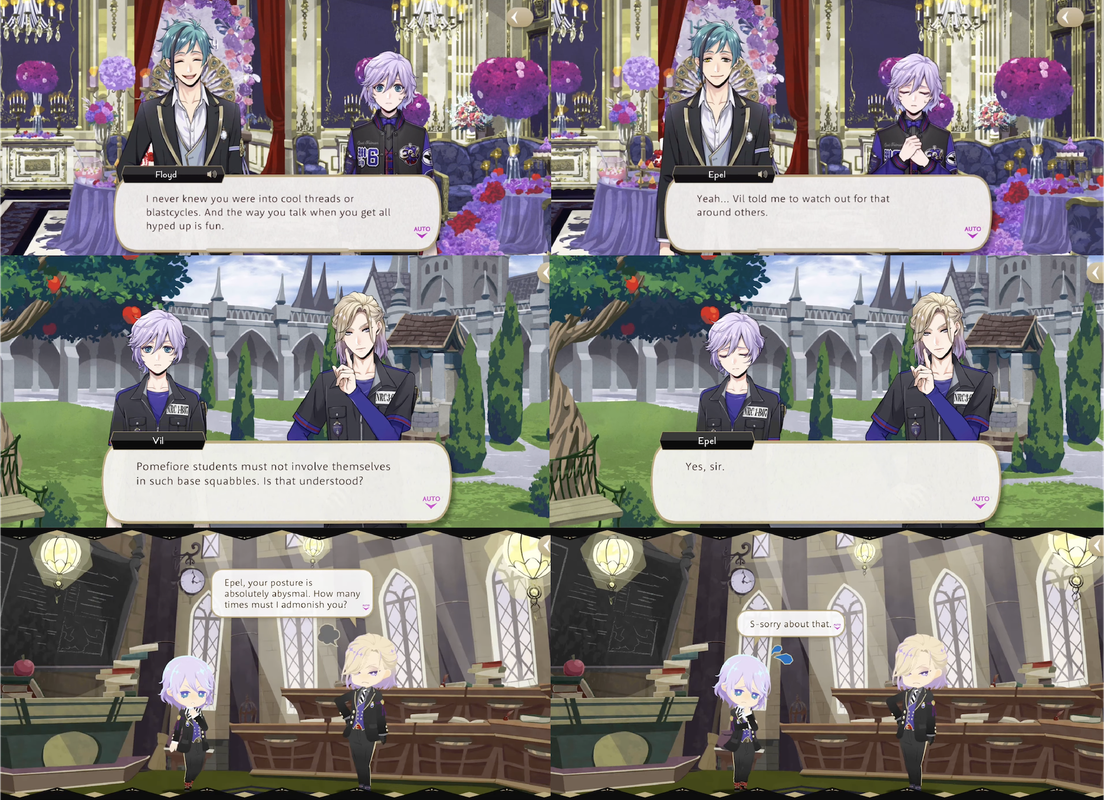
We see Vil correcting Epel’s posture, informal speech patterns and table manners all on his first day of school, and Epel has said that Vil will “really let (him) have it” when he slips into his natural dialect. (More on Vil’s issues with Epel’s impolite speech patterns here ->)
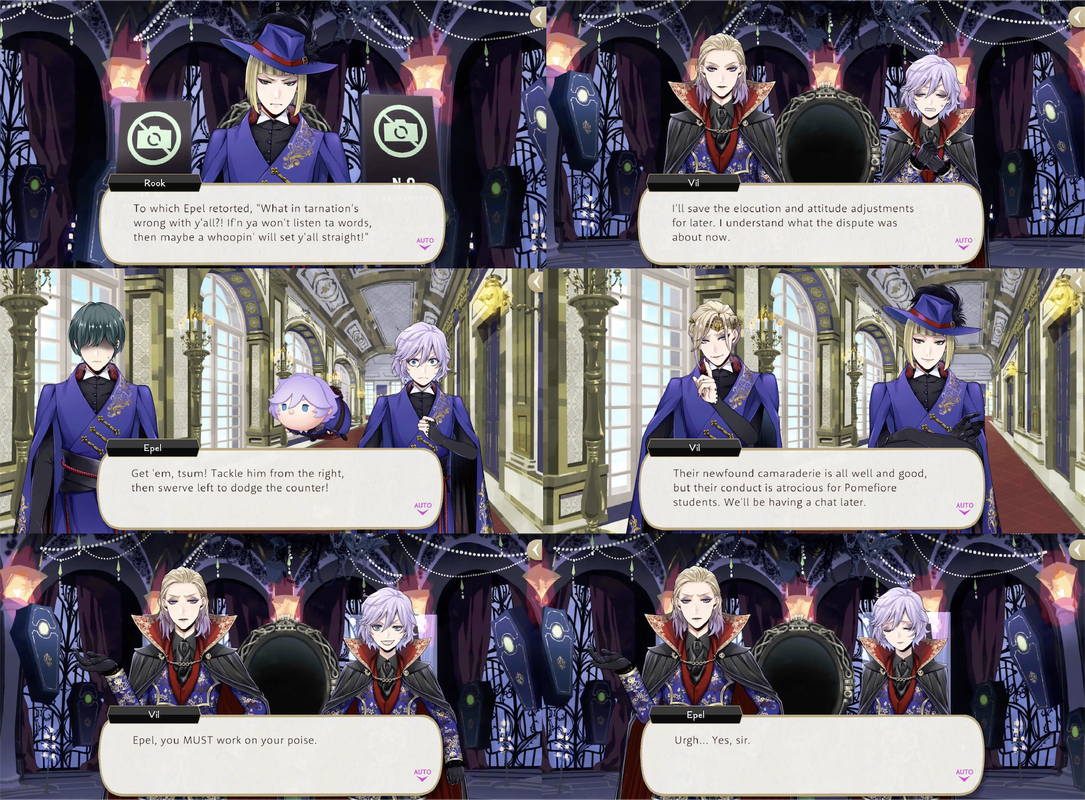
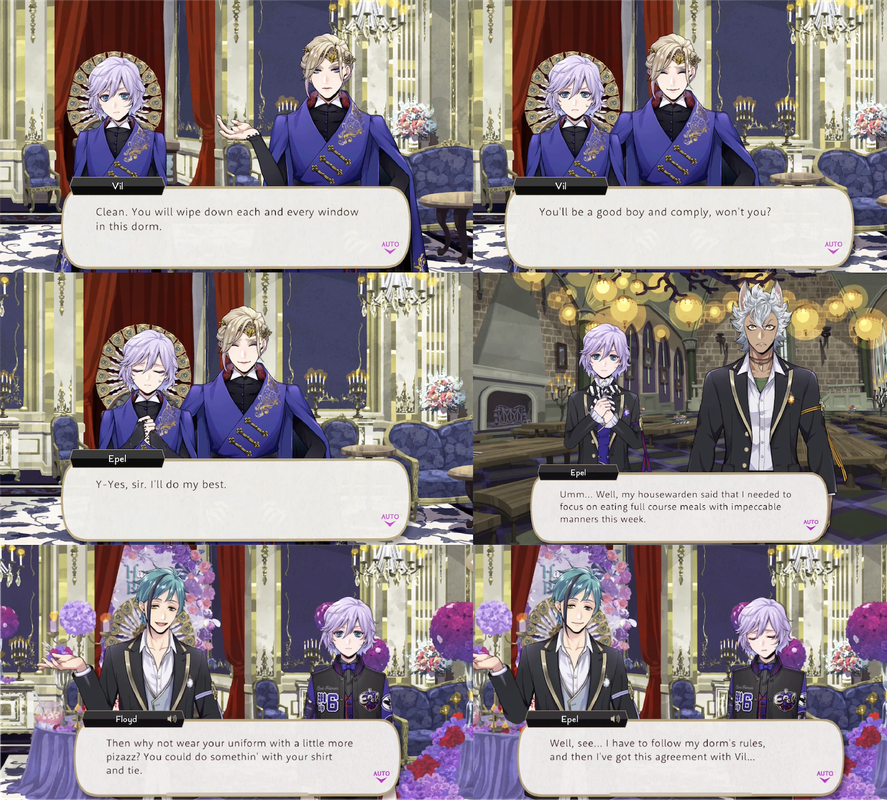
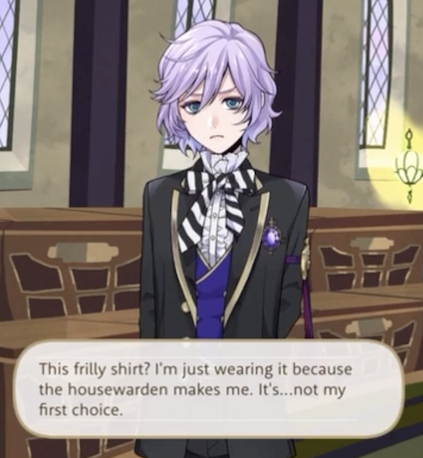
Other tasks that Vil assigns to Epel are cleaning, eating full-course meals with impeccable manners, wearing the “frilly shirt” that he wears with his school uniform, not getting into fights and fixing his posture.
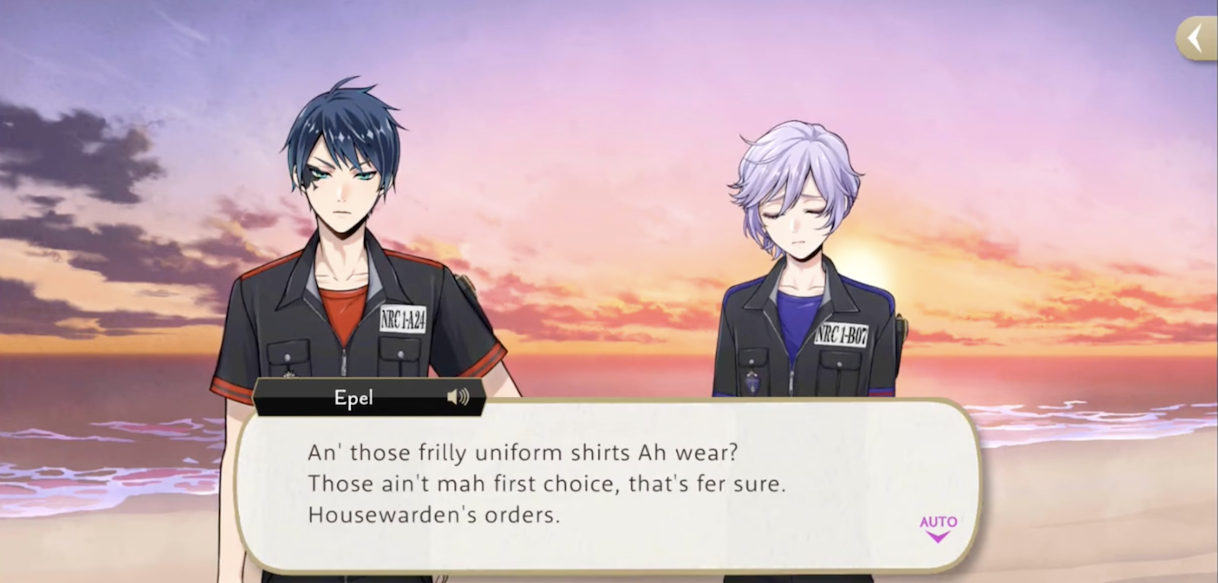
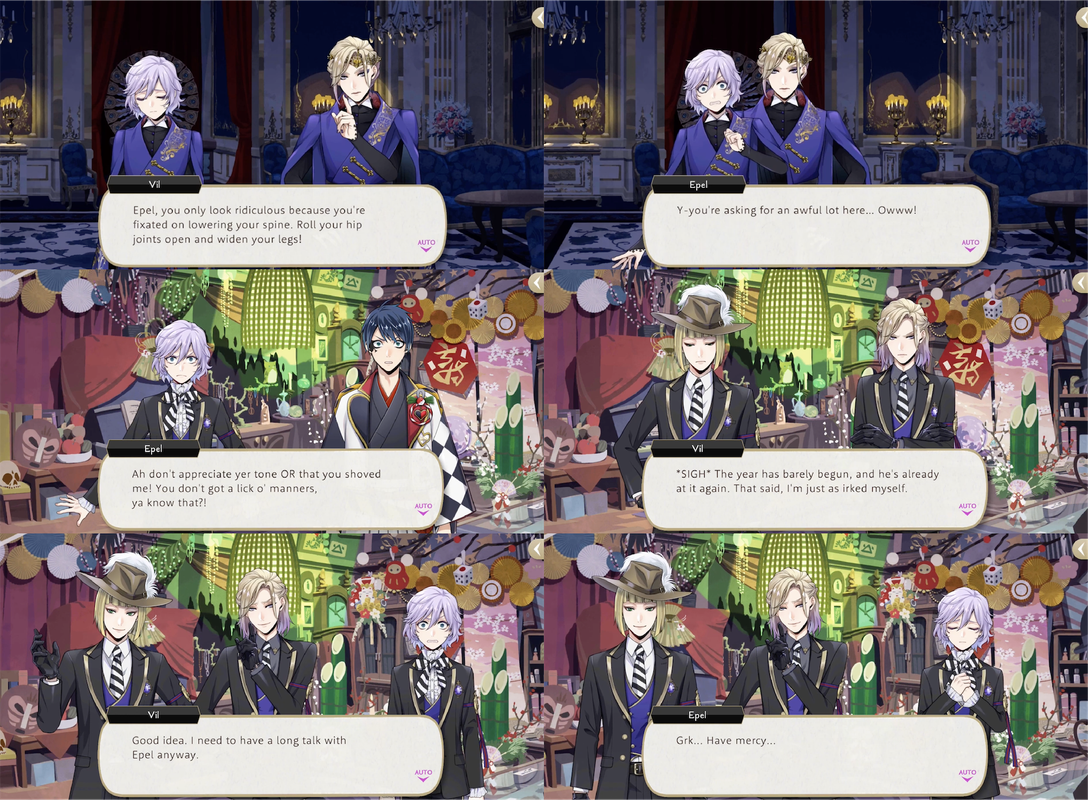
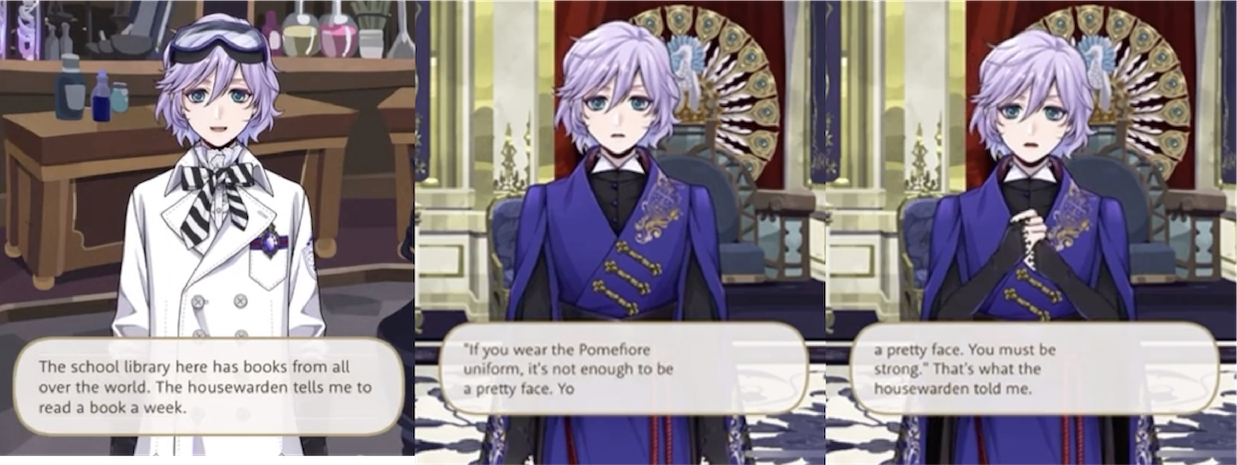
He has also instructed Epel to read one book a week and that “”If you wear the Pomefore uniform, it’s not enough to be a pretty face. You must be strong.”
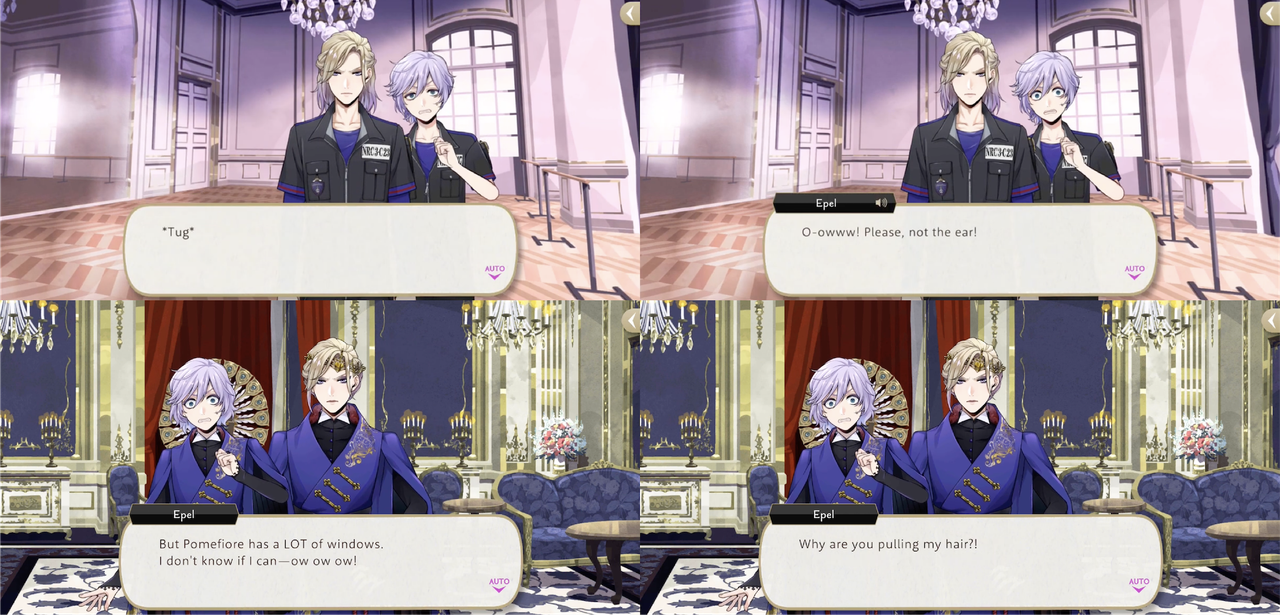
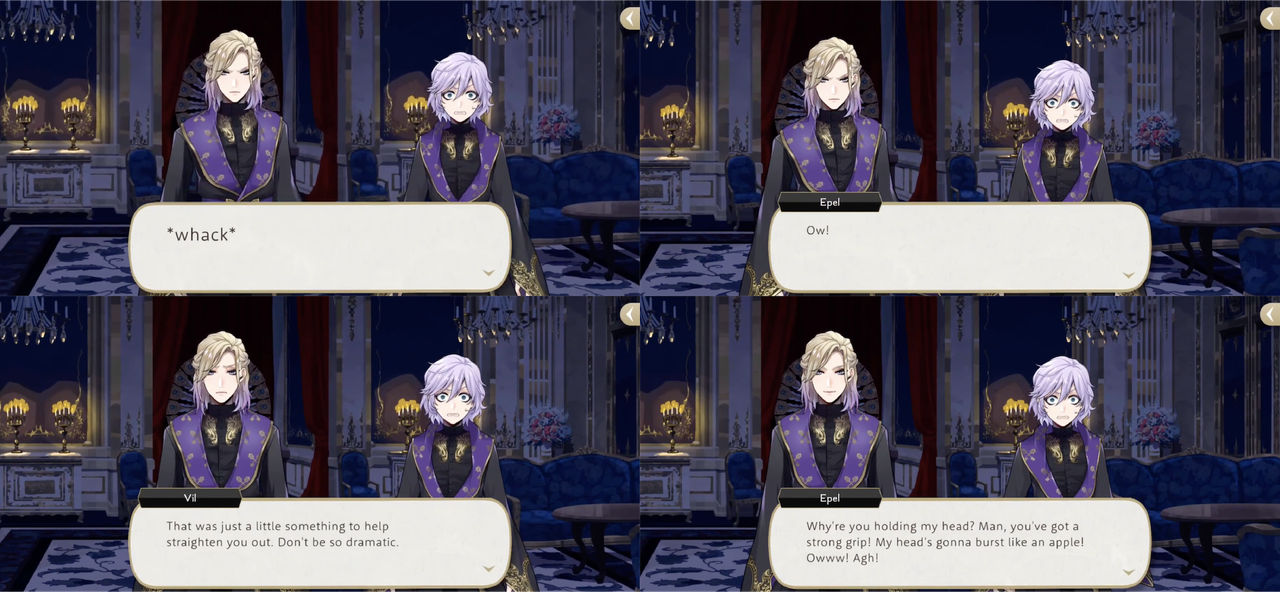
Vil seems to incorporate corporal punishment into his training of Epel, grabbing him by his ear, his hair hitting him (on the back?) and gripping onto his head.
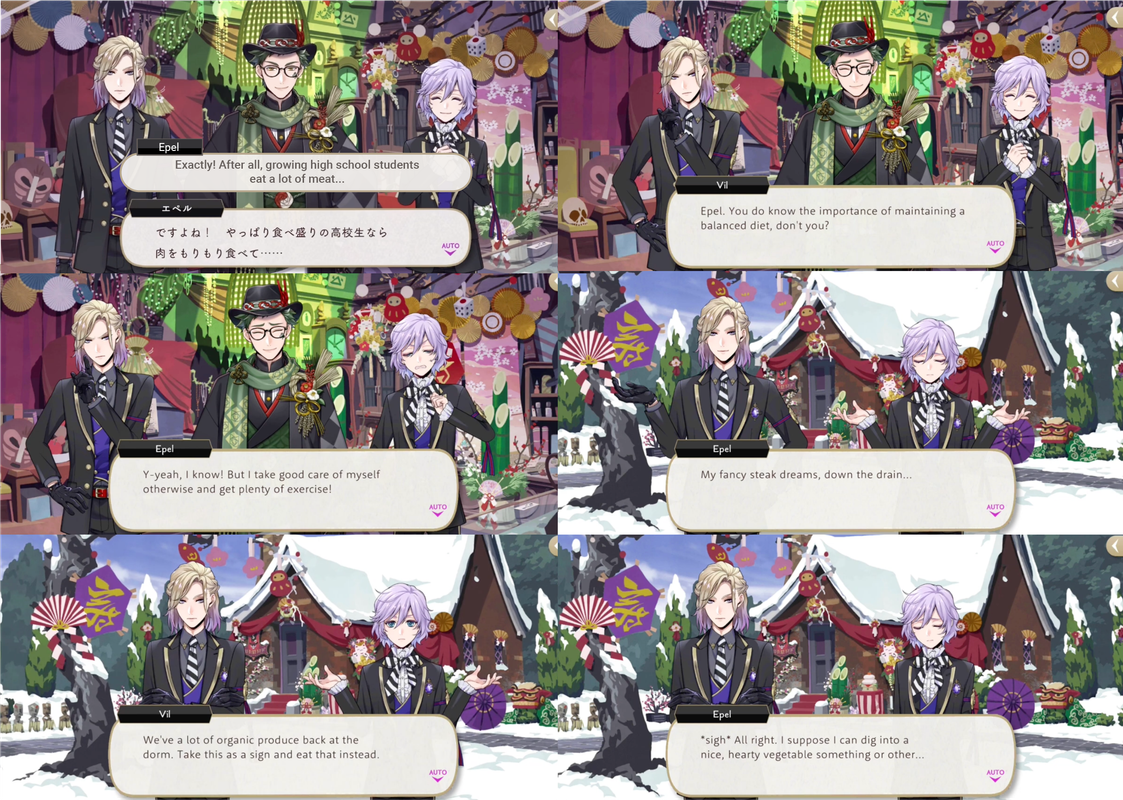
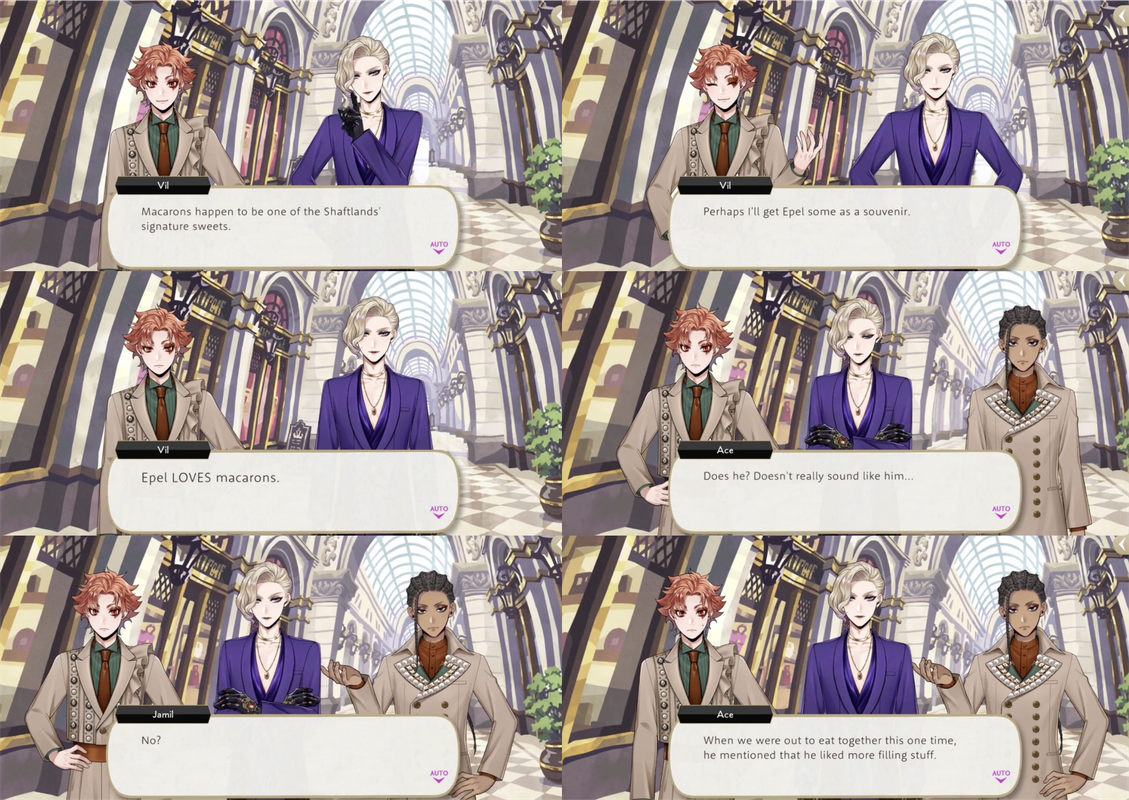
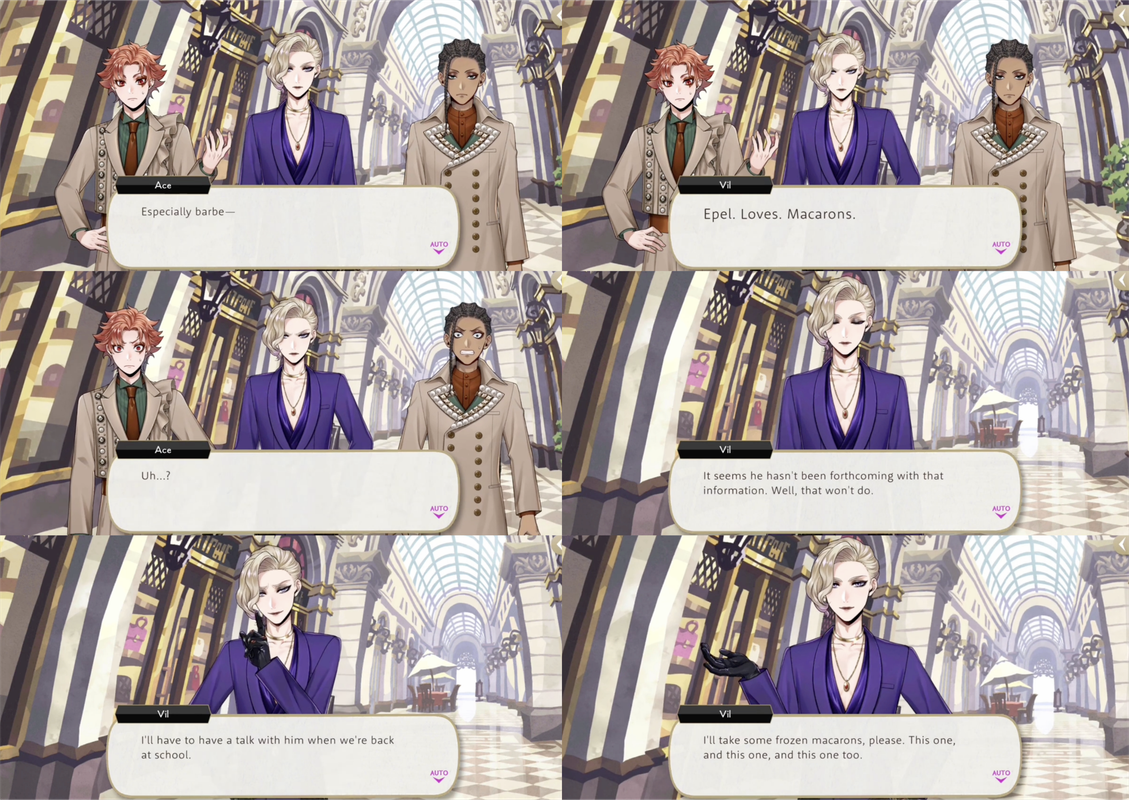
Vil is also often reminding Epel to eat a balanced diet, encouraging him to eat organic produce instead of steak and insisting that Epel actually loves macarons, not the yakiniku (EN: grilled meat/barbecue) that he will mention when Vil is not in hearing range.
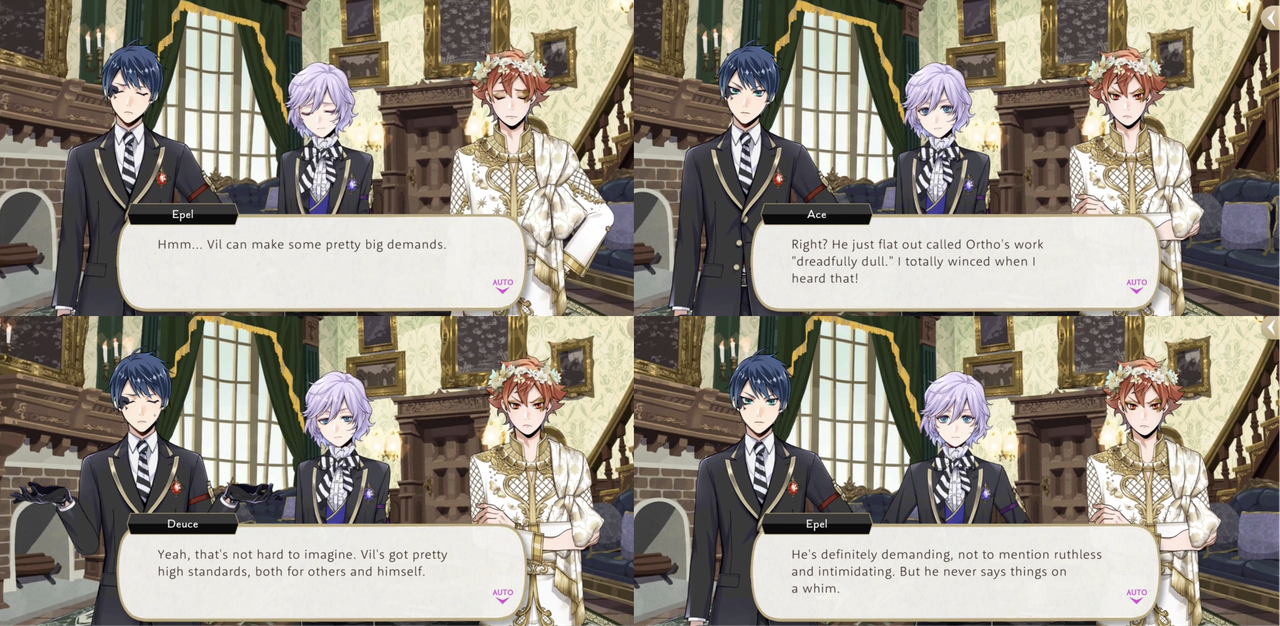
Epel says that Vil is “definitely demanding, not to mention ruthless and intimidating. But he never says things on a whim.”
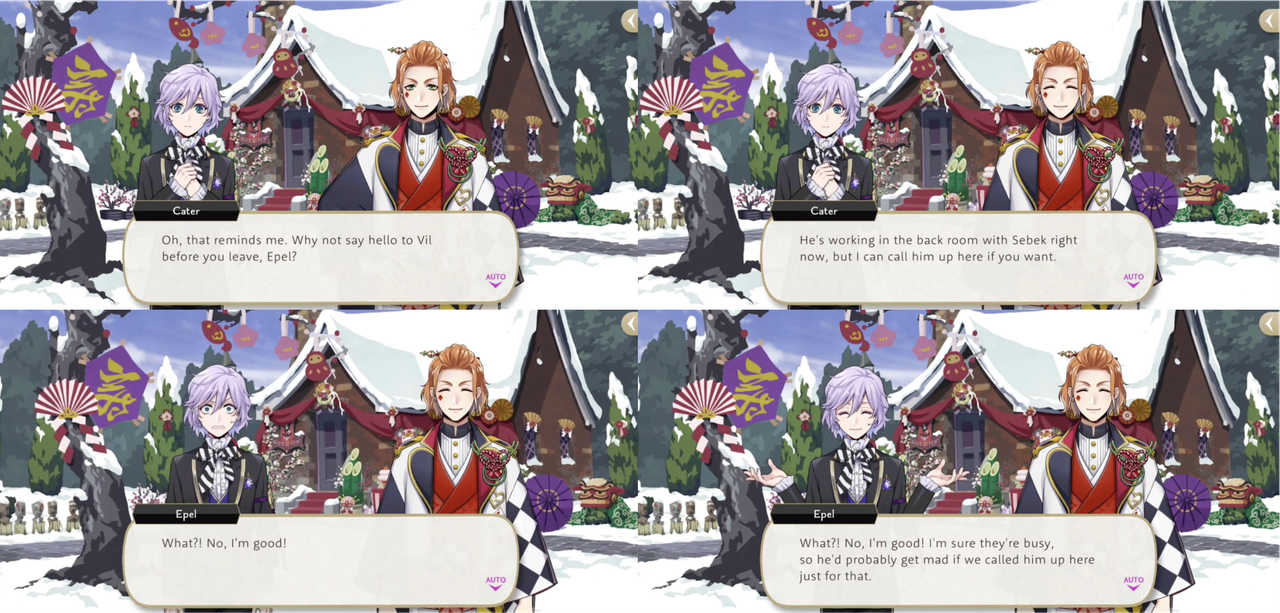
When Epel goes to the school store during New Year’s Cater volunteers to get Vil so that he can say hello, but Epel declines.
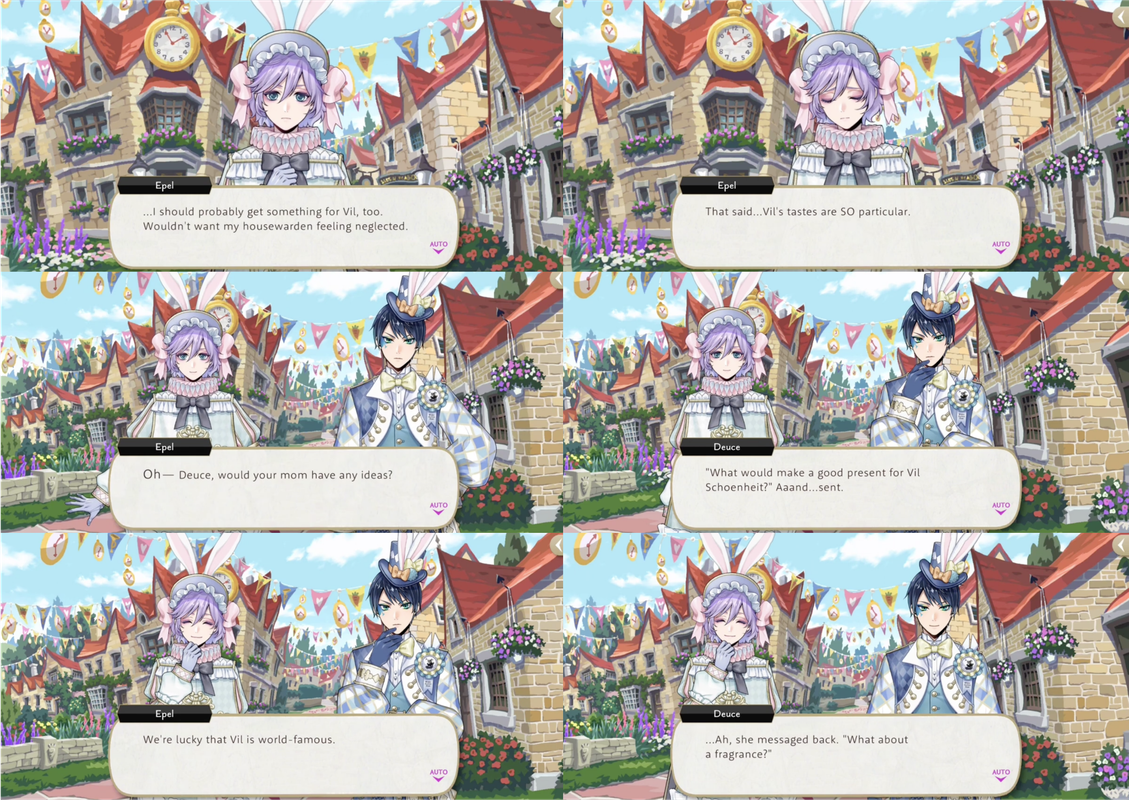
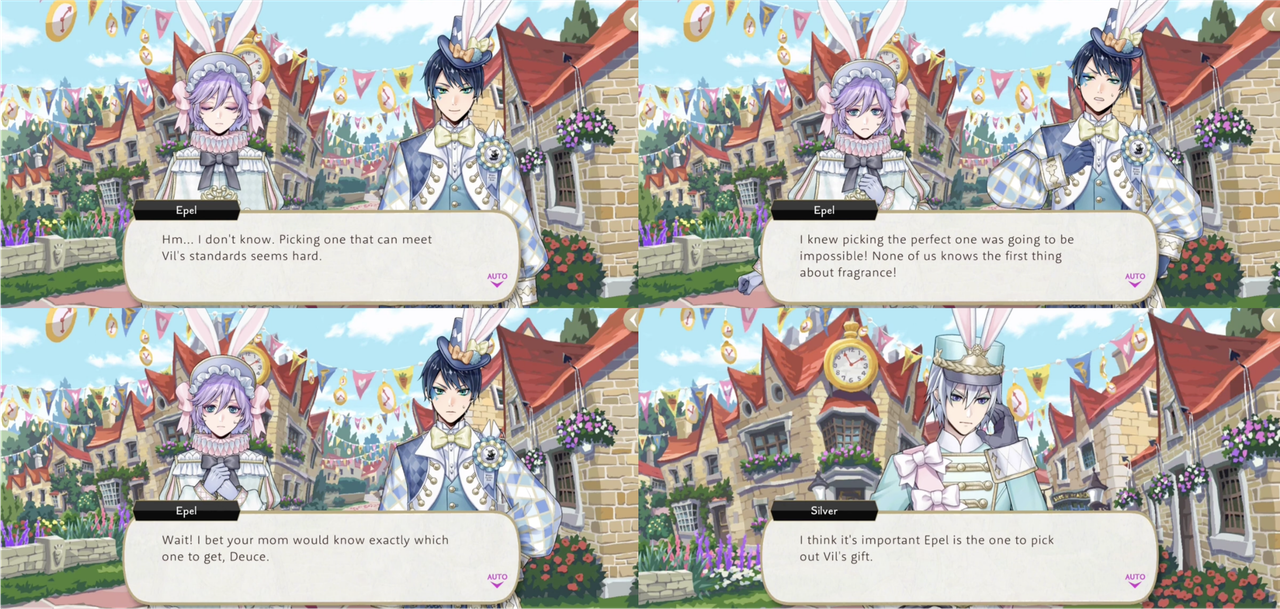
Epel struggles to find a souvenir for Vil during the White Rabbit Fes event, going to Deuce’s mother for ideas. He agrees with her idea of getting him a fragrance but cannot decide on which one, wanting to go back to Deuce’s mother for advice, but Silver insists that it is important for Epel to pick out Vil’s gift himself.
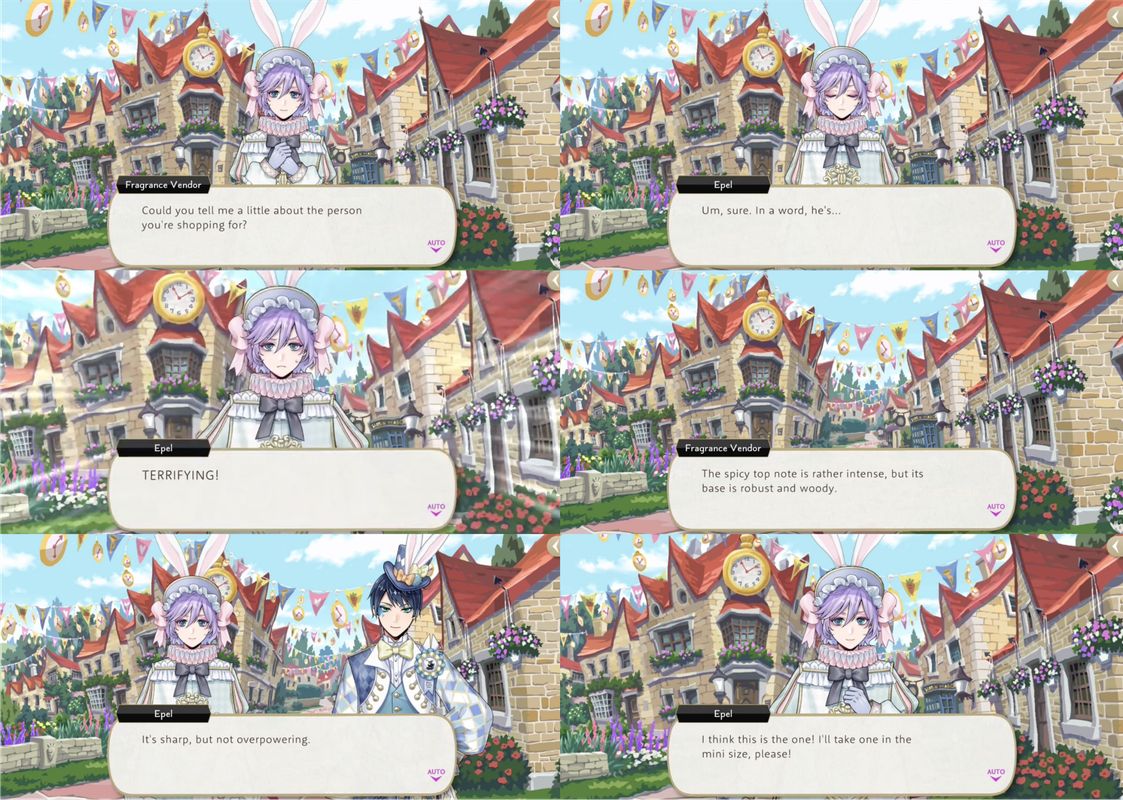
Epel goes to a store attendant for advice instead of Deuce’s mother, describing Vil as “terrifying,” and buying the fragrance that they recommend.
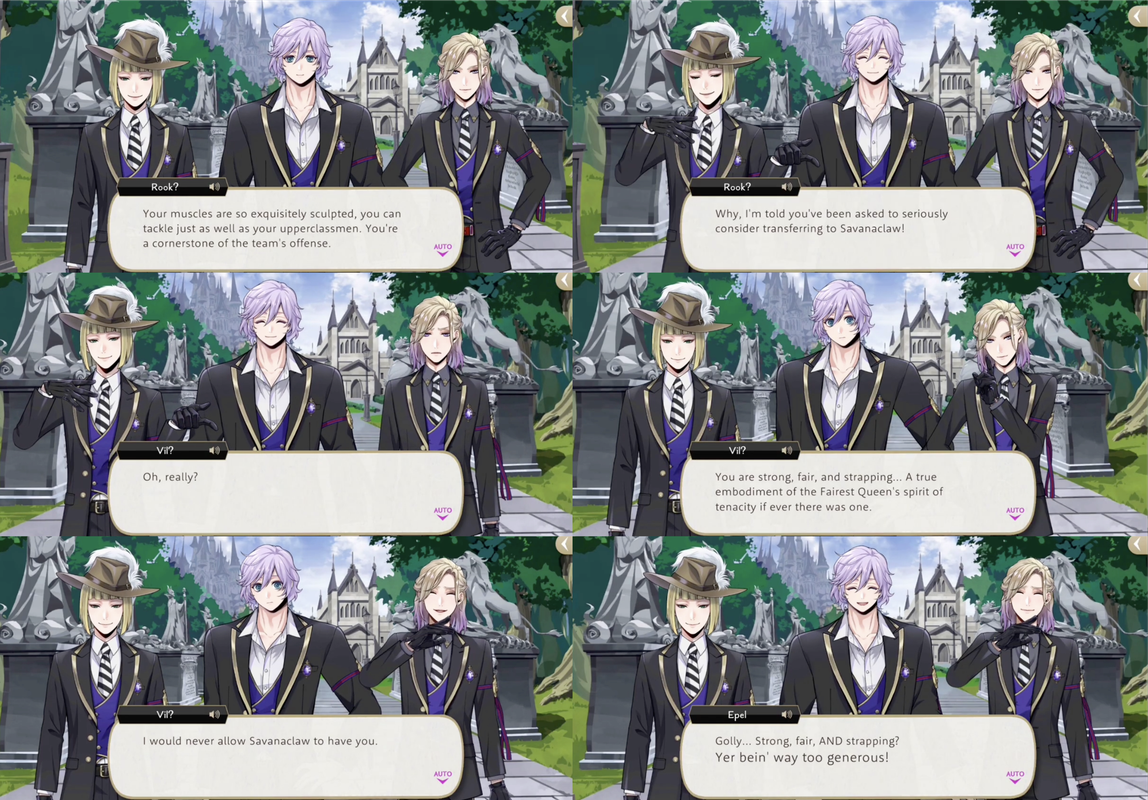
A dream version of Vil appears in Epel’s dream and compliments him on his “exquisitely sculpted” muscles, calling him “strong, fair and strapping…a true embodiment of the Fairest Queen’s tenacity” and saying he will never allow Epel to transfer to Savanaclaw. Epel is delighted by the flattery.
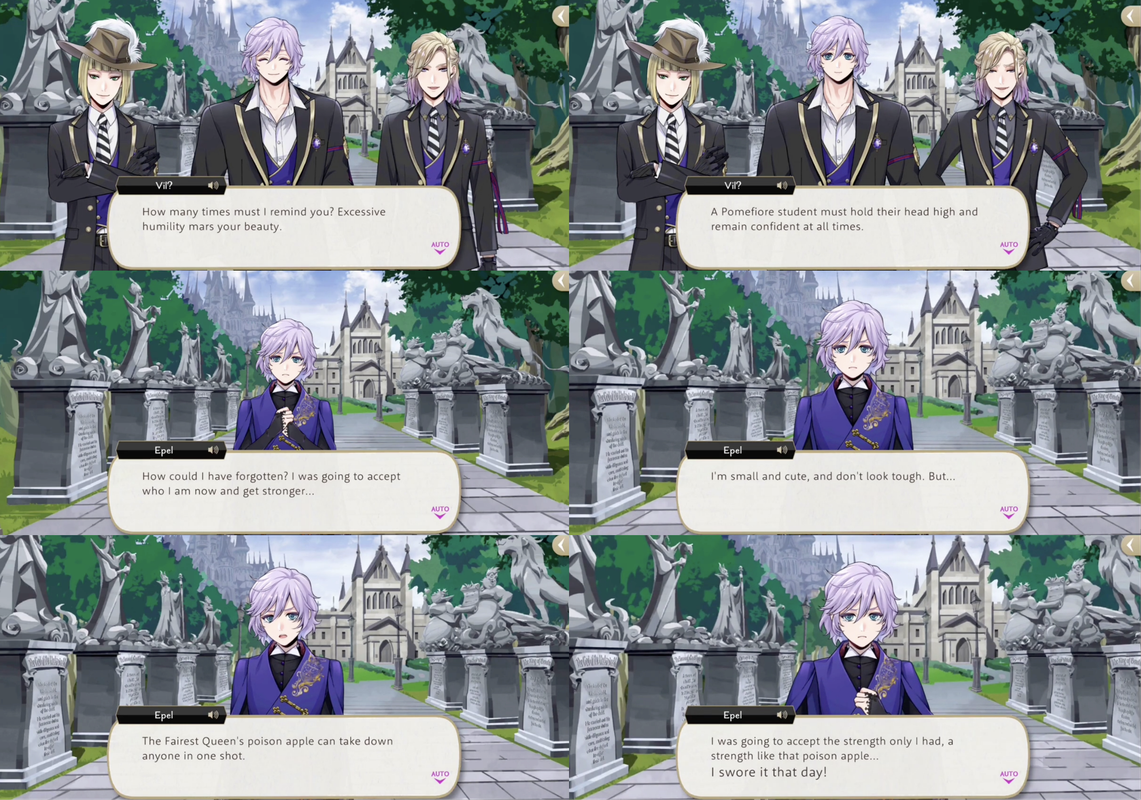
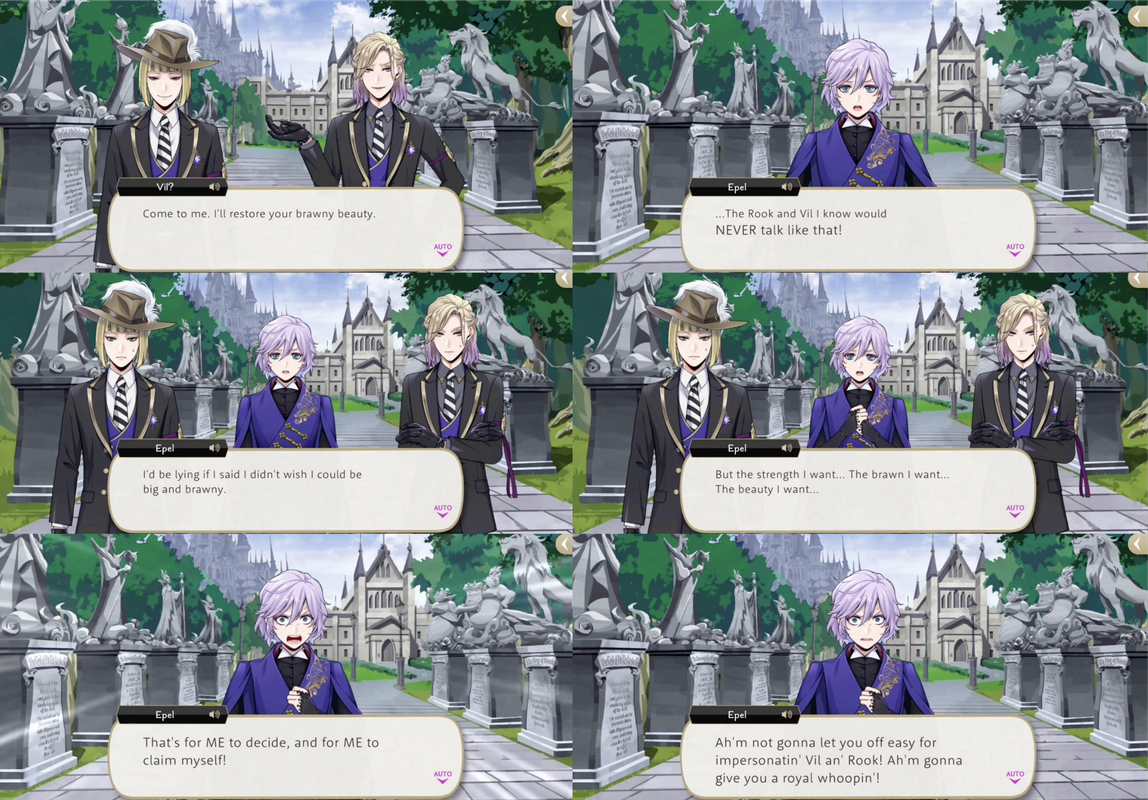
After waking up Epel questions how he forgot his decision from Book 5 to accept who he is and get stronger, taking offense at how the dream versions of Rook and Vil speak to him and saying that he will not be letting the darkness off easy for impersonating them.
 Twisted Wonderland Reference Note